

 GMA Brandtalk
 Tracking
 Archives

‘Searching’ stars and director talk about the revolutionary film
Los Angeles — After the box-office success of the all-Asian cast comedy romance “Crazy Rich Asians,” here comes "Searching," a revolutionary film of Aneesh Chaganty, which had its world premiere at the Sundance Film Festival.
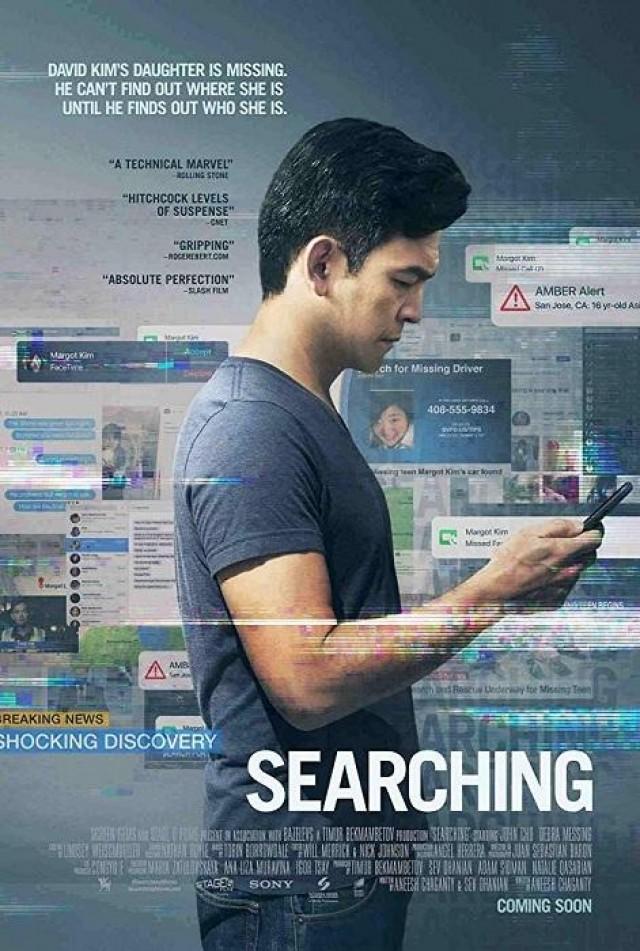
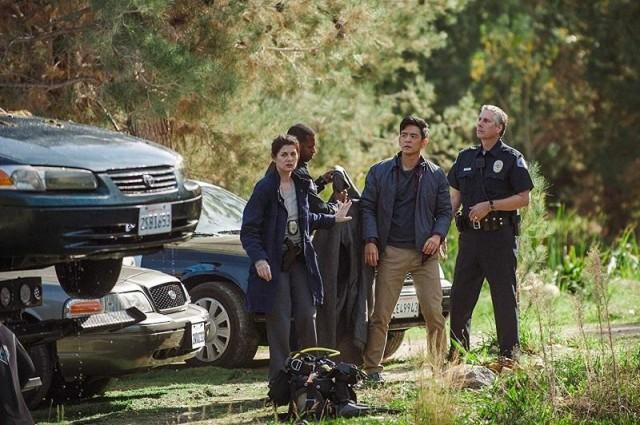
The American thriller features a mostly Asian cast led by John Cho (“Harold & Kumar” trilogy, “Star Trek”) as David Kim, a father desperately trying to find his missing 16-year-old daughter with the use of social media.
Other stars include Michelle La as Margot Kim, Sara Sohn as Pamela Nam Kim, Joseph Lee as Peter, and Ric Sarabia as Randy Cartoff. Debra Messing (“Will & Grace,” “The Starter Wife”) portrays Detective Rosemary Vick.
Co-written and directed by Aneesh, "Searching" is shot from the point-of-view of smartphones and computer screens. This is his feature directorial debut.
The eloquent young filmmaker talked to us about the challenges of filming using an iPhone or GoPro, having a mostly Asian cast, among others.
Born in Seattle, Washington, Aneesh became popular when his two-minute short film, “Seeds,” became an internet sensation garnering a million YouTube views in 24 hours. Following its success, Aneesh was recruited by Google to develop and direct commercials as part of the Google 5, a team of five young creatives from around the world helping shape the Google brand from New York City.
Below are excerpts of our conversations with director Aneesh Chaganty, and some of his cast members – John Cho and Debra Messing:
Aneesh Chaganty (director)
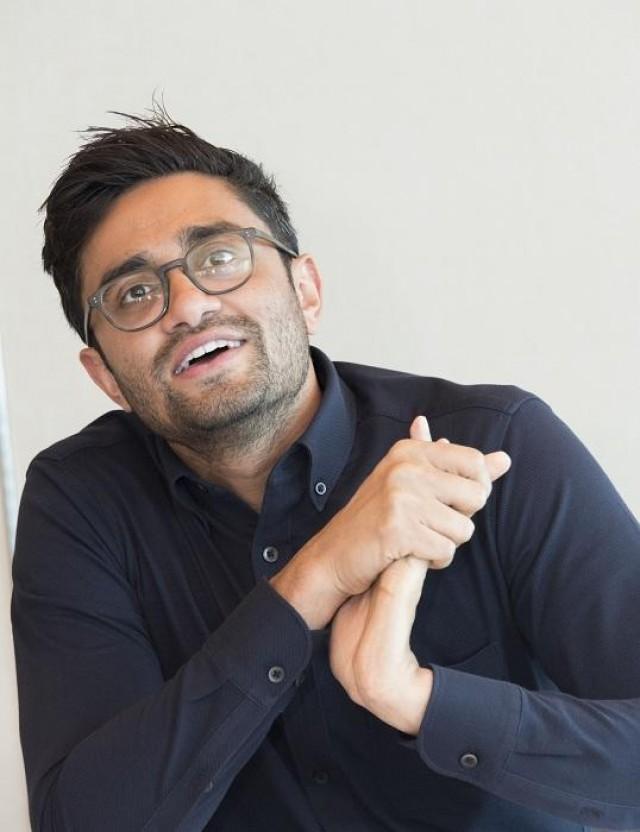
On choosing a Korean family as his main characters:
My co-writer Sev (Ohanian) completely agrees with me on this, but growing up, all of my favorite movies were like action movies, thrillers, mysteries, all that stuff [and] I just never saw myself in those movies, like even the Disney Channel shows. I felt like if I saw myself, it was often in the side or like some stereotype or something like that.
I told myself when I would grow up, like if I ever got a chance to make movies, I would put those people that I didn't feel like were in the movies and in the stories that had nothing to do with their race or their ethnicity, but just was just a normal story that was outside of all of that.
So, it was Korean-American because of John (Cho), and it was wanting to cast somebody who didn't look like everybody else in the beginning. We wrote the film for David Kim. It's in the script. So we went after John Cho because he's awesome. Thankfully, I begged enough, and he said yes.
On where he got the idea for the script:
The idea came from a lot of places. Originally, the production company that wanted to make this film had made a movie that took place on a screen way before that. He wanted to do it again. They first came to us, and they're like, we want to make a short film that takes place on a computer screen. My first reaction to that was, yes, because I do not want to make a feature film that takes place on a computer screen that sounds like it would not be good, I'll never do that. I promise.
Right after that, Sev and I came up with an idea for a short film version of the movie. When we gave it to the production company, they said we want to make it into a feature film. My immediate reaction was, no way we can't do this because I don't think it can be emotional or engaging or most of all, artistic.
I felt like the reasons we'd be doing it would be wrong. But, after about a month going by Sev, I remember texting each other, and we had said no to the project, and we texted each other.
One day he’s like, hey, I have an idea for an opening scene. Then we got on the phone with each other. Like right, okay, so you guys know the opening montage is like a Google commercial meets Pixar's "Up," like those two together. So, we came up with this idea, and we pitched it together.
All of a sudden, we felt like we had an opening into this movie that was like emotional, engaging, thrilling, but most of all would suddenly not feel like a gimmick because hopefully, you would forget the fact that you were watching a movie on the computer screens within the first three minutes. If we could accomplish that, if we could get the style out of the way and then just start to focus on the story, we're like, maybe this is something that is worth telling and giving up two years of our lives in an edit room to make. So we did that.
On casting more Asians and John Cho as leading man:
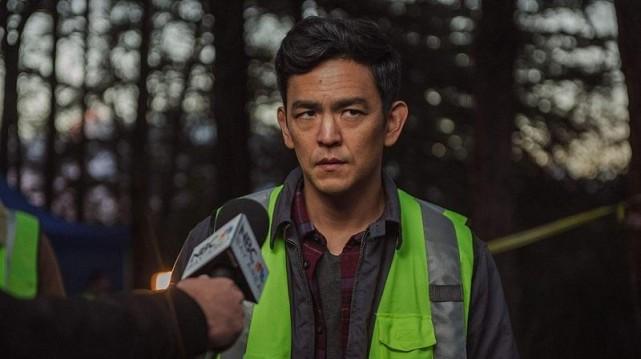
We're in an era where there's a lot of stories about race and about culture being championed and that's awesome. For us, this is not that movie. For us, this was a movie that had nothing to do with that, and for us, that was the biggest battle to be able to fight.
It wasn't like the easiest thing for us to get approvals on and everything down the line, but it was just very important that moving forward and this is something that I know Sev and myself will continue to fight for, is just to make sure that the characters in our movies reflect the country that we live in. I don't think that they do that right now.
As far as working with John, it was one of the most incredible experiences. He's one of the most talented and underused actors. That combination, like I said earlier, a guy like him does not need to take a risk of making a movie that takes place on a computer screen, but he saw at one point, I don't know how, but the potential and like, hey, maybe we can do something new and fresh and maybe I can contribute something to this. So it was wonderful to work with him, and I know what he appreciates most is exactly what we did, is that often times he's cast as an Asian lead, and often times he's cast as a Korean American lead, or a Korean lead, and this is just a lead. That's why we made the movie with him.
On the film using Facebook and being like a social commentary on social media, privacy and such:
Facebook did not reach out to me at any point in the film. I did not personally pay anybody. From the beginning of the movie, we always realized, I felt like in movies often times when technology is portrayed or when text messages are portrayed or when the Internet is portrayed, it's always made up. It's always like made up sites, and there's a little bit of a disconnect between the audience - what is on the screen as far as reality.
For us, this movie needs to take place on the Internet that you use on the Internet that we all use and the websites that we all go to and stuff. So, from the beginning, we were like, this movie needs to use all the same sites that billions of people use every single day. But most importantly, we were always able to rest our hats on the fact that they were always used in the way that they were intended.
In fact, in any specific case, there's only a couple of made up websites in the film, throughout the film. Do you remember like the live blogging website that Margot goes on and talks to the camera? That site we made up. It's based on a real site, but the reason we made it up is because the bad guy more or less interacts with her on that site. We figured like any company, anyone in the future would be against saying oh yeah, we have characters like this on our site.
So, we just made sure that if there was anything negative about a company being portrayed, we made up something, but if it was true and if we were accurate and if it was the way that millions and billions of people use it every day, we were like let's do this. I don't think anyone will get too mad at us for doing it the right way. We obviously got our legal stamp of approval on that before moving forward.
On whether social media is a friend or foe:
It's both. Often times the way that technology and especially social media has been presented to us as a society, as media-consuming people, is always negative. Like if you look at an episode of "Black Mirror" or you open up your Facebook, and you see these little PSA videos or people are talking on essays online and stuff, it's always like we're addicted to our phones, we're obsessed with social media. We're staring at our screens too much. That's true, a lot of that is true, but I don't think it's the whole picture.
For me that's like saying look at this hammer, hammer is bad. When in reality, it's like bad hammers, good hammers, in-between hammers, it's anything that you want it to be when you use it a certain way.
For us, what we wanted to do with this film was say yes, social media has been, there are negative aspects to it, there are scary aspects to it, there are mysterious aspects to it, but there are also aspects that make us love, feel, touch and connect with one another.
That holistic picture, presenting it in a way that isn't good or isn't bad but just is, is what the goal was with the film. On a personal level, I use it just as much as I'd say anybody else does. Hopefully, it's in moderation. Anything done in moderation is a healthy way to do it.
On using his iPhone7S and GoPro in doing the film:
There's like crazy ravine sequences, car chases, like tons of extras all that stuff. We shot the movie in 13 days, so very, very quick. Basically, our big theory with these movies is that often times going into movies that always portrayed technology and all this stuff, they always shoot it on really nice cameras and then in Post downgrade them. It's like, why not just shoot every single scene on the camera that it will actually be shot in, in real life.
So, we shot every single thing on actual cameras. In fact, literally, this camera was our A cam for four days. So literally, this is an iPhone 7S I haven't upgraded, I need to, but every time Debra was using Facetime, every time John was using Facetime, every time the daughter Margot was on the lake and stuff, we'd be literally shooting on this, and we have a little audio recording kind of thing up on the back. Then for all of our Skype footage, all of our Facetime footage, we basically had a GoPro right behind a laptop, peeking over the edge.
The reason we didn't shoot it on the actual Facetime camera was because we couldn't set up video village to that. So essentially with a GoPro, you can wire it up, and you can see a village from somewhere else and watch the footage. So, we're able to shoot it on a GoPro, and basically it would be like John Cho in one corner of the room, Debra Messing and the other corner of the room and video village in between because that's about as far as the wires would extend.
We would be able to watch both of them, and they'd talk back and forth. But we shot on drone cameras, we shot on like camcorders and the opening montage and if it looks like crappy. We shot it on the camera that it was meant for. Those little date stamps in the orange text at the bottom that say the date that you took it on, and that was the shot on the camera that did that automatically. So, we wanted to make sure that everything felt authentic, which was kind of the overall kind of goal with the movie I guess.
On the challenges and pitfalls while he was writing it from a narrative standpoint:
The biggest thing for us was for this movie to feel cinematic. From day one, the objective was always, how do we take an object that you use every day, a cell phone, a laptop, a screen, the last thing in the world we associate with cinema, and make that into a big screen experience?
For us, in order to do that on a narrative level, the story always had to be evolving. What basically we realized was that no two scenes could ever look the same. There's a version of this movie when I pitched it to people, they were like, okay, so that's like all Facetime conversations and all text messages.
But, no. There's actually only one text message conversation that happens in the movie, there's a couple of Facetime scenes. So constantly finding those points where the story can evolve, that we're able to give information in a way that the audience has always just to be like, okay, how is the next thing going to work out was on a technical level, a big challenge.
Then on a purely story level, our biggest objectivewas to make this a very, very classic thriller just told in an unconventional way. So, we just always wanted to really reflect a classic story, the midpoint, the beginning, the inciting incident, the end. It's so classic Hollywood. For us to put our flags down in that and make that the narrative guideposts and then tell it in a way that no one's seen before, hopefully, that marriage between those two concepts would feel a little familiar, but those were overall the challenges I would say.
John Cho
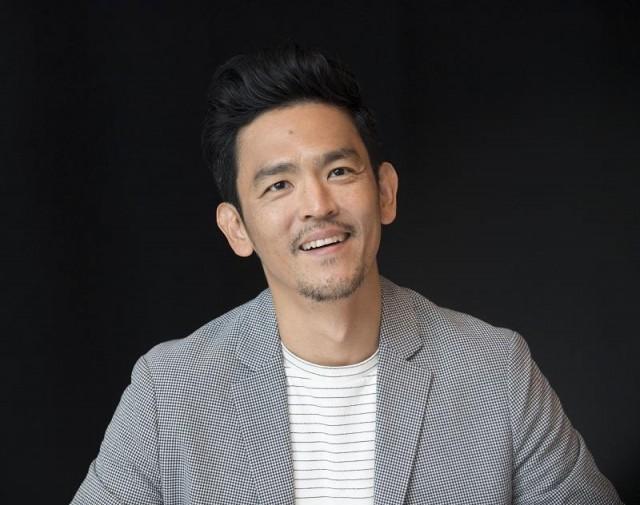
On the process of the film:
The most spontaneity for me was probably interacting with Margot, my daughter, as we grew up, creating those family memories that you see, mostly in the opening sequence of the film. Those were where we had the most latitude acting wise. But it was mostly tightly scripted by Sev Ohanian and Aneesh Chaganty.
The process was closely really to an animated film which was that you have, with an animated feature. I don’t know what you call those, but you have a crude sketch of the movie and then for Aneesh and Sev it was then photographing the actors, inserting that into the movie, and then they spent a year and a half to really painting all that in.
On his first reaction when it was pitched to him:
I have a confession: I said no at first. As much as I was intrigued by the script and the story — because it was a classical thriller and the genre, I am very fond of — I wanted to do this thriller, but I said why on screens?
Mistakenly, I just spoke with Aneesh on the phone and I didn’t get a sense, what I didn’t want to do was make a YouTube movie. Aneesh didn’t take no for an answer and I am so glad he didn’t. I am so lucky he didn’t.
We met finally in person and he said, let me change your mind. He brought his laptop, he showed me how he was going to make this a cinematic experience and be true to what I read, which was a cinematic thriller. So it was combined with that pitch and meeting this person, who I hadn’t met face-to-face, not digital and not over the phone, but being face to face with a person whose enthusiasm and intelligence, and I came to believe him and even in that meeting, I said he was smart enough, he’s young enough and he’s enthusiastic enough. Most importantly, he is a lover of cinema to make this into what I felt it could be on the page initially.
On how he got into the role because he is not a father to teenagers:
My son is ten and he is already separating himself from me in particular and not so much his mother, but I can see the teens coming. He’s already starting to have that kind of attitude. So it’s easy to see, I have friends who have teenagers.
But the thing that really allows me to connect with David is not the fact that my children are individuating themselves from me, it’s the fact that they are babies, which is the thing that all parents do. My mother thinks I am her five-year-old and will forever see me that way and will be forever protective.
That is the tug, it’s the irony of life, which is we as parents, our job, as soon as we are born, is to prepare them to leave us and we are so upset when they do. So that is the tragedy of it.
On adapting when he was a kid and feeling like the only Asian in the class:
I feel like it’s so important to feel, like for me when I was a kid, art was my connection when I felt lonely. Books, and in my house I am reading the “Little House on the Prairie” books to my kids and it’s because I had a connection with them, because I felt that we were a pioneer family in our covered wagon from Korea to America and I always felt this kinship with the Ingalls family. So it’s fun reading those books to my family. But art makes you feel like you are connected to people and drawing made me feel somehow less lonesome and that was my way. But these days you can actually connect to people and just make sure they are real people and I guess that is the danger of the internet.
Debra Messing
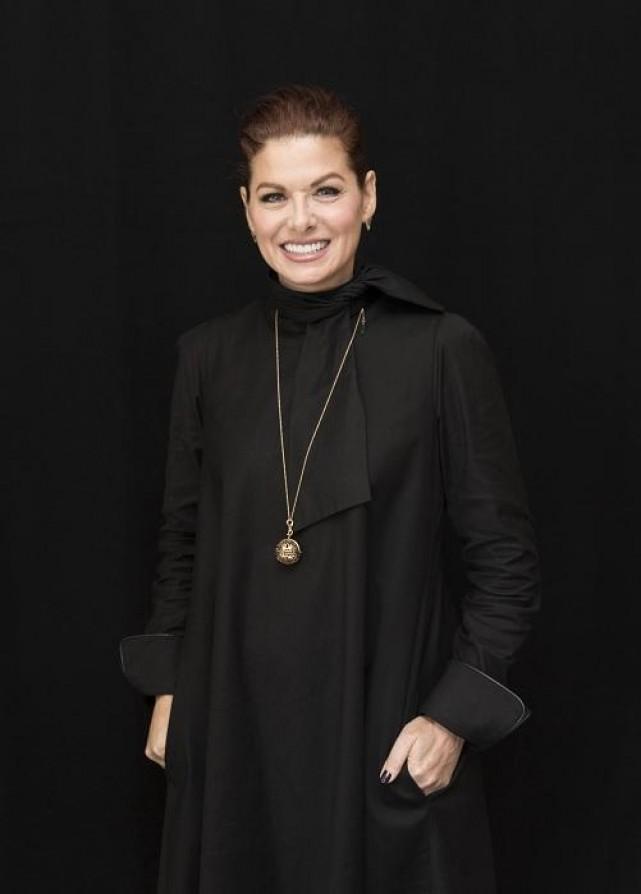
On her reaction after reading the script:
When I read the script, within the first page, I was, what am I reading? First of all because it was…cursor starts at the top of the screen, comes down to the bottom of the screen, flicks, and I was, where's the dialogue?
I knew that this film was, after I finished, it's creating a whole new vocabulary within the film. I found that incredibly exciting. But it was the story about a single dad whose child goes missing and just the power of the Internet, that being explored, and I really related to that.
I have a 14-year-old son. I trust him. He's got a great head on his shoulders, but obviously I can't protect him from everything and whether we like it or not in 2018, this is the way these new generations are communicating and it's not going away. So, he's 14 so I'm able to say, okay, you can have Instagram, but it has to be private and no Snapchat, no Twitter, no Facebook and those are my rules as a mother. But still things happen. That there's no turning back. There's no way for us to go back to the more innocent times were screen time was defined as watching TV. Screen time is now, the Internet.
On playing a detective:
I've always had an affinity and a fascination with the judicial system. I went to Brandeis University, which is named after a Supreme Court Justice. So it's a part of who I am. But this role obviously is completely out of my comfort zone. To be honest, I was surprised that I was offered the role. I know that had this been a big budget movie, I would not have been the first choice. So I was grateful to Aneesh and Sev for seeing something in me that would be able to help tell this story.
But this was the most challenging thing I've ever done by far. I felt very much an island unto myself while doing this. My character was living in entirely different reality than every other person in that film. Then, of course, the logistics of doing the entire film without ever being able to be face to face with the people you're acting with. It really challenged my imagination because not only was I just having an earbud in my ear doing a scene with John, but I had Aneesh in my ear saying, move your eyes to the left up. Okay. That's where his face is. And then, it was my own reality as the character trying to navigate all of this.
I sent Aneesh a five-page single-spaced questionnaire to him after I was offered the role. He wrote back, he said, whoa, okay, I'm going to need a little time with these questions. But I felt that because she literally has her own reality that it was really important for him and I to be on the same page of exactly minute by minute where things shift for her, where perspectives change, where intentions change, because my goal and hope was that when people finished the movie and they know the truth, if they go back a second time, that they will be able to see in a new way all of the cover through the whole film. I was really grateful for this opportunity because I was forced to use muscles that I have never used before.
On working with John Cho:
He is an exquisite actor. He really is one of our best. I am so proud to be in the very first mainstream film that has an Asian American man as the lead. It’s 2018. It's really kind of breathtaking to think that it's never happened before. Having said that, just watching it, I just see a really, really gifted actor. I don't see an Asian American face once it starts, I see a father, and I see a family. This isn't an Asian American film. I think that's a part that's important.
It struck me that it took a 24 year-old kid to just make this a truth and it didn't even occur to him that he was doing something that had never happened before. He is growing up in a time when in school, he looks around and he sees every shade of brown and yellow and black and, it's his reality. So that's what he's writing. That's his reality.
So it excites me to think about the others... niche…directors coming up who are going to celebrate all the colors of the rainbow. That this is John's moment. He has been around a while and he has been clearly a mainstay in the film industry. But now he is stepping up and showing that he should be on every poster going forward.
On having an Asian man as lead actor in a mainstream Hollywood movie:
You know that the whole goal of diversity, it's been a long road trying to get there. 2018 isn't the first year that we've been having these conversations. 20 years ago they were saying, we need equal representation and it just didn't happen. It comes down to risk assessment and it's a warped perception of our audience. That you have studios and producers who say, okay, what are the movies that have made the most money in the last two years? Who were those leads? Okay, well let's go back to them. It's self-propelled. It just keeps doing that. People say, yeah, that would be interesting casting, but is that person going to bring seats to the theater? Well, they can't bring seats to the theater until you give them roles where they can build a fan base where those people will come.
That’s why I'm excited that there are people who are building production companies who are putting projects together and getting people of all races behind the camera and in front of the camera. It's going to take concerted efforts from people who are actors who are in positions of power for things to move more quickly. — LA, GMA News

