

 GMA Brandtalk
 Tracking
 Archives

Elton John, Taron Egerton, director Dexter Fletcher, and more on the biopic musical ‘Rocketman’
Los Angeles — After Rami Malek’s award-winning portrayal of Freddie Mercury in “Bohemian Rhapsody,” here comes Taron Egerton with another memorable performance as the legendary rock star Elton John in the biopic musical “Rocketman” helmed by Dexter Fletcher.
At the movie's world premiere at the Cannes Film Festival, we talked to Taron, Bryce Dallas Howard (as Sheila Eileen), Richard Madden (as John Reid) and director Dexter Fletcher. In London, we were fortunate to talk with Sir Elton John.
Below are excerpts of our conversations with them:
Elton John
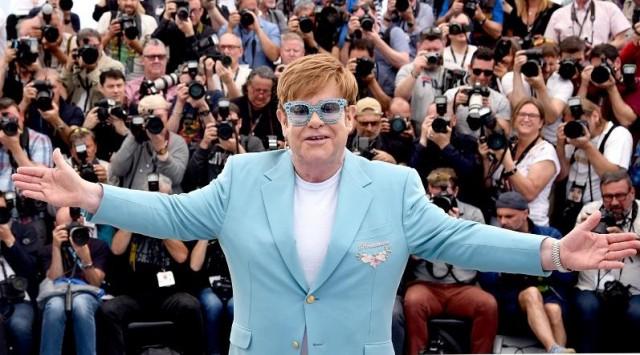
What was most impactful for me in the movie was seeing how quick and proficient you were in writing songs. So could you talk about that?
Because I write to someone else’s lyric and Bernie (Taupin) and I have this incredible gift, he gives me a lyric and I write the melody and it doesn’t take very long. “Your Song” is probably, in the film, it’s a transient moment and really a special moment in the film, it probably took me half an hour.
If I haven’t written the song in half an hour, I come back to it. I don’t write every day, I write when I have to write. So I write songs and when I am ready to write songs, I am very excited and it’s a gift. I have no idea how it happens, I just put my hands on the keyboard and then something happens.
With the song at the end of the movie “I Am Going to Love Me Again,” it was a lyric that I wanted Bernie to write for the end credits and I wanted it to be like an end of '60s, beginning of '70s Motown song.
To be honest with you, I listened to “Come See About Me” by The Supremes, and it’s exactly the same tempo and I thought that’s the tempo I want. It’s a bit like “Breaking Down the Walls of Heartbreak” which is in the film, and my early life with the band was playing with those wonderful solo artists and I wanted it to be a kind of a tribute to them. That’s how that happened.
I was deeply moved by your loveless childhood, the loneliness. Your life totally turned around. What did it take to trust love between you and David Furnish?
It took a lot of work. I had to learn to walk again, I had to learn to become a human being again. I had to listen, and I had to shut up. I had to take people’s advice, even though sometimes I didn’t want to, but my way never worked. So I listened and I got so much great help, so much kindness from strangers and everything, and I learned to listen for the first time and I learned to do what I was told for the first three years, and I didn’t tour for the first year of my sobriety and then I went to about 1,200 meetings in three years.
I worked my butt off and I got it and I started to get it. I started to get better as a person. There are still parts of a performer which will lead you to the dark side. There’s something about creative people, and David will tell me, he lived with me. Then one day I would get up and I was like ugh, it seemed like the world got dark. But it doesn’t last long because I have him to get me out of it. I have my children.
When my children are around, I never feel dark. When I got sober, I wouldn’t have said I would be in a relationship for 25 years, I never thought that would happen. I couldn’t last with any relationship because drugs came into it. You can’t have a relationship where drugs and alcohol are in it, it’s impossible.
But once I stopped, I have been with him for 25 years, I have an eight-year-old and a six-year-old child, I would never have guessed in a million years this would ever happen to me. It’s a part of being willing to change, you have to be willing to change and you have to accept that you have to be willing to listen to people and you have to do what you are told, and life will get better. It really did.
So when I am looking at those scenes in the movie when I am alone, that’s exactly how I was at the end of my sobriety and my using. I was in my house in London just doing that and I was afraid to walk down the stairs even when the house was empty, in case anybody heard me. That is craziness.
So I am just grateful that I am talking to you guys, because life is wonderful and I had everything going for me, and I nearly threw it all away.
Are you a classically trained rock musician like Neil Sedaka?
No, I started playing by ear as in the film, when I started going, the skaters, (hums).
Then I started playing any song that I heard by ear. That was a gift. Then I said to my parents, I think it would be a good idea if I had some training, and I found a really wonderful woman in Pinner where I lived called Mrs. Jones, and I started to play scales and churning, all the exercises. Then I started to play Bach and Mozart and Chopin and l loved it. Then I won a scholarship to the Royal Academy of Music. Fortunately, by that time I had found Jerry Lee Lewis and Little Richard.
Also my hands unfortunately are not classical pianist hands, there are so many wonderful musicians at the Royal Academy who were better than I am. I realized in a short time that this — I loved playing it and I loved so much — I played Chopin, Mozart, Bach.
Bartok, I didn’t know if I was playing the right note or the wrong note, but I loved playing it and I loved being a part of that thing. You can tell in my early songwriting, probably all the way through, that classical influence has stayed. It was a priceless experience to go there. I am still associated very strongly with the Royal Academy.
When I went there, I was full of fear, because it was 1958 and rock and roll and jazz, or anything other than Mozart and Bach were frowned upon. Now it’s a place of joy and fantastic. But I have always had a soft spot, I am so glad I went there, and I am so glad that I learned to play music because that education is priceless.
Taron Egerton
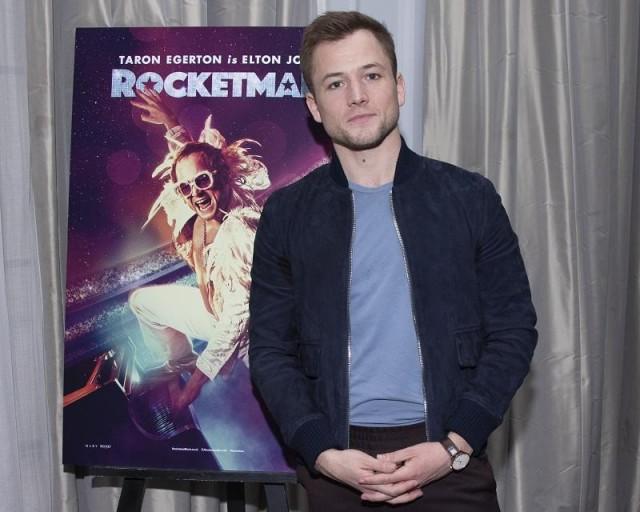
Doing the movie, what did you find out about yourself in relationship to singing and what did this teach you that surprised you?
Surprised by how much I enjoy wearing hot pants. (Laughs) I don’t know, a great many things. I’ve only been involved in the industry for five or six years and many of you have known me for all of that time and I would say that this is definitely the most complex part I’ve played, the most challenging role.
It’s been so wonderful because of the nature of what it is and what it is stylistically, it’s just demanded so many different things from me both in terms of music, in terms of emotional range, in terms of confidence, in terms of bravery with the costumes and the aesthetic.
But in terms of what surprised me about myself…I don’t know…one thing I do feel, for example in the first “Kingsman” movie, there were ways in which I would deal with stress and some of the adversity of making a movie, because as you all know it’s littered with adversity and the road’s never smooth. There are ways I would react, ways I would cope with things that were less than ideal. That’s what growing up is.
One thing I really felt about this movie is, I felt like I’d arrived at a point where I was more able to deal with some of those adversities and difficulties, partly because of the incredible team I had working with me and I hope partly because I’ve grown up a little bit. That’s a very nice feeling because I don’t look back on anything and wish I’d done it differently.
What was your first reaction when you put the pink glasses on and how did your mom react?
How my mom reacted? (Laughs) My mom knows the boy that lies dormant within me so I don’t think she was that surprised. You know the costumes especially I think are such a triumph in this film and Julian Day, who I’ve worked with before, is an extraordinarily gifted designer.
You’ve all seen the movie now, we don’t take the costumes and replicate them exactly — we don’t replicate Elton’s songs exactly. We love the songs, we’re inspired by them so we pay homage to them by subtly reimagining them. We hope that the audience will feel excited by that as we are.
So the new costumes I have in the movie, like the orange neoprene I wear in rehab, I think is such an amazing achievement because it’s so Elton, but it’s a new thing. I think for Julian to take that established aesthetic and create something new, personally I find that really, really inspiring and exciting.
One of the things that surprised me about the movie was Elton’s relationship with his parents. Did you ever talk about that with Elton?
Yes, of course, at great length. He told me…one of the first conversations we had I was thinking about the scene in the middle of the movie where Elton goes and visits his father and I said…I was asking about his dad and he said, look my dad’s been dead for decades and I’m still trying to impress him. And that was such a powerful thing to hear.
We can all relate to that, I think, regardless of your gender, impressing your parents is so important. When your parents are dysfunctional and they are unable to be what you need them to be, of course that’s going to create problems throughout your life. I’m just very lucky that Elton is very candid about those things and he’s very able to discuss those things comfortably because it was so helpful for my performance.
Bryce Dallas Howard
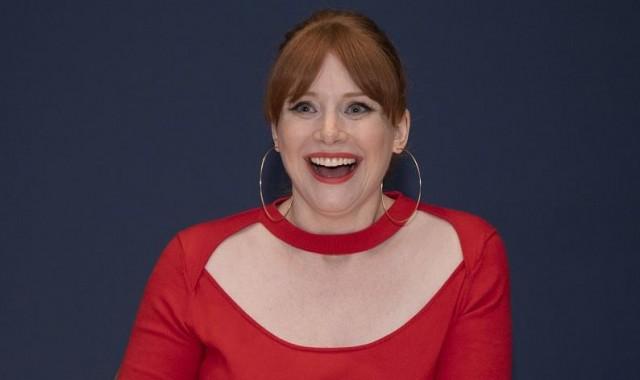
Can you talk about your role as the mother of Elton John/Taron Egerton?
Yeah, absolutely. Gosh, you know, there's information out there in the public about their relationship, about their falling out, all of that and when I initially read the script I kind of, I actually really questioned the character a lot because I felt like potentially it was one-sided and the production actually doesn't know this but I went and sought out confidentially a couple of individuals — more than a couple, who knew Sheila for decades and observed the dynamic between her and Elton. They shared with me kind of what that was like and they had no affiliation with the movie and so that was really extremely helpful.
There were some other things that really helped for me to, you know, figure out what's going on mentally. I called one of my friends who's a psychiatrist actually and I asked him, I kind of shared with him a lot of these stories and I was like, is there a diagnosis here like what was wrong like what was really going on mentally because her anger and resentfulness really just, you know, it just grew and grew and grew during her lifetime to a point where just at the end of her life she was just incredibly vindictive and it was, you know, you kind of can't comprehend a parent being that way toward a child and yet it happens.
One of the shocking lines in the movie was when the mother said ‘You will never be loved properly.’ Did you talk to Elton about that?
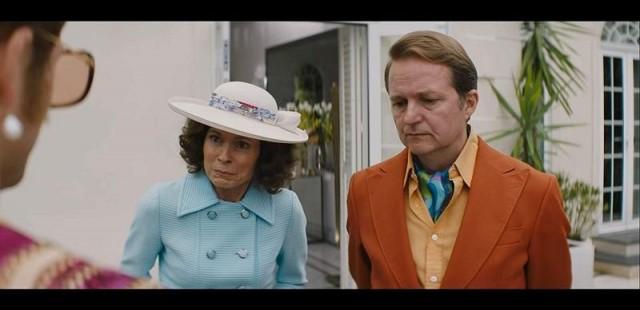
Yes, one of the most kind of heartbreaking scenes in the film is when Elton after much hesitancy and delay finally decides to share with his mother that he's gay and when he does, she sort of seems, you know, somewhat indifferent at first and then says to him “you'll never be loved properly.” Of course the irony of that is that of course he'll be loved properly.
It's that he was never loved properly by you and she has never loved him properly. His father has never loved him properly and I think that was really a defining moment for him certainly as I'm sure it is for any individual who comes out to their parents and her reaction was indicative of the nature of their relationship which, you know, she was incredibly – she was not nice, you know.
Looking at you today, what are your parents responsible for in who you turned out to be?
Oh, that's such a lovely question. A lot. I mean, absolutely a lot. Akiva Goldsman told my parents that I was the exact mixture of my dad and my mom and he was like it's the best parts which was really sweet.
That was very complimentary but, yeah, I'm very much so a product of both my mother and my father. I think there's a side of myself that I don't really share a lot and I think it comes from my mom, which is that her father was a scientist and an explorer actually and she herself is a writer and there's this kind of like curiosity like immense curiosity that actually goes beyond what my dad – I mean, my dad's a very, very, very curious person — but my mom is so curious to the point where she wants to immerse herself in something so much that she understands it so, so, so, so, so deeply and those things are specific and wild and often a little bit kind of not what you would expect.
So I think that that's something definitely that I got from my mom and my mom's side for sure and then with my dad there is an optimism that my grandfather had, his father Rance, and my grandmother certainly had, Jean, and I think the optimism isn't about that like oh, everything is going to be amazing like everything is going to work out.
I think the optimism is really connected to a genuine sense of gratitude, like genuinely being able to, in the moment even if something is difficult, recognize the kind of – I mean, my granddad always had a phrase where he would say, 'you can't separate the pain from the pleasure.' To be able to see that in a moment of pain, to be able to recognize that sometimes with that one there is not the other, I think that's something that I definitely got from my dad's side. I love that question.
Richard Madden
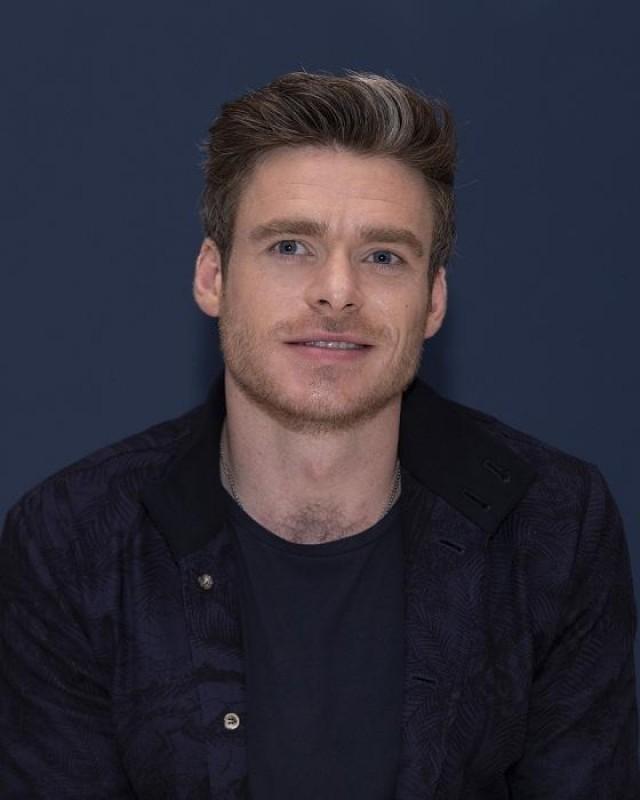
John Reid is still alive. Did you have a chance to talk to him?
No, I had not had the chance to speak to him at all. I think I had to kind of ask as many people as I could find who worked for him or with him or friends of his and try to pull as many stories as I could about him, which is fascinating because they were all so different.
Some people would say John Reid is the most fun guy you will see on a night out if you get a chance and hang out with him, and he will take you to the best parties and the most fun.
Then other people are saying he is the most terrifying person you could ever meet. He will fire someone on the spot and has a mad temper. So I had to kind of piece together what elements I would use of that for the different scenes and what is going to serve the scene and move it forward.
John Reid is alive and living in Australia. Actors whom we talk to, who play somebody who is still alive tell us that they feel more responsibility than a fictitous character. Did you feel more responsible as well?
Yeah, I felt a responsibility to play it right. But then also, then a certain freedom, because like I said earlier, how many different stories I got about him, that he could be all these different types of characters.
My priority really I think was different with Taron in this film and Elton, but all the other characters I feel we have to be truthful to the original people, but more importantly it’s how can we use those characters to feed the story, 'cause it is a fictional drama and it’s not a documentary.
So it’s like how do we bring out elements of these characters and heighten them to move the story on our feet at a few key points in Elton’s life?
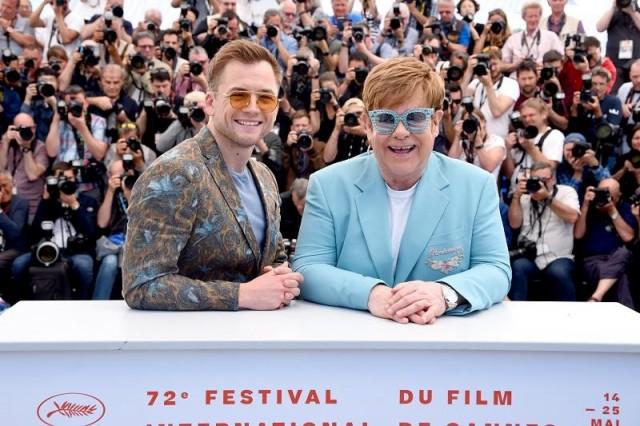
What did Elton’s music mean to you before you took on the project?
I was a big fan of his music and I grew up with him when I was younger, it was on the radio and it was played in the house and my parents are fans of Elton’s.
Then now going through the film and getting to know Elton a little bit that I have done, they are moving to me now and they are more beautiful because you realize it’s very easy to say they are about love, but then you get to know Elton and you realize that he is all about love and that is his whole ethos and they hit a bit harder with me now because you see from the film, the hardships that he’s gone through and to see someone bring so much love despite so many kind of challenges that they faced in their life, is very moving to me.
Dexter Fletcher, director
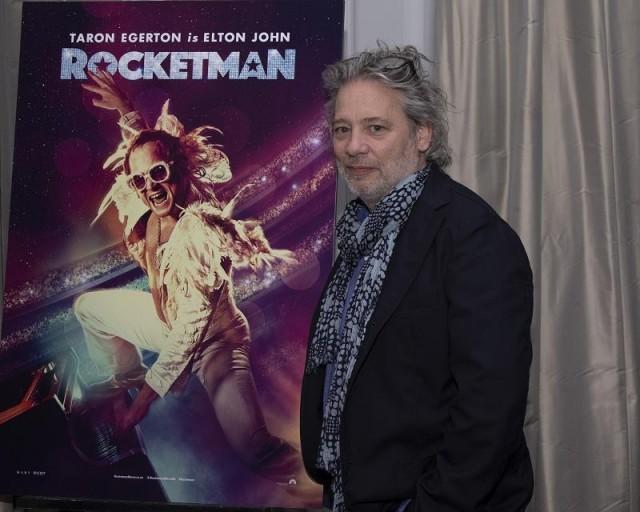
Can you talk about Taron Egerton actually singing the songs of Elton John. How you decided on this?
Well, the thing about “Rocketman” is, as a musical rather than a rock biopic, the musical is asking for songs to be interpreted in a new way or songs to be interpreted in a way that the original artist has not conceived or not thought about or we take that material and adapt it accordingly.
The best example I can give I think is "Rocketman," the actual song in the film, where I take one letter of one sentence and I change that from wife to life. Now so Bernie Taupin wrote I miss the earth, I miss my wife, right? So I changed wife to life because Elton in this particular moment in the song we're looking at, is looking for his life. Who is he? He's asking this big fundamental questions as he sinks into the abyss.
But what happens throughout the course of that song is, he's put back together and he walks out on stage at the Dodgers Stadium so where it starts is that song is – that song is like a personal expression of where he's at and so he has to run that in that way but it transforms throughout that journey out into a performance on stage which is Dodgers Stadium that's got to be more reminiscent of actually what Elton did so some of the songs are performance, some of the songs are Elton's kind of touch on them but mainly we used them more as the inner voice of the characters and so Taron has to own that in a different way for how Elton recorded them originally.
When you work with someone like Elton John, I wonder how truthful the story is?
Yeah. He is the one who wants the drugs. He is the one who wants the sex. We're just trying to answer the question as to why, you know.
He makes his choices in life and for whatever reason, he makes those choices there's a very key moment when he sits at the end and he says I've behaved like a C word for a very long time and I just forgot to stop.
That's the moment where he takes responsibility for his life. Now Elton's not a bad person. He may have behaved badly. We all behave badly at some point in our lives and then maybe reasons and excuses why we can negate them or we can accept our responsibility for them.
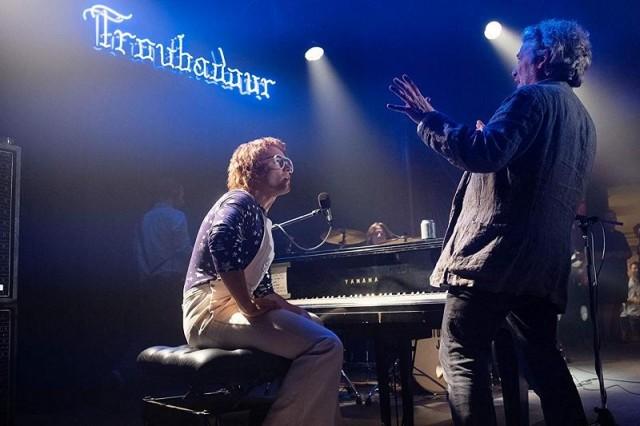
Equally our Elton at some points tries to push away the responsibility. That's what he's constantly trying to do throughout his process of recovery: It wasn't my fault. It wasn't this. It wasn't that. It wasn't me. I didn't do that. My mum was horrible. My dad neglected me and that's what the fight is when you're struggling to unpack all of your shit, when you're looking to unpack why you are the person that you are.
That's the massive part of the process until you go oh, I have to take responsibility for my part that I played in it. He turns to his mother and he says “I realize it was never easy for you and that's what we both needed to do. You needed to give me and I needed to give you.” This is really key.
What's really important about recovery, in Elton's recovery and this particular point is that you can spend the whole movie going it's John Reid's fault and I never got loved and I didn't have a bicycle and I wanted a toffee apple and I only got a banana.
You know, it's – there's many excuses but what Elton endeavors to do and the point he gets to is, he realizes that he had responsibility and he says and now I'm still standing.
You have directed both Rami Malek and Taron Egerton. So how different or similar were they?
I could only tell you about the similarities rather than the differences. I mean, they're two very different films. One is somebody else's vision and this one is my vision. “Rocketman” is what I wanted to create with Taron and I understand why there's comparisons.
Look, they're both brilliant actors and committed in different ways. They have very different processes and I get as a director the chance to be around that and work with those people which was extremely gratifying. “Rocketman” is the new era. It's the new great love of my life. We'll see where it takes Taron. He's, you know, incredible in it. He sings everything and has an incredible instrument, incredible voice so but not to take anything away from Rami. He's equally as talented. They're just very different. — LA, GMA News

