

 GMA Brandtalk
 Tracking
 Archives

Joaquin Phoenix and director Todd Phillips create a Joker film nobody will forget
Los Angeles — There are movies, there are performances, and then there is the Todd Phillips-helmed “Joker.” It features Joaquin Phoenix as the struggling stand-up comedian Arthur Fleck, who later turns out to become the Joker in Gotham City.
The film is not like any other DC Comics film because Todd, who's written and produced the movie, goes deep into the psychological and physical transformation of the harassed, abused and mentally ill Arthur Fleck into the feared and dreaded Joker.
Critically-acclaimed, the movie premiered at the 76th Venice International Film Festival this year and bagged the Golden Lion award, the festival’s highest prize.
Below are excerpts of our conversations with Joaquin and Todd on the making of the film, the improvisations they had to do, the challenges among others:
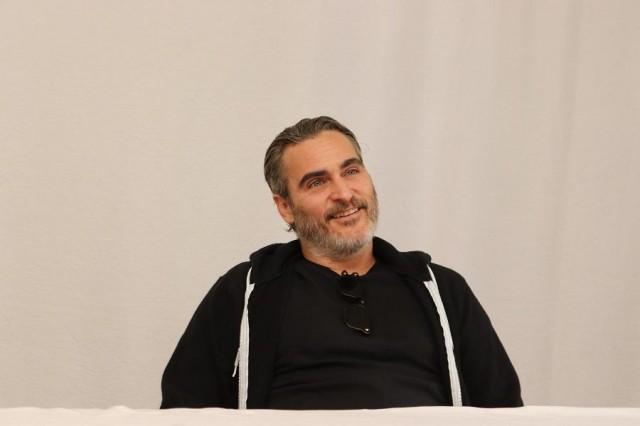
Joaquin Phoenix
When did you personally feel that you now know who the Joker is? When was that moment for you?
I still don’t have it. I never really arrived at that place and in fact I think any time that we felt that we were certain of his motivation, it seemed like something, some kind of kinetic energy faded.
There’s something that was really exciting about not really knowing his motivation. And again, I’m not 100 percent clear on what’s real and what isn’t in this film.
I like that.
Me as well. And so, it really, it never allowed me to fully understand either character, which I think is alright. I don’t know that we fully understand ourselves and our motivations right — human psychology is so complex.
But certainly, a character like this, I don’t think I wanted to know that. That’s not true. There were times — because I’m an actor and part of what you do is to try and understand something — I would try to understand a motivation, but then it would inevitably shift away from my understanding and my ability to understand it. The behaviors that he exhibits that are irrational and unreasonable. And so, I never really got to that place of feeling like I understood the character.
Did you have that experience specifically for this character or did you have this experience with other characters as well?
Human beings are so complex and we might think we understand what motivates us in a moment but often times it’s something else that we can’t receive. And so, I think that’s interesting and I don’t always need to know the answers. Sometimes you may think you know what’s motivating you. And acting, that’s interesting, so it’s an approach that I’m comfortable with but I don’t think I ever experienced anything that was as drastic as this character in that regard.
A lot of characters say that to really own your craft, you have to work at it as a muscle constantly. Do you agree with this or not at all and why?
I don’t know. Everyone’s different. I tend to practice a lot. I just create scenarios and scenes in my head, and I practice them. But I don’t know that that’s important. And I’ve seen actors that seemed like the last thing they are thinking about is the work and the scene and then they do a take and it’s astonishing and beautiful. So, I don’t really know. I don’t think there’s really a right way to approach acting. I think for everyone it’s different.
How is it for you?
I do both things. What I like to do is prepare a lot, ask a lot of questions during rehearsal process, do various scenarios, come up with as many possibilities as I can for a way to play the scene.
And then what I do is, I will go early on and I will try every single version at once and it will be terrible and then I will tell myself to just shut up and stop. Then something emerges, and you start following the feeling, you say that feels right and I am going to go in that direction.
Sometimes you go in that direction, on this we shot for three hours a version of the subway scene that was a version that felt right to me, and then me and Todd realized, we took a break, we said let’s just take a break for a second and review things, and we realized that it wasn’t right. In fact it was completely wrong.
But out of that process emerged another idea with one of the other actors who nobody had anticipated, and which became I think, a really important and integral part of the scene.
So that’s why you have to allow things to happen, you have to allow yourself to be moved with the current of the scene of what you are feeling, because you don’t know where you are going to find that moment or on whom. So that’s roughly the process that I followed on this.
Tell us more about you dancing on the steps which you did with ease of your body, and the challenges of doing that scene without even holding on the railing.
Yeah, I made a crucial error in preparing for that scene, because I never practiced on those steps. And they were very narrow, I guess the length of the steps was much shorter than I anticipated, they weren’t the normal length. But what’s interesting about that sequence is we view it through two different lenses, one of which is the reality.
We are seeing it at 24 frames per second, and the movements are quite choppy and out of step and not in great rhythm. And then we see it subjectively in his mind, in which we are seeing it in slow motion. And suddenly he looks fluid and graceful.
I thought that was a really interesting approach for Todd doing that, because this film developed, throughout the film we are constantly challenged, what is the objective reality and what is his understanding, his perception of things?
I thought that that sequence perfectly illustrates that moment and you are able to witness those two things happening simultaneously. But as preparation for that, I worked with a choreographer named Michael Arnold. I don’t normally like sharing ideas with anyone other than the director maybe when I work, so I was a little reluctant.
But I thought he was brilliant, and he started talking about, just really introducing me to movement and he talked about the vocabulary of dance. Not necessarily any specific steps, although we did do some of that. It was really just exploring the idea of movement. I think that that really triggered something that was unexpected. And when we went into the movie, the script had talked about that Arthur has music in his head, that he’s always hearing music.
But I didn’t anticipate just how much it would influence the character and the two different sides, how best to illustrate the two different sides of Arthur and Joker.
Todd Phillips
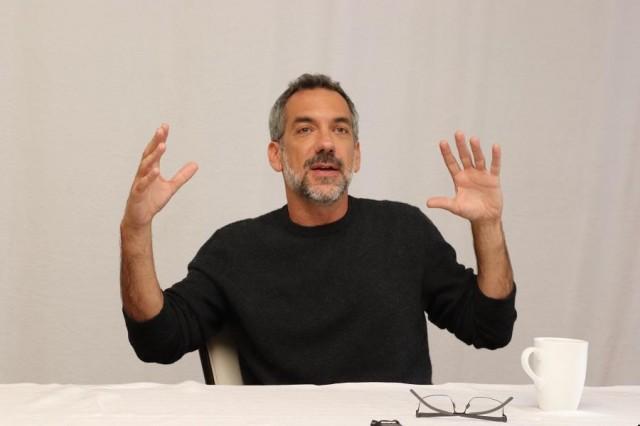
Why do you think Joaquin Phoenix had doubts in the beginning about doing this project?
I think he had doubts because it's a pretty intimidating role to take on. It's been done before many times wonderfully and I think he had doubts because the expectations that come with a movie that's called “Joker,” the same doubts I had and fears but I also think that's what energized him.
We made a decision early on to not look at the stuff in the past. I am sure he has too but we couldn't really talk about it because it was too overwhelming of a cloud hanging over you and we just put our heads down and tried to do our own thing.
Did you have somebody supervise Joaquin when he lost weight for the role?
Joaquin had to lose a lot of weight for the movie and of course we said okay, we can get you a nutritionist and a doctor, etc and Joaquin's like uh it's not how I do it. I'll lose the weight and he kept putting it off and we were now we're three months from shooting and he hasn't really started and he's got to lose like 50 pounds.
He ended up losing 52 pounds in 3 months and I don't know if he told you how he did it but literally the way he did it, not with a doctor which he should have which we had but he didn't want to talk to, not with a nutritionist, he just basically ate an apple a day. I'm not kidding like an apple a day for months.
That was his thing and then he started adding a little salad with no dressing in the middle of the day but he basically just didn't eat. He did not do any smokes which helped and it was not the healthiest way to lose weight but it was amazing to watch. It literally just was like falling off him so by the time he started shooting he was 52 pounds lighter than when we started talking about it.
Did you have him practice his laughter in public places?
No, that's also not very Joaquin. We did it in his house a lot. We tried on, so to speak, different laughs and it was something he was most fearful about with the movie because that's a hard thing to do if you can imagine even for a great actor, it's such a weird thing to ask.
Laugh now, uncomfortably, make it go on for 2, 3 minutes and so we were just messing around with it a lot leading up to the movie at his house.
Is that actually a real condition?
Yeah, it is based on a real condition actually called Pseudobulbar Affect. It's an actual thing.
I love that you gave a voice to a person like, in this case, the Joker, that society probably would totally disregard and not realize that they have dreams, that they feel pain. Where does this empathy come from?
I was raised like that maybe if you can't tell from “Old School” and “The Hangover” but I was raised by three women basically my mom and my two sisters and I was raised with some very specific standards and one is to not fit in.
A lot of my movies have always been about guys trying to fit in because that's always fascinated me. Why would you try to fit in? And what, you know, to have your own voice was always a very big thing but also empathy but really the movie is about this loss of empathy that I think has been amplified in the last few years for many reasons, in culture and yes, our current administration but also the Internet, culture and Twitter and all that.
There's a lack of civility that is to me when you have a world like that, you get the president you deserve and to me when you have a world like that you get the villain you deserve and so while the movie takes place in the late-70's, early-80's we wrote it in 2016 and 2017 and so, of course, there's a little bit of a mirror to what's going on in our times.
We usually box actors and other creative people in one kind of genre. So how much was this a risk for you?
To me it wasn't but to other people because no-one pigeonholes themselves, right. I feel like I could do anything, right, and that's just how I was raised but for sure people are like I don't understand.
You made “The Hangover.” How did you make this? But I've never been a fan of pigeonholing and somebody telling me what my tastes are or what my career should look like, so it's just not something that hung over me.
The battle is now when Fox 11 from Dallas comes in and goes, how do you get from “Hangover” to here? You just go, but I don't have that internal battle.
What is it about the role of the Joker that is so fascinating?
It's a great question and like why does it attract such great actors because it really always have.
Jared Leto's a great actor, right, so like it's attracted some brilliant actors to this same role. You'd have to ask Joaquin.
For me what it represents is this sort of no rules and it's this kind of lawlessness to Joker. He's pure id. There's no ego. Arthur has an ego. It's like when you become Joker, when Joker has no ego. He is a wild stallion with no rider. Pure id.
So I don't know if I'm an actor that would be exciting to me as well. The problem with it is it also comes with these great performances before you because people have done it but we got past that. — LA, GMA News

