

 GMA Brandtalk
 Tracking
 Archives

Awkwafina, Kelly Marie Tran, Filipino animators and more talk of 'Raya and The Last Dragon'

Los Angeles — One of the most exciting animated films this year is “Raya and The Last Dragon,” highlighting Disney’s first Southeast Asian Princess, Raya, voiced by the talented Kelly Marie Tran of “Star Wars” fame. She portrayed Rose Tico in “The Last Jedi” (2017) and “The Rise of Skywalker” (2019).
Aside from having its first Southeast Asian Princess, the movie also showcases a number of Asian actors and actresses like Awkwafina (Sisu), Daniel Dae Kim (Chief Benja), Gemma Chan (Namaari), Benedict Wong (Tong), Sandra Oh (Virana), and Lucille Soong (Dang Hu) among others.
The animated movie also features Disney's first-ever Tagalog song, "Gabay," sung by Filipina singer KZ Tandingan.
Helmed by Don Hall and Carlos Lopez Estrada, the epic fantasy adventure with Southeast Asian themes, is set in Kumandra, a reimagined earth inhabited by an ancient civilization.
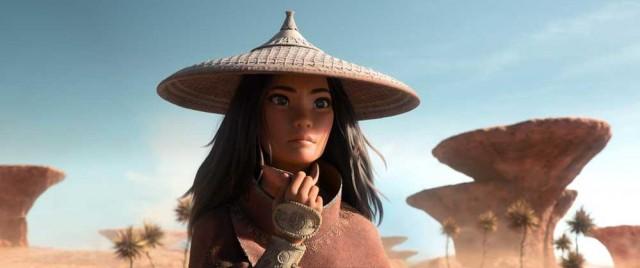
Raya, a fierce and courageous warrior princess of Kumandra’s Heart Land, embarks to search for the last dragon to restore peace.
We interviewed Awkwafina, Kelly Marie Tran, directors Don Hall and Carlos Lopez Estrada as well as Filipino animators Mikee Sevilla and Virgilio John Aquino (Modeling Lead-Environment) and they talked about their experience in working in the computer-animated action film.
Below are excerpts of our conversations with them:
Kelly Marie Tran
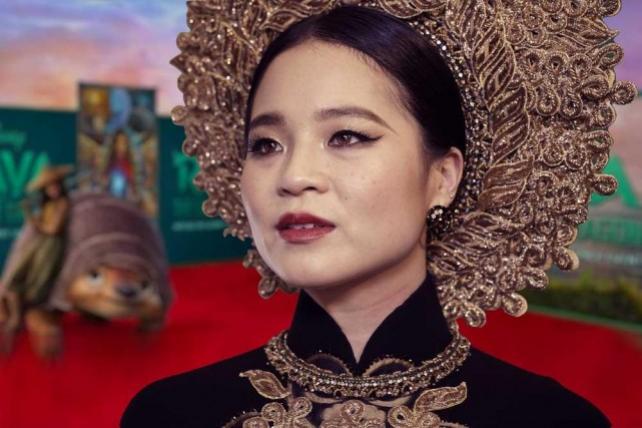
You are the first Southeast Asian Disney princess. Can you please talk about the significance of that?
Yeah! Oh my goodness, it's a really big deal. It feels like such an honor to be a part of this movie that so accurately represents this special part of the world that I don't think is celebrated that often. I'm really excited for people to see it and hopefully see themselves in this character that I just love so much.
Raya is a kick-ass princess, who does martial arts. One of them is arnis from the Philippines. Can you talk about that?
What has been really rewarding about being in this movie is seeing how meticulous everyone has been about making sure how authentic the representation of this part of the world is.
So all of the martial arts styles you see depicted in the movie are specifically from the Southeast Asian region, which I think is awesome. I'm really excited for people to see all of the action scenes in this movie. I think it's one of the coolest things about this movie.
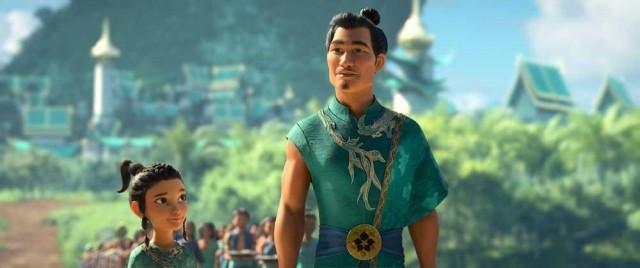
There is incredible bonding that’s going on between father and daughter in the movie. What has been your own experience with your father?
I'm really close with my dad. And my mom. That to me, was a really important relationship in this movie.
Just like you said, it's not very often depicted. And in addition, I think the ways in which Raya and Benja are interacting, the way in which he sort of imparts upon her this wisdom, and just the way he also tells her about her responsibility in the world. It really resonates with me.
I think that the relationship with my dad is similar. My dad has taught me so much about how to interact in the world and how to exist and stand up for myself while still not stepping on anyone else, if that makes sense? Man, that relationship just makes me really, really emotional because of the whole trajectory of it. And I think Daniel Dae Kim is an incredible actor and talent, and to be able to do those things with him was really special.
So yes, I definitely see similarities between that relationship and the relationship with my own father.
What was your reaction when you got the part? How was your audition?
It was a wild process. So, I auditioned for it a few times, and obviously, I loved the project from the beginning, but I just really didn't believe that I would get it. Like this thing is so much bigger than me and it's so special.
And then, when I found out that I got it, I think my initial reaction was fear and disbelief. (Laughs) You go through your life wanting these things, and I think that we spend so much time fighting and climbing and really almost pulling on that rope, and it's so much effort, and you don't really think about what you're going to do when you get there.
So when I was offered the role, I just remembered being totally in disbelief. And now, looking back, it has been such a beautiful, magical experience, and I really wish – I keep saying this – but I really wish I could bring every single person who's ever dreamed of being in this position. I know that it's such a privilege to be able to work in this industry at all, much less get to be a part of something this special. And I wish that everyone could experience this. It's more than I ever dreamed it would be. It's really, really special.
Your parents were refugees from Vietnam. Can you talk about what you learned from them? How did the lessons they shared with you contribute to you becoming an actress and the person you are today?
Growing up, one of the things that was pretty clear in my family without ever having a conversation about it, it was the idea of working really hard and doing what you had to do in order to put food on the table.
My parents, as you said, are both boat refugees, and they never got to a place where they had the luxury to think about having a dream or what would fulfill them in life. Their whole life was essentially; they just wanted to make sure that we had a safe place to live and food on the table.
So they taught me a lot about what grit is and what it means to never give up, and what it means to always find hope even though it feels hopeless. I don't think that I would be where I am today if I didn't have my parents. And if I didn't have the experiences that I did growing up and seeing my dad wake up every morning at four o'clock, and go to work, and get home after I got home from school, and do that for 40 plus years. I love my parents so much. I'm so grateful for them. They definitely taught me a lot about never giving up, and I think that's one of the reasons why I'm here.
On a lighter note, I saw you in a TV interview wearing a Michael Cinco orange dress. Can you talk about that dress? Did you know Michael Cinco or did your stylist recommend him?
I don't know him personally but the dress was so beautiful, and I had talked to my styling team about wanting to make sure that we are using all Asian designers for this tour. It was really important to me to do that.
To be able to wear a dress like that, it just radiates. It just makes you feel joy. Yes, it was really, really special, and I just think he's incredibly talented.
Awkwafina

When you look at a story like Raya, what are the life lessons that you take with you?
These movies are embedded into our childhood and then in a way our adulthoods, our lives. And I think the thing that ties them together, the universal themes that you can understand as a child and you can understand as an adult, they have a relevance to any stage of your life.
And for this one specifically when I first signed on, it was a couple of years ago, so the political, everything has changed right? And so even then, it still rang true and still even does to this day; trust and unity over hatred, the idea of when we are fragmented, we can’t come together, we can’t do all this alone, we can’t do it without coming together and having some kind of belief in one another.
And I think they really do ring true in these really universal ways. And yeah, I still think when you watch it, really at any time, that is the beauty of these movies for sure.
What was your reaction when you saw yourself as a Disney doll?
It’s pretty cool man. And I have the dragon as well. I couldn’t believe it when I first saw it. It was like nuts. It has my voice and stuff, so yeah, it’s really an out-of-body experience.
Being part of this Asian project, were you able to contact or work physically with the other Asian actors like Kelly Marie Tran or Daniel Dae Kim?
It’s crazy because half of the movie we went into lockdown, so a lot of it was filmed in quarantine in our houses. So we had seen already as much as I would have loved to have seen everybody. But yeah, we are spending a lot of time now honestly on these things.
Can you tell us how the process worked while filming during quarantine?
When you are recording at Disney, you are in their studios and you have all the equipment. But then all of a sudden you are just doing it like from home. And I thought that I actually had pretty decent equipment, but I had come to find that there were horrible acoustics in my house and it didn’t work out.
They ended up sending like a tent, like a giant production tent and it was in my living room because it was really big and I put a carpet down and then I put a little light in there. And I was like I could spend my days in here, I could make this my studio. And then they were like we need that tent back immediately. (laughs) So there you go.
What is your relationship to dragons? Have you done any dragon research?
That’s a really good question. Well I obviously love dragons, I was born in the year of the dragon. The dragon was the only fictional animal of all the Chinese zodiacs I always…and obviously they do play a big role in mythology that spans across all kinds of cultures.
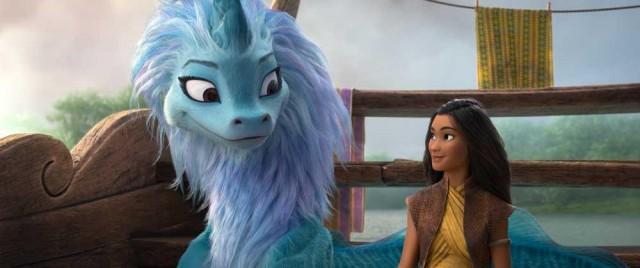
The interesting thing about Sisu is that the dragons that I’ve seen in movies and TV, one that comes to mind the “Game of Thrones” dragons where they are these kinds of creatures of intense…you could just feel their power and their royalty.
And to see Sisu as one that has flaws, is imperfect, is innocent and also just human. I had never really experienced or could imagine a dragon quite like that. And also, I think that with Sisu as a drawing she always had the same vibe but yes smaller details would change over time. There are a lot more other influences that went into her design, for instance she has fur, which is a unique characteristic of a dragon, so very different.
Directors Don Hall and Carlos Lopez Estrada
Finally, we have a Southeast Asian Disney princess. Talk about the significance of that and casting Kelly Marie Tran.
Carlos: The significance is huge, and we are very proud to be part of this team, bringing this story to life. It’s been a long, long process, almost six years in the making.
Don and I and Qui (Nguyen), who was one of our writers, joined relatively late in the process, but we really got to be the recipients of 5+ years of incredible cultural work that our producers, our other fellow filmmakers, and the people at Disney have been doing.
We were introduced to the Southeast Asian Story Trust, which is this group of anthropologists, architects, musicians, and other cultural experts who were helping us create this world.
Also, having a lot of people in our team who have direct connections to the region, so whether it’s Qui Nguyen, one of our writers who has Vietnamese heritage; Adele Lim, who has Malaysian heritage and was born in Malaysia. I believe, Fawn, our Head of Story, was born in Thailand.
There was a real responsibility in bringing this story to life, and Kelly Marie Tran was really, the most important thing we could have done for this movie, for many reasons.
First of all, creatively, she really embodies Raya and everyone single one of the aspects we were excited about. Whether it’s her quirk, whether it’s her intelligence, her sense of humor, her ability to emote on such a profound level, but then also most importantly, she became an ambassador to the movie. She really, really stands behind what the movie represents.
What her role is in it, and how the world is going to receive it. So, she’s just been going out and spreading the good word and talking to so many people about how meaningful this is to her, to her culture and how special of a time this feels in Disney history.
Were you part of the team that went all over Southeast Asia — Cambodia, Thailand, Singapore? How was that experience and what did you get from that experience?
Don: We came on the project about a year and a half ago, and the origins of the project go back six years, and so unfortunately, we didn’t get to go on those research trips.
However, there were three, maybe four over the course of the film, significant ones, and we sent different teams of artists on different trips, and then very soon after we came on the project the world shut down due to COVID. So unfortunately, we didn’t get a chance to go on those research trips.
That said, we were the beneficiaries of all of that. It was almost like we did go on those trips, because not only did we have all of the photos, and all the collected research from the trips, but we were also struck in the meetings when the artists who had actually gone on the trips would bring something out, and you could tell how deeply inspired they were by those trips, and the people they met and the things they saw, and everything.
They came back on fire, and so it was almost like we got to go by proxy through them and I think that once the world gets back in shape, hopefully, we will be able to go.
Carlos: The impact of those trips could not be overstated. In every single one of those meetings all of the artists would pull out references, “I remember feeling in this temple...I remember hearing cicadas,” and they made their way into the movie, and the very first sound you hear is cicadas, or, “I remember the sunset over the Mekong River, when we were on the boat ride, and we want to recreate it in lighting.” So, it really infused almost every aspect of the movie, so I know all of the artists were deeply, deeply touched.
Josie Trinidad’s name on the credits as well. I’m just curious what she contributed to the movie since I’m also from the Philippines.
Don: She’s part of our Story Trust. She is a very valued colleague and her opinion on story is always welcome, and so she, just like everybody in the Story Trust, looked at different multiple screenings and gave us thoughts and notes, and it was very instrumental in helping us make this movie.
Carlos: Also, we have a scratch crew that helps us develop the characters before the real talent, so she was helping us with one of the key characters, voicing them. So we were in the booth with her a lot.
Virgilio John Aquino (Modeling Lead-Environment)
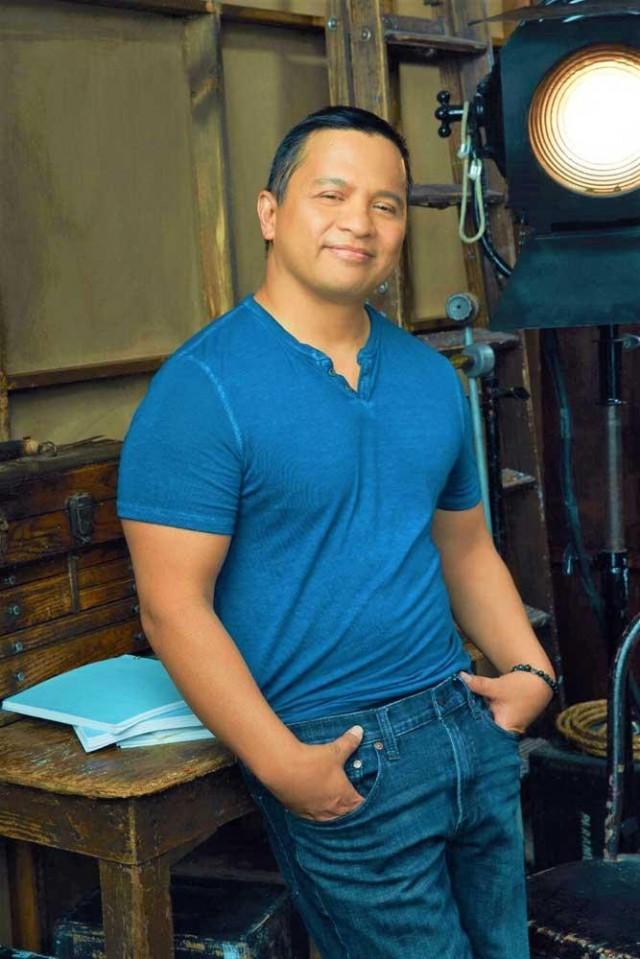
Tell me what you do in this movie as a Modeling Lead-Environment.
I'm the environment modeling lead on the movie and let me just back up and explain to you and to your readers what modelers are.
Modelers are the artists who digitally create characters, and the world in the computer for animated films. And as the environment modeling lead, I'm actually the one who facilitates communication between all the other departments to make sure that our work is tending to their needs, both technically and visually. So that's my role as the environment modeling lead.
How did you end up doing this project?
I actually was on another project, a little film called “Frozen 2.” We were just finishing up on that movie, and I heard that Raya was looking for an environment modeling lead.
I decided to put my name in, because I really wanted to be part of a movie that represented the Southeast Asian cultures. Amongst them, of course, the Philippines. So I submitted my application, interviewed and got the lead position.
What were the challenges of your job? I know some people went to Southeast Asia to do research, take photos or just experience the whole environment.
Yeah. There was a research trip that Disney always does whenever they're wanting to create, or tell a story from a region of the world and Southeast Asia was no less deserving of that. So our research team went there and explored, felt the culture, talked to the citizens, took in the environments and stuff.
But for me, I lived it, so you don't need to tell me about the Philippines and stuff because I grew up there, as a kid.
What were the things that are Filipino or akin to the Philippines that you added in the movie? I know you did the wooden spoon and fork thing in the movie.
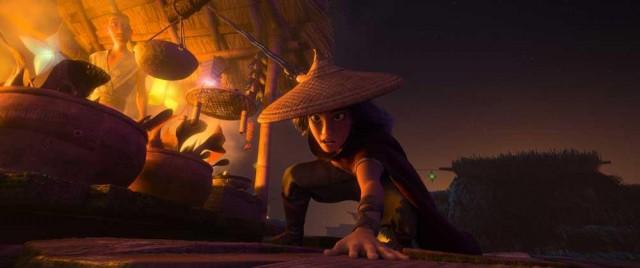
Yes. A staple that's very common in Filipino homes. But there's one particular environment that really takes me back to the Philippines, and that's the Talon market city — I mean, the marketplace called Talon, in the movie.
It kind of reminded me of a palengke, with the stalls, and with the selling of goods, like fruits and meats, and clothing, and stuff definitely reminded me of a palengke. And when I was a kid, I used to go to the palengke with my grandmother and we would go there, and I always ... my memories of palengke were always, it was just crazy.
Everyone was buying and people were yelling and screaming at each other to buy stuff. All of that. All the memories that I had, I just fused it into my work, and I wanted to make sure, working with the art director, and of course the rest of the environment modeling team, that Talon looked lived in, that it represented marketplaces that are from the Southeast Asian culture.
So if you were to see this film, definitely keep your eye on the Talon, because it's really palengke, to me.
Tell me a little background of yourself. Where were you born in the Philippines?
I was born in Manila, and I grew up there as a kid. My grandparents were missionaries and they built a church in Cavite, and we would go to Cavite on the weekends, to do fellowship there. I would sing in the choir, all that good stuff. And then we'd come back to Manila, and then I'd go to school.
You mentioned your grandmother. How did she influence your drawings because you mentioned that you went to the palengke with her?
My grandmother is a big inspiration, like my mom was. They always encouraged me to nurture my gift, because they knew I liked to draw. So my grandmother made sure to tell my mother, "You need to enlist him in art classes and art schools, foster that talent of his and stuff." So my grandmother was a big influence in my career, and she's no longer with us, along with my mother, but they still remain very strong inspirations of my world.
When was the last time you were in the Philippines?
Oh gosh, 1992 or 1993, I think. That's the last time I was there. Unfortunately, my grandfather passed away around that time.
When you go to the Philippines, what are the first things you usually do?
Oh gosh, eat. There's nothing like good Filipino food. And when you're in the country of your birth, that's all you want to do. You want to have some adobo, you want to have some pancit, and there's nothing like it. I love the Philippines, especially our food and when my mother cooks it, it just feels like home, every time.
Food is very important in Raya. They’d been cooking food a lot. Did you make any suggestions?
I didn't make suggestions; the art director usually just gives us the artwork to model. But I did get to model some of the food that you see in the film.
Did you see any of the talents like Awkwafina, Kelly Marie Tran or Gemma Chan?
Actually no. And you have asked before, what was the hardest thing, or the challenges that we did on this film? I would have to say the most challenging thing was working from home because of the pandemic. It was a different reality that we're used to.
Usually it's very interactive, when we're talking about what to model and story plots, and props and stuff. But being at home, and then conversing over online, on Zoom, it was a different world altogether.
But I'm very proud of the studio in that we came together, we rose to the occasion and we met this challenge. Raya was the first animated film that was done at home, at our homes and stuff, and we're very proud of that. That we were able meet that challenge and exceed it actually, because the movie is just beautiful, and it just turned out really great.
So you started working from home since the lockdown in March?
Yes, we did. And it took a while, it was a slow beginning because Disney animation wanted to make sure that there were no hiccups in the beginning, and there were some hiccups, but they ironed it out really quick, and they wanted to be sure that we had the same fluidity that we had at work, here at home. That we were able to work like that at home. Through some miracle, we were able to do it.
And I know that around 400 people worked on the film. How was that? Managing people and dealing with everybody on Zoom must be hard.
Well, part of a successful film, I believe, is having good communication, and I have to give credit to the production team for really making sure that everything moved along smoothly.
Our leaders, our supervisors, my supervisor, Eric Provan, he made sure that he communicated everything that needed to be communicated to our department, and to every modeler. It was a Herculean task to do this production without being in the same building. And I have to give credit to everyone at Disney, all the artists and production people for coming together, and working together, and making sure that the communication was loud and clear.
I saw the name of Josie Trinidad on the credits. How much work did you do with her?
Yes. Josie's great. [But] I didn't get to work with her one-on-one on this film. She did do some storyboarding on the film.
Josie's great. She's awesome. She's going places, is what I'm saying, because she's so talented and I love talking with her.
Aside from “Frozen,” what other projects have you done with Disney?
I'll mention a few of my favorites. “Tangled” was a favorite of mine, that really turned the studio around. “Frozen” was another good one that was a good milestone for Disney animation. “Zootopia” was a good one as well, and “Moana” is a favorite of mine. But I have to say that “Raya” is up there as well for me. It's really a beautiful film and I'm very proud of the work that we did on “Raya.”
And having a first Southeast Asian Disney princess was really significant to a lot of families and to us coming from Asia. How special or significant is Raya to you?
I think, in all the films that we work on, there's always a certain pride that our artists and production people here at Disney animation take pride on, especially if it's a movie that showcases their culture, from Mulan to Moana, there's a certain pride that people from those regions take pride in.
I love Moana, but I also love Raya, and Raya hits a little bit closer to home just because it does represent the Southeast Asian culture. There are elements of Philippine culture that are showcased in the film, especially in Talon, that really reminded me of home. And that's why it's special to me because it reminds me of my family and in all our films, it really is about family. It's about coming together. It's about trust. And for me, Raya is special because it does remind me of home, and my grandmother, and mother.
What advice would you give to aspiring Filipino animators who want to join your ranks?
Don't give up. Don't give up on your dreams. There were many times that I had pursued endlessly and was told no, many times. And it can be a little bit discouraging, especially when it's changing from 2D to 3D and then hybrids and stuff, there's a lot of things going on that gives everyone opportunities, and there's a lot of opportunities right now. So my one advice is to, don't give up, don't quit. If you know what you want, go for it and your perseverance will pay off.
Who or what influenced you to become an animator?
I think, what inspired me to go into animation, first of all, was watching "The Little Mermaid." I noticed that a certain name popped up, and it was Ruben Aquino, and Ruben Aquino is this famous Filipino animator, who animated Ursula, such a beautiful character, well animated, and I couldn't believe Ruben Aquino was in charge of her.
When I first came to Disney and met Ruben Aquino, I was flabbergasted. Here's a guy who came from the same origins as I have, in the Philippines, and he's this top animator that's well respected. It was such a pleasure to meet him. He's such a humble guy, very sweet. He was a hero of mine, working at Disney. I would have to say Ruben Aquino, and Glen Keane also is a very nice animator, very inspiring as well. But yeah, Ruben Aquino would be my first one.
Were you really focusing on joining Disney and being an animator or it happened by accident?
Well, I wanted to be a comic book artist in the beginning. I'll have to be honest. I had a portfolio tended to comic books, and one day, in the '90s, I showed it to a comic book artist from Image, and, he critiqued my portfolio and he said it was great, but he also told me that being in the comic book industry, it's long hours, and you got to be really good. It doesn't pay that much and stuff. So it's not that he was discouraging me. He was just being honest and real.
And then he said, "Why don't you go into animation?" Animation was big at that time, "Beauty and the Beast" was a big hit, and he had a point, and I thought about it. I'm like, "Yeah, maybe I should inquire in that." So I started asking around and I actually met this woman who worked at Film Roman, who does the Simpsons, and she saw my portfolio, and she goes, "Well, you need to redo your portfolio so that way it's more geared towards animation." So I did that, and studied, and went to the school in Santa Monica that taught animation, from the mechanics to drawing from real life. That's where I learned it from.
And then it just so happens that a Disney animator came and did a presentation and I was so blown away, and had a chat with him afterwards of his lecture. And he said, "Well, we have a lot of character animators, there's literally a line out the door, but we don't have any effects animators." Effects animation is basically animating fire, and water, wind, anything that wasn't a character. And so, he gave me advice. So I decided to curtail and gear my portfolio towards effects animation. And a few months later, I got into the Disney training program and became an effects artist.
I was hired for Fantasia 2000, but my first project was Hercules during my 2D days, and then Fantasia 2000, and on. But after the 2D revolution, kind of like fizzled out, and studios were starting to go into 3D, I had to relearn the computer all over, and teach myself to learn the computer. And after putting together a reel and got back into Disney, I just stayed at Disney ever since.
If you had a chance to direct your first movie, what would it be?
Well, actually I was given the opportunity to direct a short that's on Disney Plus right now, called “Lightning in a Bottle.” And actually, it was very humble and I was very grateful that there was a program called “Short Circuit,” that was introduced at Disney, that anyone who's working in Disney animation can submit an idea, and turn it into a short film. And I was fortunate enough to submit my idea in the second round and was chosen to direct a short. And so I directed “Lightning in a Bottle” that's on Disney Plus right now.
I actually do want to direct some more, whether it's TV or the movies and stuff, I definitely have written some ideas down, and also have written a screenplay. So, I have been very busy ever since then.
And the Philippine culture is very rich in stories.
Yes. Definitely. Just telling about my childhood … there's a lot of stories that can be told.
Mikee Sevilla (Animator)
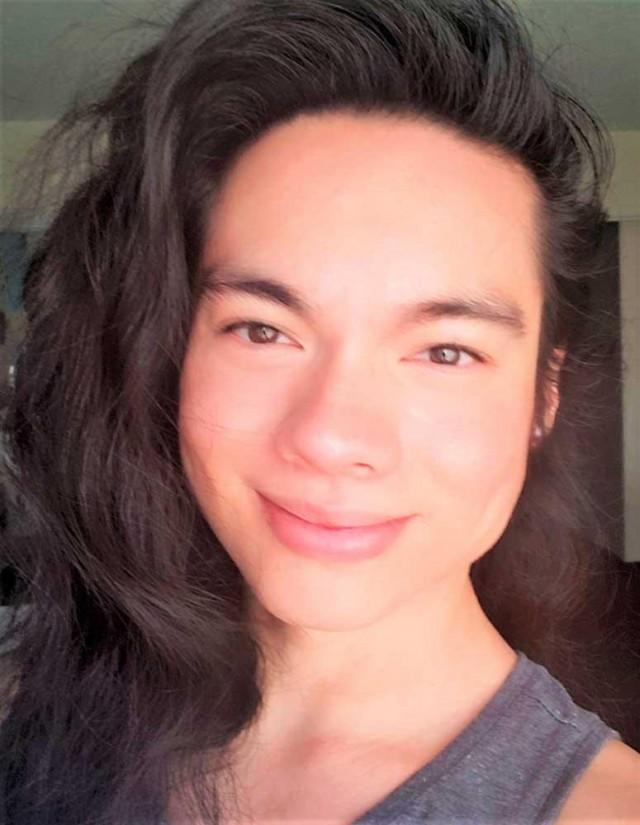
As an animator here in the movie Raya, what were your contributions?
I'm involved with anything that has to do with the characters' performance. So if this is a human character or an animal, we're involved with acting and performance.
What was the significance of having the first Southeast Asian Disney princess to you and working in an all-Asian cast movie?
I'm so excited and I feel extremely grateful and just that Disney chose me to be part of their movie. And I'm excited that Kelly Marie Tran being the first Southeast Asian princess. So I'm so excited for the world to see this movie.
Did you see or meet any of the talents?
No, not at all. This movie has been made entirely from home. So Kelly was recording at her own home and I was animating on my kitchen counter. So, yeah, we weren't able to see each other.
So how do you get inspired by the actors’ facial expressions?
We do have a talent recording. So we do have access to those recording sessions on our computers.
I feel like that's an invaluable resource, watching the voice actors do all these expressions. And we also record ourselves and take inspiration from personal experiences and personal recordings as well.
How was it working with Don Hall and Carlos Lopez Estrada?
Oh, they were incredible to work with. You know how this movie is centered around trust and I feel like our directors trusted us to deliver what was needed for this film. And I just can't believe that we were able to accomplish animating and finishing this movie from home.
What were the challenges you experienced during the pandemic and working from home?
There's definitely technical challenges and animation in itself is hard enough. So having internet issues and technical issues presents its own layer of challenges. But even though we were all working from home and apart, we were somehow able to collaborate and still feel like we were a team and we were together on this.
You’re from the Philippines. What Philippine influences did you incorporate in your animation in this movie?
Well, I was able to incorporate some things that my mom told me in relation to cooking Filipino food. I won't get into any details, because I'm excited for the audience to watch the movie, but yes, there were some things that my mom told me. Filipino cooking advice that I was able to sprinkle in the movie.
What other projects have you done with Disney?
I'm excited that this is my first project with Disney, so it's so surreal. And I'm so excited to be able to work on this film.
How did you get the gig? Did you apply?
I did. I applied through their website and when you apply at a company, you put together a portfolio for them. So I've been working on a personal project that was inspired by Filipino culture and you could see it. I posted it online, but it's about the Bakunawa, so that's the Filipino almost like a sea serpent dragon. And the title was in Baybayin. And it really caught their attention. So I guess that was probably my ticket into Disney somehow.
When was the last time you were in the Philippines?
I believe it was a couple of years ago for my sister's wedding. That's probably the only reason why I would go back now if there's a wedding that I need to attend to, but I would love to go back for pleasure and visit all the islands. It's so beautiful there, I can't wait to go back.
Any particular island that you would want to visit?
Palawan. El Nido, Palawan. That's, that's the place to be. I have not been there, but I'm looking forward to it. And I'm planning on making a big event for it.
Have you met some of the Filipino animators at Pixar or the Pixnoys?
Yeah. Fun fact. I was at Pixar for a month, so I was able to meet some of the Pixnoys there.
And yes, they're incredibly kind. And even the Pixar menu would sometimes have adobo on their menu. And I was like, "What? I feel like I'm in the Philippines again."
What advice would you give to aspiring Filipino kids who want to be like you?
Well, I would say keep pushing, keep learning. There are so many resources available online for free. Just keep hanging on and when it feels like a struggle when you feel like giving up that it won't matter. That feeling of self-doubt is only temporary. Just keep learning and keep pushing until you achieve your goal.
Have you always wanted to become an animator?
Yes, I've always wanted to work in animation. I was heavily influenced by animated movies and video games. I can’t imagine myself doing anything else.
So as a child were you already animating and drawing?
No, that's the thing. I was not the kid who always drew. I decided I wanted to become an animator and I took it seriously when I was entering college and I got my bachelor's degree in the Philippines. And I only started learning how to properly draw, like the fundamentals during my senior year. And so, it's definitely something that you can learn. And for someone out there who feels discouraged, it's a learned skill and you can get better and better at it by just keep doing it.
At what point in your life did you take it seriously?
Well, I guess it was during that time in senior year, because back when I was in school, aside from taking animation for my degree, I was also dancing a lot. So for me, it was like one or the other. I can't focus on both. So I focused my time on animation, because it's something that I really wanted to do.
Have you seen Raya and what was your reaction to it?
I loved it. It makes me cry every time. I've seen the movie when I first started at Disney and it was only in storyboard form. And so it was only drawings and it made me cry so much throughout the film. And see, I just saw it again during our Zoom wrap party this past weekend all finished and it made me cry again. So I am so excited for the world to see it.
If you had a chance to direct a film yourself, what kind of movie would you do?
It would definitely be Filipino inspired. I feel like our culture is so rich and there's so much there. There's a unique perspective when it's centered around Filipino culture. So, yeah, definitely something about the Philippines. — LA, GMA News

