

 GMA Brandtalk
 Tracking
 Archives

Isabel Sandoval on her short film 'Shangri-La,' making it in Hollywood, and representing the Asian-American community
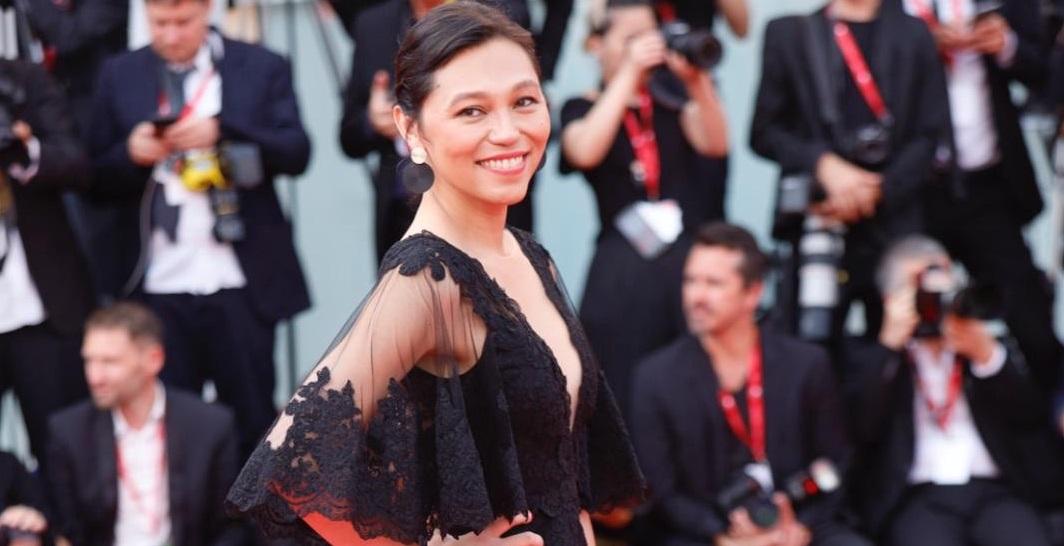
LOS ANGELES —Breaking ceilings and barriers is nothing new to Filipina filmmaker Isabel Sandoval.
The talented and eloquent Filipina auteur became the first transgender woman of color to compete in the 2019 Venice Film Festival with her film, "Lingua Franca."
This year, she will be back at the Lido with her short film, "Shangri-La," having its physical world premiere at the Venice Film Festival on September 1-11.
The film is the 21st entry in the Miu Miu Women's Tales project, which asks female directors to examine femininity in the 21st century. The short deals with forbidden love and racial prejudice.
Sandoval, who was born in Cebu and graduated summa cum laude from the University of San Carlos, is now based in North Carolina, United States.
We recently interviewed Isabel and below are excerpts from our conversation:
You are a groundbreaking Filipino-American filmmaker, an auteur who wrote, directed, edited, produced and acted in the award-winning film "Lingua Franca." Plus, you are also a transgender woman of color which makes it more difficult to make it in Hollywood. But you did it. How did you manage to overcome all these challenges?
I think it has to do with having the audacity and the tenacity to show Hollywood that when underrepresented voices and minority artists and storytellers really take the reins and really take control over the stories that we tell about our communities, that art that we make is truly moving and powerful and transcendent. And it's what I attempted to do with "Lingua Franca," and I am just so pleased and grateful that it's being received warmly by audiences around the world.
Why is it important for you to highlight stories of trans women?
For me it's not just trans women specifically, but more women who are disempowered and marginalized in a fraught socio-political setting that's always been the kind of protagonist that I have been drawn to ever since my first feature. And yeah, my films explore themes of power and privilege and especially the difference, the power differentials between characters in my films.
In "Lingua Franca" for instance, although it has the framework of a romantic drama, within the intimate romantic relationship between Alex and Olivia, because one of them is a trans woman of color and an undocumented immigrant, while the other is white and is an American citizen, the power that they now mix within the confines of that relationship, can serve as a microcosm of the political forces and kind of indifference in the power of the people in America on a wider scope or level.
How difficult or challenging was it for you to be doing everything—writing, directing, editing and acting?
I actually had a marvelous time making "Lingua Franca" and taking on those multiple roles. And it's because I thought of all the creative hats, I took on in making the film as different jobs. I thought it had one job and that is to tell a story and to make the film, and that happens to have multiple facets to it.
Like for example writing, directing, and editing a film to me are just writing the film but in different stages of making it. Writing is of course in pre-production and directing is writing it because I also make changes while I am shooting it, it's writing during production while editing it is writing the film when you are in the post-production stage. And on those multiple [facets], I had to ensure that I was able to translate by vision of the film from the page to the screen as faithfully as possible and without any compromise.
When did you decide that you wanted to be a filmmaker?
I knew at a very young age that I was in love with cinema. I was a passionate lover of film and I remember when I was four, my mom took me to this theater in the Philippines, which happens to be the oldest street in the Philippines. But she took me to see a film starring the Charlie Chaplin of the Philippines, Dolphy, and his son Vandolph at that time, that film was called "Bata-Batuta." I barely remember the details about the film itself but I just remember sitting there in the movie theater next to my mom and of course I was tiny, but just being awestruck at this massive moving image being projected onto the screen.
Shortly after that I realized that I was creative and my creativity expressed itself by me thinking up or dreaming up these scenes in my mind, so it was like as a young kid, I was cutting together scenes in my mind that would form into a film. But it took me a while to convince myself that filmmaking can be a viable grownup/professional career, because it can be so risky and there are a lot of aspiring filmmakers that work hard and for years without any guarantee of success.
That's why my first job out of college was a more secure, like financially secure job, like working for brand management at a multinational company and I realized shortly after that while I was pursuing an MBA in grad school that I can't really pursue a corporate job for the rest of my career and that I am an artist and more of a creative person and that's where I feel the most fulfillment emotionally.
After business school I worked for a digital media agency for one or two years and then I decided to take the plunge and started making movies. And I am glad that I trusted my instinct. So that is taking the plunge by making my first short, which is called "Señorita" and I developed it into a full-length feature which was also called "Señorita."
Those decisions led me to where I am today, by just trusting my own instinct and realizing that everyone has their own path and has to be authentic and true to what, and I know this might sound cliché, but what you are truly passionate about, the universe will conspire to reward you for it.
What was the reaction from your mom when you told her that, "I'm going to be a filmmaker, Mom"?
I am very, very lucky and grateful in that my mom has always supported me from day one. She raised me by herself, she was a single mother. And I think the confidence that I have is something that I owe very much to my mom, because she made me believe and think that I can be anything I wanted to be. And so the reason why I am so brazenly pursuing filmmaking is that my mom supported it and she believed in my talent and my commitment to this dream.
You are an only child as well. How did growing up in Cebu and being an only child raised by a single parent affect you as a filmmaker today?
I think being an only child or raised by a single mother taught me to be independent early on. And it taught me, because I was going to a school that was a Filipino-Chinese Catholic school and how conservative, of course there were some classmates and parents that were talking about oh their parents are not married or she is born out of wedlock, etc. But it taught me to not just accept but embrace and celebrate that fact that I am different because that is what makes me unique and that means my story and my experience is different from what other people's lives are and therefore the art that I produce from being different is going to be unique and original in that sense.
So how was it coming out to your mother? What was her reaction?
I had to come out twice to my mother. The first one was the coming out which happened in College and that was fun because I was ready and in college at the University of Cebu. I was an editor at our school magazine and one of the staff writers was, our families went to the same church together, and so he told his dad, who told my mom about me being gay.
So one Saturday morning, this is like 8:30, I was sleeping, and my mom shook me and tried waking me up and just asked me point blank, like, "Are you gay?" And I told her, and I was still very groggy because I was barely awake and I just said yes. And she just hugged me and said, "No matter what, at the end of the day, you are still my child and I love you and I support you." And I didn't realize until hours later when I was actually fully awake, I thought I was dreaming, that it actually happened, and that I came out to my mom, just like that.
Years later, after having lived in the U.S. but my mom is still living in Cebu, I really decided to start transitioning to gender conform placement therapy and I hadn't told my mom yet, because I wanted to be able to tell her in person. And so when I was taking hormones, maybe three, four months in it, I started seeing bodily changes, my body changing physically, like I was growing boobs at that time, and I was like okay, I have got to take the next flight out and fly to the Philippines and tell my mom in person.
And so I flew her from Cebu to Manila because I also wanted to get her a tourist visa to the U.S. so she could visit me. So we were in Manila for four days, and it took me until the night before I was supposed to fly back to the US, we went out to dinner and then when we were back at the hotel and I just started bawling my eyes out for over an hour before I managed to blurt out the words that I'm transgender and I am transitioning.
She wasn't jumping for joy initially because like a lot of folks, she was very religious. But she was more confused than upset and she told me that, "I might not fully understand what you are going through and this transition process that you are undergoing, I just to make sure that you are safe medically in terms of your health and that a doctor is looking after you and that you are my child and I love you and I want you to be happy." And so that was really an incredible response to have from my parent and I am lucky to have my mom be as supportive as it is.
You are also called the "Queen of Sensual Cinema." Can you talk about how or why you got that moniker?
Oh God, it's funny because I gave myself that title as a joke at first, on Twitter. "Lingua Franca" had a few sensual scenes and then the press campaign, as "Lingua Franca" was coming out in the US, it was talking about how there is very little sensuality in contemporary American cinema and so I say that is why I wanted to depict; in "Lingua Franca" for instance, the trans female gaze or the female character being the active agent of sexual desire, because it's such a weird thing to see. And it is actually quite empowering in the case of single minority characters. I am also doing my own research on films that portray desire very powerfully and originally. And I want to explore sensuality more in my upcoming work. And my sensuality I don't just mean sex scenes, but a gaze and a perspective that admires and appreciates beauty.
Why do you believe that cinema is also about seduction?
Because we want to experience art and cinema is part of that. Because we want to be seduced essentially. Again it boils down to our, I think, innate human need to experience beauty, either visually or musically, because it helps us make sense of our reality and our experience and it makes it more palatable. And just rough living, I think. Before in my earlier features, I tend to explore more darker realities and impulses. But I think starting with "Lingua Franca" I am starting to appreciate incorporating more sensuality into my work because we love feeling that way. I want to have my work elicit that kind of emotion in the audience, either in their experience of falling in love or being infatuated or sexually desiring of what is being portrayed on screen.
When do you think you found your voice?
I think if I were to kind of identify a moment, it's when I was making and editing "Lingua Franca." And it's during that creative process where it was truly intuitive and instinctual and I think it's also because I am a Pisces, that I am at my best and I am at my most and in my most creative element when I just listen to my gut instinct and in my intuition.
While making that I was just, the creative choices and decisions that I made were not always by design or deliberate, but it was just what felt right to me as I was making it. And I was trying to make a film that satisfied my own high standards and expectations of myself, both as an artist and as a cinephile, I am not necessarily thinking of, "OK, I want a film that is going to be making a lot of money," because I was being true to my art and being authentic that way, that's when I found my voice as an artist.
You also represent the Asian-American communities. Can you talk about what makes you excited to tackle this challenge?
What makes me excited is that because I am part of a minority community in Hollywood, like an Asian-American, and Filipino-American community specific is that our stories have not been mined and explored and that we are an untapped resource. There is an untapped potential for our stories and our perspectives to be told.
Very recently I did a short film for "Miu Miu" as part of their acclaimed short film series "Miu Miu Women's Tales," where it is set in the Great Depression and it's an intimate, kind of like an intimate confessional between two lovers during that time. And it was set in California where there were kinds of laws prohibiting white Americans from marrying people of color, including Filipinos. And by having that kind of romantic confessional story that explores that interracial relationship which was illegal at that time and centering it in the Great Depression, I'm able to incorporate my political impulses and my exploration of political themes into a work that on the surface seems lyrical and poetic and sensuous.
I have said a few times in the past that on the basis of "Lingua Franca" and "Shangri-La," this aesthetic style is a marriage of a strong political underpinning or undercurrent in terms of theme, with a look and a tone that's more delicate and poetic and sensuous and that's what I have been becoming drawn to in my work. And I want to approach stories about the Asian-American experience and be Filipino-American in the same way with inspiration and passion and originality.
You directed "Shangri-La," a short film as part of the Miu Miu Women's Tales project. Can you talk about that?
They reached out to me in November, and it was truly an incredible experience to get that call and that invitation, because "Miu Miu Women's Tales" is one of the most acclaimed short film series featuring major internationally renowned women filmmakers. Some of the filmmakers that they have worked with include icons and legends like Agnes Varda, Lucrecia Martel, Lynne Ramsay, Miranda July, and of course Ava DuVernay.
They reached out in November, but it was in the middle of the pandemic. They said that you have two months essentially to finish this film. And I can say about myself as a filmmaker that I thrive and I love challenges. When I was given that kind of parameter, like okay, you have two months to shoot the short film in the middle of a pandemic, and that constraint and challenge makes me step up and rise to the occasion creatively. I also feel like I do my best work under pressure and here it's both the time and constraint of making a short film during the pandemic.
We ended up shooting the short film at a soundstage in LA. I was in North Carolina at the time. So when I flew to LA, that happened to be in December, when that was the time when LA was the epicenter of the pandemic in the US. I had to quarantine for 12 days in a house, take three COVID-19 tests and then shoot it. I was really anxious the whole time because I knew that if I had tested positive the whole production would shut down. But thank God it didn't. I think that that short film came out quite great and it was really a perfect distillation of involving aesthetics as a filmmaker as well.
You are currently in development on your most ambitious feature, "Tropical Gothic," which won the VFF Talent Highlight Award at the 2021 Berlinale co-production market. Can you tell us more about that?
Yes, I have finished writing my fourth feature "Tropical Gothic" and that one is set in the 16th Century in the Philippines, very early on during the Spanish regime. It's an allegory on colonialism and imperialism and it's my own riff on Hitchcock's "Vertigo," which I consider the quintessential male gaze film. I am very much into subverting gazes in cinema, and so this time, instead of subverting the male gaze, it's about the gaze of a Filipina native woman.
My producer Carlo Velayo and I launched it at the Locarno Open Doors project market last Fall and it was selected for the Berlinale co-production market where as you mentioned, won the VFF Talent Highlight Award, and I am very proud of that because it is one of three features that won a development prize, but it's the only one that did not have a European co-producer attached at that point. And it just goes to show that there is a lot of interest when it comes to stories that delve into and grapple with Europe’s colonial past.
I finished it during the pandemic and the pandemic has been good to me in that sense, of course I know on a macro level it's been truly devastating because of the loss of life and livelihood and just the strain on mental health that people have been experiencing. But as an introvert, it benefitted me because the solitude and the privacy and the quiet, especially after moving out of New York to North Carolina, it allowed me to be prolific in my own work and my creative work. So I kept working on "Tropical Gothic" as well as some other projects. I have a few projects that I finished.
You also finished or pitched a new TV series for F/X.
I did and that is in development. It's a crime drama involving nuns, but it's set in the underground queer scene in LA. So that's becoming my shtick, like sex and religion.
How was it moving from New York to North Carolina?
It was a welcome change for me because I had lived in New York for 15 years and I felt that I needed a change of environment and peace. I've also noticed that as I am getting older, I am becoming more introverted and protective of my own privacy and time for myself. And I think it's also very important for artists to have that quiet and solitude to be able to produce thoughtful and meaningful work.
How is it living in North Carolina these days?
It's good. I'm mostly at home because I have been working on a lot of projects. But I think actually, part of the reason why I decided to move out of New York was when "Lingua Franca" premiered in Venice, and for the six months after that, I was traveling a lot abroad to these festivals. And I just found myself emotionally and physically drained that at the end of each day I was at these festivals abroad because I was meeting a lot of strangers. Of course these are cinephiles and audiences who love your work, but it can be draining to me as an introvert. And so by living outside of the city and now that the world is opening up again, for instance, in September I am going to be at the Venice Film Festival to present "Shangri-La" the new short in person. And then I am also going to be in London in October and it gives me a balance between being extroverted when I am traveling abroad to film festivals and when I am shooting something, and being in a smaller city that's more remote where I can recharge as a person.
Where do you think your sense of focus and drive to be creative comes from? Is it from being introverted or is it from being isolated?
I think it's interesting in that we don't really get to choose what we are or what our passions are. Like for example, someone who likes architecture or becomes an athlete, oftentimes there might be a parent or a relative who was into sports or was an architect. But for the most part, we are just born with the passions that we have and what's important for me is that if we are given that passion and or talent, that it's important for our own sense of meaning and happiness that we pursue it.
And that's where the phrase "being true to one's self," comes from, in knowing who are, what you like, what you are passionate about, and hopefully being in an environment that is conducive and or supportive to you personally and your passion. Especially in art. We live in a society at the present moment where professions like being a doctor and a lawyer or an accountant are more rewarded and being an artist is more difficult and financially more challenging. So I'm very lucky to see that my art is being received warmly by cinephiles and by audiences around the world, and that I am given the opportunity to continue making art and do something that I love and that gets me excited to wake up each day.
Did you ever imagine all this success? Did you ever dream of it?
I have to say that I visualized it, and I am only saying it in that it's very important that each of us as an aspiring whatever, aspiring artists or aspiring athletes, that we set aside time to daydream and to really just go for it in our dreams. And I think that's why because I had a clear vision and visualization of what I wanted to be, I wanted to be an auteur, a filmmaker. And because I had that in mind, I projected that in 10 or 15 years that I was making decisions both on a day-to-day basis and a bigger picture macro level, that would steer me towards that destination that I always wanted to accomplish.
Do you think Hollywood now is ready to welcome more Filipino-American filmmakers and Asian-Americans to Hollywood?
I think it's less about Hollywood being ready but rather we as artists who are from the Asian-American community or Filipino-Americans are ready to take over Hollywood. And I think if we just make that step and create art that is truly powerful and unique and provocative and uncompromising, that Hollywood would have no choice but to set up and pay attention to what we do.
That's what I tried to do with "Lingua Franca" and that's remarkable and truly gratifying to see that, because I put myself out there as a talent both in front of and behind the camera. I broke the rules in terms of the stories that were being made and how to tell these stories, that Hollywood is now realizing that creators, to allow them to tell their stories their own way and come up with art that is truly unique and groundbreaking and inspiring.
I hope that the "Lingua Franca" example emboldens and encourages more artists from our communities to do the same with our own work, to break the rules and to defy conventions in terms of what Hollywood deems and considers possible.
If you had a chance to advice your younger self, what would you say to her?
I spent quite a bit of time before "Lingua Franca" came out and I achieved a relative measure of success that it felt like I was being passed by and I was comparing myself to peers that maybe had been more successful and accomplished their own milestones in life earlier on. I would tell my younger self that everyone has their own individual and unique path and it's no use comparing ourselves with other people, because that can only lead us down a road of misery and discomfort. So it's incumbent upon us as individuals to get to know ourselves, our capabilities, our potential and to work every day to do the universe justice in terms of what we were given.
—MGP, GMA News

