

 GMA Brandtalk
 Tracking
 Archives

Jane Campion, Benedict Cumberbatch and Kirsten Dunst on 'The Power of the Dog'
LOS ANGELES — Dame Jane Campion made headlines again this year when she bagged the Silver Lion award for directing "The Power of the Dog," which had its world premiere at the 78th Venice Film Festival.
The talented 67-year-old New Zealander filmmaker, who wrote and directed the western drama based on the 1967 novel of the same name by Thomas Savage, confessed that she fell in love with Thomas Savage's powerful novel.
"It was a rare joy, yet I never thought of directing it with so many male characters and such deep masculine themes," she said. "I questioned instead who Savage with his own ambiguous masculinity would have wanted as his director and slowly I felt him slip an arm around my shoulders; 'A mad woman who knows how to love the story!'"
"The Power of the Dog" features Benedict Cumberbatch as Phil Burbank and Kirsten Dunst as Rose Gordon. We interviewed Jane, Benedict and Kirsten in Venice and below are excerpts of that press conference:
Jane Campion
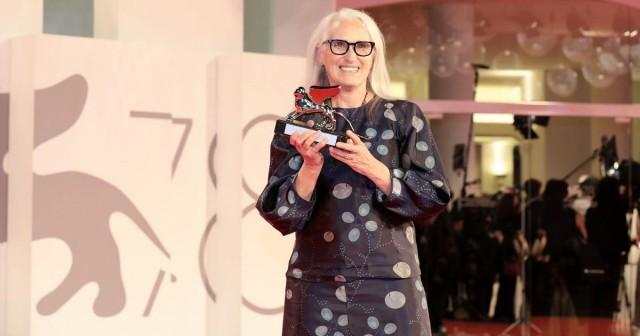
Women have been at the center of your stories most of your career. What spoke to you about this book, the story and these characters to make this shift?
I am a creative person. I don't calculate about gender; it has to be this or that. But I read this book and I just thought wow, this is an amazing piece of literature. It had a really powerful impact on me because I really believed in the world that Thomas Savage described there, I believed he really lived it. So that enabled me to really travel deeply into it. I just felt the last section of the book was so exciting and I finished it and remember thinking generally I hardly ever finish novels these days, but this one I was very immersed in. Then I just thought, oh good book.
But over the next few weeks scenes and themes from the book kept coming back to me, so that I couldn't forget it. I realized then that this is a really deep piece that works on the psyche and it’s very interesting and very different. Slowly I just kept taking steps closer towards finding out who had the rights, which is Roger Frappier and trying to arrange a meeting with him in Cannes. Which we did.
How was it making an American West in New Zealand because the landscapes in your films are always sublime and there is a real sense of place in the Western?
There are parts of New Zealand that really are so empty. To find 1925 Montana in Montana, it would actually be more difficult than where we were in New Zealand in the Hawkdun Range and the Ida Valley which is really empty, really a beautiful forgotten landscape. It really gave you that sensation when you were standing there, and you looked around 360 degrees and you just couldn’t see any civilization. It really felt like you were on a little boat in the ocean, except you were in a landscape.
Actually, we chose a location that happened to have the highest wind value of anywhere in New Zealand, which is anywhere a very windy place, so it was devastatingly difficult to both build and shoot there. But I guess it had that extreme weather because it was so isolated, because it did have strange landforms, like the wind just came over those hills and sometimes we had trouble standing up.
It has been 12 years since "Bright Star." So, what made you decide to return to a feature film in this case and was there at any point of you entertaining the notion of turning this into a TV series?
I had a great time working with the series and I loved the collaborative quality of co-writing and co-directing and creating worlds. But it's also so much work. I think the thing I really love about the series is creating the world and the tone and then you do six hours more and more.
In a way, I was beginning to think two hours was really beautiful. Two hours is like perfect, and I noticed myself also on the Netflix online platform choosing to watch features more than ever. And I think the discipline and the rigor of those two hours was something that I was excited to go back to after my sojourn.
You are the first female director to win the Palme d’Or and it has been more than 30 years ago. I know you for your political and feminist statements so what would you say has to be done so that female directors can come to the forefront of cinema in festivals in competition?
To me, I think the girls are doing very well. A woman just won the Academy Award and then last year at Venice, Chloe Zhou and then this year at Cannes. So, I think once you give them a chance, there is not going to be much stopping them. I say that in a gallant way, but I still know that the statistics are not in the favor of women and there are still much less women. The great loss for everyone is that there's not just enough feminine voice and narrative describing our worlds, describing who we are so that we come to believe that all of us are a patriarchy when actually that's not the case.
Women do think differently and that is what is so beautiful and really interesting. We have seen it a lot more on television because women are really dominating that field and sharing really unique and edgy views. All I can say since the Me Too movement happened, I feel a change in the weather that's absolutely substantial like the Berlin Wall coming down or the end of Apartheid for us women, that they are emboldened and supported by not just each other, but by the men as well, that people can see how unequal and unfair it is.
The film is really breathtaking with the scenes of New Zealand and the scenes in the saloon. What do you think about the film, that people will watch it on Netflix, and what will you do to make it come to the cinemas?
One of the great things I think about working with Netflix is that they do give cinema makers like me an opportunity to work with a budget I haven't had the chance to work with before to fully express my vision. I am so grateful to that; they are actually working in a way like the Medici's or something. Fortunately, they value artistry and that's a great thing.
We have the chance to screen it both in cinemas, where we can, and they make that possible by giving a two- or three-week corridor before the film goes online, and then even still the film will be available to be seen in cinemas. People will choose to do that as a party event, go out, like people in book clubs and then they go and see the movie.
But I think one of the reasons I was drawn to telling this story too is that I felt it was like a piece of event cinema, that it's got the scope and also a tight intimate story I hoped that would make it something that people would make the effort to go and see in an actual cinema, because that's where I fell in love with cinema. Naturally my big desire is to feedback into that initial inspiration.
Benedict Cumberbatch
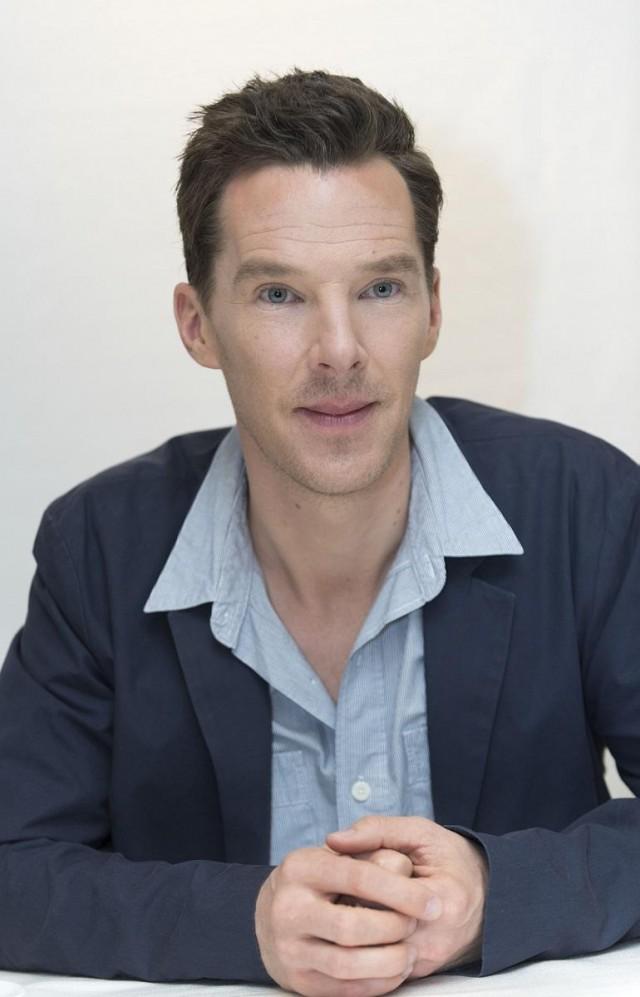
Since Phil, your character, seems to be an alpha man, at times he is very aggressive and very competitive, can you share your opinion about toxic masculinity and if it is a redeemable quality in him maybe? What do you think of the shift of power in the relationship that we see in the movie between women and men?
I think he does for me; the toxicity is something that is a product of his nurture, his upbringing, his circumstance, it's nothing that's arrived fully fledged, it comes out of a moment and a moment and a moment. So, I can understand him; I can look into that and appreciate it, not condone it, but understand it. So, I don't think it's redeemed by that, it's part of who he is, part of his flaw, part of his personal tragedy.
I can understand someone who is defensive, someone who is anxious about everything they have built to be potentially taken away, who is lonely, who is repressed, who is feeling isolated in his circumstance and everything that he has tried to create that is authentic in his life when there is a center of authenticity that can't fully be revealed.
As far as how it speaks to toxic masculinity in the world, if you go towards it trying to understand it and acknowledge it, that is the only way to bridge it and change it really, you can't just oppose it. It's fuel on the fire if you do that, you have to understand why these damaged people are causing damage to others and themselves. Whether those are world leaders on a stage, strong men of politics that have risen again in recent times or whether it's something within your own life or culture, it has to be addressed and challenged but it has to be understood. It's not just about locking the monster away and throwing away the key, otherwise it keeps recycling.
You have played a bit of a bastard with breathing fire for Peter Jackson and now you are playing another one for another New Zealander. You normally play nice guys. So how was it to go to New Zealand and simulate Montana and also play the bad guy?
Yeah, I have a problem with that kind of simplistic duality, not to turn too pompous about it, but I think he's just so complex. Once you start understanding someone, he can't become just a cookie-cutter antagonist bad guy. That's kind of the beautiful poetry and complexity of it, of the whole situation. What Savage explores in the book as well as what Jane has made in the film.
I loved going back to New Zealand. I couldn't get enough of it. It's an extraordinary country; it held us in a very precarious moment in our human history as a family at that point, my wife and children and my mom and my dad as well. So, we were very, very fortunate to be together, fortunate to be in that country with those people. I will happily go back to playing a cookie-cutter villain if you want me to; I mean any excuse for me to go down there. It's a very special place to be we felt very privileged to be welcomed and make our home there for the duration of the filming.
What makes a Jane Campion film unique?
When you meet Jane, you have all the baggage of her iconic status in cinema and the weight of that. Then who walks in the room is this delightful human being who is collaborative and frail and is interesting and as humorous as the rest of us. Still there is just this underlying alchemy that she doesn't let on too much, because she is very modest. But it affects everyone, not just in the film, you see it with the crew, you see how hard they worked to make it the best possible shot, every single moment of that shoot. That admiration comes from pure respect and how she is, who she is as a human being and her artistry. She's great fun to be around.
It's freeing, it's a freeing experience. You want to please; you want the experience to match the expectation both for yourself as an artist but also for the person who has put their trust in you. When it's Jane, she gives you every facility to go there, whether it's introducing you as a character to the cast and crew and saying you will meet Benedict at the end of the shoot, just allowing you to be that character until the end of production. Or whether it's facilitating an expectation of a character before production has begun by going to Montana, by getting involved in roping and riding and ranching and just having an immersive experience where you are free to express it as fully as you can within the paradigms of her good taste, it's a great experience. But she's also really good fun.
Kirsten Dunst
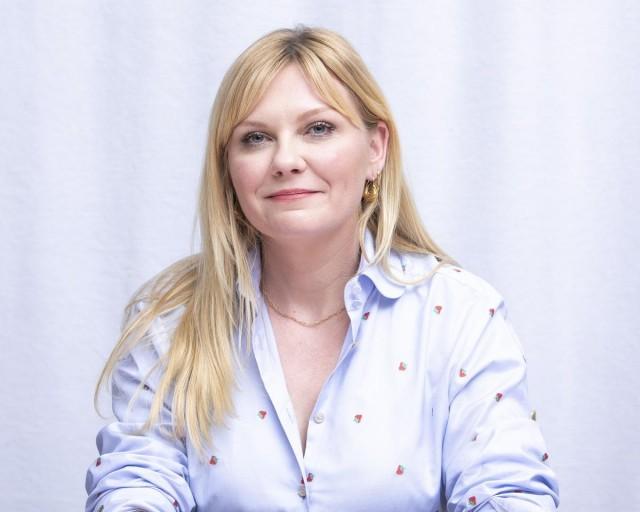
Your character Rose is the target of Phil's frustration, his self-hatred. How did you work on a character who is the receiving end and made her real?
It's interesting, Benedict and I didn't talk to each other on set at all. We almost felt guilty if we were like hi, hi. We kept our distance. A lot of my scenes aren’t even with him, so I had to create my own demons and figure that out for myself, because there's not a scene where we fight and it's very few exchanges. The piano scene, his artistry kind of trumps mine and I also feel like Rose is a little bit representing all the pain that is inside of him in a way too. So, I saw it as a bigger picture of this relatable pain of isolation of being gaslit by someone.
Can you talk about what makes a Jane Campion film so uniquely Jane and why it's perhaps like nobody else's work?
There's definitely a sexuality in Jane's movies. There is. Listen, you make a scarf around someone's neck that they are connecting with something magical. I don't know, don't make me feel bad about this, but there is!
There's a sensitivity and a rawness to her characters and a female watching her female characters over the years, they all feel like real women to me and the kind of acting and the kind of actors and the kind of performances that I aspire to as an actress.
—MGP, GMA News

