

 GMA Brandtalk
 Tracking
 Archives

Fil-Vietnamese Frederic Aspiras of ‘House of Gucci’ on working with Lady Gaga, getting an Oscar nod, and visiting Batangas

Los Angeles — The 94th Academy Award nominations announcement held virtually recently at the crack of dawn gave us something to be excited about: Frederic Aspiras, the Filipino-Vietnamese hairstylist of Lady Gaga, got a nod for his work in Ridley Scott’s “House of Gucci.”
Aspiras, whose late Filipino father hailed from Batangas and whose late Vietnamese mother owned a hair and makeup salon, became the second Asian American to be nominated for best hair and makeup for the Oscars and the first Filipino to be nominated in this category.
In this exclusive, he talked to us about his dream-come-true nomination, working with Lady Gaga, the influence of his late mother, and his advice to aspiring hairstylists.
Below are excerpts of our conversation with Aspiras.
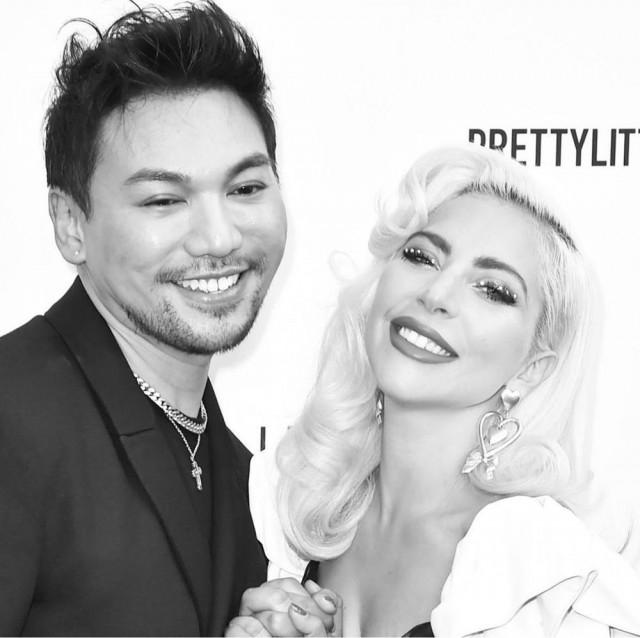
Are you aware that you're are breaking barriers with the nominations — you're only the 2nd Asian-American to be nominated for best hair and makeup for the Oscar and the first Filipino to be nominated in this category! What was your reaction when you heard about your nomination?
First, I want to say “Mabuhay!” to the Philippines. I am so excited to be here this morning to talk with you and to share my joy, a milestone of a nomination. I am very honored.
I posted a video of me crying because it was such an authentic emotion. I always dreamt of becoming an Oscar winner.
When I heard my name, I was in shock and I let out that huge scream and I cried for like a good long period of time because I just thought of all of the sacrifices and the work that got me to where I am today. If you can see it now, I still am just searching for the words [to explain] how I feel. You can see it in my face. Every time I look in the mirror, I look at my face. I'm like, geez, I just can't believe it. I'm blown away.
What was the first thing you did and who was the first person you called or texted?
I called my sister first because we share such a very tight bond. We cried again and we talked about our mother. We talked about how much I used to dream about this as a kid, doing what I do.
Then I got a call from Gaga right away just to congratulate me, and I was really surprised that Gaga would call me right at that second to just congratulate me.
I felt a little bit of sadness but then she is such an amazing human being that she shared her wisdom and her joy for someone that she's worked with for over 15 years, that she can still make me smile and even make it about me and about all the hard work that we put into this film.
I am sharing my award (nomination) with her. She keeps saying no, this is your time. This is for all of us. It really is.
Can you tell us how you started working with Lady Gaga and what is the secret of your long relationship?
There is no secret. If you can see what she wrote about me—we're open about our friendship, our process and the house of Gaga. We are such an amazing family, really are, and we love each other, and we work with each other, and we respect each other very well.
That's what longevity is about when you work with somebody. You're not just working with somebody, you are invested in that person's life. When we started working together very long ago, we were both somewhat starting our careers, almost like a very spontaneous kind of way. There was no like, oh, I need to go work with her.
It was just a natural match. My agent, Ken Melvin, whom I’ve been with forever, called me one morning. At that time, I was working with Paris Hilton for years. But he said, "Do you want to work with this new artist who's coming out? She's going to be great."
I said, 'sure' and it was Lady Gaga. I saw her on stage the night before at the VMAs. I was like, whoa, okay. So, the friendship started with us, because we are both interesting in our dynamics, or the way we look at a project, or art, hair, clothing or makeup. We look at it at such a different perspective.
I think we share that same creativity, that desire to fulfil our soul and to bring happiness to so many people around the world. I think that's part of it.
We also have the same work ethic. I can only imagine her brain, like I can understand it. Hopefully, I can help her bring to the stage what her vision is.
You've worked with her in almost all her videos, her tours like Monster Ball Tour, and films like “A Star Is Born” and TV series like “American Horror Story.” How different was your experience with her in “House of Gucci”?
The difference is very clear. She's like, "you've done every look that I've ever done. I don't want to look on the screen and see Lady Gaga." So that was the hardest thing to do, because you had to erase all the iconography and you had to start. There was not a lot of photos of Patrizia (Reggiani). I started studying her hairstyle. I had to start with really authentic researching and talking to Italian women. I had Zoom calls and I had meetings with people, locals that used to live there.
Before we went to Rome to film, I watched a lot of Italian films, Fellini. There wasn't a lot to choose from in terms of American iconography of Italian women. So it was really important to do extensive research on what would an Italian woman’s lifestyle be like, what type of music would she listen to, culturally, to find the exact look that would portray the first image you saw of Patrizia as a young woman in the film.
Because there are no films of Patrizia when she was a young woman so that was the challenge – to merge the two together, to make it look as real as possible, as honest as possible.
To map out those looks, I went page by page on the script, mapped out every hairstyle, every look chronologically from the early '70s to the late '80s — I mean, three decades.
It took months of preparation because I wanted to get it right. I wanted to do the character justice. Also, because Gaga is such a very talented actress and the way she just pushes her whole soul into a character and becomes that. She lived as Patrizia for almost a year with her dialect and started to really prepare for that. I've never seen someone so determined and so magical; she was not even Gaga at home.
When I saw her here, we would test hairstyles out, even before I made 15 wigs for her to try just so she'd get into the character. There was a lot of that, just the nuances, how she's going to feel. So, it felt super natural on camera, like this was her hair, and this is how she would've had it. This is how she would've styled it. It just slowly progressed in the film until you saw the real Patrizia on film. So that's how we laid it out.
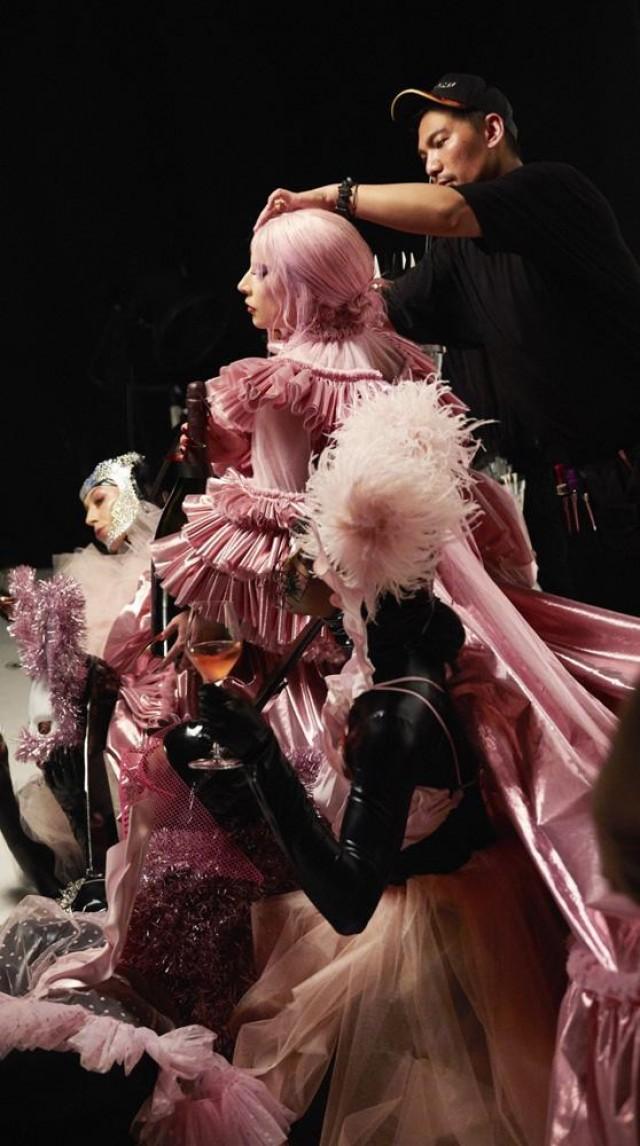
Can you name three memorable looks that you have created for her?
Oh, no that's a hard question. Everyone asks that question even in her catalog of looks. There were 54 hairstyles... I would have to say the one that was the most challenging to convince everyone was the perm. But if everyone knows from the early '80s, that the perm was considered such a luxury thing to get.
At that time, Patrizia was starting to become very wealthy. She was married to the family so she had to look the part. I had to convince when I tested the perm, a real perm the way they did it back in 1982, really frizzy, really big and Gaga saw that wig on her mannequin head.
When Ridley saw it, he was like, "Oh, I don't know." That's why he said only two wigs and make it really pretty.
I'm like, "well, the '80s was really a pretty decade when some styles are a little questionable." So, to convince them, putting it on her head, selling her my idea, selling it to Ridley. I mean, every day that type of challenge was like, okay, so what look stays? Then what's the casting look like? We planned it right, down to the nail color, and then we presented it to Ridley.
But right before we shoot it, it had to be right. You can't just put on a glue on the wig and all those four hours of preparation. Then like, "Oh, we don't like it. It doesn't shoot well."
I did the preparation because I read the story. I read what her life was going to be like, this is what it would look like. Just naturally she put it on, and she was like, "Patrizia." Then she was like, "In the name of the Father, the Son and the House of Gucci." That was exactly what it is. That iconic scene now is like, I couldn't imagine it if it was a different hairstyle.
What was the most memorable, challenging, or difficult part in your journey to become the accomplished hair stylist that you are today?
I think what made me better are the challenges I have faced in life. I think without them, I would not have become the artist I am today. The kind of person I am in my heart and how I create things. I work from my emotions and I work from my heart.
My mother passed away about six months before we started filming this movie. She was a hairdresser and she would've been so proud when she saw all the work that I put through to create these styles.
I believe that when you create hair or you do someone's hair, or how you make them look, really emulates their emotions and how they feel. So with Gaga, we worked every morning, right before we got on set, on how I was going to style her hair based on how she was going to play the role.
That's how brilliant her mind is, because she wanted us, her makeup artist and I, to understand how she was going to play the role so we can properly style it. But it was not easy every day to persevere and push.
A lot of people who are starting out are going to face a lot of rejection, or they're going to face a lot of obstacles. That's part of it. Life is not about just everybody's going to love what you do. You have to do the work. You have to prove yourself and what you know. You have to honestly understand your craft.
That's how I'm going to build my confidence and be able to face the world again, and be able to put out art, and put out anything. It doesn't necessarily have to do with just being an artist. It can be everything in life, what you want to achieve. I say that to people, a lot of the fans who've written to me. They're so nice and so sweet because they've written to me. A lot of her fans now, I've grown up with them.
They've been with her 15 years now. A lot of them were really young at that time. It's so sweet because I get messages now from them saying how they have been so inspired by my work and have my passion and how liberating it is to them. When I create something, you can feel my emotions when I do that. Now they're hairdressers and they're successful. They're doing fashion and they're creating work.
I'm like, whoa, they're getting some great stuff. They're taking it to the next level. So, it also puts a little bit of fire under me but it also is so really amazing to see them just thrive. They are photographers and makeup artists and this endless community of love and kindness, which is part of this whole community of “Little Monsters”. And “Little Monsters” are so sweet. Her fans are the best. And it's really cool.
You are Filipino-Vietnamese. How is it growing up in two different cultures?
Delicious! There's so much good food. Asian families — I compare my family to my upbringing to other cultures I've grown up with — it's very different. Our families, our culture has a lot of standards. We strive for perfection. My parents did that, but they allowed me to breathe. My father, he was really an artist who played a lot of music, he was really animated, talented and musical. But he also was really good with his hands and fixing things.
My mother was really smart and intelligent. Then there's me. They allowed me to make mistakes, which I'm very fortunate about that. But they were like, you always have to remember to take care of yourself.
I could hear my father say, "You need to take care of your health. Be nice to people and be kind." My mother was like, "Don't let people hurt you or take advantage of you." They talk about these things because of what they went through, coming here to America and dealing with a lot of the oppressive things that they had experienced as refugees of the country from the Vietnam War.
My father was a Filipino GI who dealt with the things that he had to deal with as he grew up in a non-inclusive society. My mother being an Asian woman who started her own business – it was so monumental in the late '80s, '90s.
There weren't many at that time. Now there are tons of hair salons and nail salons. She taught me that you have to work hard, you have to always strive to be the best because things aren't going to come easy for you. I didn't understand that until, as I got older. I had to understand that. As an Asian man, I know I received rejections because I didn't fit into some type of stereotype. I literally learned later on because this industry is based on look and stereotype.
For me, that type of mentality was like, I'm going to prove you wrong. Time and time again, I just put my head into my work and strive to be good at what I was doing. So, there was no question about what abilities I had. You can never take away your talent. That is a person’s strength. Everyone is talented. You just have to find that inside you and really hone it. That's the one thing that no one can ever take from you.
Have you visited the Philippines or Vietnam, recently?
I have been to the Philippines. We were fortunate enough when we were on the world tour for the “Born This Way Tour” with Gaga that I got to visit my father's homeland. My father's from Batangas and his family is really known in Manila. I remember my father talking about how he used to go fishing and go to Batangas and it's so beautiful.
I have all my uncles and they all live here now but I went back, when my father passed away in 2007 and his ashes were taken back home to Batangas and to his family and put there because that was what he wanted us to do.
So, I went to visit and see his village. It was such a beautiful moment because I just sat and remembered. But it was such a short visit and I want to go back. I want to see so many people.
I want to visit Vietnam but it's been so difficult with my schedule. I haven't been there. For my mother, it was such a difficult situation for her to leave her country during a war. It was going to be very hard for her to go back and to see it completely different.
I'm so proud to see where my mom and my dad came from. I’d like to visit the Philippines again and see more of the Filipino culture. Hopefully, I can see more of my family there.
You mentioned your mother. What kind of influences did your mother have on you becoming a hair stylist? And at what point in your life did you decide to become one?
My mom was a very hardworking woman. I look at that woman and just like, geez, she has done everything she could for her children. Both of my parents did. She did a lot. She had seven children. I was the last one. So as the youngest kid and me being different and me being the kid who was not like the rest of my brothers and sisters, she honed in on that.
She tried to exert a little more effort on me because she wanted to protect me, I guess. When I was young, my mom started her own business. She was a hairdresser. She brought me in to help clean up the house. I saw how she interacted with people and they loved her.
They really loved her. She was so gentle, sweet and lovable. They used to call her Miss Suzie all the time. That affected me and made me think about the humanity of people and life. I learned that everyone is different and everyone has to be treated the same.
She would sit down with every single person, no matter what struggles they're going through in life, and treat them with the most loving and compassionate heart.
Then, I just started to watch her and everything she did. I didn't really learn about the technicality of it. I just started to do it. I did make-up, too, and I would do it on my sister. I was just 12 or 13 years old.
My mom was not saying anything. Then one time, she was like, "Why don't you try it on me one day?" Then I did it! Before you know it, I was 13 and started to do stuff at the hair salon and she would teach me and do wet sets and all. They don't teach that anymore, classical hair styling, which was so great.
She wanted to be like all the rest of the hair salons. She wanted to be like that. But she saw in me and that I could take that to the next level. I wanted to do that in fashion. I ended up doing make-up and retail and I did all the stuff. But she really was the one who influenced me a lot in terms of hairdressing.
She really saw that in me and I didn't want to do it for a while because of the stigma of being gay and just being ashamed of that, which was so nonsense. That has nothing to do with your talent and you should be proud of that. My mom was proud of me and I was very fortunate because of that.
To honor your mom, you started this ICAN Project, which helps single mothers start their own businesses. Can you talk more about that?
Two friends of mine who are like family to me now, Paula Cantu and her sister Ross Cantu, started the ICAN Project, which I founded.
ICAN Project does amazing work in helping Indian reservations and single mothers. They knew about my mom and they knew how much my mom was a role model to a lot of women out there who wanted to start their own business and had children and didn't know where to start.
I wanted to give back in honor of my mom, and honor a lot of women out there who are struggling to make it, to start a different life for their children.
If my mother didn’t have this salon business, I would not probably have been a hairdresser. She wanted to make a change and that's what I want to do for another family. I want to do that for other women who are out there who need the help, who need the guidance and then need a little bit of funding to help them with the education, tutoring and mentorship.
That's what the ICAN Project will help you do. I'm very proud to have partnered with them to start this grant and I'll do it every year around my birthday, around my mom’s birthday in honor of her. We collect money and donations so that we can help a lot of women out there.
Why do you think representation in Hollywood is so important this day?
Absolutely, it is important. I feel that especially now. Asian representation is so crucial, to be multiculturally diverse and a multifaceted society. It's vital that we amplify our voices and share this story. This is why I'm here talking to you today. I wanted to share my story so that someone can see this and see someone who looks like me and have similar stories like me.
I'm not the first refugee or whatever but I'm at this point where now I have a platform and I want to use it to help bring light and positivity to my heritage, to my community and as an Asian American. I speak a lot to the young and inspiring artists, striving to make an impact in this country to do more. There is more that we can do. There is more you can achieve. We are conditioned to be a doctor or a lawyer because they are seen as being successful.
But there is more to that. There are different endless possibilities you can try. There isn't a lot of us Asians in this industry who get recognized but there’s a lot of us. There's Tym Buacharern who is just very successful, a very talented make-up artist who has done the “Dreamgirls.” He's so successful. He reached out and congratulated me. I am so proud to be able to give back this way and to be able to represent my community.
What would you advise the upcoming young, aspiring hairstyles want to follow your footsteps?
First of all, listen to your mom. I tell a lot of people to be yourself. It really is important. Stop trying to strive based on my path. My path is my path. My journey is my journey. Your journey is yours. Your time will come. You just have to wait and be patient. It will happen because if it happened to me and I waited this long, it could happen to you too. It doesn't have to happen when you're 20 or whatever.
Discover, learn, really grasp and make a name for yourself in this community before you aim to become the greatest because to be able to do all that, you have to master what you do.
That's the great thing. In order to sit here and be able to talk about my work with honesty, you have to have the work behind you. No one's going to just give you a handout. You really have to grab that. And that's what I would say.
— LA, GMA News

