

 GMA Brandtalk
 Tracking
 Archives

Gugu Mbatha-Raw, Jessica Plummer, Ben Hardy, and David Oyelowo on their latest thriller 'The Girl Before'
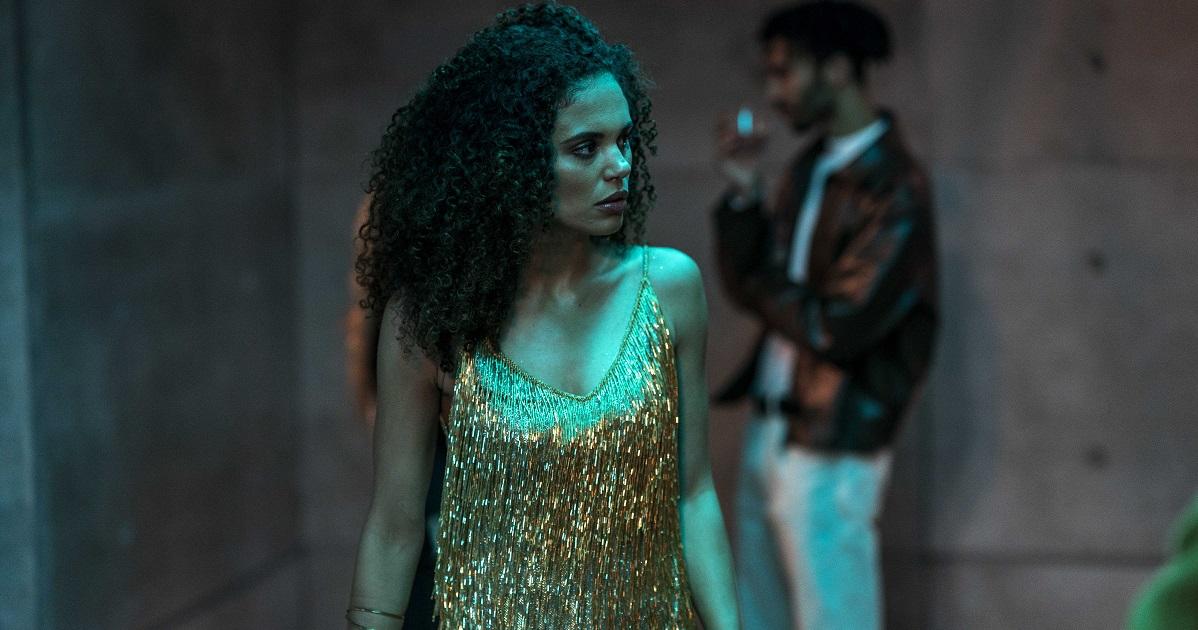
LOS ANGELES — Would you live in a house if you knew somebody died in it? Or if the architect and seller of the house gave you a number of rules to follow? What if this dream house has all the technology you need to make it user-friendly?
This is the situation confronting the characters in psychological thriller "The Girl Before," a four-part television thriller adaptation directed by Lisa Bruhlmann and created by J.P. Delaney based on the 2016 novel of the same name by Delaney.
It stars Gugu Mbatha-Raw as Jane Cavendish, a single traumatized woman who falls in love with an extraordinary minimalist house built by architect Edward, portrayed by David Oyelowo. She decides to move in and stays even after she discovers that somebody died in that house.
Jessica Plummer, who portrays Emma Matthews, also stars as the partner of Simon (portrayed by Ben Hardy) who moved into the house three years prior to Jane.
Below are our conversations with Oyelowo, Mbatha-Raw, Plummer and Hardy about the show, the house, the director, among others.
Gugu Mbatha-Raw and David Oyelowo
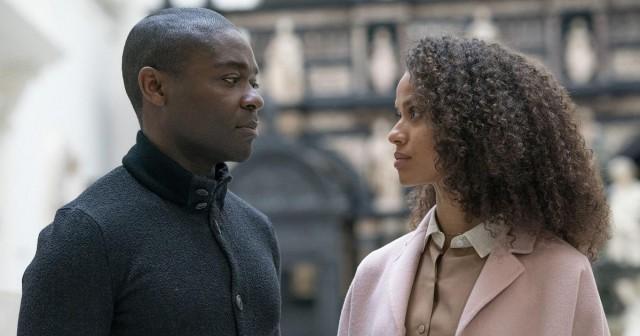
Would you ever consider living in a house under those conditions?
Gugu: You see my face? I'm like, no way. No way. No, I couldn't. I couldn't handle it, I don't think. Not with all those rules. I'm not messy, messy, but I need to be able to have things out. I need to have books. Yes. So, no, I definitely couldn't.
David: For me, maybe when I was single and for a brief amount of time, it would've felt cool. But now that I'm a father and have pets, it is just the silliest house to have any kind of life that involves children or animals or anything like that. But there's something quite sexy about it, maybe for a weekend, but, no, it's not my jam.
Gugu, you reached out to David for this part. So, I really want to know, what is the kind of creep that you saw in him that you thought would make him perfect for this role? I know you're friends from before.
Gugu: Yeah, I was like, "I know just the guy." No, just kidding. No, honestly, I know that sounds funny. But I knew that obviously David brings a gravitas and an elegance, which is innate, for the character of Edward. The creepy stuff, well, I know David's a brilliant actor. I thought that this was a great chance to see him explore this darker side. It was nothing personal. All in the knowledge of the fact that he can transform and has range.
David: Well, done, Gugu. Very good. I'm so glad you asked that question. I have been wondering. No, it was an amazing opportunity. So often as actors, especially based on the work you've done, people assume that's what you should keep doing, or that's what you want to keep doing. If you're someone who really is enamored with the opportunity that acting affords, you want to keep testing yourself. Gugu recognizes that as an actor herself, and she certainly gave me that opportunity with this.
The house shows that technology has already taken over our lives. So, do you think technology is a blessing or a curse?
David: It's both, personally. There are amazing things. Not only technology, but social media, and all these technological advances we have. But they also afford power, and that's the thing that my character uses the technology for. He uses it for control. He uses it for power. He uses it for dominance. But it's on the basis of his own trauma, and a selfishness in a sense. So, when these things are used selflessly, they're a blessing. When they're used selfishly, they're a curse.
Gugu: I tend to agree. It can be used for good or evil. It depends on the intention of the person using them. Technology obviously is created by humans, so, obviously there are many great ways to connect on the internet. But, again, there's no real replacement for human connection. That can never be really replaced in any way.
What five things would you bring to this house that you can't live without?
David: It would be all things that would not work in the house. So, I would have to bring my wife. She would hate it. I would have to bring my kids. They would destroy it. I would have to bring my dogs. They would poop all over it. It's not that I love mess, but I do love things. One of the things that Edward doesn't like is things. He wants to see as little as humanly possible. So, in three, four, five, six, 10, 20, there are just too many things that would not make it work for me.
Gugu: Similarly. I also feel like beyond just things, you need a place to have a soul as well. That's the one thing perhaps with Folgate Street, to me, as a place to live, it does feel a bit soulless. That, to me, comes from character and personality. Obviously, you could say that the house does have a personality. It's Edward's personality. But, for me, anything for me that gives a place a soul. Plants. I can't really live without plants, I've discovered. Certainly, in the pandemic. House plants. There's not really anything in the house. Things that give the place life. Books, obviously. Similarly, to David, not the children and the pets, but I think people. People whom you want to have around you, and I feel like with all the rules of the house, with no parties and all of that, to me, it's a classic party house. So, I'd want to bring friends into that house to give it life.
David: The thing to say as well, I know we're joking about the silliness of the house, but the reason why certainly Jane, Emma and Edward gravitate towards this kind of house is because they are all people who have endured certain traumas, have made them feel the loss of control. To be in a very controlled environment, even though it is also a controlling environment, gives the optics of safety. That’s why so few people over the course of time want to be tenants at the house. Edward has only had two tenants in three years in terms of initially Emma and then Jane. They are very specific women in terms of the things that they have endured, what they're looking for, who they're looking for, why they're looking for those circumstances. I do think the show does a pretty good job of not only placing them in that home, but really exploring the reasons why they would gravitate to both that home and this man at the same time.
David, from your answers, I get the feeling that you are a bit the opposite of Edward. So, I would like to ask you how it is for you to be the guy who's under suspicion the whole time during the entire show of committing the crime?
David: The joy of being an actor is to hold a mirror up to humanity. I have no interest in playing myself, and I'm deeply fascinated by human beings. Our job as actors is to not judge the character, but to explore the character, tell the truth of the character. In not judging the character, I can't afford to say Edward is those negative things. That I can totally see why an audience or the characters he's interacting with, but, personally, I understand the benefit of having certain parameters in your life, certain rules that you live by.
Again, a bit like the technology thing, if they are rules that are selfless, loving people, treating people how you would want to be treated, that's a good rule. But if it's about I will not let anyone hurt me, come what may, then that's not such a good way to live your life. I like to think I'm different from Edward, but I tried to understand him. I tried to tell the truth of him, and that's the opportunity you're afforded over four hours. In a film, maybe he would just be a bit more of a quote/unquote "baddie," but with four hours to explore, there's just more nuance for all of the characters.
Three of the four leads have all suffered from serious trauma and emotional baggage. As you said, you had quite some time to deal with it on the show, and deal with it in a good way. How did you choose how to deal with those kinds of traumas on this show since a lot of people watching may have suffered from some of these traumas as well? It's both important for them to see that, but also it can be dangerous if you do it in a bad way.
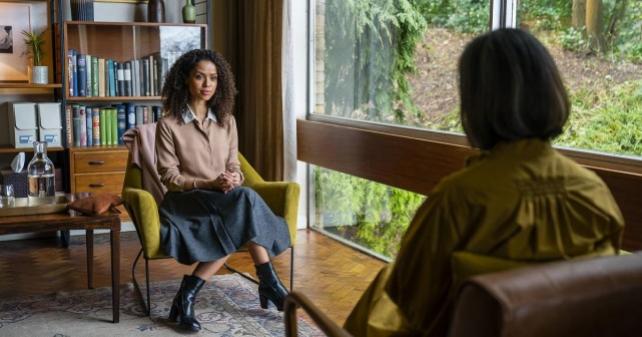
Gugu: I can speak for Jane's journey. Obviously, Jane has been through a stillbirth, and that was something that we were very careful to research. The production partnered with Sands, which is an organization that helps people processing the experience of stillbirth and that kind of grief. So, I was able to speak to a bereavement midwife who works with Sands, and that was heavy research, but really very informative in terms of helping place and make Jane's memory box of Isabelle. That's a real thing that a lot of people do. It's recommended to help heal from that experience.
The items that are in the memory box are all things that are real items that people would use and speaking with the bereavement midwife about many of those experiences was very emotional.
I also talked with a therapist about the stages of grief, and how that might manifest. A friend who has, sadly, experienced a stillbirth herself was very generous to speak with me about her experience as well. So, between that research for those topics, and then, obviously, bringing in as an actor, Jane has had this experience, but she also comes from her personality, her professional life. Building a whole person.
Obviously, we all have difficult things that we go through, but hopefully they don't necessarily define us. But it was important to go there with the research, and J.P. Delaney also has a personal connection to some of that material as well. So, between him and Lisa Brühlmann, our director, everybody was sharing a lot of articles and material related to the subject matter when we were in pre-production.
Most realtors would reveal to you that somebody died in a house. So, would you buy a house where you knew that somebody died in it? Because I'm also curious why Jane decided to stay in it even though she knew somebody died in it.
David: Yeah. When my wife and I first got married, we had so little money that, even though we were told that someone had died in the apartment next to our apartment, we were just happy to get an apartment. So, to your point, that's not in the house specifically. That the fact is when you've dealt with trauma, and when there are reasons that appeal to you on the basis of what you've been through, you can explain away most things.
It's like people going into a bad relationship. You can say, "Well, yes, I know that they just came out of a bad divorce, and they have a bit of a drinking problem, but they're really nice, and maybe I'm going to help them heal from that." Or whatever rationale we give for who we're with, or where we live, or the job that we know isn't for us. We go and do it again.
Edward has a condition called repetition compulsion, which basically you are constantly going back to your moment of trauma and trying to reframe it and change it. But, of course, you are doing the same thing over and over, and expecting a different result. We know what that is the definition of. And so that's why he literally tries to find women who are akin to who he married, and who he is traumatized by having lost.
So, yes, rationally speaking, you should run a mile maybe if someone died in that house, but we just don't. People are way more complicated and complex than that. And that's something else about this show is that you could look at Jane and Emma, and go "Don't stay in the house," but I do think the show does a good job of bringing you into the psychology of why they chose to be in that place.
Gugu, do you know why Jane preferred to stay?
Gugu: Like David was saying, it goes deep into her psychology of her mental and emotional state, and why she's looking to leave her place in the first place, which is for many reasons, but predominantly with the loss of Isabelle, she's looking for a fresh start and somewhere where she doesn't have those memories. She's trying to find a place that is a blank canvas for her to feel safe and to heal.
In a way, I sort of feel Folgate Street for Jane is almost like a sanctuary. It's a calming space because it's so clean and minimal. Initially, it's very attractive to her because, even though Jane feels very contained and restrained on the outside, her emotions underneath her are completely in turmoil. So, for her to be able to be in a space like that, she's attracted to it because it's calming and potentially healing. So, obviously, there's a price, but that's, obviously, the source of the drama. But psychologically speaking, that's what draws her and keeps her in the space. Of course, there is the complexity of the relationship with Edward.
David, how do you put in the shoes of this character, and how do you let go with the intensity of this show?
David: It's a good question. It's something you have to get good at as an actor, especially when you're playing intense roles. Because I have played roles where it took a while to shake it off, and that's sometimes the price that you pay.
This character, he has a certain disposition. You'd have to ask my wife. She can always tell the nature of the character I'm playing by based on who she's having to deal with in the house. But, yeah, there is something very exacting, something very controlling.
It's like I have kids, and kids thrive when you give them boundaries. They actually can be freer when they know what the parameters are, and they know what to test as well. I'm saying that to say that there are good things about boundaries. But it's like everything. Taken to an extreme, it becomes something diseased. There is disease and, therefore, disease with it. I could feel that in playing the character. I could feel that there was a benchmark whereby, okay, I can see why he thinks the way he thinks, and then you see how it manifests in the relationships he has, and his inability to truly connect.
I'm not going to say that I then started behaving in that way, but I could feel the line. I could feel the line where I was just like, oh, that's a little bit Edward. That's not comfortable. But look, again, I've talked about my kids a lot. They're very good at making you just... The minute you get home. I have a 10-year-old daughter, and the minute I see her, Edward goes out the door. There's no controlling with a 10-year-old girl jumping all over you.
Jessica Plummer and Ben Hardy
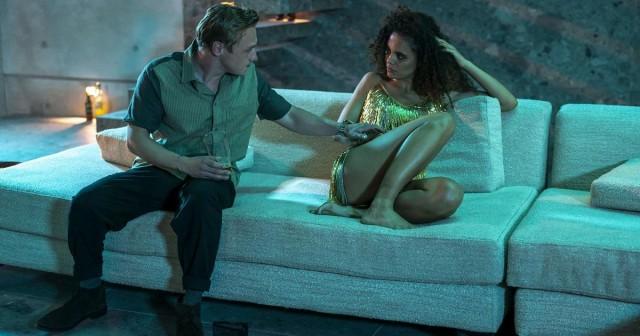
Would you live in that kind of house? Why or why not?
Jessica: I feel like for a holiday, I could live there. If it wasn't as cold as what it was in reality, I could live there. Permanently? I'm not sure, there are elements of it that I like. I'm really indecisive. So, the fact that it turns the light off for you when it's bedtime and it turns off your toothbrush when you finish brushing your teeth, is great. But I don't like being told, taught to do at the same time. So, I don't do that. I'm not sure, probably for a holiday for two weeks.
Ben: I could have the design of the house and the house is beautiful. It'll be wonderful to live in that house, the design of the house, but just take away all of the controlling b******* in having to answer questionnaires and being told when you have to go to stay. It's too much like Jess was saying, that's just too much. I'm too much of a control freak for that a 100%. But the actual layout of the house I don't like clutter and things like that. So, I like the idea of just going somewhere with one suitcase or one bag, even that sounds quite appealing to me.
How was it working with Lisa Brühlmann?
Jessica: Amazing! I met her for the first time on Zoom. It's actually how I met everyone for the first time. We really connected. I feel like not only is she an incredible director whom you can fully trust, and I also feel like she trusts you. She allows you to bring whatever it is, like suggests ideas and things to a scene. She is professionally incredible, and as a person, she makes a connection with you so that you feel safe, which is really important as an actor to have that relationship with the person directing you.
Ben: I find it very open and receptive, as a director to working in quite a collaborative way with the actors as well, so I really appreciated it. I found all of her notes were generally just really insightful and really helpful. Numerous times, if I was stuck in a moment on a scene, she comes in with something brilliant. It's great to work with directors like that, who seem to understand actors, can really make that difference, give that crucial note that can really flip a scene and turn it into something special. She's a nice person too.
Jessica. how did you prepare for this role because it's a lot of tough subjects to cover? And I guess you wanted to cover it as good as possible for people who might have gone through it themselves.
Jessica: Absolutely. So, I was really lucky to have tremendous support around me. I worked with an acting coach, Giles Foreman, who was incredible. He gave me so many fantastic techniques that I use throughout. I'll share one of them with you.
So, we gave Emma her moods like a theme song. If she was feeling scared, claustrophobic, happy, whatever the mood would be, I would have a playlist on my phone. I would listen to that song when I would go over my lines when I would in any of the prep so then before the scene, I would just play that song.
It was like all the emotions would build right back up because that's her mood that song is how she's feeling. That was a huge help in terms of just making sure that as an actor, I'm portraying Emma in a way that is representing somebody been through similar trauma.
I worked with a therapist who was amazing. She was there whenever I needed her for support within the storyline and my own personal support, which was incredible because as an actress it was heavy, and Lisa, just phenomenal, as we've already just said, just really supportive. Then when you are working opposite such a brilliant cast, it makes it a lot easier too. So, all of those things made the journey for me as an actor a lot easier playing Emma.
I like to know not the preparation of the character. I like to know what things you do every day after shooting to take away the character and the intensity of the scenes that you shoot?
Ben: At the end of every day, I like to meditate just as a little bookend like that's the end of that day, because it can be quite... I mean my character, playing someone who had some slightly warped ideals, and I was worried about getting lost in that and it may be getting stuck. So, it is just nice to have a moment of time of space of just getting away from thinking your own thoughts or characters' thoughts, and just escaping that and then resetting. Sometimes, I would exercise as well or go to the pub.
Jessica: I love to laugh. For me, I would never stay in character for long and luckily laughing was very easy with the people that we had on this project. Like the cast crew, everybody and... It was during COVID-19 when we started, but that eased a month into shooting. So, it was great to just, spend time with people whom you're working with and getting to know them. I feel like building those friendships outside of just being on set with everyone, made the whole process so much more enjoyable because it is really important when you're playing somebody going through such traumatic things to just come back to yourself and look after yourself. For me, it was just laughing and enjoying myself. I lived in Bristol for three amazing months on the job of my dreams and I just wanted to absorb everything that I could get from it. So having a laugh and enjoying the people around me.
What's one thing cool about the house is this technology and are you a slave of technology, do you see technology as a blessing or a curse?
Ben: Both. Having this guy here to stay in contact with friends and family can be wonderful, but then if you become obsessive and you end up on social media and spend your day looking on there, it can be all consuming. Technology in itself has wonderful upsides, but it also has wonderful downsides. You could apply it to bloody the arms race, you know what I mean? It can be used in a wonderful way, or it can be abused.
Me, in my day-to-day life, I suppose I do use technology. I use my phone. I watch a lot of films, so I like having good technology, good televisions, being able to go to the cinema and enjoy that. I'm not really into all the gadgets. I don't know if you are, but I'm not really big on that. Partly because of COVID-19 to be honest, just getting used to going outside and appreciating that more, trying to be more an outdoorsy person, but that's my life story.
Jessica: I agree. I feel like the past couple of years, it has made you go through the lockdowns appreciate not being online constantly, but at the same time, I feel like without that technology, I would've felt like so much more isolated. Thank God for technology in the past two years. Just like being able to connect with the people whom you physically couldn't see. I feel I probably am a slave to my phone and social media, if I'm a hundred percent honest, like I can sit for hours just looking at dog memes and... Hours just in this black hole of just looking at dogs constantly, this is insane.
I have Alexa at home and my daughter, she goes crazy for it. She wakes up and she looks for Alexa. She loves it. I love it. But I do sometimes feel like I would go to bed a lot earlier if it wasn't for the black holes of technology that I find myself in at 3:00 AM.
Jessica, how is it doing a show like this that happens in a house during the pandemic?
Jessica: The only thing that it prevented at the start was, going out in public and things like that, but we were all in a tight knit bubble and we had like a COVID-19 warden who was very strict and kept everybody in check in comparison to other things that I've done during COVID-19 where I had to physically be at two meters away from somebody the whole time. It was nice that we were lucky enough by this time it was like a year after it started that we could do regular testing and things like that, to be able to, within the bubble of the production, be able to work quite freely as you normally would.
Ben: It was a Godsend really, actually just being able to work and be around other people, even if it was socially distanced. We've been in lockdown beforehand. There are rules and regulations with which the BBC and HBO we're very good at making sure we're in place to keep everyone safe and make everyone feel safe.
But just to be able to go to work and be around people, I appreciated it more than ever just to have conversations with people, masks on or not. A lot of us have realized, I thought I was a person we didn't like people that much, but then it turns out COVID-19 has made me completely change my mind on that front and now absolutely. Just enjoy being with wonderful friends and the cast and crew.
So, Edward certainly has a type of girl. So, if there's ever a time to be type cast, I guess this was the time for you, Jessica, since Gugu was already cast, and someone had to look like her. But I was wondering how was that auditioning process? Was there a bunch of Gugu look alikes? How did this role land on you in the end?
Jessica Plummer: That's one thing that I don't miss about face-to-face auditions, because you would just walk in a room with just like 20 other versions of yourself and the whole process was done over Zoom. I remember when I got the email from my agent that I had this audition coming up and Gugu was attached to it. I got a picture of her off of Google and I put it next to my picture and I was like, "I've got this, this is mine. I can do this."
It's funny actually, because seeing her, when we were in Bristol together... I remember when it was her birthday. People kept coming up to me saying happy to birthday, but since we finished filming and we've seen, we don't actually look alike. I just think there's like small things that make it look like we are quite similar. I don't think today, if I had showed up at the interview with this hair I would've got through. But the whole process was done over Zoom.
I remember my first audition, everything that could have possibly gone wrong, went wrong. Like the postman knocked on the door and he just wouldn't stop knocking. My daughter fell off her trampoline and started crying like everything. So maybe it was the fact that I looked like Gugu that got me through.
I like to know if you ever think about the people who have been living in your apartment or house before?
Jessica: I have. Okay. So, the house that I lived in like three houses ago. That whilst I was living there, I just felt like a presence. Like something was off like weird things that I couldn't explain kept happening. I found out when I left that sadly, the guy who had lived in it before me had died in it and it was, Oh, my God. I said to my neighbor, I was like, "Thank God you didn't say that to me before today."
Because then it was like, oh, my God, this all makes sense. It was him. Like, I don't know, it might not have been him, but the fact that I felt something was just off constantly throughout my time living there. Then to hear that after, but this exact conversation happens in "The Girl Before," in episode one or two, the one with Jane speaking to her friend about the people dying in their house is quite normal. Isn't it?
But before then, I never really thought about the people who lived in my house before. But since that, I do feel like, "Oh, fuck so has anyone died in this house?" Like, what's this house's history?
Ben: 100% I agree. Probably in most houses, something incredibly dramatic has probably happened at some point depending how old the house is. So, it's definitely something that plays on my mind. I'm a bit of a freak about when I move into a place as well. I want any remnants of anyone else to be gone. That sounds awful. But I just want to strip the carpets and repaint the walls and redo everything just to feel like it's mine, It's almost like a cleanliness thing. I just feel like cleaner if I feel like the whole energy or maybe I'm just a narcissist. I don't know. Maybe both.
Can you talk about having two female leads in this psychological thriller?
Jessica: Incredible! Amazing! When I was working on it, when we were shooting, I didn't read any of Jane's timeline because Emma didn't even know that Jane existed. She was before. So, I only concentrate on my stuff and watching it back seeing the parallels, two women, physically similar, but in other ways completely opposite ends of the spectrum just going through same thing, you see Emma at work, you see Jane at work, you see Emma having a shower, you see Jane having a shower. It was really powerful. For me to have done that with Gugu is just insane. So, it was really powerful. To have that as in a show on TV in this day and age, I am really honored to be a part of it.
Ben: It's great. The landscape has changed so much even in the last 10 years. I don't think would've been seeing that happen, working with both Jess and Gugu was brilliant, two fantastic actresses. What was great about Jess was she didn't read Gugu's and Jane's timelines. I was playing it across both. I got to see both their performances and see both two distinctive characters, but both in their very own unique way.
—MGP, GMA News

