

 GMA Brandtalk
 Tracking
 Archives

2 women filmmakers on creating costumes for Oscar-nominated films 'Encanto' and 'Raya and The Last Dragon'
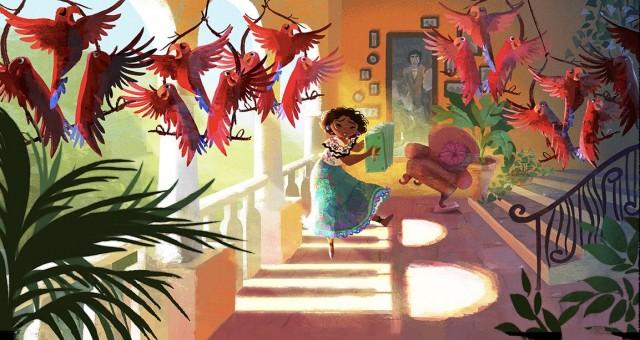
LOS ANGELES — We have always been fascinated with the details that go in creating costumes for animated films.
We talked to two female filmmakers who are involved in creating the costumes for two of the five nominated animated films for the Oscars this year—Lorelay Bove, associate production designer for "Encanto" and Avneet Kaur, simulation supervisor for "Raya and The Last Dragon."
The other Oscar-nominated animated films this year are "Flee," "Luca," and "The Mitchells v. The Machines."
"Encanto" tells of the story of the amazing Madrigal family who has been blessed with a magic gift unique to each person, except for young Mirabel. She turns out to be the only "ordinary" member of the family.
"Raya and the Last Dragon," meanwhile, is about the lone warrior Raya who searches for a legendary dragon to stop the evil force that is destroying all she holds dear.
Below are excerpts of our interviews with Bove and Kaur on working on the costumes of these Oscar-nominated films.
Lorelay Bove (Associate Production Designer for "Encanto")
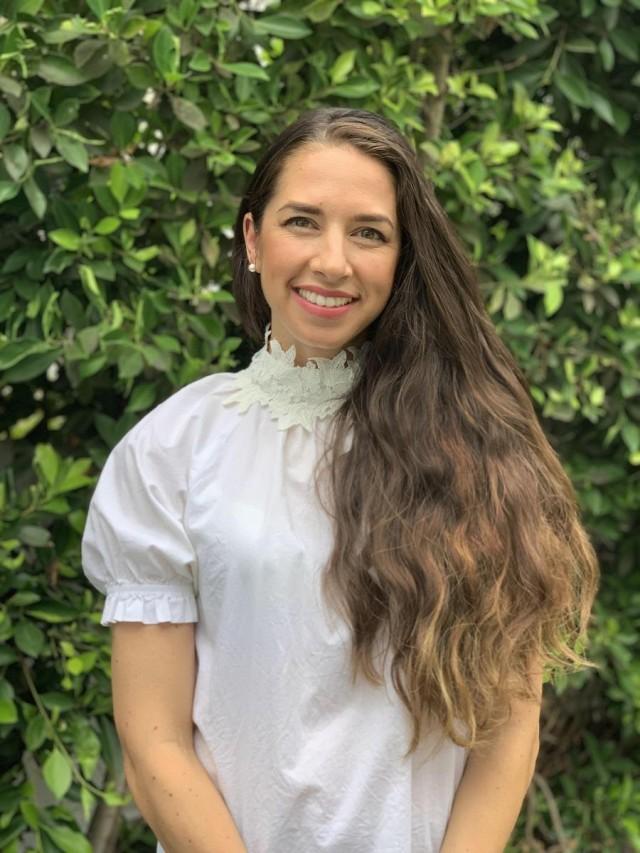
Please describe your job as Associate Production Designer and how much of your time is spent on character costumes.
My job as Associate Production Designer is to partner with the Production Designer to create all of the visual concepts for the look of the film, such as the design, the characters, the environments, the colors, and the costumes for the characters.
Costume design is a very important role at Walt Disney Animation Studios, and we had Neysa Bové as our main Costume Design Lead, which helped so much on "Encanto" because she put so much love and details into these costumes. Production Designer Ian Gooding, Art Director of Characters Bill Schwab, Neysa Bové and I oversaw all of the costume work on "Encanto" from beginning to end.
I also had the opportunity to design some of the costumes including those for Antonio, Abuela Alma, and Mariano. I was also responsible for the color palettes for all the characters.
Why do you think the correct character costume is important in a film?
Costumes are a huge part of the design of the characters, as it helps define the character and their personality, and it also tells a story. With lots of care, details and nuance, we can achieve believability and a connection to our audiences.
What are the things you have to learn or research on before designing a costume for a character?
Before designing a character's costume, we have to know who they are, where they come from, the time period of the story, and of course the story itself.
After asking all those questions, it always starts with research. We had an amazing resource at Disney Animation with our Colombian Cultural Trust, which included experts such as anthropologists, who were able to provide us with information on the people and cultures of Colombia as well as examples of garments found in the region. We would show them our designs in a weekly basis, and this collaboration led to deeper authenticity.
What other steps do you do after finalizing a costume for a character?
After we have a character design approved by the film's directors, we do a very detailed pass, indicating the materials, the textures, the seams, the type of thread and the construction of the garments.
We need this pass so our Look Development and Character Simulation teams have a very detailed page with reference images as they build the costume, like a map of the design. Then we work back and forth across the other production departments to make sure the design remains true to the vision of the directors.
What did you study in Cal Arts and how did that educational background prepare you for this field?
I studied Character Animation at CalArts, and it prepared me in animation, design, and storytelling. I thought that the storytelling part was crucial, and it still helps me to this day when tackling assignments at Disney Animation.
You were born in Spain and your father is a renowned painter himself. How did that cultural background and family environment shape you into who you are today?
My father, being an artist himself, has always supported my siblings and I with our love for art at an early age. He gave me all the resources that I needed to succeed. We were always surrounded by art supplies. Being from Spain and having a love for travel has made me an observer—taking note of all the details around me and incorporating them into my work.
Of all the costumes in "Encanto," which one was your favorite and why? What was the most challenging?
Mirabel's costume was my favorite one that Neysa Bové had designed. I love it so much because it is imperfect, and it has such a handmade quality to it. It is also very fun and whimsical, just like Mirabel.
The most challenging things to get right were the detailed embroidery, the fits of each costume and different textures of hair which were important to us because they reflect the diversity of the people of Colombia.
What is your personal relationship to fashion?
My sister comes from a fashion background, and I always loved her work as well as costumes from films.
Of all the many Disney films you have worked on, what is your favorite in terms of character costumes and why?
The authenticity of the inspirations from the people and cultures of Colombia, the details the colors, and how all the costumes in this film are layered and have more fabric all make this movie very special. The costumes of “Encanto” are very sophisticated, both in design and technical innovation.
Why do you think the costume or design of the outfit of an animated character very important to a film?
It is so important because there is a life for these characters and costumes beyond the movie; you see little kids and adults personify these beloved characters and their costumes. Especially for people who have not seen themselves represented as much in films, this is an opportunity for them to see themselves in these characters as they wear the costumes.
Avneet Kaur (Simulation Supervisor of "Raya and The Last Dragon")
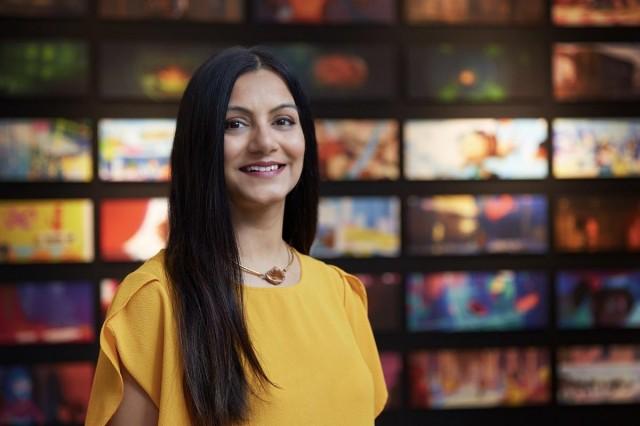
Please describe your job as Simulation Supervisor and why you also have a hand in the costumes of the characters.
I was the Character Simulation Supervisor. My team was responsible for the simulations that informed cloth and hair movement and performances for every character in the film.
Realizing the designs for unique wrapped clothing like the dhoti, sampot and bust wrap was a first of its kind, a unique challenge in this film. My team and I collaborated very closely with character designers, other asset departments and animators, and iterated heavily on the design and construction of these garments, to bring all the characters of this film to life.
You have unique draping and folding techniques and is well versed in textures and structures of costumes, plus of course, you are familiar with Southeast Asian styles and culture. Can you please explain more about how you developed these skills and talents?
Born and brought up in Southeast Asia, I am very familiar with the styles of costumes worn in that part of the world. When I started work on "Raya and the Last Dragon," I was thrilled to know that the designs of the garments worn by the characters in the film were inspired by traditional wrapped clothing from the many diverse regions of Southeast Asia. These garments, such as the dhoti, sampot, and bust wrap, typically consist solely of large pieces of fabric that are wrapped, folded and tucked into position to produce the structure and style, with little to no seams to hold the form. These garments can have very different appearances depending on the weave and how the hand-crafted folds land upon draping.
In contrast, the types of garments found in our previous films are typically constructed from 2D patterns resulting in fabric pieces that are sewn together to produce the 3D garment (pants, shirts and skirts, for example). The pattern, seams, stitching, and pleats produce the overall structure.
Our existing cloth construction pipeline has evolved over time to emulate the pattern-based workflow used in tailoring. We have found that this approach gives us the most natural results, both in look and motion performance. Faced with the challenge of realizing these unique wrapped garments, we once again looked to the real-world counterparts and extrapolated the wrapping technique into a novel approach in CG.
You studied architecture and have a master's in visualization sciences. How do you think your background enhanced your skills in dressing up animated characters?
I always loved to draw as a kid. My family encouraged my passion for the arts, and I studied architecture in India which gave me a very well-rounded education, both in art and sciences.
With a desire to advance my expertise, I applied to the Master's program at Texas A & M University, and it was while pursuing this program that I was exposed to the amazing world of creating animated features. I was completely intrigued by the amalgamation of art and technology. I also loved films and grew up watching all genres of Bollywood and Disney films. A career in this field was the desired outcome and seemed like a natural extension of what I loved to do.
Architecture and CG filmmaking are similar in many ways. I found myself applying the fundamentals of everything that I learnt in Architecture to the art of CG film production. I thoroughly enjoy my work and feel fortunate to be in a profession that can employ such a unique mix of my creative and technical skill sets.
Before finalizing a particular design or costume for a character, what are the things you look out for and need to know?
Before we finalize a costume design, it is important to know what part the character plays in the story, the personality of the character and their range of performance in the film.
After the final selection of the outfit or costume, what extra steps do you usually do?
Once the wrapped costumes were designed for the characters of this film, our first step was to understand how wrapped garments are created and worn.
In this effort, we were not able to find any examples of this style of garments in CG—neither in film nor in the fashion industry. Thus started a process of research and experimentation to analyze how these unique garments are wrapped and worn in order to gain insight into their complex draping behavior.
The Asset Production team did a series of hands-on experiments where we wrapped the garments on a doll and also on ourselves and then recorded enacting some of the ranges of motions that the characters needed. This allowed us to visually comprehend the balance between mobility, flexibility and appeal in the performance of these garments.
All of these tests helped inform and influence the design choices for each character's personality and performance. This tactile experimentation with the garments helped us lay out the steps needed to translate from the real world into CG.
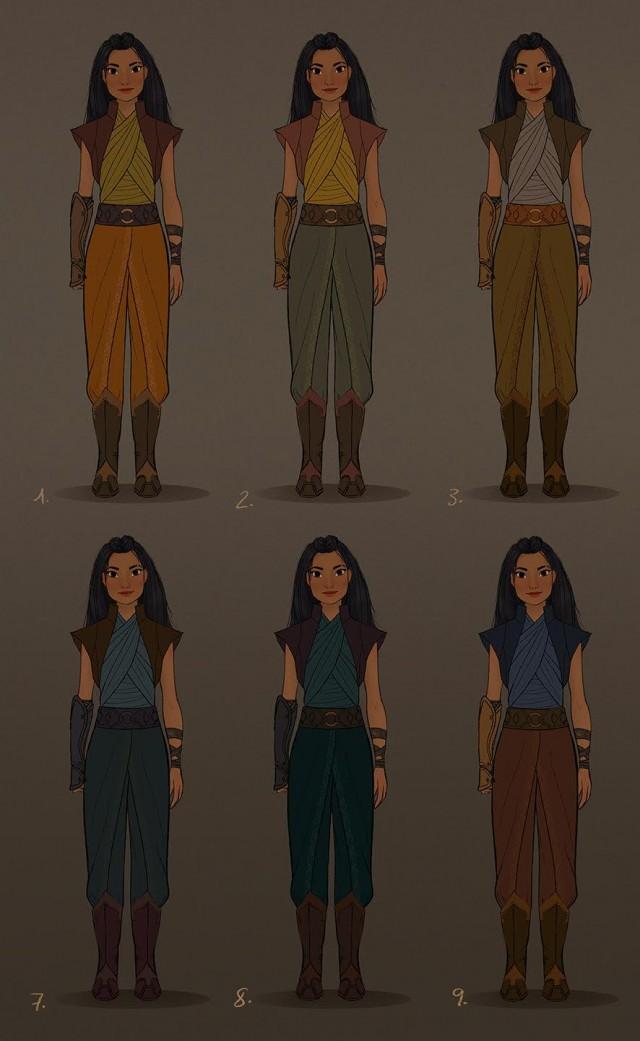
How easy or difficult is designing or dressing up an animated character compared to a real live person? What are the challenges?
One challenge is that these garments have very few or no seams. Our existing CG methods were not directly applicable because they depend on analysis of tension wrinkles and adjustment of the surface area and seams to achieve a good fit.
From our hands-on exploration, we inferred that we should treat the garment holistically, staying as true as possible to the physical mechanics, and rely on different wrapping and folding techniques to achieve the desired form.
Our initial CG tailoring efforts informed us that the final drape is dependent on many factors, including use of rolls versus folds, the aspect ratio of the cloth panel, and the order of overlapping layers of cloth. We leveraged various CG capabilities of the tailoring package and solver to emulate pulling and tugging of the cloth to wrap it over a form to produce the desired folds.
This includes dynamically growing the pieces to emulate unrolling, altering gravity, adding helper collision objects and temporary pins, and adjusting the garment edge-flow and resolution. Once the initial tailoring pass was complete, motion tests were essential in finding the best drape for the design and desired performance.
Of all the costume designs made for Raya, what was your favorite and why?
Sisu's sampot was one of my favorite costumes in the film. Sampots are also worn by many other characters in the film, including Boun, Tong and many background characters.
The sampot is similar to a sarong. It is a long piece of fabric that is wrapped around the waist in specific ways. It was one of the most challenging garments to create in the film because Sisu has a very wide range of motion and the CG garment thus had to hold up to many different types of performances while keeping the essence of the true sampot and looking authentic and beautiful. This artistic and technical challenge made it the most fun garment to work on for my team.
As a mother of two girls, do you enjoy dressing up time or make-believe dress ups with your daughters?
Yes, as a mom of two daughters I loved dressing up my girls for every occasion we celebrated.
Why do you think the costume or design of the dress of an animated character is very important in a film?
One of the first ways we as people begin to express our individuality is by the way we dress. Similarly, the way an animated character dresses affects how the audience sees them, emotionally and intellectually.
Clothing design, its look and its motion, plus the character's overall performance are some of the many tools a director uses to tell the story of their characters.
—MGP, GMA News

