

 GMA Brandtalk
 Tracking
 Archives

Bill Hader, Sarah Goldberg, Henry Winkler and other cast members talk of 3rd season of 'Barry'
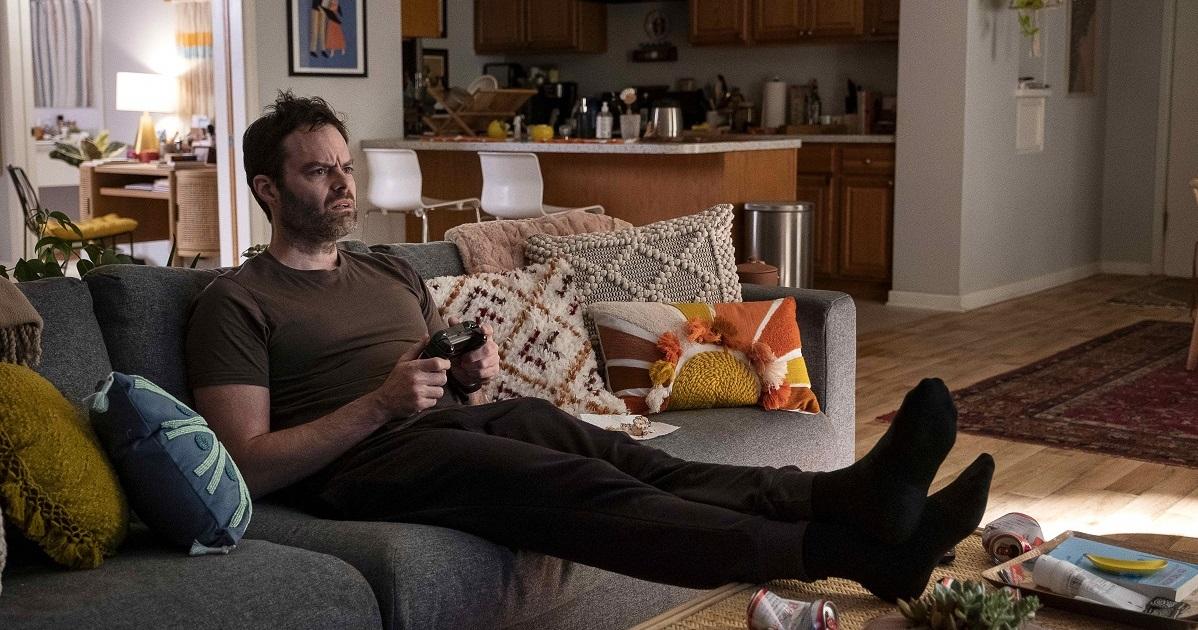
LOS ANGELES — Bill Hader is a genius.
If you don't know that yet, you better watch the TV series "Barry," the dark comedy which he co-created, co-wrote, directed, acted on and executive produced.
The former "Saturday Night Live" star plays as Barry Berkman, a hitman who turns into an actor. As one of the co-creators and writers with Alec Berg, Hader has also directed multiple episodes of the hit series.
The show, which had extended delays due to the pandemic, comes back after almost three years of its last episode in 2019. Now on its third season, "Barry" debuted in 2018 to critical success.
The 43-year-old actor from Tulsa, Oklahoma and his cast mates—Sarah Goldberg (who portrays Sally Reed), Henry Winkler (Gene Cousineau), Anthony Carrigan (Noho Hank) and Stephen Root (Monroe Fuches)—talked to us via Zoom about the show. Below are excerpts of our conversation.
Bill Hader
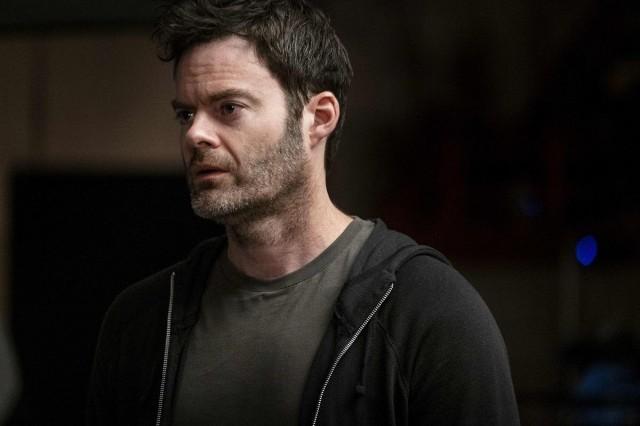
When you wrote the first season, did you conceive that this series would maybe go on for three or four seasons? If so, did you have a goal in mind, or a story which could go all the way?
No, we just take it, really not even episode by episode. Genuinely, we take it scene by scene. You just go scene by scene, seeing, what happens next? What's the honest thing that can happen? What's the thing we haven't seen? What's the evolution? How does this thing grow? We're just going to take it until it feels like it stops growing. Not that I don't like television, but I tend to watch movies more, and read stuff. I read more.
I'm from Oklahoma. I get impatient with TV shows, and I feel like it's treading water, or it's for the order. They've got the order of 20 something episodes. So, it's got to be, the story is in place. Now, we're doing a whole episode about like the doorman at the main character's building, or something. You're like, "What are we doing?" I have an impatience for that, which I think maybe comes across in the show, where I like stuff to happen.
We were speaking to Alec Berg earlier, and he was talking about how you guys have a tendency to sometimes change things up on the fly, and rewrite scenes that you think aren't necessarily working. But given how tightly plotted "Barry" feels, I was wondering whether you do improv at all, while shooting?
Sometimes. The good thing about writing the scripts, and getting all the scripts written beforehand is, you know where you're headed. This actually works as an improv, or this is a moment that we can make very full of comedy. This moment is all about getting this information out, because it's a short scene. We're going right to this.
In the fourth episode, Sally gives a speech. That speech was a good example of a moment where it could be full, but then there are other transitional moments where you just keep it on target and keep the thing moving.
Let's talk about Barry's understanding of what love is. He tells Sally that he loves her, and yet his actions include yelling at her to the point that her co-workers are traumatized. He tells Mr. Cousineau, that he loves him, even as he's threatening his life. I know it's not the whole thing. There's a lot of moving parts here, but as part of this journey, does Barry actually have a true concept of what love is, or is his journey towards a better understanding of it?
I don't know if he'll ever really understand. That's the question we're always asking ourselves. I don't know if he understands what love is, because I don't know if he is good at connecting with people. He's someone who sees himself as the victim in all of these situations. As he says to Sally, "I was having a day." That he can be like that, and then not think that there would be any consequences, that he could do that to Cousineau, and think there are no consequences.
That's a thing that you've seen through him, throughout the show. Season one, he kills Chris, his friend, who's completely innocent, and never considers that there are consequences for that. What Fuches is doing, is reminding him. His little plan, and saying, there are consequences.
That is a thing with him. Those scenes were tough to do. Those are moments in the writing when you go, there's a funny way we can go here and a real way. It's like, let's do it the real way. Trying to lessen it, and be cute with it, is really offensive. To be real with it and show this is the guy.
You are Bill of all trades, creating, writing, directing, starring. Do you feel that maybe spoils you for the next project that you would want to give the reigns to someone else?
Oh, no. I've unfortunately set a precedent for myself. Stupidly, I set a precedent for myself to do every job.
Because you mentioned the impatience thing earlier.
Yeah. I do get pretty impatient with stuff. That's a thing where I always have to reel in, but you're learning. I say do every job, look, people keep saying, "Oh you do everything." There's a billion people that work on this show. There are amazing people who, from my first AD to the producer, to our editors, the DP, writers, the cast. All of these people make me look really smart and save me from myself a lot of times. Those are the people I'm indebted to.
So, if I do another project, it's me trying to take them along, or say, "Who do you recommend?" Because you need that. I can't do this all by myself. The whole auteur thing is belonging.
When we were talking to Henry Winkler, he said, "Bill knows what he wants. And writing is always the most important process. In structure, there is freedom." Can you share with us your writing process? What kind of a writer are you?
It looks like I'm lazy, because I tend to think a lot about it. You know what it's like? You ever told a story to somebody, and you tell a group, or you tell your friend a story that happened. You're at the grocery store, and something happened. Then you tell them the story, and they go, "Oh. Oh, yeah." Other parts, they go, "Oh." Then you tell the story of someone at work, and you change it a little bit. You exaggerate this part, and you punch this part in a little bit. Then, this happens. You're trying to get the thing to work. It's like that. It's like, I will sit and talk it out with people.
Season three, as a whole, would be like, I'm thinking this, and this. And season two, a good example of saying, "I want to do this episode," and Barry goes to the place, he's going to kill this guy. But then the guy turns out to be his Taekwondo instructor, and he goes into this room, and it's filled with trophies. I wait, and be like, "Right? That's funny, right?" It's like, come on, that's good. It's sweaty and it's lame, and I drive people insane.
Then finally, when I have it in my head, the way it should be, I tend to write very fast. It's done in a day, or two. "Ronnie and Lily" was something I wrote in an afternoon. Just wrote the whole thing, and then brought it to the writers. We added one thing, which was, Fuches sticking himself to the steering wheel. Then, everything else was just done. It's not like people go, "Oh, you wrote it in a day." It's like, no, but that's months of thinking about it.
Sarah Goldberg

Sally is such a fascinating character because she doesn't try to be anything other than herself, and it's not something we often see on television. Can you talk to about your approach, because watching these episodes of season three, she seems to be hitting deeper and deeper inside herself?
That's very observant and definitely something that we're going for. Sally has a kind of myopia that could be perceived as narcissism. She has tunnel vision; she wants these things so badly. She has a difficult time seeing people around her, and really listening and absorbing things. Even when she has wins or successful moments, you see her grappling with it because she's so laser focused. She's not taking anything in.
I do think she's missing it. She's one step away from where she could be, where she could really be enjoying her life and being kinder to people, but she's not in that space. I tried really hard this season to explore. We've seen Sally as the underdog, and now we're seeing Sally with a little bit of success, and it really fascinates me the way people behave when they receive a bit of power.
I did a lot of basing her on Tom from "Succession," who's my favorite character on TV, because when Tom, you see him in these vulnerable positions, and you feel for him. He's really put upon, but the minute he gets a whiff of power, he flips it and becomes the bully.
I'm really interested in that with Sally and to see how she uses her power. Unfortunately, she's not very evolved. We see her grapple.
I've been very clear with the writers from the beginning that as the only female series regular, she's not the moral barometer of the show. These are all morally dubious characters, who again and again, are given a chance to make the right choice and they tend to make the selfish choice. Sally's no exception to that rule. We had a lot of fun playing with that, but ultimately, I really care about her. I think she's lost.
Sally has everything she always wanted, an acting job, she's producing it, she's creative, and we have this beautiful shot where she's getting on the set and she's giving instruction and direction. But she's not that happy enough. That's very human-like. What you think about that? Have you ever had that moment when you apparently have everything that you wanted, but at the same time, you don't feel like you'll be happy?
It's such a good question. It's really something we were trying to explore. It happens a lot in the world of the arts, right? Because we're all freelancers, we're all hustling. Then you get a big job and you're expecting it to be a pure feeling, just a joy feeling. Actually, it's more complex than that. It comes with a lot of other things. It comes with responsibility. It comes with fear. It comes with anxiety.
Sally has everything that she wants, and it's happened so quickly suddenly. She is very overwhelmed but trying so hard to push forward. If she could take a beat to take her surroundings in, and absorb a bit of what's happened to her, she could find that calm joy with what she's doing and become a good leader and a good showrunner. But she's hurdling forward through space without taking any of it in.
That is a common human trait and something I've really tried to watch in my life because this is a business of highs and lows, and you can always be seeking more. I've really watched that and been quite strict with myself that you've got to celebrate the wins as they come.
I did a play in London years ago, that was one of the greatest plays I ever worked on. It was called "Clybourne Park." I was very aware; it doesn't get better than this. Every night you're playing to a full theater with these incredible words, Bruce Norris won the Pulitzer Prize for it. There's a lot of actors who, you're doing that play and you're going, but what movie is this play going to get me? Therein misery lies. There's nothing on the other side of the mountain, and I know that from knowing enough people who've found such success in this business, and seeing from that side, that the ratio is not always an even one.
I've really tried to find in myself gratitude for the job you've got in the moment you've got it. Joy for the art you're creating in that, like that play, it was too special. If you can't take that in, what's the point? We're all going to die. It'll be over before you know it. If you don't take it in, there's no point.
I feel for Sally because she's not taking it in and she's in the overwhelm, and she's in a manic high, low with it, where we do see her celebrate it, but it's quite a superficial level of celebration. There's no real absorption. I feel blessed. I don't think I suffer from the same.
I love watching you and Bill, especially that moment when he just lost it and he had that temper tantrum on you. But how is he as a colleague, director, creator, writer, and then you are acting with him?
We've been making this show for seven years, so it's been a long ride because we had a pandemic, as we all know. We all go way back at this point. It feels like we've been a touring band. There's a lot of comfort on set in expressing how you feel. It's a very collaborative atmosphere. It's a very buoyant atmosphere. We have an incredible crew as well. We have an incredible producer, Aida Rogers who puts out all the fires before they happen. So, Bill, he comes from sketch comedy, so he likes to work in a group.
It's how he thrives. He's a real best idea wins collaborator. He set that tone from the beginning. There isn't a huge hierarchy on set at all in the way that you can sometimes find on a TV, or a film set. I really feel safe saying exactly how I feel. They've really created that atmosphere.
Alec as well is an incredibly collaborative director. He's very humble about what he does. If their idea is better, that we're going to go with their idea. If my idea is better, we're going to go with my idea, it's just how it goes. The back and forth on it can be a lot of fun. We also get a lot of rehearsal on Barry, which is a real luxury. We're usually coming in, already singing from the same hymn sheet.
That really helps with Bill jumping between directing and acting, that we've been able to rehearse outside of shooting, so that we come in very prepared. I'd say the only thing challenging about acting with someone who's directing is it's just hard for them because they have to run back and forth. But Bill will always have Alec or Duffy Boudreau, who's one of our brilliant writers and one of Bill's oldest best friends. He'll always have someone on the monitor helping with the directing side of his performance so that he can let go. He'll stay very present for your side of shots and be able to sort of step outside of his performance to help you as a director as well.
This has come up and Henry said it his own, his only thing is that sometimes he's mouthing your words at the same time as you're talking, because he's so deep in the script and you have to go "Bill stop!" But it's a very easy atmosphere. Everybody understands the opposite of our characters in the acting side of the show where there are no stakes, but everything's running so high.
We understand we're making a TV show, we're in a luxury position. We're all doing what we love and we're lucky to be there. That atmosphere really trickles down from the top.
Henry Winkler comes in every day, with the greatest attitude, like it's his first day on the job and that's contagious, that kind of spirit. That's the collective group atmosphere that we've got where you're very safe to say, "Hey, I think I'd say this, this way." Everybody loves it and is here for it. It's very special.
Henry Winkler
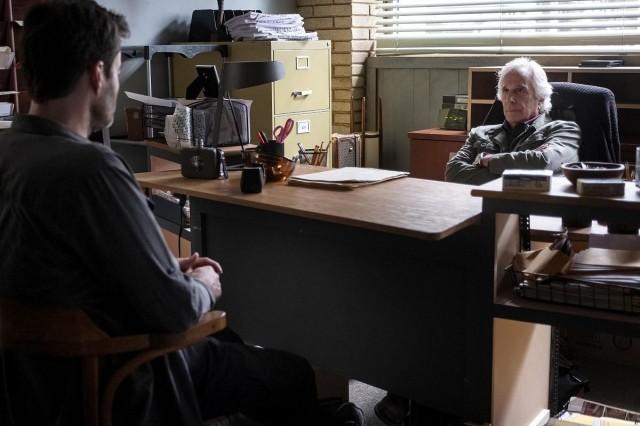
I'm fascinated by how, in Season 3, the sweetness and the relationship between yours and Bill's characters are in the rear-view mirror now. I wondered how you felt moving into a darker phase of that relationship and how you feel that changes the tone of the show now that your character knows the true nature of Barry.
In the second year, before we started, I could not recognize Gene Cousineau from the guy I created with them in the first season. I went to the producers, and I said that. They said, "Look. We hear you. We will make adjustments, but this is the direction we are going." So, you get on the train.
In the third season, remember we are left with my character knowing Bill just killed the love of my life. I have that in my mind. I did not even ask a question. I just thought, "Okay, this third season is going to go where it goes."
There are a lot of running, especially for a mature person. I have to tell you, when I watch the first four episodes with my wife, she starts laughing because when I come down the stairs at 11 o'clock at night to let the dogs out for their last pee all she hears is, "Ow. Ow. Ow," because I'm negotiating with my knees on every step, and here I am running down the street.
I am really amazed by that scene where you came in, like in an audition process, and you just gave it all. I want you to recall your memorable audition process.
Auditioning for me was always difficult. I will tell you two things. It is important to audition because the executives at either a studio or a television station, network, they're very short and they need to see you in the flesh. There are some actors who say, "I don't audition. You can see me on tape." The fact is that those human beings who are in the audition, they need to see you live.
Now, I'm sitting in those metal chairs around the wall waiting to go in and the young actors say, "You're Henry Winkler. What are you doing here?" I said, "I'm looking for a job. You?" When you audition and or when I audition, I am lucky enough because I am short and pretty much scared all the time, and when I audition, or through my work, somehow, I'm able to become Batman or something. I don't know. I go in and I do what is on my mind, not what I think they want.
I tell every young actor; you cannot be right. There is no right. There is no wrong. There is only your imagination that fills the room. If you don't do that, sell shoes.
When I went for "The Fonz," I changed my voice. That's all I did and all of a sudden, my entire imagination was unleashed. In "Barry," I saw, out of the corner of my eye, I made Bill Hader laugh. I've watched him now for years with my wife every Saturday night. We have died in hysterics. And I'm making this man laugh.
Anthony Carrigan
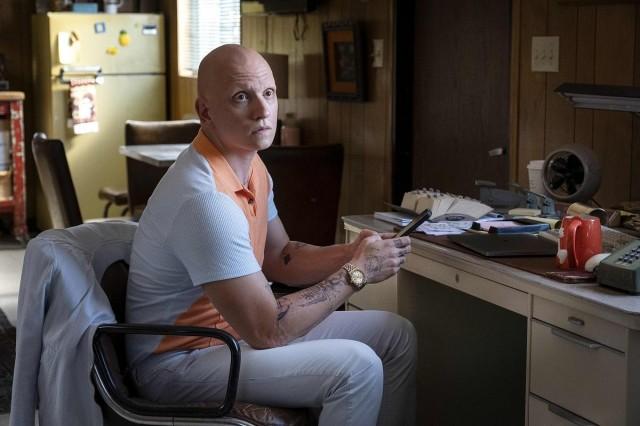
One of the approaches of the show seems to bring disparate elements together, things that you don't think go together like a hitman who wants to be an actor and a drug dealer who's gay and in love. What was it like to play something like that? How did it come up in the script? How did you all decide that's who he was and then how do you play that yourself?
There's an element to this show in particular. Any time you're tasked with a character, no matter if it's dramatic or comedic or somewhere in between, you're ultimately just trying to honor that character as much as you can. Even if it's a character like Hank, who's pretty just ridiculous at times. You really just try and use those empathy muscles and try and understand what makes them tick and how they can move through the world and make the sometimes-stupid decisions that they make.
Ultimately, especially this season, I just wanted to be incredibly respectful in terms of who Hank was, not comment on anything, but just really just try and honor who Hank was in these circumstances. Then just let the scene unfold from there ultimately.
I read that one time during the audition process, you forgot that it was a script because it was so good. Can you talk more about the writing in the show?
The writing is, we're spoiled. Like things don't happen like this normally. You read stuff and some stuff, and you're just like, wow, this is going to take a lot of work to make this sound like a human being. But just with every version of the script, it's like, you almost don't want it to a change. You don't want to improvise on top of it because it's so perfect as it is. Then you'll get the new draft of the script and you're like, oh, that was so good, but this is even better.
Then when you get to actually filming it you find this process of just what it is in the moment and what it is in the moment can change from this line to something that pops into your head or something that Bill will come up with and we'll throw at you. Then you have to be constantly on your toes. The great writing is what really solidifies this spectacular show. I'm so spoiled.
Stephen Root

Besides the violence, the whole series is about second chances and finding purpose. Do you think guys like Barry and Fuches can find redemption because I can't see a happy ending to this?
I agree with you, I can't see one either. Because this character, Fuches character, just doesn't seem to be able to evolve past his jealousy. He's somebody who really loves Barry but he's not doing what he's been told to do. No matter what kind of wonderful situation Fuches seems to find himself in, he just can't let it go that Barry is not doing what he wants him to do. I agree that I don't see it ending well but I guess we'll see.
One of the themes is forgiveness has to be earned. What do you think of that and what do you think your character thinks of that?
I think as a person, that's absolutely true. As Fuches, I think he would say, "That's ridiculous. I'm going to get what I want if you have it." I keep coming back to this only because there's no way that this character will evolve beyond the fact that he just wants to get back to the place where he loves Barry. He wants to mentor Barry and that's never going to happen again because too much has happened between them and no matter how much he wants it to happen it's not going to happen. If you ask Fuches directly that question he'd say, "That's bohunk." That's what I think.
The Emmy-winning dark comedy series Barry, starring Emmy winner Bill Hader, returns for its eight-episode third season same time as the U.S. on Monday, April 25 at 10 a.m. on HBO and HBO GO. A new episode will debut every following Monday.
—MGP, GMA News

