

 GMA Brandtalk
 Tracking
 Archives

Jerry Bruckheimer, Glen Powell and director Joseph Kosinski talk of 'Top Gun: Maverick' at CinemaCon
LOS ANGELES — CinemaCon audiences this year were lucky to be treated to the first screening of Tom Cruise's much-awaited movie, "Top Gun: Maverick."
After the screening, there was a panel, moderated by The Hollywood Reporter’s Senior Film Editor Rebecca Keegan, which included "Top Gun: Maverick" producer Jerry Bruckheimer, actor Glen Powell who portrayed "Hangman," director Joseph Kosinski and Paramount President and CEO Brian Robbins.
Aside from Cruise and Powell, the action-drama sequel stars Miles Teller, Jennifer Connelly, Jon Hamm, Ed Harris, Lewis Pullman and Val Kilmer. Cruise and Kilmer reprise their roles from the first film.
Below are excerpts from the panel discussion:
Jerry Bruckheimer (producer)
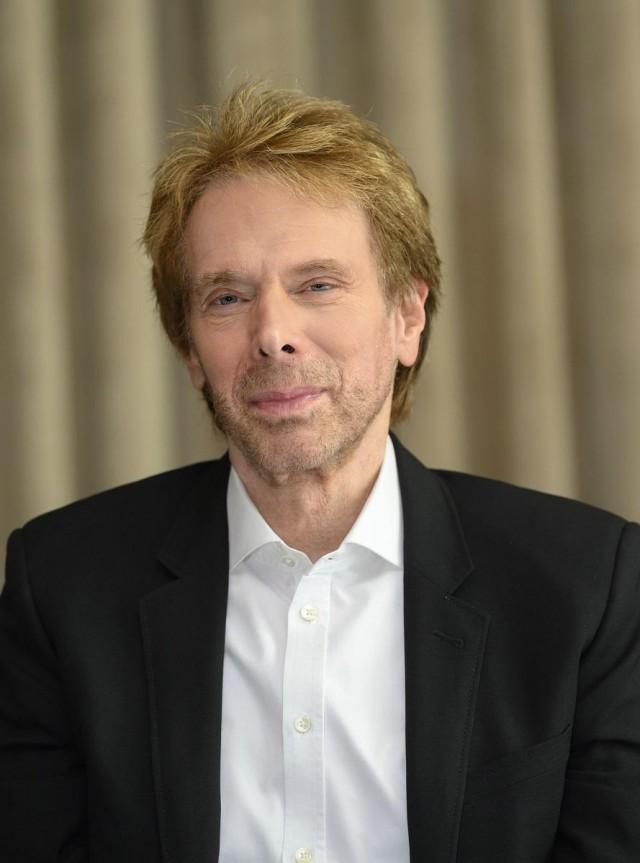
Over the years there had been talk of making a Top Gun sequel. Why is this the moment that it finally came together?
After we made the first one, nobody realized it was going to be the success it turned out to be. It lasted these 30 some years, and people are excited to see another one. All our careers took off from that point.
Unfortunately, we don't have Tony Scott, but we have Joe Kosinski here who made an amazing movie for us. In the vein that Tony would be up there smiling at this movie right now.
It's very hard to get a movie off the ground. The hardest thing to break is the story. We had a fantastic character in Maverick, but what is the story? Thanks to Joe Kosinski, he came up with a way to make it that exciting.
One of the poignant moments in the movie is when Val Kilmer appears on screen and that scene. I found very moving. Can you talk about how that came together?
That was always the design storytelling-wise. It's the story Tom wanted to tell. Val felt comfortable doing it. It was very emotional filming it. We knew Val from the very beginning, he was a very young actor. To see him today and see that he is still working at acting, and he's got this great spirit, and is so helpful, and was just terrific filming. Obviously, he's compromised, but he's still an amazing actor, and amazing individual. He was so thrilled we brought him back and this way, and Tom was so gracious. Tom actually said, "I'm not making this movie unless Val's in it." So that was really gracious of Tom.
You said you didn't expect it to be the hit that it was, but what were your expectations for it at the time?
I always hope for the best and expect the worst. I'm always a damper mind psyche because you never know. We've had movies that have tested through the roof, and nobody showed up. You never really know. We do love the fact that audiences get to enjoy what we do, and we try to do the best we can.
When you're producing movies where the lead actor enjoys danger, do you bite your nails about those? Do you stress about that? Do you ever want to say, "Tom, let's have somebody else take this"?
That's one thing you can't say to Tom. Say that to somebody else but not to Tom. Tom does everything at full speed all the time to the best of his ability and beyond, and you can't stop him. He's just going to do it no matter what. But what's so interesting about it is everything is done with real caution, because he's so prepared.
He'll spend months preparing a stunt that will be on the screen for 30 seconds. He puts the time and the energy. He's in such great shape, and that's hard to do. He gets up at 4:30 a.m. He works out. He's on a very special diet. His dietician feeds him. If he was here for dinner or for lunch with us today, he would've already eaten. That's just the way he is.
He makes sure he gets enough rest. He really takes care of himself. When you see him on the screen, it shows. He takes care of his body and his mind in the best way possible. If you want somebody to do a stunt, you want Tom Cruise to be there to do it. He is so cautious. He's so careful of what he does. It doesn't look like it, because the stunts are so dangerous. But he's so well-prepared when he does do it.
Glen Powell ("Hangman")

How does it feel for a young actor like you to have a project like this in the can and then wait?
It's a bit of a bummer when you have to wait for your career to start. You feel like you have this great secret, this amazing thing that you can't show to anybody. But it is really a great feeling knowing you're sitting on a winner, knowing that you're working with world-class filmmakers. I can't wait to unleash this to the world. It's just so great.
Initially, you were not interested in the role of Hangman. You had a conversation with Tom Cruise that was pretty meaningful. Can you tell us about what happened there?
I originally auditioned for the role of Rooster, which went to Miles Teller who smoked it. When you see this movie, you realize that was perfect casting.
At that time, it was a little bit of ego blow. It really is a testament to Jerry, Joe, and Tom, how they would get me on the hook on this. Because I wasn't sure I was going to do it. Then they showed me those aerial footage, the test footage. I got to sit in a room with Tom for a couple of hours. I felt pretty confident about how I chose movies and what I want to do. Then Tom basically blew my mind with how he has created his career.
He said, "What kind of career do you want, Glen?" I was like, "You, man, I want to be you." Then he said, "How do you think I got here?" I was like, "You choose good roles." He said, "No, Glen, I choose great movies. Then I make the roles great." It's true.
I was like, "Dammit, this guy's good." I had to take a leap of faith on what the Hangman role would be. These guys lived up to every promise that they promised. That's a very rare thing in Hollywood. I'm just so grateful that I took the plunge and joined this thing. It's been the ride of a lifetime.
You now have your pilot's license, but you had not flown at the time that you took this role. Can you walk us through what your training was and what you had to learn?
Tom put together the entire training program so that we wouldn't be puking or passing out in government assets which was very nice of him.
We started in the Cessna 172. We went to the extra 300, the L39 and then the F18. That was just a gradual process in order to get our G tolerance up so that we could act and ride around in these jets. Then after that, I had a love of aviation and Tom was a great cheerleader in terms of saying, "Hey, did you pass your ground yet? You do your check ride?"
Then the day that I passed my check ride, I got on the ground and there was a gift that said welcome to the skies from Tom. It was hours and hours of race car driving classes. Tom likes to live fast. I'm trying to follow as closely as I can.
What does it feel like to be pulling Gs? How is that physical sensation like? How do you act while it's happening?
It's incredibly painful. Every time we went up there, you just have to mentally brace for a fight. You get on the ground and you're exhausted. We fly two, three times. That's the other thing that's impressive about Tom, he's flying more than anybody else in the movie.
We fly once a day. He would fly three times a day. It's not as much fun as you would imagine, but it's what they say is it's like riding a dragon. You just hold on and you try to look as cool as possible. Especially Hangman's supposed to be cool and trying not to puke. Half of the shots in this movie I'm literally holding a bag of my puke while I'm acting.
How was it working with Val Kilmer?
When we were leaving Miramar, I was moving out of my hotel room and, I had one of those luggage carts. I had already moved all my stuff out. The only thing on the luggage cart at the end were some weights, protein powder, and tequila. I got caught in the elevator with Val and he looked at the luggage cart. He took a picture with me, and he was like, "That's Top Gun right there." That was my top gun. I love it.
When the first "Top Gun" came out, you weren't born yet. What was your moment? What was your experience of this film walking into it? What did you know about it?
"Top Gun" is one of the three movies that made me decide to be an actor. Even more reason why it was a very difficult decision to go, "I don't know if I'm going to be right for this."
Working with Jerry Bruckheimer has been a lifelong dream of mine. He has made some of my favorite movies of all time.
I remember when I was 10, my dad showed me the original. It's obviously something so special like playing catch for the first time. That was what the experience was like with my dad.
He held the VHS tape in his hands like it was a moment and was like, "We're going to do this together." I was like, "Are we? What are we watching?" When we watched the first one, he looked over at me constantly wanting me to react the same way he felt. That's what's so special about this movie.
It feels so important for so many people. It's hallowed ground. It's such a hard mark to hit. These guys just smoked it.
Can you talk about working with Tom and what his philosophy is on the set?
There was one day, it was in a bar scene, where the cameras went down for a bit. I got to talk to Tom.
One of my favorite movies is "Rain Man," and I got to talk to Tom about the entire development process of "Rain Man"—how he developed the character, he and Dustin's process.
He talked about the changing business and the opportunity. He's such a student of every part of this business. He loves everything from music to lenses to costume department.
Tom was focused on everyone else's performance, making, guiding their performance, rooting for everybody to be the best. My character wouldn't be nearly as special without Tom's eye on it every step of the way.
I remember there was one scene, the fight scene in the tap room. There was a moment where Joe, Jerry, and Tom were all right behind the lens all coaching me in their own ways. It was a peanut gallery. My heroes all sitting there coaching me on a thing.
That's what defines this movie. It felt like we were a squadron. We were all in it together. It wasn't an easy shoot by any means, but it was the most rewarding experience in my life. Making movies with your heroes, and especially with Tom whom I've literally looked out to since I saw my first movie. It just doesn't get any better.
Joe Kosinski (director)
What does it feel like to finally have people see a movie that you've been finished for years?
It's surreal. It's been two years since we finished this film, but I wish everyone who worked on the film could be here to watch it with an audience. Because that was really special to experience that finished with 3,000 people.
One of the things that's changed since 1985 is that we have digital, visual effects now. But there are actual human beings and actual planes in this movie. Why this was shot practically and what were the challenges?
I had done a movie with Tom before, so I knew that not only was he capable of doing anything in this film. But that it's essentially a requirement that it be as grounded and realistic as possible. I knew that was one of the fundamental parts of the film that had to be that way.
I had seen these videos on YouTube of Navy pilots, putting GoPro cameras, sticking into their canopy, and just shooting their training. Even though it was just done with a GoPro loaded on the internet, it was spectacular. It was better than anything I had seen in film as far as aerials go.
I showed that to Tom and I said, "This is available on the internet for free. If we can't beat this, there's no point in making this film." He agreed. It began like a 15-month project to figure out how to get a motion picture camera in the cockpit.
We got six IMAX quality cameras in the cockpit of these airplanes working very closely with the Navy to do that. Then the challenge after that was, I knew Tom would be able to handle everything that this movie was going to throw it in. But could we get Glen to go on the plane and be able to do everything he needed to do and all the rest of the actors? Then became this large training program that Tom designed for the actors to prepare themselves for what they were about to experience.
You shot the opening sequence at a secret location. Can you tell us about that location?
This goes back to Jerry when he made the first "Top Gun." He'll tell you at first, they did not get a lot of support from the Navy to make it. Then it really worked their way through the system to make that movie.
This movie, on the other hand, when we approached the Navy to make it was like throwing open the doors, come on in, tell us what you need. One of the places I went, we were looking for a location for the dark star sequence which is that experimental airplane sequence at the beginning of the film. Looking for a really cool place to shoot it and we went out to China Lake Naval Air Station which is a relatively secret base where they do develop a lot of secret things.
While I was scouting, someone from China Lake said, "Feel free to take pictures of anything you want, except for that building over there." I instantly became focused on this hangar in the corner, surrounded by barbed wire. I said, "That looks like the perfect location for what we're trying to do." They said, "Don't even think about it." I said, "Can we drive over there? I won't take a picture." They let me do that. Then I said, "God, it'd be really great to shoot here if we could."
Cut to two weeks later, they call us back and they say, "All right, you can shoot that hangar and just tell us when, and we'll move whatever's inside that out." We got to shoot that sequence in that very special place. We got to develop that aircraft with Skunk Works, which is a division of Lockheed Martin that makes real planes like that. That level of access, that level of cooperation just sums up how amazing it was to work with the Navy on this given what the first movie did.
What had you biting your nails the most? The aerial sequences or getting the emotional needs right?
It's everything. That's "Top Gun." It's a drama wrapped in an action movie. In some ways, working on the aerial sequences felt like a completely different skillset than doing a scene, like the one between America and Iceland. You put the same amount of effort into both sides of it. We put as much effort into the scenes between Maverick and Penny, Maverick and Rooster as we did into the third act battle. The DNA of the film is to get that. You have to get the drama right.

Can you talk about working with Tom and his philosophy on the set?
His philosophy is, like Maverick, to push the envelope every single day in every aspect. Not only himself, but the whole crew. It's very inspiring.
Glen and all the other actors are lucky to see Tom, his work ethic, his passion, his knowledge of filmmaking, using mistakes he's made in the past to learn lessons, to give advice. I saw him as a mentor on this film, which was different than the first film I made with him.
Because we had all these young pilots, he would turn it into a masterclass session on the set where he would talk about how he got to where he is and how things are done. I just thought it was great.
Tom looks great. A lot of actors or actresses his age would maybe not want to do a beach football scene, but it's shot beautifully, and he looks terrific. Can you talk about shooting that scene?
That's one of those high bars from the first movie; it's iconic. We didn't want to be the cover band version of "Top Gun." Luckily, our talented screenwriters figured out a way that that scene actually has a story to it.
If you see the movie, you'll see, it has a very specific point that Maverick is making when that scene happens.
That scene was the Super Bowl of shirtless scenes.
The payoff is worth it. I also want to say thank you for the female pilot, which is not something that you had in previous films. Because of the changes in who actually gets to fly planes in the Navy since the original "Top Gun," what went into adding that element?
We had female pilots flying Monica's (Barbaro) character in the film. That's not movie fiction. There are female aviators, and amazing ones, who flew for us on the film. It was important for us that the Navy in our film reflect the Navy of today, and even the Navy of tomorrow. We worked hard to do that.
It was a very diverse range of faces who were flying for us in this film. I was just so impressed with the professionalism of these top gun pilots. The stuff we're doing is spectacular and it looks very dangerous. But knowing that these actors were flying with this level of aviator, which are the absolute best in the world, best of the best is what we say in the movie, and that's absolutely true.
—MGP, GMA News

