

 GMA Brandtalk
 Tracking
 Archives

Diversity at Tribeca: Meet some of the Asian and other filmmakers featured at the film festival
LOS ANGELES — It was refreshing to see a lot of AAPI, BIPOC and LGBTQ+ films at the recently held Tribeca Film Festival.
Founded in 2002 by Robert De Niro, Jane Rosenthal and Craig Hatkoff to spur the economic and cultural revitalization of lower Manhattan after the 9/11 attacks on the World Trade Center, the Tribeca Film Festival featured a number of filmmakers from minorities.
Two groups, in fact, hosted two separate events for the Asian Pacific filmmakers —the Asian Pacific Filmmakers Experience and the Future Gold Film Fellowship hosted by Gold House, Tribeca Studios and Netflix.
Tribeca is one of the country's top film festivals that uplifts marginalized voices. This year, 61 percent of the fest's lineup is by LGBTQ+, female or BIPOC directors.
Each year the festival hosts over 600 screenings with approximately 150,000 attendees, and awards independent artists in 23 juried competitive categories.
Derek Nguyen, director of "The Resemblance," is also one of the three recipients of Gold House's Future Gold Film Fellowship which gives an opportunity for three AAPI (Asian American and Pacific Islander) directors to tell the stories they have been dreaming of telling for and about their communities and experiences, presented as short-scripted films across genres and topics.
The other recipients were Erin Lau ("Inheritance"), and Lloyd Lee Choi ("Closing Dynasty").
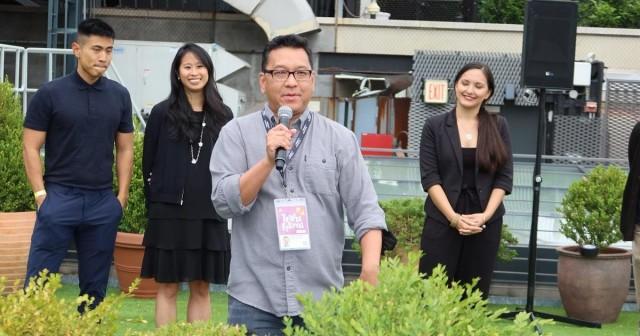
"The Resemblance" is about a grieving couple who went to a "rental family" agency to hire an actor to role-play their dead son and then discover that their evening of remembrance is more than they bargained for.
"Back in 2018, I came across a New Yorker article entitled Japan's Rent-A-Family Industry and became immediately fascinated by the concept of rental families. It's a uniquely Asian phenomenon where people hire actors to role play and/or pose as relatives to either save face, heal, or rehearse troublesome situations to prepare themselves for the real-life incidents," Nguyen said about his inspiration for the film. "I immediately thought it would make an interesting film and started jotting down ideas that might make a good script. 'The Resemblance' was the result of years of sifting through many stories. But the story of an elderly couple wanting closure with their dead son held the most emotional resonance to me."
"Many might find the concept of the film to be quite comic. However, my approach to writing and directing 'The Resemblance' was naturalistic, intimate, and subtle. I chose not to ridicule the people who hire rental-families. Instead, I opted to examine why they emotionally need rental-families in the first place. I wrote this script as an examination of grief, longing, acceptance, and closure."
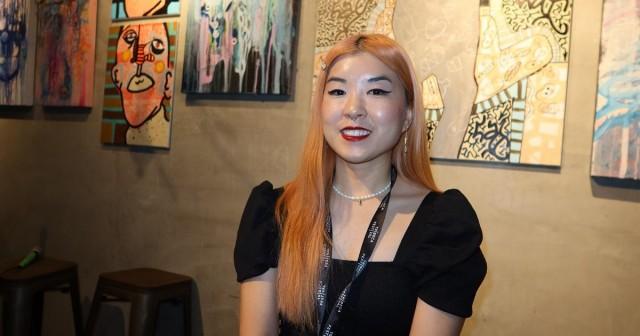
So Yun Um is one of the youngest filmmakers at Tribeca who just made her directorial feature debut with the autobiographical movie "Liquor Store Dreams."
The documentary is a moving film about immigrant dreams and generational divides. It follows So and her friend Danny, both "liquor store babies," whose Korean parents made the best of limited opportunities by running liquor stores in Black and Brown communities in Los Angeles.
So Yun Um, who spent four years to be able to finish her film, revealed that she learned a lot from making this film. "I learned how to tell a compelling story with nuance and balance, nitty gritty details about film business, sales, and distribution and more. Every part of this process was a learning lesson for me and above all, I learned more about myself as a filmmaker and what kind of stories I wanted to tell."
"While making this film, I learned more about my dad's upbringing, immigration story, passions, and in general, more about him as a person. I didn't realize he had so many great nuggets of wisdom. I discovered what a natural performer my dad is."
Asked how she was able to convince her family and her friend Danny (the other "liquor store baby") and his family to be in the film and reveal more of their hardships and challenges, she said, "I already had a previous relationship with most of the people in my film. Filming our lives and conversations allowed us to just open up naturally to one another. I tried to approach my subject with a lot of care and curiosity. Creating a safe space for my subjects allowed them to share such personal information about themselves with me. I never imagined that it would come so easily but I'm glad they felt safe to share a lot of their inner thoughts and secrets with me."
Filmmaker Abbas Rattani did the short "Alhamdu | Muslim Futurism" which he is "an experimental vision of resistance and liberation through the lens of Muslim joy, flourishing, and imagination."
Rattani said that one of the challenges he encountered in making the film was funding. "The film was completely crowd-sourced and funded by the individual donations of 850 people who wanted this vision of the future to come to life."
"Funding for art and cultural products from marginalized and disenfranchised minority communities is a big challenge and restricts the speed, scale, and potential of creative works—like this film," he said.
"The entire film features Muslims of all self-identifying backgrounds; bringing such a group together requires significant logistical coordination. Moreover, nearly 100% of the behind-the-scenes crew were Muslim—selecting and coordinating their contributions is also an operations challenge. Much credit goes to Sofia and Akifa Khan, our executive producers, for overcoming this barrier."
"Finally, being a modest arts and culture collective representing a marginalized group—our distribution capacity is limited relative to larger corporate entities. Everyone who has seen this film has had only beautiful things to say about it—but competing for people's eyes in the highly saturated digital world is a significant challenge in getting out the artwork of American minorities."
As for the several messages incorporated in the film like "Everyone you meet has something to teach you" or "What is coming is better than what has come by," he said, "The larger message is a joyous, vibrant vision of liberation. A future where our dignity, flourishing, and imaginations as Muslims are actualized. We dream of worlds and communities where we exist boldly, proudly, and unapologetically. It is precisely for this beautiful future that we pray our efforts with the 'Alhamdu | Muslim Futurism' project serves as a catalyst toward a celebration of our humanity."
"There should be no ambiguity in our call—a joyous Muslim future begins when we resist against anti-Black racism, Islamophobia/xenophobia, orientalism, homo-trans phobias, sexism, ableism, settler colonialism, nationalism, imperialism, militarism, supremacy-nativism, and everything in between."
"The chronic suffering of yesterday and the compounded acute traumas of each day are constant affronts to the Muslim spirit—restricting us from conceiving and building toward a utopia of our own. May the process of boldly asserting our existence disrupt the hegemonic powers of today and serve as a portal to another planet where our joy is championed, our spirits are revitalized, and our commitments to flourishing and justice are re-energized."
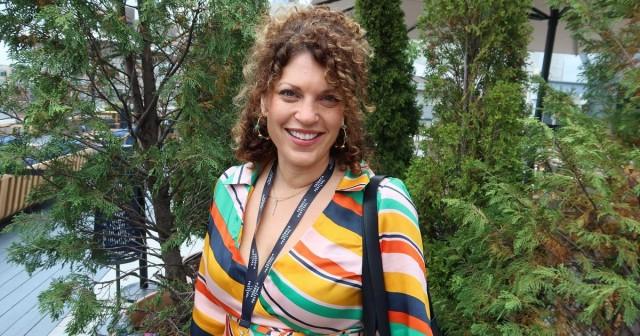
Another filmmaker we met and interviewed at the Tribeca Film Festival was Rachel Myers, who did the short "Bourn Kind: The Tiny Kindness Project."
The film is about a Black Jewish street artist, Bourn Rich, who confronts the fear and isolation of the moment through art and creates a street mural project to celebrate kindness and connection in his community.
Myers told us she met Rich in the early days of the pandemic through the Black-Jewish Entertainment Alliance. "As a new organization, they hosted online group conversations sparked by the moment we were collectively experiencing as a society under COVID lockdown and also of the intense emotional charge around the Black Lives Matter protests."
"I felt that we were experiencing a moment of reconciling our American identities and also immense fear. In those first conversations I met Rich. I was struck by his grace and kindness but also by his immense talent. I could tell he was a beautiful person and I wanted to get to know him better, so I reached out and we became friends."
"I had made a drawing and written a script called 'The Tiny Kindness Project' about how we see and connect with one another in this time in our country. The idea was about connection and how as a people despite where we come from or what we look like we are united in our humanity and kindness and connection. I asked him if he wanted to collaborate on the project and that was where it started."
She told us that the idea of the project came "when we were all masked. The question was, what are people feeling but not saying or able to say to one another when we experience this dramatic change in the world. How do we see and communicate with one another in this time of pandemic and lockdowns? The early concept was messages on masks with simple statements."
"'The Tiny Kindness Project' came in part from how I was raised. My mother was an elementary school teacher and community leader and has always been very kind in conversation and interactions with strangers. Early in the polarized days of Trump's presidency I noticed my mother was profuse in her kindness to strangers, complimenting people, profoundly thoughtful and smiling in every tiny exchange of her day. When I asked her about it, she said, 'We must counter the anger in the world with kindness.' That really stuck with me and that was where the idea started."
"The message of the film and project is small and simple but also impactful. How can little actions towards are fellow humans make change? How can art and engagement in our communities build connection? What tiny actions can we do every day to make things better and kinder towards one another? I believe that people are good and want the same things in the world and in their lives. I want the project to be contagious and inspire people to reach out in little ways. Approaching one another with kindness, love and understanding is simple. Our country and world need it to heal."
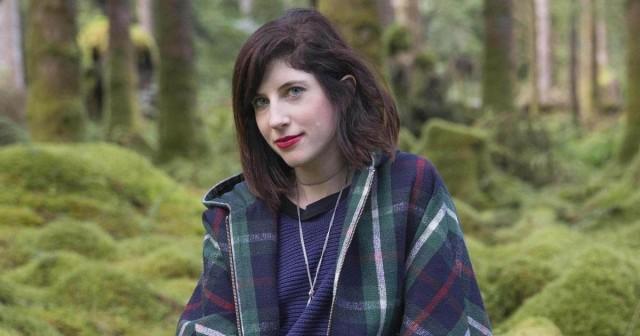
Finally, filmmaker Becky Hutner followed sustainable fashion designer Amy Powney, winner of the Vogue Designer Fashion Fund, on her journey to create beautiful clothes while at the same time saving the environment in her documentary "Fashion Reimagined."
Powney, who lived and grew up in a one-bedroom caravan she shared with her sister and her environment activist parents, began the #FashionTheFuture campaign where she encourages people to rent, recycle, and repair clothes instead of buying dresses all the time. She also started the "No Frills" sustainable collection of "Mother of Pearls."
Also involved in the film is Powney's inspiration, fashion designer and political activist Katharine Hamnett. as one of the only established designers in the world focusing on sustainability in the early 2000's. Hutner shared how she got Hamnett involved. "Fast forward a few years into filming, I received an invite to attend a rally that Katharine was holding at her studio during Fashion Revolution Week. There I had the opportunity to share Amy's story with Katharine. She was really receptive and agreed to meet with Amy right away."
Hutner admitted that she was also enlightened after doing the documentary on Powney. "About 10 years ago, I really scaled back my shopping and started paying attention to clothing labels, opting for natural fibers over synthetics. Then working on 'Fashion Reimagined,' I ramped things up even more. Now I buy very little and only from a few select brands that I've researched and trust. And each item has to pass my three-question test: Do I love it? Do I need it? Will I wear it for years to come?" she said.
"If it passes the test, that item becomes all the more precious and I want to keep it forever."
—MGP, GMA News

