

 GMA Brandtalk
 Tracking
 Archives

Ali Wong, Steven Yeun, creator Lee Sung Jin talk about road rage and 'Beef'
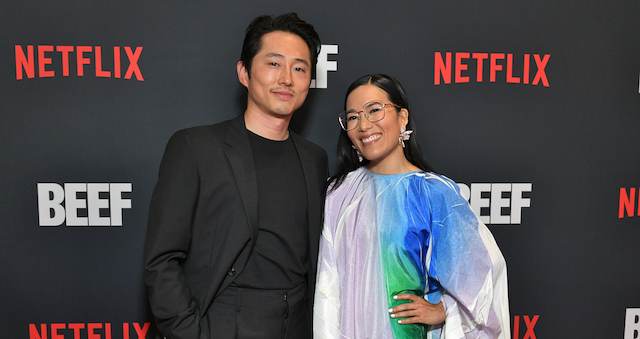
What do you do when a guy cuts you off in traffic, honks at you and does the finger on you? Do you try to chase him, follow him and get even or give him a piece of your mind? Or do you just chill, play classical music and forget it as just one of those off days?
The new hit TV series, "Beef," deals with road rage, anger management, marriage and family stress and everything else that makes a person mad.
It is so relatable that it makes you think of what makes you see red, how you control those burning feelings and emotions.
Created by Lee Sung Jin and starring Ali Wong (Amy Lau) and Steven Yeun (Danny Cho), the comedy drama series tells of a near accident in a parking lot that turns two strangers into mortal enemies.
It gets worse when the two try to find out more about each other and their families and try to retaliate by being more involved in each other's lives.
Other stars in the series include Joseph Lee (George Nakai), David Choe (Isaac Cho), Patti Yasutake (Fumi Nakai), Ashley Park (Naomi), and Maria Bello (Jordan).
At a Q&A at the SXSW (South by Southwest Film Festival) in Austin, Texas, creator-showrunner-director-writer Lee Sung Jin, Ali Wong and Steven Yeun were all interviewed. Below are excerpts from that conversation.

Lee Sung Jin
As the showrunner and writer, what was the impetus for this story? Where did the idea come from?
The idea came from a real road rage thing that I went through. It was a white SUV. It was a BMW though, not a Mercedes. It honked at me, cursed at me, and drove away. For some reason on that day, I was like, "I'm going to follow you." It didn't end as it did in the show, thankfully. That's why I'm here able to talk to you today. But it definitely made me think about just how we live in such subjective realities, and we project so much onto people that we don't know all the time and thought maybe there would be a show here. Thanks to A24 and Netflix encouraging me to pursue it. That's why we're here today.
So, you have this road rage incident. How do you take it from that experience to a show? Did you write a pilot first? How did you go about selling this project?
I didn't write the pilot first. We actually got straight to series off a pitch, which is very rare. But we were able to do that because of Steven and Ali. A lot of conversations, the joy of having them on as executive producers from the very start and just constantly talking, texting me at 1:30 in the morning being like, "Danny, you think... How much do you love 3 Musketeers? You think you eat a lot of them?"
Obviously, Danny's eating a 3 Musketeers bar when he's coming to Amy's. But just having that back and forth allowed us to really fill these characters fully before we took it out, and that's why buyers really resonated with it.
Did you have actors in mind when you were conceiving the idea?
Well, yeah. I mean, Steven, I think he was the first person outside of Ravi at A24 to whom I told the idea. That first conversation, we talked for three hours. Conversations with Steven, usually start with a very simple thing like, "Hey, I want to talk to you about a show," and then three hours later we're like, "Why is God the way he is?" And so, all those conversations definitely helped spawn the show. And then for maybe half a day we were like, "What if you were up against Stanley Tucci?" And that felt too literal at first thought. Then Ali happened to call me about something else and we caught up. She just had such a funny way of talking about harsh things in life and made me think, "Oh, what about Ali?" And then once we were all on board, it just came together very fast.
You really explore these themes of the class divide in the show. Although Amy and Danny's lives could not be the more different and polar opposites, there are similarities in their demeanor. Talk about that desire to want to convey that.
Probably because I've been both Danny and Amy, when I started writing, I was quite poor and had a lot of Danny-isms constantly and was very sad inside, and then now here I am at South Bay with a show, and I'm probably still sad inside. So, this feeling never goes away, and so you have to try and figure out how to accept it and live with it. That's why I wrote the show the way I did.
One of the reasons why this show really resonates with people is because there's so much that is absurd about it because impulsive anger is absurd. We've all been there, whether it's a road rage accident or something, we're so close to being just set off at any moment, and you often have to deal with the ripple effects of that. What are you hoping that audiences take away from this experience?
I hope everyone takes what they need wherever they're at. But for me, there was a Carl Jung quote that really was North Star for a lot of the writing. He says, "One does not become enlightened by imagining figures of light, but by making the darkness conscious."
We spend a lot of time with our masks and personas on as we interact with one another. That separateness causes us to feel like, "Oh, these things that we only know in our own brains like no one else does."
That can lead to shame, isolation and feeling alone. The more we are like, "Oh, I actually have thought that before too," or "I've actually even done that before." If we would just take our masks off once in a while, the need to go as crazy with expressing some of these things wouldn't be as high.
Steven Yeun and Ali Wong

As Sunny said, you both were executive producers. Did you have a lot of input into the evolution of the characters?
Steven Yeun: Yeah, I think we have a lot of shared experiences in terms of, it's cool to be able to tell stories like this from this point of view that I think is deeply connective and human. We're just having fun mining small, intricate, authentic things. Both Sunny and I grew up in a Korean church, so then you can just play with that and share the experience. Or we have uncles and cousins or family members who have not been seen that we can pull from, and that's hopefully what it felt like watching.
Ali Wong: I do remember talking a lot throughout the development process. It's just so surreal watching this again, and it brings up so many memories of the conversations we had in 2020 over Zoom in COVID-19, when we were all in our T-shirts and bottomless, having these Zoom calls talking. But I really have to give the most credit to Sunny. I've never eaten a Burger King chicken sandwich in my life. It's really beautiful to see Sunny express himself through this show and yes, all of us.
Ali, how did you get ready for the role and are we going to see more of this from you in the future?
Ali Wong: People always ask me too about the gun masturbation scene and if that was difficult. That wasn't difficult. I was like, "I got this, it's fine." The difficult, the more challenging parts were, there's some therapy scenes where I sit, and I talk for a long time, and I'm used to being able to gesture and have a lot of different inflections in my voice and everything. So that was something I've never done before, and I have to give a lot of credit to our heads of department.
The costume designer purposely dressed me in a lot of neutrals, which I don't wear usually. I dress kind of very expressively and loudly. But Amy has these insane thoughts, but she's kind of costumed herself in these Zen outfits. She's really in a maze of her own creation.
Then in the set design, Grace spaced out those bars in Amy's home. She calculated to this perfect amount where it's seemingly Zen, but her house also feels like a cage. So anytime I was in my costume or in Amy's space, I always felt like this is supposed to be nice, and I asked for this, but I do feel a little trapped. And so, all of that really helped me prepare and get into it. Also, because Steven, my god is Steven and he's so committed and he's such an incredible actor and he's such a good listener. I had no choice but to rise to the occasion.
Steven, this is also a pretty different role for you as well. What drew you to the character of Danny and the idea of "Beef" as well? Did you inject any of Steven into Danny?
Steven Yeun: A little bit. I think maybe what attracted me is that we got to play with something that maybe we're not asked to on the surface, which is our shadow selves. This whole show is about every character's shadow self, and we all have that. To tap into that and get paid for it is great and have your friends with you and have this story so that we can connect with you all about it and hopefully make you feel seen too, because this s***'s very common, surprisingly. So that was really liberating and fun, and I just jumped at it.
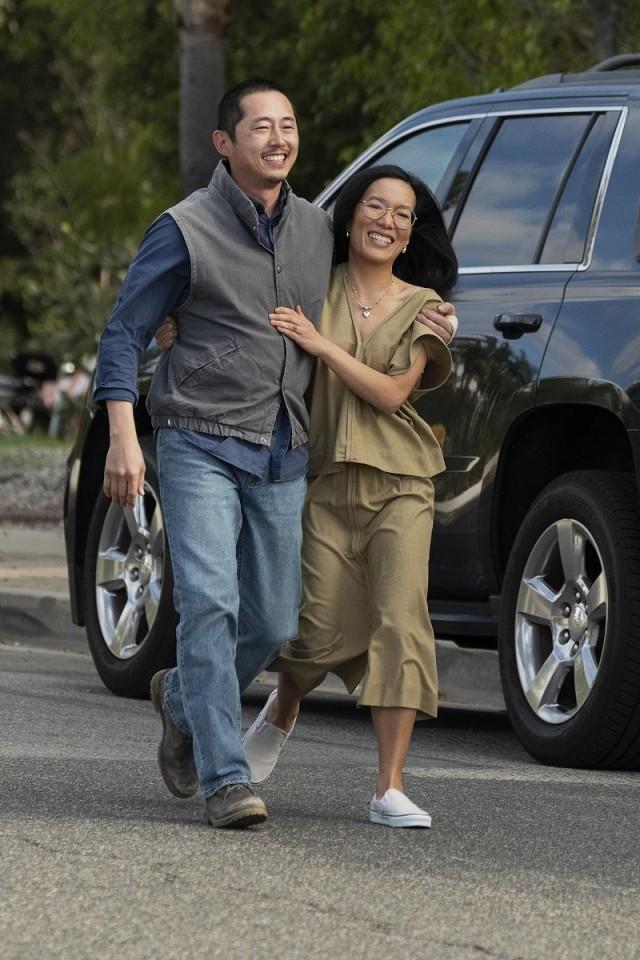
As I was watching, the chemistry that you all have is so incredible. You've all been friends for a while. What was that like to have these highly intense, dramatic scenes with your friends?
Ali Wong: It's interesting because even watching the pilot, I got emotional at the end because when I'm chasing after Steven, which was the first thing we shot together. After the first take of me running after him, we were laughing hysterically, and there are pictures of us. We're like hugging and laughing and we're just like, I can't believe we're doing this together. Even though we go up against each other in this series, in between takes, I remember in Amy's house, we would unplug our mics and go off into the corner, go on the stairs, and just gossip and giggle. We were making a show and it's really hard work, but it was, even now, it's just so nice to be doing this with friends.
How about you, Steven? What was it like for you to work with such good friends playing this kind of a role?
Steven Yeun: It keeps you feeling safe, and it helps you to be more honest, and that you're not left on your own vulnerability, but you're sharing in this thing. That's the only real way that Ali and I could get together and just ream each other out, and you're going to see more, and it's really fun. But that's the beauty of the chemistry is that we get to be safe and friends and sit in love and then just totally go at each other on screen.
Speaking of reaming each other, you all spend a lot of time being very angry. It is so visceral, this show. How do you get into it? And then how do you get out of it? Was it hard to decompress after exerting that kind of energy on being so angry?
Steven Yeun: Yeah. Our bodies shut down afterward, right?
Ali Wong: Yeah. Steven and I both broke out into hives. Mine was on my face.
Steven Yeun: Mine was all over my body.
Ali Wong: His was all over his body because he's weak like that. No?
Steven Yeun: Sensitive. I'm sensitive.
Ali Wong: It definitely took a toll on us that I think we didn't even realize until after the show ended. I won't even talk about what happened to your elbow.
If we knew what we were going to put our bodies and minds through, maybe we wouldn't have said yes to all of this, but we're really glad we did.
Steven Yeun: Afterwards I had to spend some time kind of just chilling out. But what was really nice is when you get to express this all in that safety of friendship and on set. You go home and you're like, "I don't get to really explore that anywhere else." So, it wasn't too bad. It was just the holding of the tension that was really gnarly, but it just keeps going. We're all living in it. It's finding that balance of trying to be chill because this is always hard. It's gnarly. So, trying, trying.
—MGP, GMA Integrated News

