

 GMA Brandtalk
 Tracking
 Archives

Will Adrien Brody get another Oscar after 22 years?
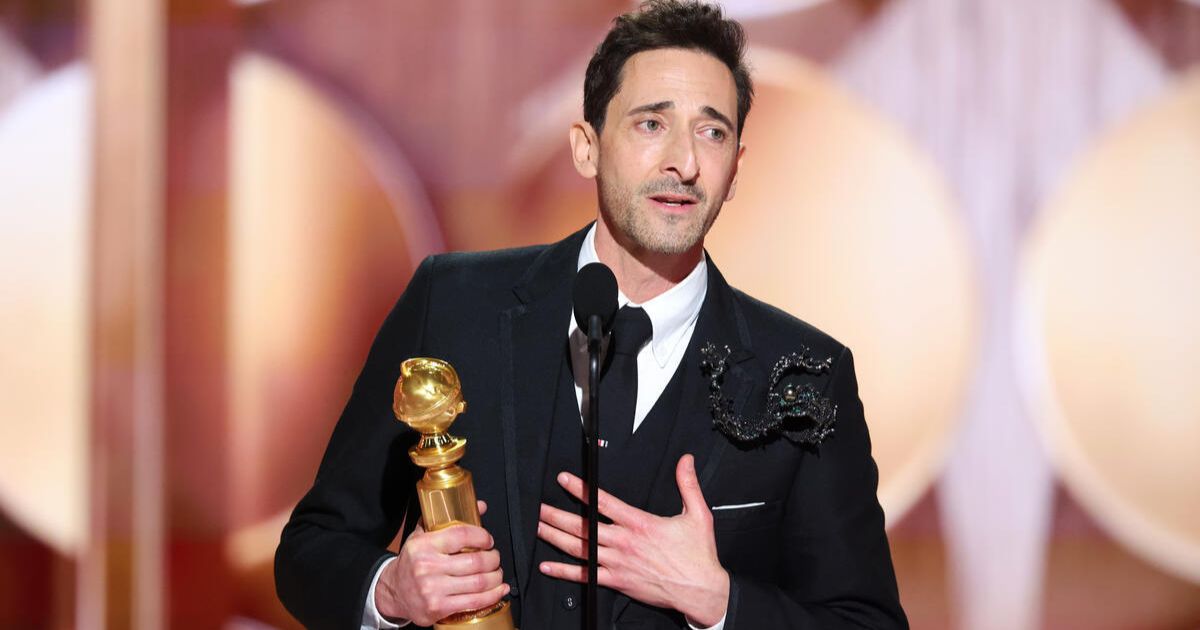
After 22 years since he won his first Oscar at the age of 29 (the youngest actor ever to win in that category) for his role in "The Pianist" in 2002, will Adrien Brody get his second Oscar for his performance as an architect in "The Brutalist?"
The first-time Golden Globe winner, now 51, is creating a lot of buzz as a frontrunner for the much-coveted Oscar after his portrayal of Laszlo Toth, a Hungarian-Jewish architect who immigrates to rural Pennsylvania after World War II and experiences antisemitism.
Brody, who was born in Jackson Heights, Queens, New York City, is the only son of former history professor and painter Elliot Brody, who is of Polish Jewish descent, and photographer Sylvia Plachy, who is of Hungarian and Czech Jewish descent.
"The Brutalist," which is a three-and-a-half-hour saga written by director Brady Corbet and partner Mona Eastvold, won the Golden Globe Best Motion Picture-Drama award and the Best Director-Motion Picture award for filmmaker Corbet, his first Golden Globe win.
Shot in the spring of 2023 in Hungary and Italy, the movie also stars Felicity Jones (Erzebet Toth, Laszlo's wife), Guy Pearce (Harrison Lee Van Buren, Laszlo's most important client), and Joe Alwyn (Harry Lee Van Buren, Harrison's son).
We were able to talk to Brody in an exclusive virtual interview and also at the Venice Film Festival press conference with director Corbet, Brody and the other cast members – Jones and Pearce. They talked about the challenges of making "The Brutalist," their preparation for the role, and working with each other, among others.
Adrien Brody (Laszlo Toth)
What attracted you to this project?
Oh, many, many things. But when I read it over five and a half years ago, I was incredibly moved by the material. The character is so nuanced and full of humanity and complexity. The storytelling is both incredibly intimate and very grand. I had a great appreciation for Brady Corbet's previous works. I knew he would do something wonderful with this. And he surpassed my expectations.
How did you prepare for the role of a Hungarian architect who was a Holocaust survivor?
Well, I've had a lifetime of influences that have allowed me to have an intimate understanding of this character and the circumstances.
In some respect, the research and commitment that I had given to understanding and portraying (Wladyslaw) Szpilman in "The Pianist" 20-something years ago gave me insight and context to all the struggles that László was leaving behind, which is essentially the backstory of this film, where he is now arriving in America in a new journey.
But it speaks to the trauma of World War II and the horrors of that time and the hopes and dreams of immigrating to America and the American dream and the immigrant experience. And I'm very intimate with the immigrant experience and the resilience seed that is needed and the sacrifice. Because my grandparents and my mother fled Hungary in 1956 during the Hungarian Revolution.
So, they had a similar journey and emigrated to the United States in the '50s, much like László did, and had to begin again as foreigners. That is very present in my life.
It's something I have tremendous appreciation for. And I felt fortunate to be able to honor the storytelling and my depiction of a character who's undergone those experiences.
How did you step into his shoes and determine who this man was?
In regard to portraying Laszlo Toth, firstly it's a beautifully written and constructed character on the page but it is one that I felt immediate kinship and understanding for and that I was adept at playing. Some of you may know my mother's work. My mother is Sylvia Plachy. She's a wonderful photographer. She's a New York photographer but she's also a Hungarian immigrant who fled Hungary in 1956 during the Hungarian Revolution, was a refugee, and emigrated to the United States.
Much like Laszlo, she started again, lost her home, and pursued the dream of being an artist. I understand a great deal about the repercussions of that on her life and her work as an artist which I think is a wonderful parallel with Laszlo's creations, how they've evolved, and how post-war psychology creatively influences your work and all other aspects of your life moving forward. This is such a beautifully thoughtful film even though it is fiction. It feels very real and very real to me. That's so important for me to embody a character and make him real and for a film like this to not only represent the past but remind us of the past. We must learn from them.
Did you draw inspiration from something or any other art form besides Brutalist architecture, music, paintings or other movies, for the film?
Brady shares a lot of his inspiration. He's very generous with that whether it's intentionally to help our process as actors or just his enthusiasm and excitement for it.
Aside from beautiful paintings or photographs that speak to the time and space, he would sometimes share a still or a screen grab essentially of the film when he was looking at dailies. They were like wonderful paintings of another era and also just to immerse me personally in an understanding, a deeper understanding of the complexities of architectural design and architecture as an art form and again how past trauma influences an artist and how our experiences in life continue to inform our work as they do for as an actor and as a man and as I grow.
As I'm able to impart my journey and the journeys of others and the loss of others around me into the characters that I inhabit, there's this beautiful parallel of all of it and all different mediums feeding into one another. Brady is very correct that so much of my character's ambition and fighting through all the suffering to create something indelible is the journey of a filmmaker trying to make something indelible and with all the obstacles that we have in this creative medium.
I tried to champion that in my work in support of his work, in support of the work that we all aspire to be able to do and as you know you see many films that very few come to fruition quite like this.
How was it working with Felicity Jones as your wife?
She's a lovely human being and a remarkable actress. She brought so much to this movie; she brought a great deal of strength, intelligence, and sensitivity.
The dynamic between those characters has to work, it's very important. He spends the whole first half of the film longing for her. And it's great. Her contribution is wonderful.
Brady Corbet (Director, Writer)
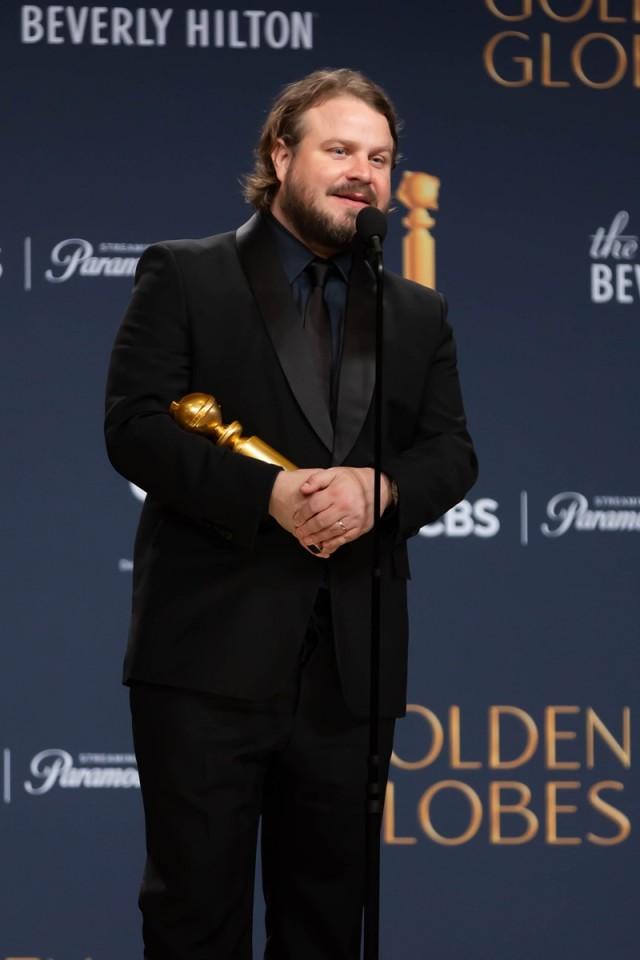
I consulted someone who passed away last year who I loved very much and admired a lot named Jean-Louis Cohen. He wrote the book Le Corbusier, the Taschen book that you see in rich peoples' living rooms. He wrote a beautiful book called Architecture In Uniform. The film was inspired by that book in part and the film is about the physical manifestation of the trauma of the 20th Century.
Jean-Louis was an expert and I asked him one question which was can you give me an example of someone who was stuck in the quagmire of the war who was able to rebuild their life in America, he said "No, there are zero examples" which I found haunting because there were so many architects out of the Bauhaus who had so much talent.
We didn't even get to see what it was that they were planning to build: the future that they planned for and expected. This movie, unfortunately, is a fantasy film. It's a virtual history because it's the only way for me to access the past. After all, once you start writing, it all becomes fiction and so the film is dedicated to them, the artists who didn't get to realize their visions.
Why did you want to make the film in this format – 70 mm, three hours and an intermission rather than maybe doing a mini-series?
First of all, in my experience, there are probably exceptions to the rule, but television is not a writer's medium but an executive's medium, so I decided to make a film instead of a mini-series. In regard to this division, it was a format that was developed in the 1950's. I think it was paramount, and so it felt like the best way to access the period.
It felt like there was a massive urgency for you to do the film from the first frame and then across 3 ½ hours, the magnificent actors and the urgency is really what I came out of this with. Is that correct and if it is, why so?
This was an incredibly difficult film to make. I'm very emotional today because I've been working on it for seven years and it felt urgent every day for about a part of a decade.
I am just really grateful to everyone who spent 31/2 hours with it last night and will spend 3-1/2 hours with it later today, and the cast and crew who made this film possible because this film does everything that we are told we are not allowed to do.
I think it's quite silly actually to have a conversation about runtime because that's like criticizing a book for being 700 pages versus 100 pages. I've read great novellas. I've read great multi-volume masterpieces and for me, it's just about how much story there is to tell. Maybe the next thing I'll make will be a 45-minute film and I should be allowed to do that. Everyone should be allowed to do that. The idea that we need to fit inside of a box is quite silly. We're, as Harmony Korine once said, cinema is stuck in the birth canal, and I agree with him. So, we need to help it out.
How did you work on the scenery – the bar scene, the room, the beautiful library?
Judy Becker is our production designer. She designed films like "Carol," "I'm Not There," "Brokeback Mountain" and many others. She's brilliant and she just understood the assignment and she showed up and worked on a shoestring budget because the film is not made for a lot of money. It's a low-budget film and she never complained, and she bolstered my experience because at times it was very difficult and she over-delivered Lol Crawley, my cinematographer, who shot the film, this is our third film together. We see the world in a very similar way and so it's just a testament to their work because I agree. I think it's superb.
How did you choose the cast?
It takes a long time to make a movie and especially with a cast that's this large, it's difficult to sort out all these schedules because they're busy so it's pretty simple. I cast the people who I think are the best performers who are available and that's it. I'm very proud of all of their work. I am also not surprised that they're all great in the film.
Did you draw inspiration from something or any other art form besides Brutalist architecture, music, paintings or other movies, for the film?
Generally, when you're prepping a film you have images, the street photographer from the mid-century who did a lot of early color photographs was a huge influence. He also used to be my neighbor but that's a separate issue. We are referencing films from the past. We were looking at a lot of the choreography in films like "Rope" and many films shot on Vistavision because the camera back then was even bigger than it is now. It affected the scene in a way, so we tried to restrict ourselves even though we are capable of now putting the camera on a Steadicam and we have technology available to us that we weren't used to. We did our best to try and evoke a bygone style of filmmaking by not falling back on a lot of those crutches.
Felicity Jones (Erzebet Toth)
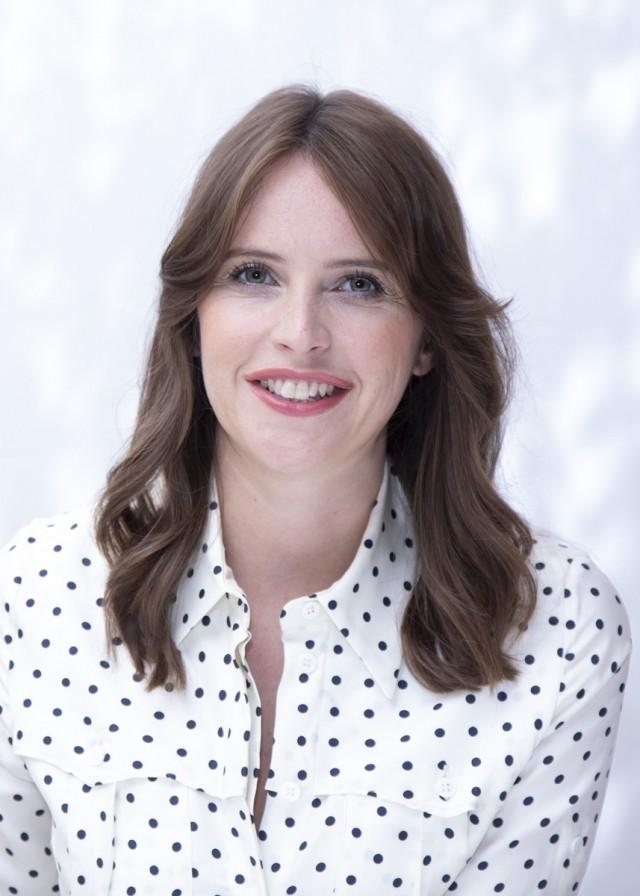
In playing Erzsebet, she's very much like the train that she arrives on in that she's only going one direction which is forward with great persistence and optimism and further, very much like Brady and Mona in making this film. So, I would feel like urgency is absolutely at the core of what we were making. I was thinking I was listening to a song by the Black Eyed Peas and there's a great line which is we've got one-word love and I think also underpinning the story and particularly for Erszebet and Laszlo is this idea of love, and the greatest love stories always come with urgency.
Guy Pearce (Harrison Lee Van Buren)
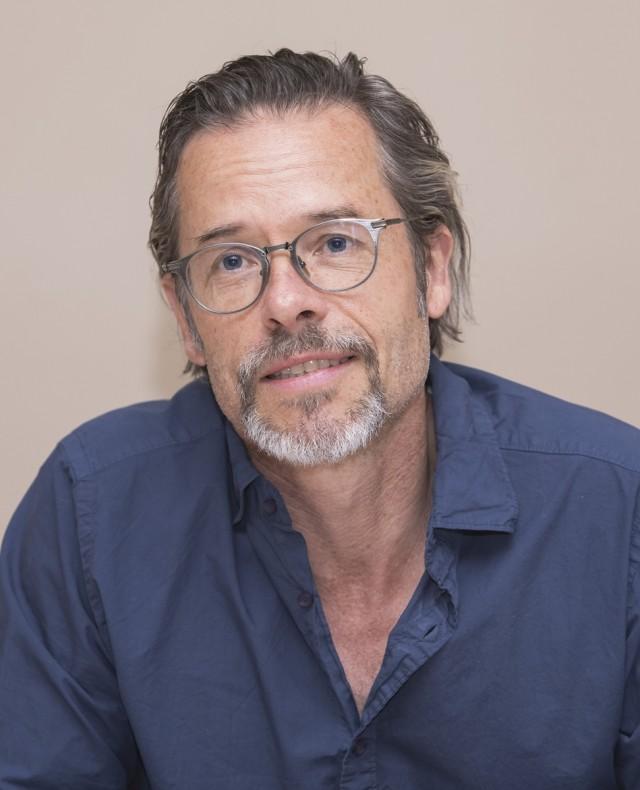
So, it's quite incredible that we had to deal with the noisy camera which I found really sort of invigorating and exciting. As we all know now, for those of us who have spanned the era of working on film and are now working in the digital realm. It's lovely to work with machines that you know work and have a time limit, that a film canister only lasts 10 minutes or whatever it does and they have to check the gate and there's a sort of an analog and an organic process that belongs there and you feel like you're part of it.
Very quickly you slip into what is most vital, which is our connection and relationship not just with each other but with Brady and what Brady is giving to us and bringing to us every day so that becomes the prime focus. But to your point, to work with some machinery that feels old-fashioned is lovely for an old fellow like me, so it was great.
—MGP, GMA Integrated News
