

 GMA Brandtalk
 Tracking
 Archives

New TV series 'Etoile' explores the lives of ballerinas in France, New York
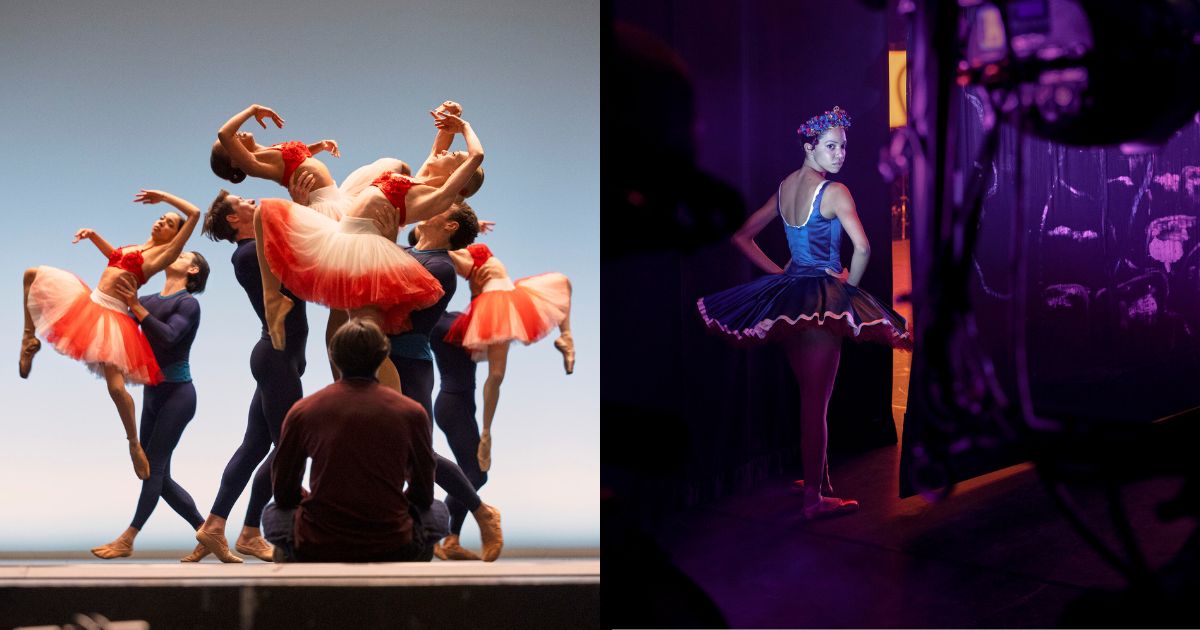
What happens when two world-renowned ballet companies in France and New York try on an ambitious project to swap their most talented stars to save their storied institutions and hope to attract new audiences?
This is the basic premise of the new upcoming comedy, "Etoile," which is coming from the witty and brilliant minds of award-winning writer-director-producers Amy Sherman-Palladino and Daniel Palladino ("Roseanne," "Gilmore Girls," "The Marvelous Mrs. Maisel," "Bunheads").
Unexpected turns, hilarious exchanges and more revelations occur as the new Amazon Prime Video series takes us inside the cut-throat world of dance.
The word "etoile" had been used to designate the best soloists of the Paris Opera Ballet since the 19th century, but it was only in 1940 that ballet master Serge Lifar decided to codify the title at the top of the company's hierarchy.
Starring Charlotte Gainsbourg ("Antichrist," "The Tree," "Melancholia"), Luke Kirby ("The Marvelous Mrs. Maisel," "No Man of God," "Boston Strangler"), Lou de Laage ("The Innocents," "Jappeloup," "The Mad Women's Ball"), and Gideon Glick ("Maestro," "Marriage Story," "White Noise"), the series is already creating a lot of buzz and critical acclaim.
We were able to interview the creators and the cast in person in Los Angeles and they talk about the fun and challenges of making the series.
Amy Sherman-Palladino and Daniel Palladino (creators, writers, directors, producers)
Why is this a passion project for both of you?
Amy: I was supposed to be a dancer. My mother's horrified at the terrible turn my career has taken. I trained for many years in toe shoes until I got my first writing job on "Roseanne." So, I've always sort of felt like it's a world I love. They're very strange people, dancers, in a great way. Your whole world is inside four walls. You're constantly in tights. You're rolling over on people, and people are grabbing you in your crotch all the time. You just have to accept it.
So, we had a short show called "Bunheads" many years ago, when I was younger and fresher. And it was just a little taste of what it was like to write in that dance world, and it's been itching for a long time. We finally decided, and we got to be in Paris half the time.
Daniel: Behind the scenes, there were some documentaries by a great filmmaker named Frederick Wiseman. He's done some documentaries about the dance, about, one's called "Ballet."
It's a very cutthroat world. And most people don't know that.
They think it's kind of a light and fluffy thing behind the scenes, but behind the scenes, it's like the behind the scenes at an NFL, at a football league or a soccer league. It's a rough world with tiny margins. It's cutthroat. You're having to cut dancers. You're having to crush dreams. So, we wanted to show the behind-the-scenes too.
Are there misconceptions about this world that you maybe helped to debunk or maybe there are some stereotypes about this community that are all too real that you wanted to lean into a bit?
Daniel: We worked with a lot of professional dancers on this show, Unity Phelan and Tiler Peck being the top people out of New York City Ballet. They still dance there. They're their top people. I can tell you those two, and the whole dance world in particular, they have not been happy about a lot of the ballet shows. And it's not because they're not well written, it's because they're telling the same story of what they feel is an unreal depiction of things. Like bulimia and suicide and all that stuff. It's a tough world. There are all sorts of emotions; they're human beings. They go through all sorts of things. But there are too many shows that lean into the few problems that they have, and it wasn't showing the whole world. It wasn't showing that they're elite athletes really.
Amy: And they're weird. And they're funny. They're like a, we say in one of the episodes, we're like a cult. They are. It's like a whole other level of artistry, of intense, you're with the people that you are competing against, and yet they're your friends and your allies and the only ones who really understand what you're going through. Your career could be over, one twisted ankle, you're out and you're teaching Pilates the rest of your life. It's the one artform which you are guaranteed to make no money. You're doing it purely for the love of art and the beauty of it.
And if you want to make a buck, you got to figure out how to sell something on the side. Because it just isn't that kind of thing. And the dedication is unbelievable. I think that they just wanted everybody to see everything about them that they are not just like pretty on stage and then pushing each other off buildings, off stage. It happens. Who hasn't pushed someone off a building? But they're like it's not all we do, and it was a chance for us to also dive into Paris Ballet is very different than New York Ballet.
Paris Ballet goes back to the courts of the kings where ballet started. New York City Ballet started much, much later. So, it's sort of like the tradition with the young upstarts, and there's sort of an interesting push pull in the way the different worlds are, and I think they wanted that represented also, that it's not just one ballet dancer, is not just one thing or one kind of person or one sort of attitude.
You were inspired by a documentary about ballet. Can you talk a little bit about that?
Amy: The documentary followed a season of ABT, American Ballet Theatre. You saw everything. You saw the rehearsals and you saw the person trying to get into the company. And you saw the process and a lot of lying around in hallways in tights. The people who have to work the phones to support the ballet.
In America, it's not a government-subsidized thing. And in Paris, it is. And when we went to Paris to try and recruit dancers, if they were in the Paris Ballet, they're like we got a job. We got retirement. We got benefits. We get to strike every once in a while. We don't need you.
In America, they're like, come on, because they don't have any of that. And so, there's a whole team of people who aren't dancers who are working the phones, who are like hard New Yorkers screaming at people about money and theaters and things like that. And that side was interesting too. That's why we centered around Luke Kirby, who is our delightful, handsome, adorable lead, to see the whole workings of, and what it takes from everybody to keep something like this, that's not the big moneymaker, alive.
And because it's an unbelievable art form that is always on the verge, especially in America, of going away. Always. It's like this far from being bye-bye constantly.
Because you guys were able to shoot this series both at Lincoln Center, as well as in very historical locations in Paris, the Palais Garnier, the whole thing, so I wanted to know a little bit what's the story behind actually getting these locations and ensuring that the people who follow ballet would recognize these places?
Daniel: In both cities, we had to sort of Frankenstein monster build what our fictional theater was like. So, in New York, we used the outside of Lincoln Center, but we used the interior of a theater that's actually in New Jersey because we get access to it.
Amy: We used the stage in New Jersey, and then the interior of the theater where it's getting into the seats and stuff like that, that's The Met. So, that was the three different.
Daniel: And then in Paris, we couldn't get as much access to the Opera Garnier as we needed, so we did one theater as our interior. We got to shoot a little bit at the Opera Garnier. The exterior was the Comique, and the interior was the Châtelet. And then we occasionally got into the grand rooms of that Opera Garnier and shot as much as we could in there.
Can you walk us through how you cast dancers who are also terrific actors? Especially including the young Asian girl (LaMay Zhang) who is in the series.
Amy: She was impossible to find because we needed a little girl who had a certain amount of technique. And you could see that she had a lot of talent to grow into. And she had to talk. So, there were just a lot of requirements, and we really searched high and low for our little LaMay. And we finally found her. She was 10, which was younger than we wanted, because 10-year-olds are like they're one year out of nine. Like, they're little.
But she's very weird. And I mean that in the best way. Like, she was just sort of weird and she had this sort of dry way of talking, and she just sort of looked at you and was just sort of like, it was, I don't know. She was like a strange little adult walking around, kind of like judging you, judging us.
We're like, LaMay, you know, we're grown. It's like, don't look at me like that, but she was just a very smart girl. She knew everyone else's part, where everyone else goes. You tell her something once, that's it. She's never going to do it a different way again. She was just very special.
So, our choreographer, Marguerite Derricks, who has been with us since "Bunheads," and then she was with us all the way through "Maisel," we always used dancers in any way we could because it just made the way we film easier. So, she went out and scouted everywhere. And she knew Tiler and she knew just within the dance world. So, we slowly sort of cobbled together this unbelievable group of 20 and 20 that we had. People like Tiler, Unity, Robbie Fairchild and Banjamin Freemantle, we really leaned on them a lot.
Talk about the casting choices in the Sherman-Palladino universe.
Amy: Luke didn't realize that he signed his life away to us and can never go anywhere ever again. I think it's dawning on him now. And Gideon, actually we had hired Gideon as a writer, because Gideon wanted to transfer into writing, and he has done Broadway and acting and he started to write. And he's actually a very good writer, so we had him in the writer's room.
And the funny thing about Gideon as we started to create this character, this weird semi-on-the-spectrum strange choreographer, and we would find ourselves talking about this character and then just looking at Gideon. And after a while, Gideon's like why are you looking at me like every five seconds? And we realized we were creating a character, and it was Gideon. Like, we created this character together in the writer's room, and then about halfway through it, we said to Gideon, is it something you might want to do? And he's like, yeah, well I knew it because you guys kept staring at me the whole time that you've talked about being weird and being spaced out and not understanding what people are talking about.
Daniel: We knew that Luke was the right guy for this leading role, and Gideon, there's no one, Gideon has his own odd, peculiar way, and it's kind of, it's unmatched with anybody else.
Amy: Luke also happens to speak French, not bad. Luke has been in our "Maisel" world for so long, but we just keep looking at him like, you are a leading man. You should be out there number one. He's as lovely a human being as he is a great actor.
Talk about Charlotte Gainsbourg, she is known in certain parts of the world. I didn't know she was quite as funny as she was in the show.
Amy: She's so funny, and very physical. We knew she was, like, the coolest person walking the face of the earth. She's like the French Lenny Kravitz. Like, Lenny Kravitz wakes up in the morning cool, and Charlotte, I just think wakes up with her hair slightly askew and she just looks cool.
And she's got this quality about her, that voice, that ethereal voice and she walks like a dude. And everything she does is like she's on a skateboard or like a ski or something. She's just unbelievably cool. It's weird because you walk around Paris, and her father's murals in the subway, you walk into a coffee shop, and it's a weird existence that she has, but she's got like these unbelievable kids and they're so adult and smart, and they have conversations. Like, I've never had that conversation with my mom ever. She's just really awesome.
And we met her, she just read the script and said, "Hey I'd like to do this." I went to breakfast with her, and I was going to sell and I'm going to be like getting her to do it. And she had already decided she was going to do it, but I don't think she knew that this was a conversation for me to convince her to do it. And it was like we had coffee, and she had a hat, and she walked into a room and everyone's like, oh, Charlotte's in the room. So, it's like the red carpet rolled out for her and it's like you're walking with the Queen. It's unbelievably mysterious and fabulous.
She's an unbelievably hard worker. She never leaves the set. She just sort of hangs there. And she has a funniness that is like there's like a thing about her. And what I didn't know about her was, A, how funny she was gone be and how physically funny she could be. Like there's a thing where she slides down at The Grand Salon.
Charlotte Gainsbourg (Genevieve)
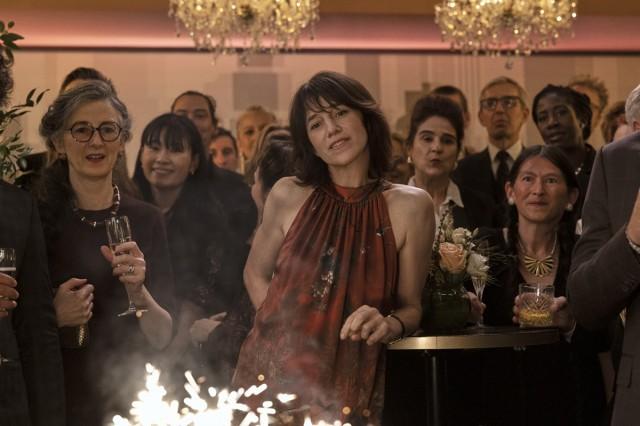
Amy and Dan didn't want me to have an English background because I was going to have a sister. In the story she had a French accent. So, I said, "Ah. So, my father must be English then." And Amy said, "No." So, I don't think it mattered. All our different accents. But, of course, I used my background. I use everything I can for the character.
It was fun for me to go from the French to the English. I've never done this in a film. To be able to do not as much French but quite a lot. My character being in France, I was speaking French quite often. And it was fun.
What I love about watching your character is how she gets caught in the bureaucracy of her job. Is that as much as she wants to do what she wants, there are people above her and people below her she has to navigate through this. In your profession too, how close does that correlate? How interesting has that navigation been in your life?
I don't have to pretend in my life. I don't have to fake it the way she has to. And all the minister of culture, the fact that she constantly feels that she's going to be fired, and that position, we do have this in films where we can be replaced. Maybe there's a little bit of this not being that comfortable. Not being that secure. But I think she's hiding it constantly, which is hard work. Because you can feel that she's not that strong. I mean, she has strong ideas. But she pretends to be sure of herself.
You portray a woman of power who is also tender and a bit clumsy. She's goofy. Was the character written that way or is it something you brought to the role?
No. It was written that way. I love the way they write. I've never done a comedy in English before. So, I love the way they use words and the clumsiness, which was really part of their writing. So, it's rare to have a character that you love. Because it wasn't a two-month shoot like I'm used to. It was a nine-month shoot. So, to be able to love your character, have fun, was really very special for me.
Following up on the comedy, I don't know if you heard what Amy was saying, how great you were. All that stuff. But she said that she never saw you doing comedy. It's true that in "Etoile," the physical comedy, it's a lot more than what people would expect from you. So, was it a hard job? Or just you at that stage in your life just being freer and just going for it? And also, because you are younger, you didn't do that kind of comedy.
No.
And when you started here, there were a lot more serious role. Do you feel also that, again, at that stage in your career, in your life, you're more open to that kind of opportunity?
I do want to have fun. I love serious films and dramas, for sure. But it's wonderful to be able to be light.
I needed to be light. Especially at that time in my life.
Oh, the physical stuff. It just happened. It was very funny. I think the red shoes were a big thing in my mind. And the fact that I always wanted to take them off and put them back on. And the clumsiness and the constant agitation made it happen.
That's sort of funny. It was written that way. And I had so much fun. I wanted to dance. I thought when they came to ask me to do this, I thought, oh, so she has a ballet background then. I'm an ex-dancer. Then I can put it in my character.
And she said, "No. No. You're not." So, I was really frustrated.
I just love your being free in this character. Amy Palladino described you as the Lenny Kravitz of the French. Talk about that. And also, the sexual tension between you and Luke Kirby.
It was fun. Luke is such a great partner. We had a lot of fun. And it's so easy. I mean, all the characters, all the actors were such a pleasure to work with. And it's not that obvious to have a great crew and great fellow actors.
Amy Palladino described you as the Lenny Kravitz of the French. Because you take off your shoes and then run down in the salon.
Yeah. I felt very free, maybe, for the first time, just messing up. Having fun. Because Amy and Dan were both pushing to say, do whatever you want.
And they were so easy with that and any proposition. And then they would tighten it. And have, of course, their input. But at the beginning, they were really welcoming any kind of craziness.
What made you pick this project and what is important for you in general when you sign up for projects at this point in your career?
I haven't done many series, especially since it's my first one in the US. I participated in a few in France. But it's not a world that I know. So, I was very curious. And that's it really. When I read the first episodes, I was convinced that I wanted to be a part of it.
I met them. I met Luke. I remember in New York. And it was very exciting. The project was exciting. All that world of dancing. I couldn't see the studios yet. But they had already constructed the whole opera. It was going to be a big thing.
I've never gone into, also, a story where you don't know what's going to happen with your character. In the fifth episode, eighth, you know. And I always think of an episode of "Friends" where he gets killed in the elevator shaft. So, I was always wondering, ooh, am I going to stay until the end?
You feel endangered, but at the same time, there's this excitement about what's going to happen in the next episode. And they kept it really until the last minute. So, the suspense was very high.
When you pick work, what's important to you?
What's most important is to be able to juggle with a comedy, a drama, speaking French, speaking English, music.
All these different worlds. Fashion for a little bit. It's lovely to be able to, because your persona changes. I'm not the same when I speak French, then when I speak English. Obviously, in a comedy it's different than in a drama. But I miss them all, when I've done too much of something. I want to be able to play everything I can. That's my choice.
Lou de Laage (Cheyenne)
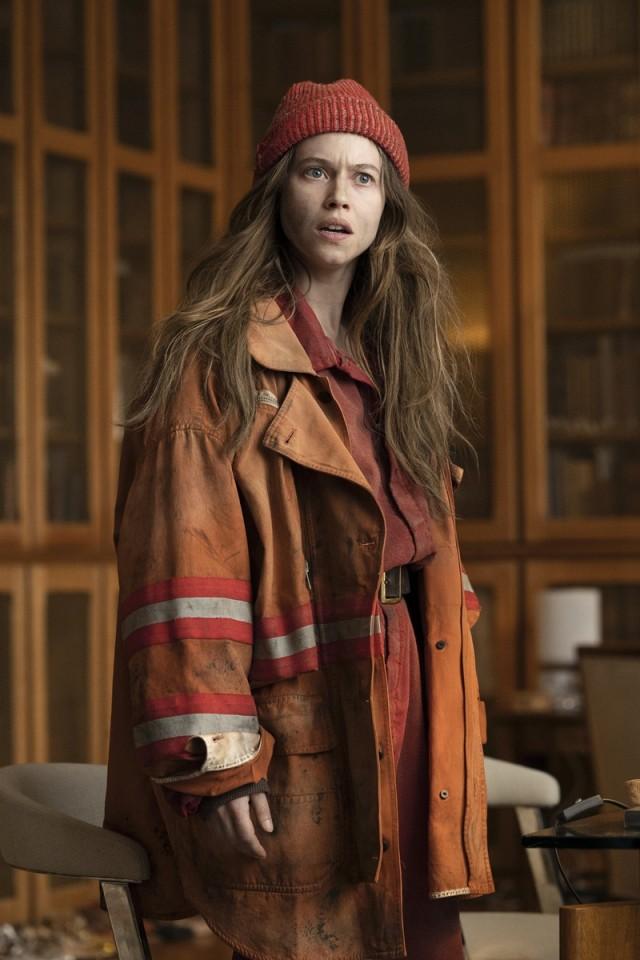
No. With Amy, the Director, in reality TV -- because sometimes you have to take something of the personality of the directors because they put themselves, in a way, in the character. But, no, I invented someone. But it was in the script.
The script was very, very clear. So, it was easy to see her when I read the script.
Your character has an interesting line between arrogance and self-confidence.
She's the perfect balance between -- not perfect, but childhood and responsibility.
She has a child inside of her. A very strong child and very headstrong.
But how important is it as an artist to have that belief in yourself? Because other people think that that's arrogance. But if you don't have that confidence, how are other people gonna understand it?
Because I think it's not only belief in myself. It's believing something bigger than me. She believes in art. She believes in dance. So, it's not about her. It's about, yes, dance.
There are some very funny moments. And one of the funny moments I loved with you in it was when you pleaded to Luke Kirby's character, Mr. Pride. And you were addressing him down there. And I was wondering if you were able to keep a straight face all throughout, or you were actually laughing? You were able to pull it off. It's very funny.
Oh, maybe I laughed the first time. But after when you have to play a character with so many angers and so many passions, sometimes I'm like that. I'm becoming to be this kind of girl. And what was complicated for me in this scene, I thought, okay, I have to find a way to do that without vulgarity. So, I have to keep something just charming and crazy and fantasy.
Your character kind of took into her wings the Asian girl. So, talk about working with her and how the chemistry between the two of you was.
Oh, it's nice to work with a child, and she was a real child dancer. So, she was so serious and so concentrated. And sometimes I was, oh my God, I'm with such a serious person. She's more serious than an adult. Because she wanted to do everything well.
And because she has la rigueur d'un danseur. She had the rigor of a dancer.
And that's crazy because the dancer has so much rigor. And after, it became funny because my goal was to make her smile.
Because I was, okay, she's a child. She needs to just relax and enjoy the moment. That's the most important.
You talked about your character and how she doesn't care about social conventions. I was wondering if that was liberating for you to play a woman like that. And did she rub off on you in real life a little? Did she make you freer? Or maybe you guys already have a lot in common? Can you talk about that?
I think it's complicated to become this kind of citizen. But, yes, it was so enjoyable to do it because she's so free. She doesn't care about what people think. So, it was fun to just do what I wanted to do without thinking, what people would think about me. That was very liberating.
Luke Kirby (Jack)
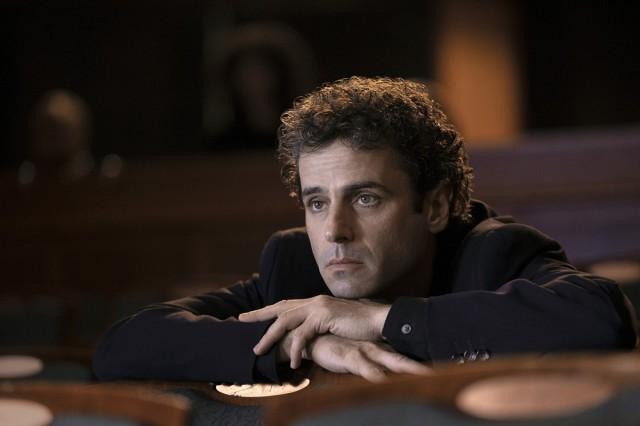
I think that's fair to say that it's a complicated relationship. Jack and Genevieve have known each other for a long time. They are both operators of ballet companies.
And they share an affection for this art that I think is deeply rooted in both of them. They are both conflicted by the dynamic of art and commerce. They have to walk that fine line of art and commerce can become a very cynical prospect. They're both challenged by that consistently. They care about their companies deeply. I think their companies are like their families to them. So, I think of them as having a bit of a twin relationship. They both just happen to like each other's company in many different fashions.
How did you enter the Sherman-Palladino universe and how would you describe it?
I entered it through "The Marvelous Mrs. Maisel," which was a nice way to enter it because I had Lenny Bruce on my side, who was a very brave person to hold hands within that endeavor. I would describe that universe as I feel like in their world there is a metronome that is moving very quickly.
And there's a sensation for the most part with these characters that the earth itself could crumble underneath their feet. And so, the stakes are constantly very, very heightened. And then occasionally, they give you a glass of water, where everything kind of smooths out and slows down and we can see each other in the kind of realer way that we like to. But for the most part, these people are driven by a need that goes back very far in their history.
And that is a kind of yearning that we share to be seen and to be heard and to be understood and to get things done. It's a very nice world and universe to live in. And I'm happy to practice that kind of life in their world and not in my own, because I'm a little slower going.
When we talked earlier to Amy Palladino, she mentioned that she was convincing you that you're ready to be a leading man. So, how is it now being the leading man in this series?
Very good. She's right. I mean, that's very flattering. I think of this show as being truly an ensemble. It's a very exciting cast of characters. The show is about companies, you know?
And so, it's a pleasure to sort of be at the head of it but I feel richly blessed to have all of these other really, really remarkable actors playing these great characters. It's a dream to get that kind of company.
I asked Lou about this earlier, and one of the funny moments that I saw in the show was when she was with your character and Mr. Pride down there, so can you talk about whether it was it hard to keep a straight face, or you were just thinking, oh, this is all part of an actor's life?
It's a nice way to spend a Tuesday. You know, it beats other Tuesdays that I've had. Lou is remarkable. She's a really remarkable actor.
And really great to share the space with and her focus and her drive are so palpable. It's just great to have that challenge and that degree of focus brought into a scene. Yes, there were moments. We had to get through a little bit of the giggles, I guess. But we found our way. It's really fun to work with her.
Gideon Glick (Tobias)
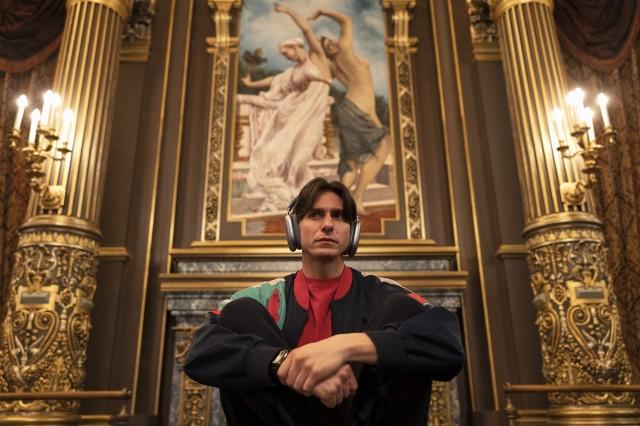
Yeah, well, it's funny. I didn't know that they were writing it for me. I had a sense.
But we were about a month into the writers' room, because I was a writer first. And every time they talked about the character, they kept pointing at me. But I didn't know it was me. And everybody kept looking around and thought, "How strange is this?" But then when they offered it to me, it was a beautiful synthesis. So, we came up with it together. Which I feel really lucky about.
Sadly, we live in a world that loves to pinpoint our differences, and kind of trying to separate us from the pack because of that. And here in this show, it's almost, it's your superpower in a way that kind of does that. So, I was wondering if you could talk about your character, and for yourself, what has been your superpower? What is unique about you, do you think that gives you an edge over somebody else?
That's an interesting question. You know, I was born with one ear. My right ear is completely fake. It's made out of my rib. And hearing impaired on my left side too. So, I would say that it has been a blessing in a strange way. Obviously, I have my own issues that come up with it.
But I've had to embrace the fact that I'm different from a very, very, very early age. I also came out when I was 12. So, at that point, it was kind of on the vanguard. People come out all the time now. But back then, that was very unique. And I think I've learned very early on that what makes you unique is your special power. And I think with Tobias, he thinks very differently than everybody else. And he's very strident and kind of blunt about it.
But he's a brilliant man. And when it actually gets actualized, you can see the tangible beauty that he's creating. So yeah, I feel very lucky. Very, very lucky to portray it.
You've done a lot of theatre, Broadway. So, working on that show with so many dancers who are used to the stage, is it different compared to what you've done before? Because at the same time, you have cameras, did you give them tricks? Because most of the dancers are not actors as well. How was it on a daily basis for you?
It's interesting coming from the theater. It felt pretty organic. And I would say Amy and Dan also have a very theatrical cadence to their writing. And so, I don't feel that anybody really needed any help. I think we understood what was happening. The really fascinating part, though, was when we were filming the dance. We understood how much of a livewire it is because you can't do it that many times. You can't do that many tasks. And so that was really exciting and special to see everybody understanding that, oh, if we don't get it, we will not get it, because the bodies won't be able to do it. And so that was really amazing.
Did you base your character on any particular teacher that you had who's very eccentric? And what did you learn about the ballet world after filming this?
Yeah, I got an amazing opportunity to work with the legendary Bill T. Jones when I was 17. I did a musical called "Spring Awakening." And that was incredibly informative. Bill is one of a kind. Completely unique.
And I would like to think that that affected the character. Paul Taylor's also somebody that really inspired me. I never got to work with him, but there's a lot of documentary footage on him. And I also got to shadow Christopher Wheeldon. So, Chris is a much more polite person than Tobias, but it was interesting working with Chris though. I got integrated into the ballet world. There's also an incredible book called "Apollo's Angels" by Jennifer Homans that is essentially a breakdown of the history of ballet.
And I'll be honest, I grew up doing plays and musicals, and I got to do "Maestro" and learn a little bit about classical music because of that. But this felt like the final great piece of art that I didn't know about, and I came away knowing a lot. Especially because of the writing component.
Did you learn anything from the ballet world because of this experience?
Oh, yeah. Discipline.
You talked about moving out of the writer's room and into this role. Does that mean that you were not involved with the script anymore after that? And also, can you talk about just getting into the writer's room? Like, what motivated you to become a writer?
Yeah, so we maintained being in the writers' room and acting at the same time. So, I was involved the whole way through. Once we started shooting, because Amy and Dan are the main directors as well, so once we're shooting, we're working on the show. But there would be times when we were in Paris where we would bring back the room, because we hadn't written all the episodes yet, and then there'd be breaks where we would come back together. So, we were still writing as we were going. But we had a lot of the episodes done. Think about six of them before we went to Paris to shoot for the first time.
I was always writing. Especially as a kid. But then the pandemic is actually what really instigated it. I felt pretty stagnant. And I needed a creative outlet. And then it all kind of started coming through me. And I wouldn't even be able to sleep at night. And I would just be writing. It was sort of manic. But I feel like I found my voice then. And I haven't really looked back. Now it's a big part of who I am as an artist.
So, your character was devastated when he got this very bad review on his play. Do you read your reviews, and how do you react to your reviews?
I will admit I have read my reviews. It's interesting. I think I'm not going to read them for this, and that'll be new for me. I come from the theater where reviews are make or break. And I come from two academic parents where they believe all data is important. And I don't know if I agree with that anymore. So yeah, I find reviews are hard because obviously you want the good, but there will always be bad.
And if you take in the good, you have to take in the bad. That's the whole adage of reading reviews. So, I don't know how helpful they are to artists, to be honest. So, I hope I will be strong and not read them for this show. —MGP, GMA Integrated News

