

 GMA Brandtalk
 Tracking
 Archives

Julia Roberts, Andrew Garfield, cast on working with director Luca Guadagnino in 'After the Hunt'
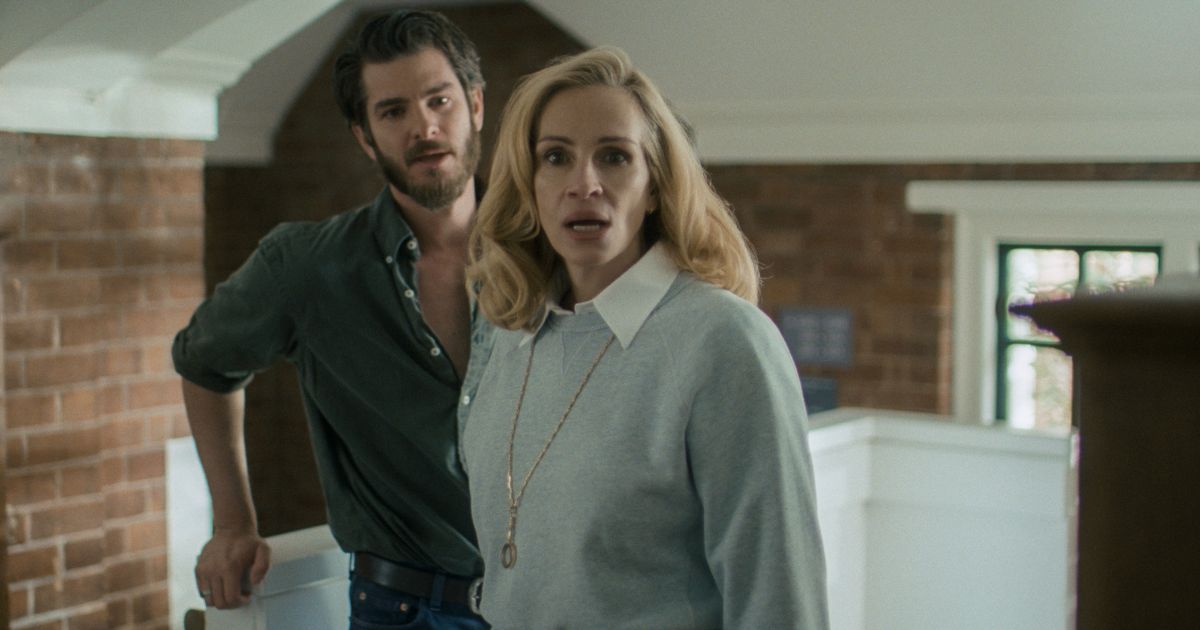
Julia Roberts and Andrew Garfield have both dubbed their "After the Hunt" director Luca Guadagnino the "one-take wonder" as the 54-year-old Italian filmmaker believes in "not torturing people" with several takes when making movies.
The filmmaker, who gave us "Call Me By Your Name" (2017), "Bones And All" (2022), "Challengers" (2024) and "Queer" (2024), is known for his movies that explore emotional complexities and the development of characters and relationships. Just like his colleague, Clint Eastwood, Guadagnino is of the same school that it takes only one or two takes to capture the complicated emotional and harrowing scenes.
"After the Hunt," which had its world premiere at the 82nd Venice International Film Festival, stars Julia Roberts as Alma Imhoff, a respected and well-liked professor at Yale University, who suddenly finds herself at a personal and professional crossroads when one of her students seriously accuses one of her colleagues and a dark secret from her past threatens to come to light.
The other stars include Andrew Garfield who portrays Henrik "Hank" Gibson, Alma's colleague and close friend, Ayo Edebiri as Margaret "Maggie" Resnick, a young philosophy student and Alma's protégée, Michael Sthulbarg as Frederik Mendelssohn , Alma's psychiatrist husband, and Chloe Sevigny as Dr. Kim Sayers, the university's student liaison and Alma's friend.
We recently had a sit-down interview with Roberts, Sthulbarg, Guadagnino and screenwriter Nora Garrett, and a press conference and a Q&A after the screening which was also attended by Garfield and Edebiri. Below are excerpts from those conversations.
Julia Roberts (Alma Imhoff) and Michael Sthulbarg (Frederik Mendelssohn)
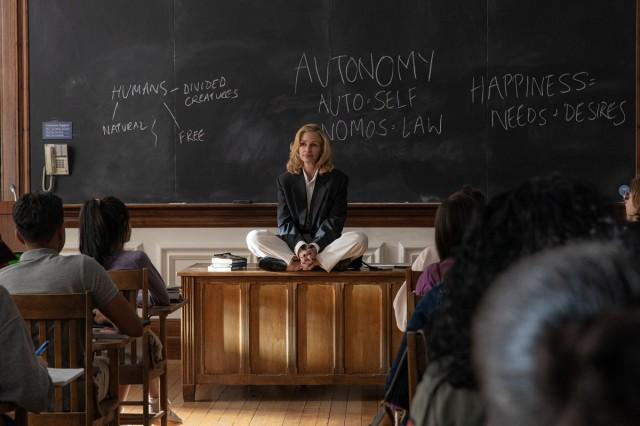
Congratulations on this amazing movie. I really like the chemistry between the two of you. You're like yin and yang, the serious one and the joyous one. Talk about working together.
Michael: It seemed a natural fit in many ways. I mean, you sort of trust the director to ask you something, and then you jump in. You never know what it's going to be like. And Julia's, you are extraordinary. And just being with you makes you feel things instantly. So, combine that with a really multi-layered text and someone with Luca's eye and spirit, and it's a great starting point for me.
Julia: There was so much in the script and then so many things that we were able to excavate as our relationship evolved. Just the little things. I mean, just watching the movie and the way Frederick sort of like pets Alma's hair in the morning and setting out her supplements, and or the two of us being in the bathroom at the same time. I think all these little things say so much about a relationship and the depth of that relationship and how these people really feel about each other when they're in the same space. I mean, there were so many great things to play in this, but I have to say, the time that I spent with Michael in their apartment playing those scenes, it was just some of my favorite stuff because it was so much nuance. It was all these tiny things, these little collections of things. And yeah, it was really kind of precious.
Julia, you also have amazing scenes with Andrew. They were very emotional. So where did you get all those feelings? And in one take?
Yeah, the one-take wonder Luca Guadagnino, I really like that. I like that sense of challenge and a little bit of pressure. There is something so gratifying when you've given Luca his dream scenario and your performance. It feels so good. I think we all sort of went the extra mile for Luca every day because he inspires that.
Julia, what was it about this character and this story that made you want to jump right into it and do it with Luca and this wonderful cast?
It's so fun getting to be in the orbit of someone who's so interested in people and curious and in love with why we do the things we do or don't.
And so, talking to him about Alma who was so foreign and complicated and challenging to me, he made me feel so excited at the possibilities of this kind of portrayal but deeply encouraged and supported and just was believing in me before I even knew what we were doing. I mean, it was the kind of thing where it was like a freight train. This was the fastest anything has ever happened.
And it was almost like if he would start to see the panic or the doubt in my eyes and I'd say you know, Luca, "No, come on, come on." And we'd just [laughs] keep going. And then as the cast was developing and evolving and it just was turning into the dream scenario and it maintained itself through to the last day of filming, it was tremendous.
Julia, how have you seen the role of women evolve on screen? And do you think 'After the Hunt' represents a shift in the types of stories being told about women today?
It's funny because people do try to talk a lot about the evolution of women in film. Nobody ever talks about the evolution or de-evolution of men in film.
I think, like, people, characters are so different and flawed, and some are empowered and powerful and evolved, and some are truncated and lost. And it can be 1920, and it can be 2004, and we can have these same things. And what this movie will do or not do in that capacity, it's beyond my understanding at this moment.
Did you learn something about yourself in every part you play? Is there some kind of introspective you have to do before you portray such a fascinating character?
Julia: I think what I learn has less to do with some internal psychological part of me. I think it's more to do with just believing in myself and being confident and putting as much trust in myself as I do in Luca in that scenario. Because it is really hard and really challenging.
The less I work, coming back, all those fears that I have every time I make a movie come back even stronger, especially because I'm really picky, and so, I wait for something that's going to be really, really hard to do, and then you get there and think, oh, now I have to do it. It's the part between taking part and doing a part, that's the sweet spot where you just go, yeah, I've got this great movie with Luca Guadagnino, and I haven't had to do anything yet.
You just kind of bask in that, and then you have to do all the hard work. So, I think it's just realizing that it's all in there, and I just have to believe in myself.
Julia, Andrew Garfield called you a national treasure. So, what was your instant reaction to that, and how much fun did you have working with Andrew?
Andrew is so incredible. I have never known a human who's so deeply, profoundly introspective. He is a searcher. He is a seeker. It is so beautiful to listen to him, pontificate on life and people and our needs and our hearts. And he's pretty breathtaking. He holds a really special place in my world.
It's very touching. He says things. He says them to make me uncomfortable. He knows exactly where my little tender parts are, so he just kind of likes to do that. It was very sweet of him to speak like that. Yes, very touching.
Julia, if memory serves correctly, your parents were teachers. So maybe there's something in your DNA. But I'm wondering, outside of them, was there a teacher for you who kind of opened you up intellectually or challenged you in such a way? And if you had to become a college professor, what would be your subject you would teach?
These are good questions. My parents were art teachers. Theater teachers. And I did have a teacher, Mrs. Gutherman. She was my high school English teacher. My freshman English teacher.
She blew my mind with the Canterbury Tales. She blew my mind when she screened the movie "Becket" for us. It was the first time that I thought I was relating to older Englishmen in a way that I didn't know was possible. I'm crying their tears. I'm feeling their pain. It was so moving and incredible. I am forever thankful to Mrs. Gutherman. If I were a teacher, I would want to bring back the home economics department.
How do you think the film reflects these dynamics of power, and what conversations do you hope it sparks about gender and authority today?
Julia: I think it's not just about those things. I think it's about so many things. And that's been the great bonus round of making a movie like this, is people having enthusiastic, exciting conversations about a plethora of things. It's not just about gender or politics. And they're seeing layers.
I'm glad we finally found this place together. I like it. It was a thrill. And I think that is me, I love talking as you can tell. I love communicating. I love, you know, being in those sorts of dinner conversations. And I love that that's what's happening from this film.
Michael Stuhlbarg (Frederik Mendelssohn)
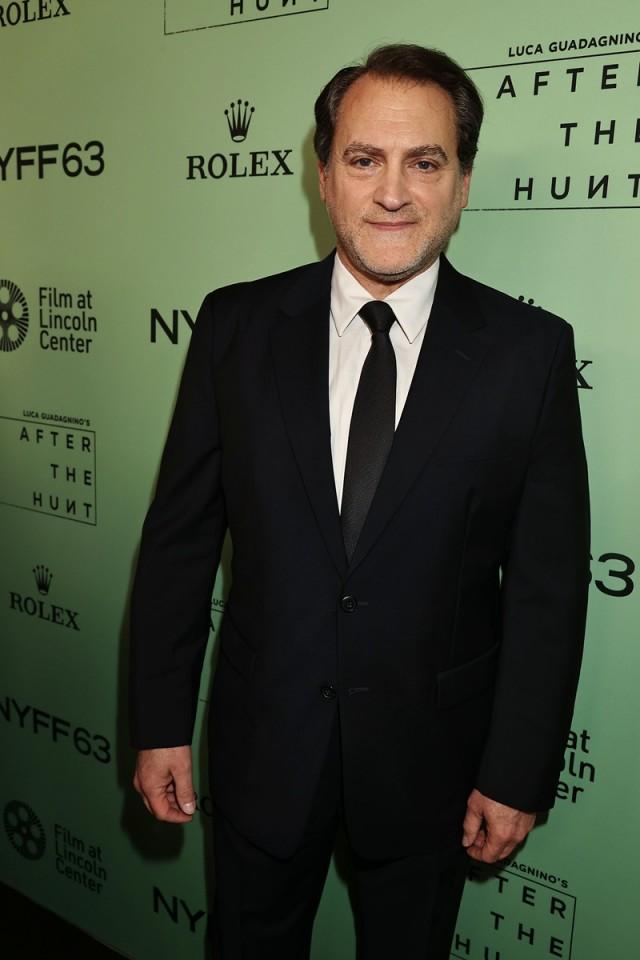
Michael, what about Frederik drew you in? We meet him in one place, and then he goes somewhere else entirely.
There were a million things about the character of Frederik that could have kept me working on it for the rest of my life, to be honest. I knew nothing about Freudian analysis, nothing about gastronomy or musicology.
All these elements contribute to who this individual is, plus the extraordinary backstory that came from Nora's remarkably layered, brilliant story. There was an endless amount of work to do in a very short amount of time. So, you do the best you can, and you throw yourself into it. But it was a relationship that I thought, particularly, as we've spoken about earlier, with Julia and me, that I found to be kindled by each other.
And as Julia would learn about Alma, I would learn from her about how to reciprocate. So, with everyone really, Andrew, it was an extraordinary, remarkable group to play with, and I got enlightenment from everybody.
Andrew Garfield (Henrik Gibson)
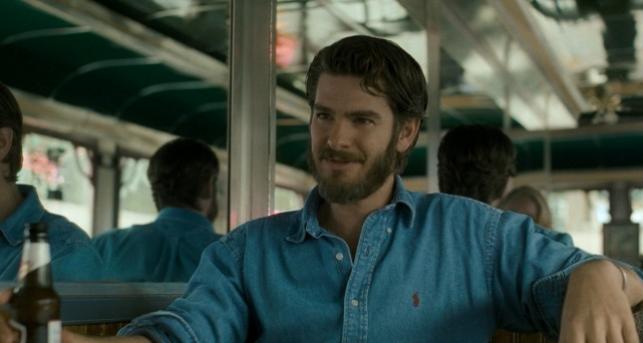
Can you talk about your character and his confrontation scene with Julia's character?
Obviously, I think that moment is very clear for the character I play in the terrible, horrible scene that I had to shoot with national treasure Julia Roberts. Thank God. I mean this very sincerely. We did just one take because it was not in any way, shape, or form pleasant. But I think there is a kind of a reckoning that this person who believes himself to be a kind of humanist and a kind of a great professor, a great teacher, a guy who's trying to open and unlock all of his students, and someone who's daring and trying to get people closer to the edges of their own hearts and the centers of their own hearts. That he's faced with something that he hadn't previously recognized in himself. And yeah, of course, it's really, really fun, I think, it is the right word that we get to safely explore the darker regions that we all, every one of us, unfortunately or fortunately, share. We all have these aspects that we'd rather not admit to.
Ayo Edebiri (Maggie Price)
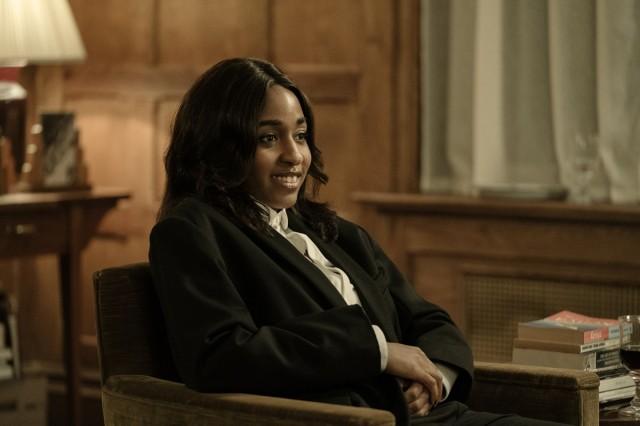
What about this character and this story that made you want to jump right into it and do it with Luca and this wonderful cast?
When I spoke with Luca, the precision of Nora's language, I felt like there was also such precision in your thoughts and in your questions and interrogations. But also, that was met by real freedom. It felt like it was going to be such an exciting challenge.
I just wanted to rise to meet everybody. I feel like Maggie, for me, was also very foreign, and I realized, kind of because of speaking with Luca, that I had a lot more judgments than I realized. There was something that was really intriguing to me about trying to find this person and meet this person without judgment and like honesty for myself. So, that was part of it.
How do you think the film reflects these dynamics of power, and what conversations do you hope it sparks about gender and authority today?
I definitely echo Julia's statement, especially about the incredibly strange tapestry of gender, of politics, and political affiliation. Of race, of class, of all of it. But for me personally, in the process of both making this film and having these conversations, meeting with you all, and again, like more discussions sparking up between all of us, it's this gray and creating more space for conversation, more space for nuance.
More space to go, "Hey, this is messy. Might take a step back and revisit this one." Like, genuinely. I think we're all in this room, honestly, in industries that benefit definitely financially from extremity. From polarization like, heavily. From what's like the most incisive things, even if I know that it wasn't the whole statement. So that's how we know. It was kinda on to something there.
But like for real though, I think it's like it is going to continue to be a tough road, and frankly, annoying one at times. But we all owe each other the duty of care that is creating space for space and creating space for nuance. And yeah, space for the gray, I think.
Luca Guadagnino (Director)
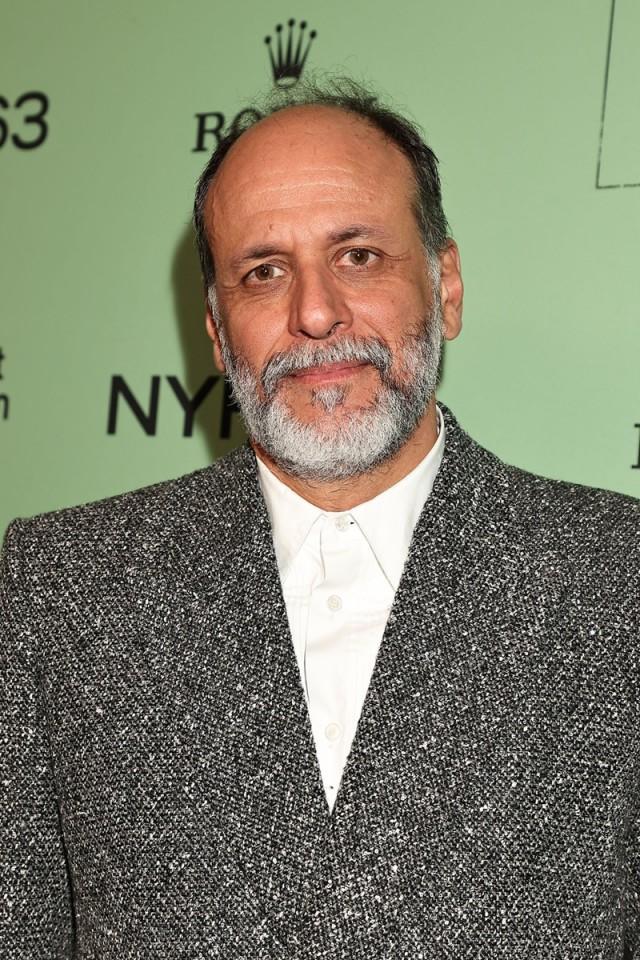
Would you describe this movie as a psychological thriller or a drama?
I think it's a movie that definitely wants to be putting you on the edge of your seat. So definitely it's a thriller. And, of course, It's a psychological drama because it's a movie that portrays flawed characters with all their flaws and with all their lies and with all their ambitions.
Most of the characters use power over each other. How did you do that with each character - Julia, Andrew and Ayo? How did you direct them to portray their characters?
I think what is a great privilege of my life is to meet extraordinary personalities like the people you mentioned, including Stuhlbarg and Sevigny and more. The thing that I found attractive to me is that I get to know these personalities, and I try my best to talk to each of them individually, the way I think, the way in which the conversation would go with each one of them. So maybe one conversation with Andrew about the concept of truth or power goes in a direction that wouldn't go in my conversation with Julia. But what is beautiful is seeing how the performances eventually collate together on screen.
There's a lot of tension in the scenes with Julia, with Andrew or with Ayo. But Michael also steals some scenes with his natural joy, abundance and glee.
Michael plays Frederick. Frederick is all these people, the only one who is capable of showing his fragilities and actually love. And I think when someone is able to love and is able to show the fragility of that position and to go for it. I think it's the best. It's the most fantastic person I can think of. And it becomes the strongest. The other people in the movie are kind of like, so much entangled in their own minds of trying to see how they can show themselves in the best light possible. How can they get something they want? Frederick doesn't want anything. He just wants to know.
It's so sweet. There's really chemistry between Julia and Michael as well. The yin and yang. And I don't know how Julia can keep a straight face because Michael really makes me laugh, too.
Well, there was a lot of levity on set, to be honest. The days were really fun.
How did you choose the music? The music is very dramatic. It's so unique.
It started with the question about the genre. It's a thriller, so we wanted tense music. First of all, the movie starts with the sound of the metronome, which gives you the idea of time, the inexorability of time, but also it gives you the idea of an interior time, and it gives you the idea of some kind of clicking bomb squad. So, from that onward, everything about the music was about tension. So, I collected some music from great composers of the past and present, like Julius Eastman, György Ligeti, and the wonderful John Adams. And then I commissioned this score to Trent Reznor and Atticus Ross to complement the rest of the music, in which I asked them to perform a music that could, in a way, express doubts, express a sort of unanswered question.
It's very memorable. It prepares you for the next scene. Talk about doing one-takes with Andrew and Julia and directing the confrontation scene?
It's interesting because sometimes, because they're very charged scenes, you expect that they go on set and they're going to be very intensely focused. In fact, being between takes, everything is super like. Sometimes they're really focused on the way that it spills over the in-between takes. My duty as a filmmaker is to follow the tension of the actors and to really accommodate their needs and their feelings.
What about Nora's script made you want to make the film, and in a relatively speedy fashion?
Actually, at the time when I got the script, I wasn't planning on making, that year, anything. But reading the script, and I was very struck by it, by the quality of the writing, by the precision of the description of the world in which the story was set, the beautiful complications of these characters, the dialogue that reminded me of some classic cinema that I love. Reading the script was immediately followed by meeting Julia. When that meeting happened, it became inevitable to make this movie because she wanted to do it, and we wanted to do it together.
It became like an immediate task to do. To be honest, without the support of Courtenay Valenti, MGM, it would have been impossible. But they felt that the urgency we had to make the movie was something to support, and they did.
"After the Hunt" challenges the idea of a single truth during filming. What was the biggest challenge in balancing moral ambiguity with narrative clarity?
I think once we started to analyze the script, to rehearse and build the world and build performances in terms of behavior, I think it was just a beautiful, smooth ride. We were very confident of the dance of these characters around one another.
I wouldn't think of challenges at that moment. The process of making the movie was quite smooth, lovely and fun.
Nora Garrett (Screenwriter)
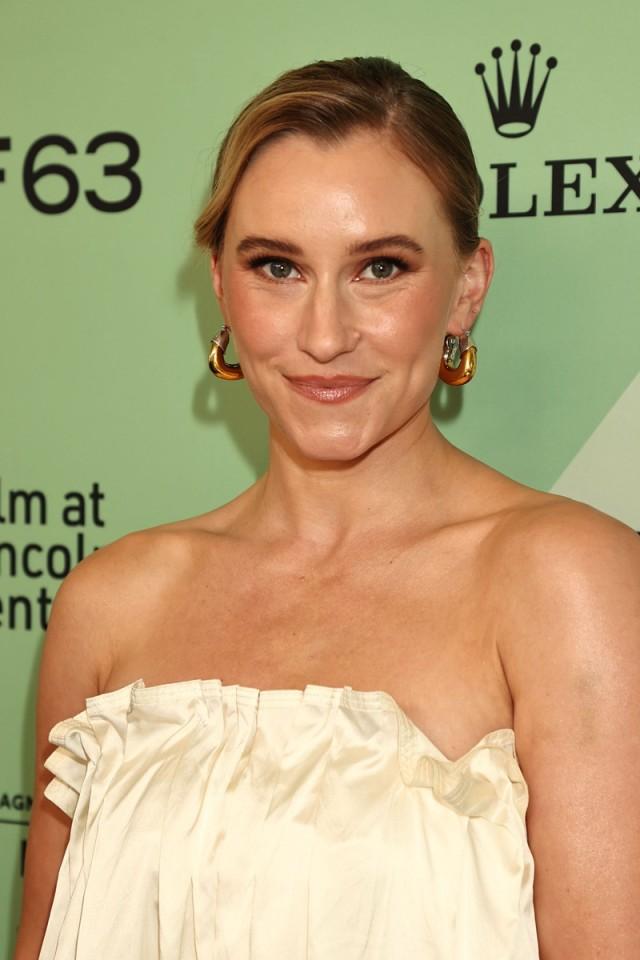
How did you develop the characters? Like most of them want control for power. Can you talk about that?
These characters are all people who come from people that I recognize, or I have seen, or overheard, or witnessed, or it is combined with a certain amount of imagination, of course. But when you're in a rarefied and sort of very isolated system like higher education and academia, where the stakes are very high, but only to the people whom you surround yourself with and who you're surrounded by, I think that it's easy. It's easier to see where everybody fits in this sort of horse race and what they're jockeying for and then sort of build around. Because I think that for these people, they very much live to work. They don't work to live.
Did you develop the character of Julia for herself, or did you have her in mind already?
No, it would have been super delusional. I think that because I hadn't had anything done before, I didn't have an agent or a manager. So, if I had the idea that I was going to somehow get it to Julia Roberts, I think I would have had myself committed.
How was your transition from actress to writer?
You're kind of both forever in a way. But I love being a writer and I love writing, and I think that if anything, I feel like whatever I learned in acting training is just coming to bear and writing. So, I feel like they inform each other really neatly.
There are many elements of the story that I think we could point to a headline and say it came from this story, it came from that story. I wondered if there was one specific real-world incident that lit the fire in you to write this script.
There wasn't any specific real-world incident. The unfortunate truth is that there are a lot of things to point to. I'm sure that there was a certain amount of unconscious level working that was the absorption of those external events. But I wasn't really working outside-in, if I can remember. For me, most stories start from the inside out, and the inside is always the characters and then the world around them.
But no, it's funny. It's like, it's only sort of after the fact that I found out more specifically things that went on at Yale. And I feel like it's just one of those uncanny, sort of symmetries that occur.
Who was the first character who came to you?
Alma was the first. It was really just about her interiority and her feeling of reaching for this external success or this level of power and prestige and being right on the cusp of that.
Perhaps some sort of unconscious drive of feeling like as soon as she had that, it would solve the internal struggle. I thought it would be interesting if right at that moment, that's the exact time when the internal becomes unignorable.
What's the most difficult scene to write?
The scene that actually took the most time was the opening scene, the dinner party scene. That was the hardest to get right. Because it was the very first image that came to mind when I was writing the script. I knew from the very beginning that that's always how I wanted to begin the script and begin the sort of entree into this world. But it took a long time to sort of finesse the heady intellectualism with the tongue-in-cheek understanding that it was heady intellectualism and to get the dynamics right, to get all the different pieces and the slight interruption when Maggie, Ayo, goes to the bathroom.
Like all of that felt like it had to be timed very well. The intellectual rigor or experiments had to not put people to sleep. There had to be that immediate understanding of the undergirding of relationship dynamics. That was difficult, tricky threading to do.
The film avoids easy answers. How did you craft dialogue that sounds intellectual yet remains deeply human?
Wow, it's so funny. I feel like it's really difficult to talk about this and avoid sounding either like incredibly pretentious or self-aggrandizing. I don't know.
I tried to really connect with the interiority of the characters. A lot of the conversations in the script are conversations born out of things that I've overheard, things that I've witnessed, conversations that I've been peripherally a part of. Or the intellectual conversations were born out of what I imagined university was going to feel like, and what I thought the salon atmosphere of being an intellectual was going to feel like. That was, of course, not what it felt like at all.
But I think reaching for that kind of verbosity is something that was borne out of a lot of imaginings about a certain amount of intellectualism. Also, my cousin was a wonderful resource for me because she's getting her master's in philosophy at Stanford. She would send me these emails that she would get from fellow professors that were about talks that they were hosting.
The language was so intractable and impenetrable that I really had to pull back a lot. But she was a wonderful resource to show me how these people talk in real life. —MGP, GMA Integrated News

