

 GMA Brandtalk
 Tracking
 Archives

Jennifer Lopez on 'Kiss of the Spider Woman': 'I've been waiting for this my whole life'
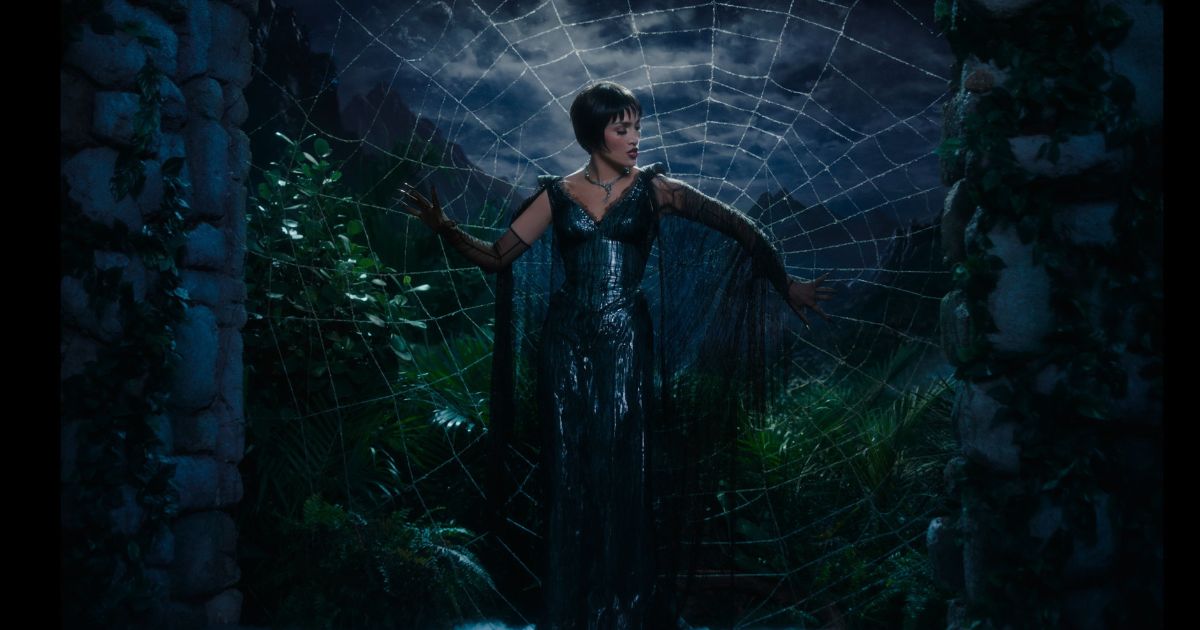
Versatile actress-singer Jennifer Lopez has done several movies in her three-decade-long-acting career, especially after she was catapulted to fame with the biopic, "Selena" (1997), on the late Latina singer Selena Quintanilla-Perez.
She portrayed a maid at the Beresford Hotel in "Maid in Manhattan" (2002), a veteran stripper and lap dancer in "Hustlers" (2019), the mother of a disabled wrestler in "Unstoppable" (2024), among others.
But when Bill Condon cast her in the musical "Kiss of the Spider Woman," J. Lo couldn't help but be so excited. She told us in our exclusive interview with her at The London Hotel in West Hollywood, "The minute I read the script, I knew this was something I've been waiting for my whole life. I kept asking, he's offering it to me, right? Like, I don't have to meet with him. And they were like, no, he wants you to do it. I was like, okay, I'm going to do it. So, it was great!"
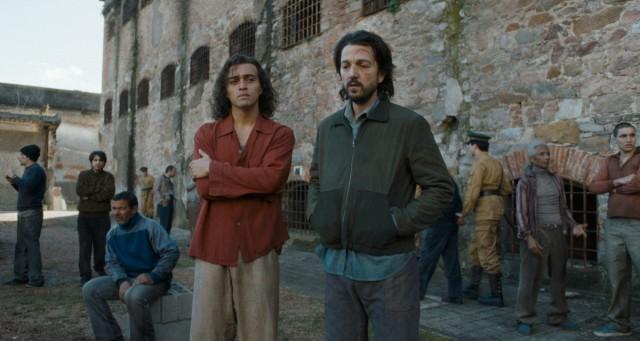
The movie, which is written and directed by Condon, is based on the same stage musical by Terrence McNally, John Kander and Fred Ebb. Lopez portrays Ingrid Luna/Aurora/The Spider Woman, Diego Luna as Valentin Arregui/Armando and Tonatiuh as Luis Molina/Kendall Nesbitt.
We were able to sit down for an exclusive interview with Lopez, Tonatiuh, and Condon, speak with them at roundtables and during a press conference. Below are excerpts from those conversations.
Jennifer Lopez (Ingrid Luna/Aurora/The Spider Woman) and Tonatiuh (Luis Molina/Kendall Nesbitt)
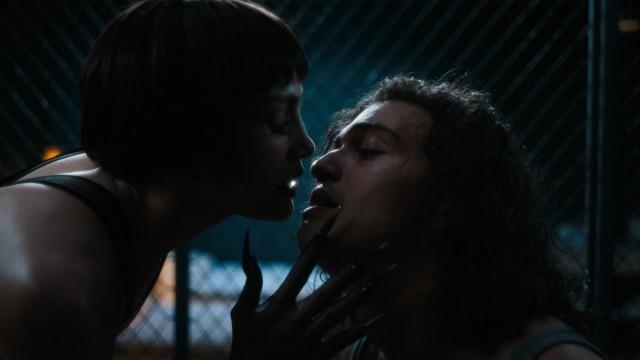
Congratulations to both of you. So, what made you say yes to this project?
Tonatiuh: Jennifer said it earlier today. We sometimes don't get these meaty, meaty roles and play multiple people. For each of us to play with multiple people is just like a gift. And to go across time was also really fun. And to challenge ourselves to do these classic musical numbers in single takes was a lot. But it's fun. That challenge is like what we live for.
Jennifer: Yeah, the minute I read the script, I knew this was something I've been waiting for my whole life. I kept asking, he's offering it to me, right? Like, I don't have to meet with him. And they were like, no, he wants you to do it. I was like, okay, I'm going to do it. So, it was great!
Jennifer, you're wearing two hats - executive producer and actress. So, was it scary for you to be filling in the shoes of Sonia Braga (who portrayed the Spider Woman in the 1985 film) and Chita Rivera (who portrayed the Spider Woman in the West End and Broadway musicals in 1992 and 1993)?
Jennifer: Always, there's going to be people who want to compare things. But the truth is, there are such different iterations of the story. One was a film, you know, straight drama. The other one was a musical on Broadway, and this is a movie musical. So, Sonia and Chita were so different in the way that they played the role. And I did it in my own way with, of course, homage to everything that they've done. Because I love Sonia. I've worked with Sonia before. I never met Chita. She was supposed to make the movie with us.
I'm so sad. And then she passed away. Like, in the first week we were rehearsing, and so.
I was devastated about that. It's a privilege to be able to step into these roles and to bring them to a new generation and bring them back into the zeitgeist. I was saying earlier that I don't think that this story that Manuel Puig wrote back in the 70s is done yet. It's not done doing its job. And so, we're here to help it do that again.
What is the relevance of the film these days? Why is it so important to do this movie today?
Tonatiuh: I think in a time where, like non-binary folks, queer individuals, Latinos, there are so many, there is so much like antagonism. It's a reminder that we have dignity, that we contribute, we bring so much life and beauty and art to the community, and that diversity is totally beautiful. But furthermore, there's something really like the end message of the whole thing is that it's our souls that see each other. That's who you fall in love with. These little physical forms that were temporarily borrowed are so negligible to the spirit that we're sharing. It reminds us that we're a part of a collective. That everything that's happening, we do this, we do art, we live for art, we live for beauty, we live for community. And there, in the darkest of times, that's what gets us through. And you're not alone.
And this is your first time working with director Bill Condon. So, talk about that experience.
Jennifer: Working with Bill for me was so much fun. He's a great collaborator. He really knew what he wanted to do. He was very adamant about it being three Latino stars in this, starring in these parts. So, it was authentic to the story that was originally written. He was very adamant about shooting it in a 50s style musical way in very long takes, no cuts, no coverage, which was nerve-wracking for me. Working with him was a blessing. He wrote this and thought of me was a dream come true.
Tonatiuh: I always say there are three Bills; there's the Bill whose work I admired and was just like, oh my God, I can't. I'm like the legend, right? And then there's the Bill, the director who you just see editing in his head, and he's very meticulous about what he's trying to accomplish. And then there's the Bill who became your friend. And like, the same with Jennifer. There's just a moment where it's like we became such a tight-knit family amidst all of it. So, it's been really wonderful to get to know the different iterations of our director.
Jennifer Lopez (Ingrid Luna/Aurora/The Spider Woman)
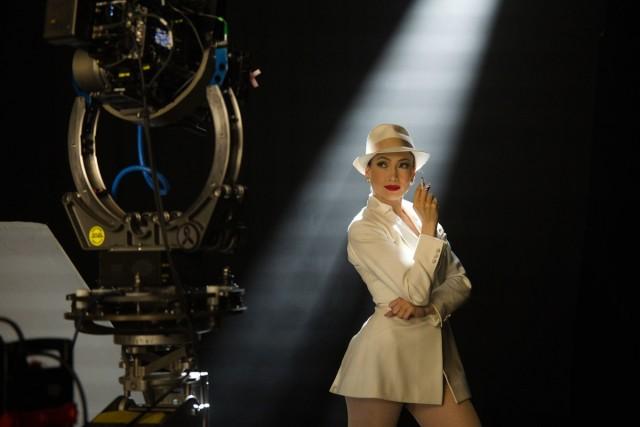
What's your favorite moment from making this film?
My favorite moments were the musical numbers. I had a lot of them. I didn't have much else besides 12 musical numbers. So, it was really kind of a marathon that we had. It wasn't a marathon. It was like a sprint. Because we did it in a short amount of time, and there were all these musical numbers, and we didn't have a lot of time to shoot. I wish we had had a year and a half like some musicals get to have. Unfortunately, we didn't get that.
So, we really like run-and-gun and getting them done. One day, it was this number, the next day it was that number. That was really my favorite part. It's kind of what I always dreamed of doing, which was doing a musical movie. So, I was living a fantasy for myself, the same way Molina had this fantasy in his mind. It was my fantasy.
We live in a day and age of modern technology where anything can be recreated, and special effects are used. But this was a throwback. This almost seemed kind of a marriage between film noirs and those classic musicals. I was wondering if you could talk about shooting in that specific style. How interesting was it? Do you have a newfound respect for what these people did back in the 1940s?
Yeah, Bill was very clear that he wanted to shoot it. He was like, "I'm hiring you because I know that you can do the numbers from top to bottom without stopping. I won't have to do it."
I was like, "Please do coverage." And he was like, no. I was like, "Please?" He's like, "No." So, it's like doing live shows. You have to start the number. You have to finish the number. No matter what happens in between. Of course, with the choreography, it's not just your own choreography. It's choreography with a camera. And so yes, I have a lot of respect for the fact that they did it that way. I also know that they rehearsed for weeks and weeks and months and months to do one number. Like "Singing in the Rain" took a long time to do that.
I would imagine and especially in the longer takes and things like that, or when you watch Cyd Charisse or any of those things, where it looks like one take and then maybe they cut and do the last part of it and something else. But those are really challenging things to do. But luckily, as frustrated as I was sometimes, and I would whine about, I was like, "Do you want a close-up here?" He's like, "We're coming in kind of close" at this one point, and then you have to choreograph that in your mind. Like, okay, here I'm going to be close, and here we're going to be farther away. Like, my body has to be right, the dances.
It's a big task on a lot of levels. So yes, lots of respect for the artist who used to do that all the time without all of the coverage that a lot of directors use now. And Bill was adamant about that being part of this movie.
Why is it important to tell an updated story in 2025?
It's important, because I think it's more relevant than ever. The idea of a trans or gay character in this movie. The idea of two people loving each other.
The idea of the kind of divisiveness that we've experienced in the world in the past few years. Just kind of a story about two people who are thrown together, who are so opposite, who are so different from each other. And find humanity and fall in love with each other. Who would never probably even find themselves in the same circles, right? And I think that that is more relevant than ever. It's really important to have queer representation in movies. In my own family, I know how important that is.
For people to see that. The same way I needed to see Rita Moreno in "West Side Story." Just because she was Puerto Rican, right? That mattered to me. It changed the course of my life. It made me realize I could do things that nobody in my family had ever thought of doing. And I think that that's important. I have to say, Bill was very adamant about everybody being Latino in the cast. The other iterations of this didn't have that. Even though it took place where it did.
And I feel like that is a really important thing. And to see that, and to feel it. And for it to still feel universal. Any character, anybody can relate to it.
Your performance was really difficult. We see people in L.A. struggling to walk in high heels. You're doing amazing stuff up there on platforms. And then you get a long, gold dress that can trip you up. Do your live performances that you've had in the past have seen you perform help you in something like this? Talk about the challenges of doing what you did while singing and everything else.
There's so much that goes into these things, right? Because the course is really tight. And the gown was 50 pounds. And people don't think of them. Like, this gown is really heavy. And, you know, Colleen Atwood's like, "It's gorgeous. It's perfect. Make it tighter."
All those things go into it. First of all, I'm playing Ingrid Luna who has her big number, "Where You Are," where she rescues him from his reality in that moment, which is one of my favorite numbers in it. So that's one character. And she's the one who's playing Aurora and the Spider Woman in the movie he's talking about, "Kiss of the Spider Woman." It was just like having a different look but finding the nuances of how different they were and how different their essence of each one of them was.
And the relationship that they had with Tona, which was Ingrid Luna's alone, right? So, there were a lot of different things as far as the musical numbers. Practically, right? Where there are costumes or heels. It was like what Ginger Rogers said. "I do everything Fred Astaire does backwards and in heels." It's the same. It hasn't changed. It's still the same thing. But that's part of the thrill of it for me are those challenges are to, again. And then do it in this particular movie in a very long, one-take. And knowing that that's what they're going to use.
So, I need every moment [to be perfect?]. It's not like, okay, well maybe they can go back and fix this or fix that or edit out of it or come out of it in that moment. It was like, these are going to be long takes. So that to me was probably the most challenging part of the whole thing. Knowing that. Not doing it. Because in my mind, I knew I could do it. But it tripped you up a little bit because you're like, halfway through, or three-quarters of the way through, and your heel gets stuck in your gown for whatever reason. You're like, "F---, no, it was perfect up until then." So those things do happen.
But at the end of the day, somehow, God is always watching and guiding, and miracles happen on set. I do miracles. We did miracles on this movie in a way.
What drives you? Where does all this energy come from? How do you stay on top of it?
I love it. And I feel very lucky to do what I do. And the battle for me has always been balance.
And trying to find balance. Which I try to do. And somehow it just doesn't work out. I don't know. I loved being on tour this summer. I canceled my tour last summer after we filmed this movie. It was great to get back there and to connect with people again at that level. And then now, even talking about this movie and I'm about to leave and go do another film with Bob Zemeckis.
And I'm super-excited about the year and everything that's coming up. I have "Office Romance" coming out, which is also so fun. I just saw it, it's my highest-scoring movie ever. It's hard to stop when everything is so fun.
What do you consider balance?
Balance would be like, because I took a year off after I did this movie when I canceled the tour. And I didn't do another movie till the following March. I didn't do anything. And so, I realized that I could have a life a little bit.
And I could sit still. And nothing was going to happen. And nothing was going to go away. Which I think was the panic of most artists in this profession. Is that you think, oh, if I stop, it'll all go away. But it doesn't. You've made your mark and you're here, and you do what you do. And now I'm back on it again. And enjoying myself. I guess I'll stop when it's not fun anymore.
When was the first time you heard about "Kiss of the Spider Woman"? What was the revolution part that spoke to you when you signed on? Why did you feel that was a good message back then, not now?
I was going to say the same thing. The revolution that you're saying that we need right now is exactly the reason why I think the movie is so important and is important right now and is important for people to see. Because it reminds you that it's really, at the end of the day, about two people getting along and falling in love when you really forget about all of the other things, that we're all just human. It is about humanity.
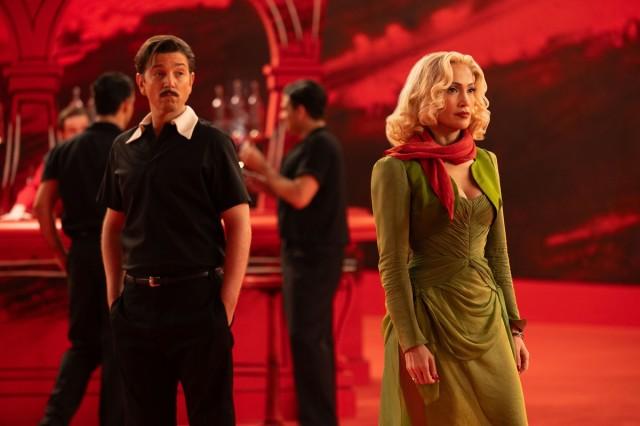
We love Diego. He was terrified about the musical part. He grounds the whole movie. He's a lovely person and so generous as an actor and a wonderful actor. But he really is the glue in the movie when you see it, not just for us. But he was terrified about all of the musical numbers. And he had a few. I was just like; we're just going to act it. You're going to act like you're Gene Kelly. You're going to act like you're Fred Astaire. I was like, you can mimic things. You're fucking brilliant. And I think that helped to key him into how he was going to learn how to dance like these people in a week, or two weeks or whatever it is he had to come in and do these things.
I was watching him dance and I was like, oh my God, he's doing it. He's freaking doing it. He took the note. Oh my God. No, but he was fantastic. The same way Molina fell in love with him, I fell in love with him. Aurora fell in love. We all fell in love with him.
The costumes were absolutely extraordinary. I'm sure that it helped to inform you of your performance. Could you talk about each one of them or if you have a favorite or anything?
For me, I worked really closely with Colleen Atwood. She was very clear. Like, she showed me boards for each change that I had. It was very specific. It wasn't like somebody who's like, "Here's 20 racks of clothes and let's find the thing." It was like, "No, I think this should be a suit. I think this should be a gown. I think this should be a gold gown." And I would be like, I like this. I like that. No, this is not going to be good for me. I really am into this. And she's like, "Oh, you like this little reference?" It was like a little picture in the corner. And then we made a blue suit that was the two-tone blue.
Like, it was super specific. And then she would bring three hats, and I would like, pick one of the hats. I was like, oh, this one looks good on me. Okay. She is kind of a precision master, I think is how I would describe her. And she knew exactly everything that she wanted to accomplish with everything. Sometimes I was just like, oh, is that what this scene is? Oh, I get it. Now I know how to be like Aurora in this movie. I know who to be as the Spider Woman in this movie. The costumes really, when they're that good, they really inform you. They really help you.
How has your routine changed for keeping yourself healthy, keeping your energy up? What are the benefits of doing it at this age instead of 25?
The dancing really helps. The fact that I started as a dancer and I've continued that my whole life. I've also started as an athlete before I was a dancer. So, I think I just have that in my blood. I actually enjoy it, like if I'm not moving my body, I'm not happy. I need to work out. I need to be active. And I only feel my best when I'm doing that. And even though it's gotten more challenging as I've gotten more mature, it still is a great joy for me. When I push through the little bit of pain that we all have when we first start working out, when we first start dancing again, whenever I do take a break, it's hard. And it's harder now than it was before. But once I break through, it's like I'm 25 again.
What about in your off hours? Do you eat differently? Do you sleep differently?
I think I've changed over the years, and what works for me at different times. Right now, if you're asking me what I eat, I eat a lot of fish. I'm very low on carbs. Now I'm adding back in carbs because I was on tour, and I lost weight. And now my trainer's like, "You need to add carbs back in." But only like the ugly carbs. Not the fun carbs. It's like oatmeal with water. But I put cinnamon, pecans and honey. I change for the times. Now I do more weight training. I know that's what she's asking. I do more weight training, weights and things like that, as opposed to cardio that I did when I was in my twenties.
What are the benefits of getting older?
All the benefits. Honestly, I feel like I'm in the best moment of my life right now. I feel smarter. I feel more self-aware. I feel happier, more joyful, and more grateful than I've ever been for everything that I have. And so, it's a very good time. I actually can enjoy without the pressures of feeling like I'm not good enough or I'm not doing enough, or all the things that we fuck ourselves in our mind with. And I can just go, I'm here, I love what I'm doing. I am so fortunate and really enjoy it without putting pressure on myself to prove anything anymore.
How has your career developed as a singer, dancer and actress? I always had a feeling like you were an underrated actress. Like that's because you did so many things and people would always single you out, oh, she's a good dancer, like singer, whatnot. But how do you feel now as you're entering this new stage of your career, "Hustlers" and everything you've done? You're getting way more critical acclaim. How much does that mean to you as a woman and especially as a Hispanic woman getting all these diverse roles that maybe back in the day you were not getting enough?
It's the nature of this business and of our lives, right, that we don't have everything that everybody else gets, or all the opportunities that everybody else gets. But for me, I never let that kind of hold me back or discourage me. I just felt like whatever was going to be for me was going to be for me and I was going to make the most of it and do what I could with it and show and give my love as an artist in the best way that I could do it with whatever opportunities came my way.
And of course, I still complain about why didn't I know about that movie? Why didn't I know about this thing? And it's frustrating. But again, I could really get upset and angry about it or I could just do the best work that I can do every time I have an opportunity to do it. And that's the route that I have chosen for myself. And it is very nice when a director like Bill Condon sends me a script or Bob Zemeckis calls me at this stage in my career and says, "I want to do this film with you" or "I want to do that film with you." Yes, of course. It's the most amazing thing.
It took a lot of work to get there. And I hope that there are other young Latina actresses and Latino actors who are already getting that in their 20s now. It's different now. And that makes me happy.
Tonatiuh (Luis Molina/Kendall Nesbitt)
Please tell me about your favorite moment from this film.
There are a lot of favorite moments. Both from prison and everything else. But there was a personal favorite moment where Jennifer and I were shooting in one of the ballroom scenes.
She complimented me, which was beautiful, but then they called action immediately after. And I got to look up for a second. I was surrounded by all these incredible Broadway talents. Next to Jennifer, next to Diego. It hit me, two weeks, three weeks into the shooting, where I was like, "Oh, this is amazing, and this is my life, and I'm surrounded by other artists who are incredible, and I respect, and I'm having such a good time." Then they called cut, and I burst into tears with gratitude. It was this moment where I was just like, man, I am so happy to be here.
We live in a day and age of modern technology where anything can be recreated, and special effects are used. But this was a throwback. This almost seemed kind of a marriage between film noirs and those classic musicals. I was wondering if you could talk about shooting in that specific style. How interesting was it? Do you have a newfound respect for what these people did back in the 1940s?
There was a lot of pastiche written in the film. It's because we got to make two different films. I really wanted to call back to people like Errol Flynn, Montgomery Clift, Gene Kelly, and so just doing the research and making sure that not just the essence but the energy and even small mannerisms that they had or embodied was really fun, to just juxtapose that later with Molina.
Why is it important to tell an updated story in 2025?
There's a certain moment that's happening right now that we need to remind ourselves that, like, dignity and humanity and love transcend gender. They transcend sexual orientation. They transcend all of those things. So, yes, we deal with queer themes in our film, but I do think that it is a love letter to diversity. It is a love letter to just humanity as a whole.
And from a business standpoint, though, it really is just fascinating just to remind everyone that casting Latin talent is incredible. Like, we sell, babe. We're hot. And people seem to forget.
"The Mother" was such a huge success. "Carry On" was a success. "Andor" was a success. Hollywood sometimes is a little trepidatious of casting an all-Latin cast. But, like, babe, it's fire.
When was the first time you heard about "Kiss of the Spider Woman"? And of course, you didn't make this movie now, where we really need a revolution. But what was the revolutionary part that spoke to you when you signed on? Why did you feel that was a good message back then, not now?
When I read the script, it was such a beautiful script. And Molina, I was a character that I could really sink my teeth into and allow myself to fully lose myself in. I lost 45 pounds for the job. I was joking with Jennifer. I was like, "Girl, I'm trying to get to that waist."
It was fun. I love this. I love being able to transform, and I also love allowing my body and my essence to be used to help create progress and love. Culture changes much faster than politics, and by casting me, you are inadvertently making a statement, right? And Molina, their passion for movies and their love and their relationship with Valentin is such a necessary story. Unfortunately, it is becoming more and more relevant, right? But I think that that's the power of cinema and that's what drives me to sign on to a project and to shed the pounds.
You grew up in West Covina. So, you must have a lot of Filipino friends.
Yes! Very many. I got a number, in fact. I also have my Ninang Eileen. I also have my friend Caitlin and my friend Lauren; I grew up with them. I still hang out with them. We have been going to school together since we were in fourth grade. Their entire family is my family, so I grew up eating Filipino food. I love Filipino food. I know a little bit of Tagalog, but it's only the bad words. So. I'm so sorry.
Bill Condon (Director, writer)
What's your favorite moment in the film?
It's funny because it's the same day for me, it's that ballroom scene. Jennifer in that gold dress. We decided we'd rehearsed so hard, but we decided to shoot it in the Astaire style, which is single takes, right? But even with that, at lunch we were behind. So, I went to Jennifer and said I want to do the rest of the day in one take, over a minute, where Jennifer dances with six men and then winds up with Tona. And it took a long time to set up. We did it in one shot with a crane, and then everyone was perfect, except for the crane, which went like this, remember? [laughs]
We live in a day and age of modern technology where anything can be recreated, and special effects are used. But this was a throwback. This almost seemed kind of a marriage between film noirs and those classic musicals. I was wondering if you could talk about shooting in that specific style. How interesting was it? And do you have a newfound respect for what these people did back in the 1940s?
I talked a little about shooting. I'd love to talk about performing in that style. And specifically, Tona and Jennifer. I've been asked a number of times what was it about Jennifer that made her the one and only choice? And I realize my answer's a little glib. It's like, "Well, we don't have that many divas, and she is playing this diva." But it's something really more remarkable than that to me that happened in this movie. She understood early on when we talked about the script that Aurora is actually, it's Molina's best version of what he could have of his life. She's a character who's never had love, who finds love in the course of this movie. So, Jennifer was playing in the style of the '40s, but also connected to what Tona was playing, right? And then she played the real actress, who is an entirely different character, and then she played the dark version of that. It's not that she's a diva. That's not what made her perfect for her. She's a great actress.
I felt the same way with Tona. When we were doing auditions for this part, usually in every production of it on stage, or in the play, you're only casting one part. You're casting Molina. But Tona had to play Molina and this '40s icon. And again, just seeing the way that he embodied that style. That was more exciting to me than us doing it with a camera and technology. It was just watching these actors live in these two worlds.
I wonder about your connection with Manuel Puig, the writer of the original book. If you have read it, or when you were working on the script.
I read the novel in college. And I'd seen every iteration.
But the great thing here was that I was able to do this archaeological dig of everything that had been written for "Kiss of the Spider Woman" as a musical. And he did a draft. So, I felt like I was living with him as he was grappling with this same thing as how do you musicalize the story. There were things I was able to cull from that. John Kander spent a lot of time with him and would do a great impression of him. He was very flouncy. He was very camp. One thing that's interesting, that we were just in Europe, and somebody said, "Oh, God, is that like a stereotype from a different time?"
"That he would be so effeminate?" And of course, the answer is no. It is the essence of who he was. And that's something we were celebrating when we were making this movie.
Can you talk about how you discovered Tonatiuh or auditioned him, and how you made the final decision about him?
I did something really smart. I pressed Play on a self-tape that Tona sent in. And we went through a huge process and put Tona through the paces. Four different auditions. The final one with Diego. But I got to say, I had that kind of feeling from the minute I saw it. Just, everything that you see on screen now is there in him. Just this incredible talent and openness, and that beautiful face, expressive face. So, Tona's the one who cast himself at the end of the day.
The sets and visuals are so important in creating this universe. What was the process like in bringing it to life?
It was a lot of studying. It was looking at those old films, and then putting them aside too, because the interesting thing about the movie is the big challenge was, is the audience going to resent the interruption? You're getting to know these guys in prison. Then you're in this movie and you want to stay there. Then you're going back. So, in a weird way, even though the worlds are very different, we were trying to find ways in which they merge. That's when Jennifer finally shows up in prison; there are these lights that she walks through that are like theater spotlights in a way that create these shadows.
As it gets deeper into the movie, when Tona finally really connects with Diego, he's lit like a Renaissance painting. That suddenly it's not just gritty and real anymore. So that to me, the fun was taking a little bit of Hollywood and putting it into prison. Actually, taking a little telenovela and putting it into Hollywood. I didn't want to just be an exact duplicate, because I think then it would have quotes around it, the movie. It had to be alive, I guess is the point.
When was the first time you heard about "Kiss of the Spider Woman"? And of course, you didn't make this movie now, where we really need a revolution, kind of. But what was the revolutionary part that spoke to you when you signed on? Why did you feel that was a good message back then, not now?
I wrote this three years ago. It was because I'd loved every version of this, and each one of them was revolutionary for its time. But when you read that novel, it's taken us this long to really catch up to what that novel was saying. Specifically, this was well before the election season and well before we knew what was going to happen. But it was clear that trans people were going to be demonized, that they were going to be a part of the conversation.
It wasn't clear at that point that there might be tanks on the street, troops on the street. That we didn't know. But it did feel that this was something that was bubbling up and happening. So that's what made it feel very urgent.
Can you talk about the influences of Sonia Braga and Chita Rivera?
Yes, it's so different. There was a moment when Jennifer had done a scene with Sonia Braga. I asked Sonia to play the magical woman who lives in the forest.
I felt like it would feel a little bit gimmicky. But I love her, and I love her in that movie. She's such a beautiful spirit.
Chita Rivera, these numbers were written for her. The show was built around her. Jennifer mentioned earlier how much it meant for her to see Rita Moreno as a young woman growing up Puerto Rican in New York.
Rita Moreno is Mexican. Chita Rivera is Puerto Rican. She got there first.
She was in "West Side Story" before Rita Moreno. She really was the groundbreaker. Our choreographer, Sergio Trujillo, danced with her in the original production.
Anything that connected us to that, I was just craving. —MGP, GMA Integrated News

