

 GMA Brandtalk
 Tracking
 Archives

Ariana Grande, Cynthia Erivo, Jonathan Bailey, director Jon Chu on 'Wicked: For Good'
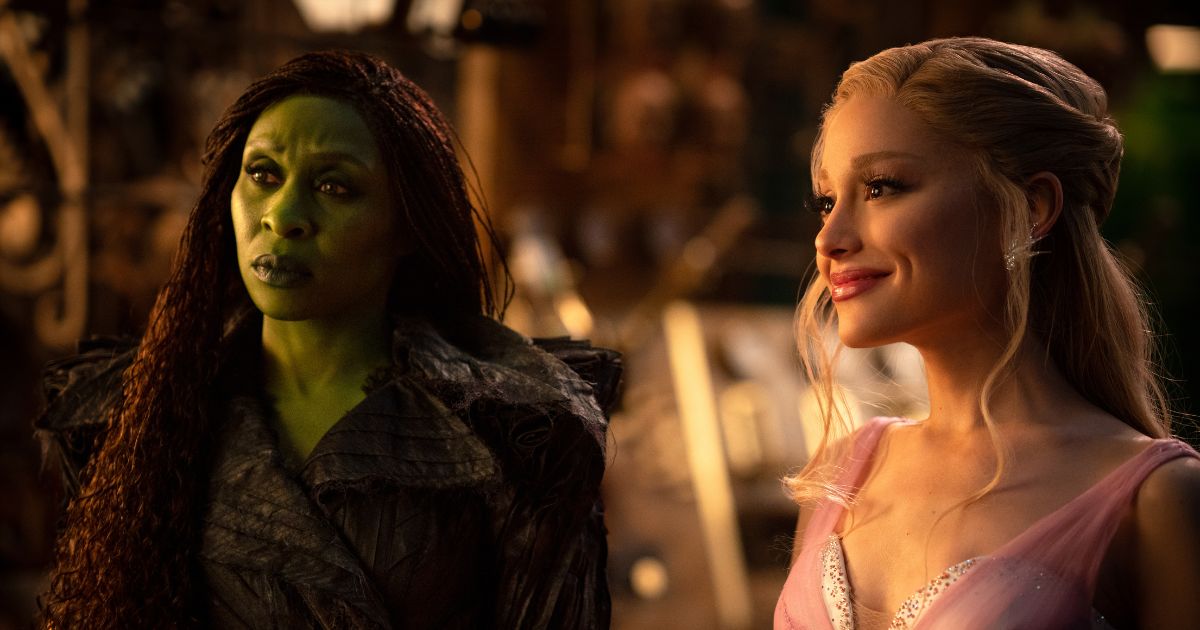
Leave it to the genius filmmaker Jon Chu to create the wonderful musical fantasy world of "Wicked: For Good."
The sequel to "Wicked" (2024) brings back Elphaba (Cynthia Erivo) and Glinda (Ariana Grande) as they embrace their new identities as Wicked Witch of the West and Glinda the Good.
We were in New York to attend the premiere of the movie and were able to do an exclusive interview with Grande, and then talked to Erivo, Jonathan Bailey, and filmmaker Chu in press conferences later. They reveal their experiences in this once-in-a-lifetime magical journey, the close relationships they have developed, and the challenges they faced in the making of the film.
Ariana Grande (Glinda the Good)
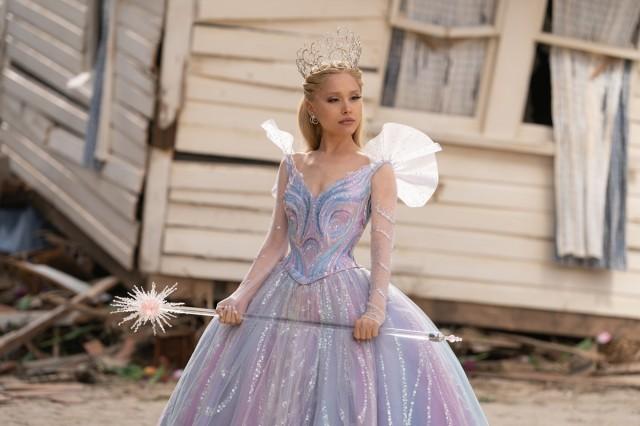
The film is also about sisterhood. Can you talk about your special bond or sisterhood with Cynthia Erivo? She's also very overprotective about you.
Oh, my goodness. We're very protective of each other. We're very independent women, but we are really protective of each other because that's what friendship is. I'm very protective of all the people I love. But I feel very grateful to have done this with her. Of course, professionally, there's no one else who could have done this. Other than her. I'm so grateful to have her in my life as a scene partner and as a friend.
Talk about working with Jon Chu. This is another magical film that he created. So, talk about what makes Jon Chu so special as a director.
I think the perfect balance is between his very precise attention to detail and his specificity, and also his playfulness and his curiosity. Like, he's very free, but he's also very planned and prepared. But that doesn't stop him from encouraging ad libbing and playing and trying something new. And yeah, he's an extraordinary person. I think that's also what makes him such a great director is because his heart and his innate understanding of the human experience, the way he can see people and see the complexities of each and every character, and the fact that all of them deserve to be understood through and through. I feel like the way he makes time and space for that, for each character in this movie, is really unique. And yeah, it's his heart.
What was the most memorable scene for you when you did this?
All of them, I don't know. I mean, maybe "For Good", but all of them were really memorable. I don't think I'll forget a moment of this experience, but "For Good" definitely has a very special place in my heart.
I know a lot of people cried during the screening.
I'm glad that the tears could be shared.
"Wicked" is a story about transformation, about how light and shadow can co-exist within us. In the second chapter, you're bringing a beloved journey to its conclusion. How did you try to keep the magic alive, while also showing the evolution and maturity of the characters in the world of Oz?
I think that is the most magical thing about Glinda is that she is balancing this lightness and this darkness quietly the whole time. And I think definitely in the second film, it gets to the forefront a lot more. But in the first film, her light can't exist without her darkness just underneath the surface. Her insecurities, her desperate need to have external validation, people like her. It all has to come from somewhere, and so I spent a lot of time thinking about her childhood, and beliefs that were projected onto her, and that she clung to for her whole life, and propelled her to create this façade, this bubble of privilege around her.
That's the thing that I love most about her and about this second film, it is getting to watch her do that shadow work in real time, as a response to all of these different heartbreaks that happen to her in this second film. It's a beautiful thing to play with someone who has so much light and so much darkness.
Very relatable, absolutely. Your chemistry with Cynthia Erivo is one of the most beautiful parts of "Wicked." What was it like to reunite with her, in "Wicked For Good''?
There actually wasn't any reuniting, because we shot both simultaneously. So, it was a beautiful privilege, and experience to be able to work with her. I love and respect her so much, as a scene partner, as a human being, she's just extraordinary, and also I think it's so unique and interesting, in the second film, they're both experiencing a really similar loneliness, that shows up in entirely different ways. I loved navigating that with her as a scene partner and just seeing how that shows up for them. Elphaba's literally alone in the woods and doesn't have her best friend.
Meanwhile, Glinda has all of these people around her, telling her that she's loved, she's doing good, she's doing the work, and even she herself is convinced that it's working for a while. But she's incredibly lonely as well. So that was a beautiful thing to share in this second film.
It's good to be reminded that this was a seamless experience that has been cut into two parts, essentially. This journey playing this character for you has clearly impacted on your career. But it seems on a deeper, more profound level, as far as who you are in the world. Can you try and explain how you've grown from this experience, and maybe how you're different now than at the start of this journey'?
I just don't even know where to start, there are so many ways. But I think that this project really healed my relationship with creating in general. I don't mean to get choked up, but it really rewired me from the inside out. I fell back in love with creating in a way that I haven't felt in a really long time. Or maybe it didn't feel safe for some time, and I hope this doesn't sound crazy, but I think that for a long time, my celebrity was maybe louder than the work that I was doing, or my dedication to my craft. I love acting, I love my work, I have always just been a creative who's been eager to create. That felt really healing, to feel seen in a way that maybe I haven't felt in a really long time, for my work. And thus, being able to fall in love again and creating a spark reignited in a way.
What was the most difficult part for you during the filming of this second movie, which of course we know was part of the larger filming, with its greater focus on Glinda and her dramatic journey in the story of "Wicked For Good"?
It was such a privilege to be able to dig deeper into who she actually is, and to get to experience those heavier, heartbreaking moments with her, because again, like she's just kind of someone who's been yearning for more of her whole life. She wanted magic as a child, and maybe it wasn't for the right reasons. Maybe she didn't know why. And to see her be propelled towards true goodness by experiencing each of these traumatic events, one on top of the other, and finally having to face her complicit nature in this regime that the Wizard and Madame Morrible have been putting up. This narrative that's been created about her best and only truly friend, she finally has to take a look at all of that, and it's heartbreaking, and it's delicious, and we get to see her finally break, and make the choice to become truly good, or at least that starting that next chapter of true goodness, by kicking the Wizard's ass.
Would you say that Glinda in "Wicked: For Good" is different from Glinda in the first film, and how would you define each of them?
I would say Glinda in the first film is very much under a spell, of needing that external validation, that you know, she has this façade that she is very proud of, and she's very liked, and she's very loved, and she has this bubbly exterior. And in the second film, that still exists, but it's been warped and turned into this really devastating presence, you know? It's not being used for good; her light is not being used for good. Each step of the way, over the course of the first film, to the end of the first film, and then the beginning of the second film, towards the end of the second film, you see that bubble of privilege being chipped away at, slowly but surely. She's being asked to look outside of herself.
I think the first moment when she actually gets to do that is in the first film in the Ozdust ballroom, and Elphaba gives her that invitation, and she takes it. But there was a quiet goodness in her even before that that knew that it wasn't the right thing to give her that hat. There's a shot in the scene where I give her the hat that Jon… I was so grateful that he added, because we had a conversation about it, because I wanted that to be there so that people could know that there was a person with a higher consciousness inside, she's just kind of under the spell of these projections of her parents, of society, of whatever. And it's beautiful to see her finally get to reconnect with that young Glinda.
Young Glinda, who now has a cameo in this movie, which I'm also so grateful for, to Jon for adding that, because I think that she deserves that context of these beliefs that were placed on her, that made her who she is in the first film, in the first place. They didn't believe in her.
I think it's a similar childhood trauma to the one that Elphaba has. It's interesting, because when you really think about it, they were both made to believe in certain ways that they weren't enough, and I think maybe that's a part of what they recognize in each other when they first meet. It's not loathing, it's intrigue. So, we both feel this tremendous pressure, but it's just showing up completely differently. I think that's ultimately why they need each other.
Cynthia Erivo (Elphaba/Wicked Witch of the West)
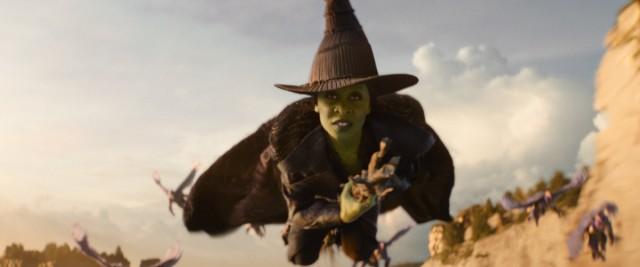
In "Wicked: For Good," we see the full arc of Elphaba's story. How did you approach exploring the deeper emotional and moral aspects of her character beyond the spectacle of the musical numbers themselves?
It's interesting because I've always thought of her story first, and then the songs as an extension to the emotion that she's feeling. I think that the way the music is used for Elphaba is sort of like a microscope into what she's feeling on the inside. And so, I actually use the measure of the music and the lyrical content to help to vacillate all of the emotion she's feeling all the way through. And then I try and channel all of that beyond the music, beyond the words, and then into the music as well. I feel like she speaks kind of two languages, the ones that- the words that she says just to say, when she can speak, and then there's another thing that happens when she opens her mouth to express, which comes out as music.
This journey, playing this character for you, has clearly impacted on your career. But it also seems deeper on a more profound level as to who you are in the world now. Can you try and explain how you've grown from this experience, and maybe how different you are than you were at the start of this journey?
I've always felt odd, different. And even though there was an acceptance of that, I think this experience, this character, and the things that have come from it, have made me really fall in love with all the differences that I have. Particularly because I've met so many other people who have fallen in love with the differences that they have, who have been able to express "I feel different, I feel like I don't belong, I feel like I don't fit, but because I've seen what you do, because I've seen Elphaba, I now feel like I belong, I feel like my difference is the thing that makes me special."
And that really has had a profound effect on me, in that now I have no choice but to consistently show up as myself fully, and I have no choice but to put myself fully into the work that I'm putting myself in. Because I know that it is beyond just showing up to play a character. These characters can actually impact people's lives, and the way people see themselves, and the way people see other people. And I think that it's just a special gift to be given, and not to be squandered. Even physically, when I went to do this job, I had to shave my head in order to paint it green, so that my scalp was green underneath the wig, and so you could see green. And so, in having to do that every day for almost a year, when I finally let the character go, I realized that I really liked what I saw without covering anything up.
I liked the fact that I was completely exposed, that you can see everything. And I got stuck with it. So, just doing this thing that I would have done a million times for this job, now has changed the way I see beauty, and I think it's maybe shifted the way that other people have seen beauty. That it really is in the eye of the beholder.
Elphaba is so wounded that she hasn't been conditioned to accept love and friendship. We watch this amazing journey of her being changed for good. Looking back, is there someone for you who's changed you for the better?
I think there are a few people who have changed me for the better. I think Ari(ana) has definitely changed me for the better. I'm very serious about my work. I'm very, very serious. I don't really break. My laughter doesn't happen randomly on set. But for the first time with her, there was sort of a chink in the armor, so to speak. And so yes, there are definitely people in my life who have changed me for good. I have some really wonderful friends who have shifted and changed my life consistently, and one of my best friends, her name's Sofia, she just has always seen all of the parts of me, and has no issue with like pulling me back and going, "Hey, look at me, how are you? What's going on?" So, I'm a lucky person who has definitely had people who have changed my life for the better.
Jonathan Bailey (Fiyero Tigelaar)
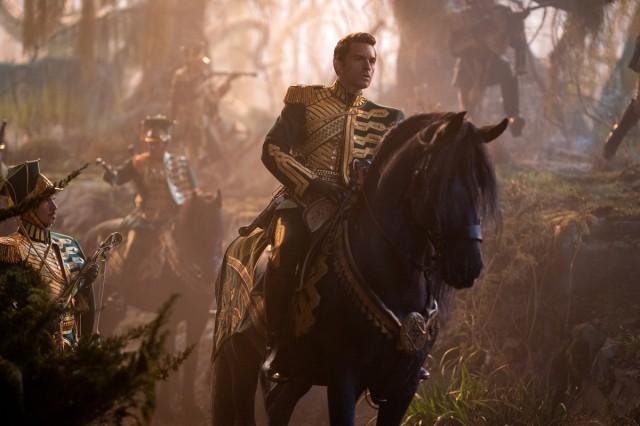
Playing Fiyero in "Wicked: For Good" takes you from carefree to deeply changed. Did that journey make you reflect on what it means to belong in your own life truly?
It's a once-in-a-lifetime experience to come and tell a story like this with an extraordinary director and talent everywhere. Everyone who worked on the project is changed for good. I just remember seeing the musical on stage, and I was really drawn specifically to Fiyero, and I just thought, "There's so much possibility in a very lean..." You're only given a small amount of time with this character, but you can really explore things. Some things that I already knew. Then some things I discovered along the way, like being carefree and to be flirty, twinkly, to be anarchic, and to create chaos sometimes, is a defense mechanism. There's such a weird and brilliant contradiction between the pop pulsing melody of dancing through life and the lyrics in what he's saying is that we should all just carry on because we're going to die anyway.
I thought, "Wow, that's a really interesting place to start." I spoke to this at great length to Jon M. Chu when we met. He's obviously got incredibly low self-esteem, and he is too scared to feel things strongly. Then you meet someone, especially in the hands of Cynthia. But Elphaba is suddenly this incredibly poised, dynamic, and just pulsates with integrity. He's completely changed from the moment that they meet in the woods. You chart that all the way through. The second film, the biggest discovery for me, is just how serious he is. His embodiment, his change, and his transformation are about that thing that, as humans, we experience. You have to move through eras in your life, and to become someone who stands by a moral code and a value system, you do have to let go of the ability to be frivolous because suddenly things come into focus and they do mean a lot.
How did Jon Chu's direction influence your performance and understanding of Fiyero's journey?
Jon M. Chu is extraordinary. It's very special to see such a calm, kind, and clear communicator who has this extraordinary film that existed in his head, both of these films. When I met him, we had about two and a half hours together. The film almost became a memory. In the conversation with Jon, it was almost like we'd already done it.
He has that quality, and he has confidence in his emotional self. He can unlock things in people, and he's really managed to protect a very intimate environment and force field where, first and foremost with Cynthia and Ari, to see him guide them into turning themselves inside out and to really sit in the emotional core of what could easily be quite a surface-level film.
There's another version of these two films which could have been fun but just did not have that same resonance and gut-wrenching iconic character study. So, with me, we'd done the work before. I just knew what could be done. Then we would go, and we'd do it, and then he would text me every night, and he'd just say, "I've just seen what you've done there." It would be so brilliant to just know that he would've been doing that with a hundred people, because there were so many people on set and so many people who were able to thrive, because in his hands is one of the most creative and exciting places to be.
It felt like a very economic relationship between Jon and me because we'd just have a good laugh as well around it. Things would come into sharp focus, you'd give a note, and you'd be like, "I know exactly what that is." In the scenes with Cynthia, which I really loved, and, again, I just understood what my role was in this, it is that he would say to me, "Okay, now just improvise around." So, when the camera's holding on Cynthia's face to just constantly keep weaving in and lovely surprises.
Again, I hear that these moments are rare and the relationships of Fiyero to Glinda and Fiyero to Elphaba only make sense if they really land and have a very specific identity in each moment. It was a real privilege to be in each moment. It was a privilege to be assisting him in that way as well just to help. Again, the way I would describe him is as a gardener. He puts all the seeds in with all the departments and with all these conversations that you have before you start, and then he's got some sort of Miracle-Gro. I think that's to do with his soul. No one should sleep on Jon M. Chu. I think it would be a very different film in anyone else's hands.
Jon Chu (director)
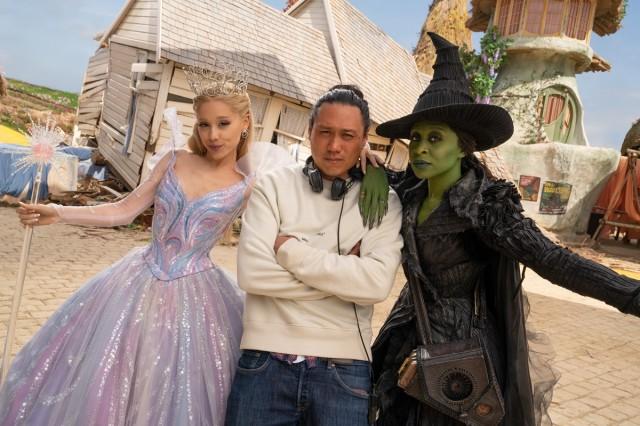
It's been reported that once you came on board to direct, you advocate for expanding the musical into two films. What was your reasoning for advocating for this, and what did you do to have to convince the studio to let you do this?
The debate was already happening when I entered the fray, and I knew that we were going to have to make a definitive decision, otherwise, you're stuck in between two things, and neither will be good. They had a one-movie version, and they had a two-movie version, of drafts, of certain ones. Usually, as a director, you come in, you get two weeks to make big changes. That was one of them. I just felt like the shortened version was just not "Wicked," you just had to cut too much out. To me, the important thing was, this was the first time ever that this show was going to be crystallized forever. I wanted to recognize the show. I love this show. I wanted it to feel like what it felt like when I first saw it. I knew that you needed room. It always felt a little rushed. But when you actually broke it apart, it made a lot of sense to create the fairytale.
Then have it shatter at the very end of that, and then movie two, where, what do you do with all these pieces? Does the fairytale actually exist in our step forward? It was the reason to make 'Wicked,' in the moment where we were in our history and looking at our own stories and looking at the world around us. I was a new father, and thinking, what are stories, and what are we supposed to believe in now? And what kind of hope and joy are we supposed to have in the messiness of where we are now?
''Wicked' is this story about transformation, about how light and shadow can co-exist within us. In the second chapter, you're bringing a beloved journey to its conclusion. How did you try to keep the magic alive while also showing the evolution and maturity of the characters and the world of Oz?
It's a great question. It's interesting when you're in a land of delight and wonder. Oz, by its nature, has a child-like feel to it.
Whether that's actually built into Oz, or that's something constructed by the wizard himself to distract you, that's an interesting question in itself. That said, it is not Earth. So, everything or our world, or our reality on Earth. It has to feel like another place. Every chair, every table, every sense of joy and wonder has to be delightful in a way that feels alien to us. That includes casting. Cynthia feels like she's from another planet. Ariana Grande feels like she's from another planet.
We're talking about reflections and distortions. Reflections are part of the stories that we write for ourselves, and part of the physical part of them, looking at ourselves. And there are distortions. There is a prism between us and what we're looking at. Who controls the glass, and what are we trying, what are we shaping that glass as? At some point in this, we break the glass, and we come through the glass; they see themselves, and they're happy with them. But at the same time, at the end of the day, even a bubble, you have to pop that reflection.
Maybe it's not about looking at yourself from someone else's perspective. Maybe it's not about what that means to somebody else, or what you're doing in your life. Maybe being good, or finding your way, means just being that person, and not worrying about your reflection. That was always both a physical and visual aspect of it, but a thematic aspect of it.
The truth of the material is in the words themselves. The girls were bringing that truth, a very personal, resonant truth, to what's happening now. As long as we focused on that, then the delight and the wonder and the layers of all of that that was playing too,' hey, this façade is not really what's happening in our lives. What's actually happening is day-to-day relationships, and the little choices we make between good and wicked. And even if we're a little wicked some days, and even if our friends are our family, we have to forgive each other at some point, if we're going to evolve. —MGP, GMA Integrated News

