

 GMA Brandtalk
 Tracking
 Archives

ADVERTISEMENT
Filtered By: Sports
Sports
FC Barcelona Escola to hold second Philippine clinic
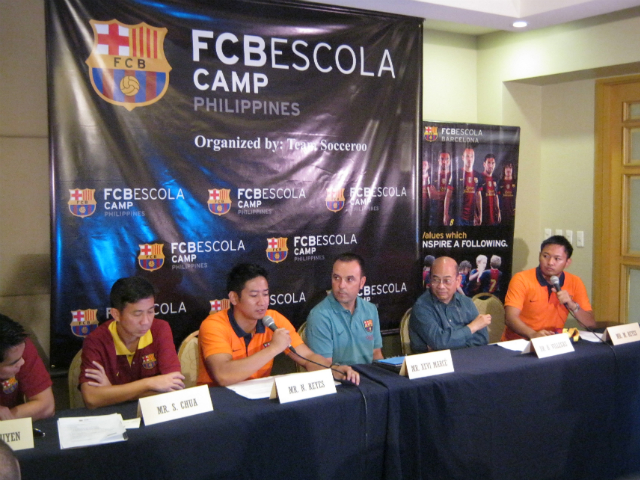
A scene from the FCB Escola Camp press conference. In green, (fourth from the left) is Director General of Escola Xevi Marcé. Earl Victor Rosero, GMA News
Arguably the best club team in the world over the last five years, FC Barcelona will once again run a training clinic in Manila with an eye to a future school in the Philippines.
In conjunction with Team Socceroo, Barcelona’s youth system, FC Barcelona Escola, will be holding the camp from December 18 to 22, as announced in a press conference, Friday at the Rockwell Club, Makati.
To be held at the Emperador Stadium over the four days, aspirants can register for the camp and be trained by these qualified professionals. It will actually be the second time the Escola have held a training camp in the Philippines with the first held at Ayala Alabang Country Club with some 148 kids from a variety of backgrounds earlier this year.
Future Escola Academy in the Philippines a “possibility”
Speaking about the training style of the camp, the Director of Escola, Xevi Marcé, said they will be teaching according to the team’s philosophy, how to “control the ball, pass the ball, think before you receive the ball,” a methodology they use from the youngest age groups to the Senior team.
Marcé continued to say that although the first team is unlikely to be present for the training camp, with the European football season half way through at that stage in December, they will be assessing the level of participants with their professional coaches to look at what will be viable for Barcelona in the future.
Asked whether Escola will look to establish their own academy in the country, Marcé admitted that “it’s a possibility.”
With the growing profile of young Sandro Reyes, a Filipino now with the Escola in Barcelona, the Philippines is a rapidly growing football power in the region. Asked why Barcelona decided to look into the Philippines, with Indonesia and Malaysia closer Southeast Asian rivals with better facilities and a deeper football tradition, Marcé said, “I think Philippine football is growing up fast. Now is the moment... we will decide what we can do in the future... [Filipinos are] an athletic people, and if we can train these guys and can train their players, we can see.”
However he did note that in some important areas the Philippines needs to improve to keep up that development. Big improvements in facilities, trainers, and other areas of the infrastructure, Marcé said, are needed in order for the Philippines to reach its full potential.
Trickle-down economics
Also in attendance at the press conference was Dr. Bernard Villegas. With a background in economics, he continued to speak of the benefits of football from an economic perspective. The infant industry, he noted, was growing rapidly with the National League the next target, for 2016.
Noting that the Philippines has had high growth in previous quarters, Dr. Villegas said that the “economic growth is not trickling down... but football groups are working with the poor... [that the] poorest of the poor can participate in football... and that’s a very attractive aspect.”
Speaking after the event, Dr. Villegas continued to say that this growth must “start with clubs and schools,” but that football is a great benefit for other areas of society. In particular, he noted that values can be formed through football and that parents can bond with their children through the sport. Growing the industry, he noted, “football is a core activity which generates money for others... [its] more than a sport”. Citing TV rights and gate receipts, in particular, Dr. Villegas is another on board with the vision of growing Philippine football.
Scholars
During the last camp in April, several players from the Tondo Futkaleros were able to attend due to corporate sponsorships. Scouted by a variety of coaches, corporate sponsors funded the two selected children through the course after they were selected from over 70 kids trying out from the urban poor community.
This time around there are plenty of children hoping for the same thing from a variety of communities. With more slots available, exactly how many is unsure as the organizers will decide on the limit at the Emperador Stadium at a later date.
And with Dr. Villegas noting that many of the most successful players on the planet, throughout history, have come from slums and urban poor communities, there will be a need to make the next training camp a more diverse exercise. With the steep fee for joining, most of Manila’s kids have obviously been priced out of the training clinic without corporate sponsorship. However, many of the best youth players come from those poor backgrounds. If the Philippines wants to show their brightest prospects to some of the most qualified coaches in the world, an investment in those poor, urban communities will be needed.
For now, though, the news of a second Barcelona led training clinic is great news for Philippine football. The sport continues to grow in the country and with the right management it looks to have a bright future ahead. - AMD, GMA News

