

 GMA Brandtalk
 Tracking
 Archives

AFC Asian Women's Cup: Filipinas lose the battle to Australia — but may yet win the war
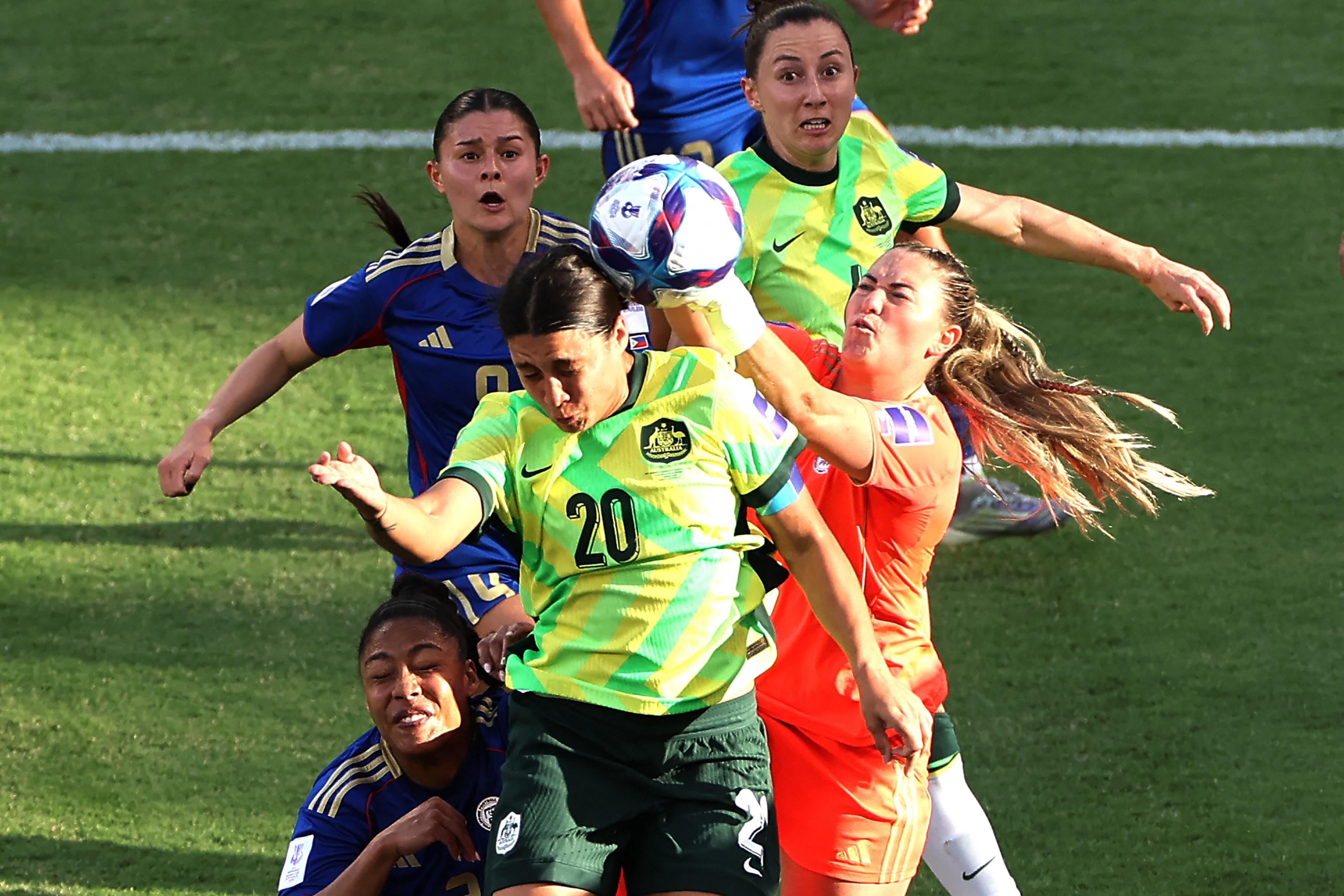
In 2022, the Filipinas’ World Cup dream turned into reality when the Philippines reached the semifinals of the AFC Women’s Asian Cup.
Now, the Philippines are back again in the Women’s Asian Cup with one clear aim — to qualify for a second successive FIFA Women’s World Cup stint.
However, things are a tad trickier this time around, with the Filipinas drawn alongside South Korea, Iran, and hosts Australia in the group stage.
The Filipinas came into the competition on an absolute high after winning their first-ever Southeast Asian Games gold medal in December 2025.
However, the Philippines were quickly given a reality check against Australia, losing by a narrow 0–1 scoreline in the opening match of the tournament.
Led by their talisman and captain Sam Kerr, the Matildas are ranked 15th in the world and boast no fewer than 13 players who ply their trade in England’s Barclays Women’s Super League.
However, the 41st-ranked Filipinas showed their defensive solidarity and resoluteness in limiting the highly touted Australians to a solitary goal in the game.
The Matildas’ game plan was to try to pull the Filipinas out of position with clever passing, but with the Philippines settling comfortably in a mid-block, Australia resorted to delivering crosses from both flanks, eventually resulting in a headed goal by local Perth heroine Sam Kerr in the 15th minute.
Before the game, Filipinas head coach Mark Torcaso promised “to be annoying and constantly be pushing,” and as the game wore on, it became very evident that the players were following the instructions to the letter by blocking passing lanes and being quick to close down any potential threats.
Make no mistake, however, the game was all Australia, with the Philippines hardly ever threatening young Chloe Lincoln’s goal and barely reaching Australia’s half.
This halftime statistic said it all: the Filipinas completed 46 passes while the Matildas completed 327, with Australia at one point having 88% of possession.
While there may be an individual gap in terms of player quality, the collective defensive effort of the Philippines more than made up for the difference.
With eleven players under the age of 23, much has been said about the blend of youth and experience in this Filipinas side.
Alexa Pino was given the start, and Jael Marie Guy, Ari Markey, and Mallie Ramirez were given a chance midway through the second half, where they showed brief glimpses of their potential, but ultimately Australia were too strong and too experienced.
It was always going to be a tall order to get something against Australia, and with the Philippines looking much further ahead with regard to their qualification prospects, it was always about limiting the damage for the Filipinas.
At the final whistle, it can be said that both teams came away with their primary objectives.
Australia, watched by a record 44,379 fans in attendance at Perth Stadium, would obviously have wanted to get their first victory under their belts while giving precious game time to their returning players — Sam Kerr and Mary Fowler.
For the Philippines, they faced the hosts and one of the tournament favorites — and came away relatively unscathed in terms of goal differential — something that might come in real handy in the latter stages of the tournament.
Looking ahead and plotting a long-game tournament strategy, should the Philippines be unable to finish in the top two of the group, they know that they still have a chance, given that two of the best third-placed sides from the group stage are set to advance.
If the Filipinas are able to muster similar discipline against 2022 finalists South Korea, and then find a way to beat Iran, the Philippines will potentially be one step closer to another World Cup.
—JKC, GMA Integrated News

