Injured teenagers – in shock and covered in blood - walked aimlessly outside a church in Manila's Pandacan district, calling out their relatives' names, desperate to know if they too had survived the loud blast that had just rocked their community. The victims, as it turned out, were not really injured but young theater actors from a local community group - Teatro Balagtas - who were merely doing a mock explosion accident to simulate a worst-case scenario in the oil depots that line up along the Pasig River in Pandacan.
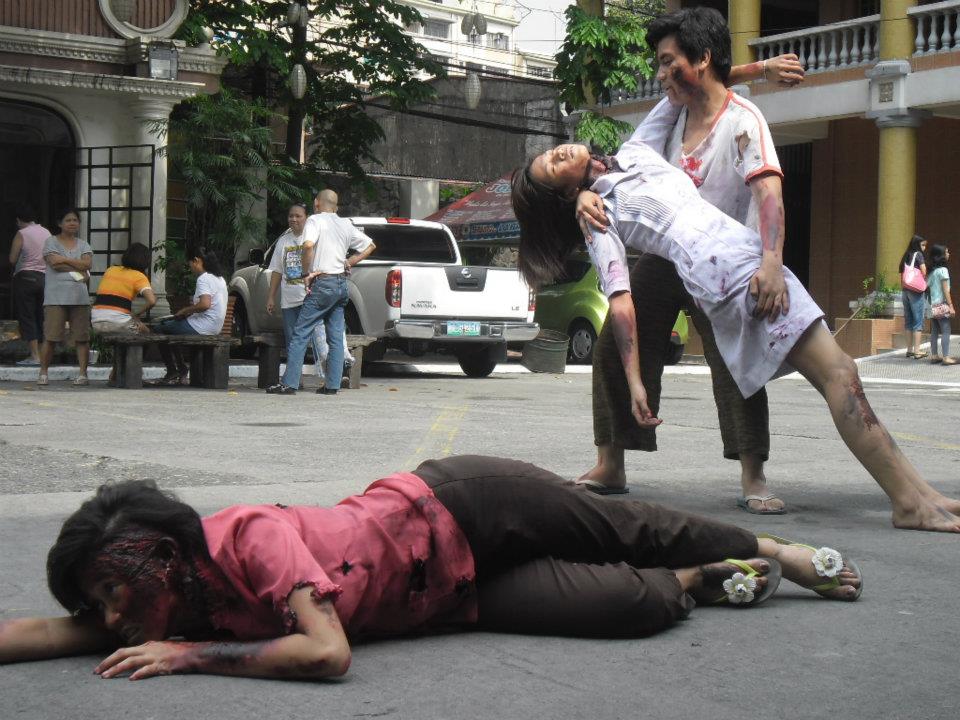
Theater actors from a local theater group in Pandacan stage a mock fire accident. AESJ/Teatro Balagtas
The activity was part of a disaster preparedness workshop to teach more than 100 participating residents of Pandacan and neighboring communities how to survive in case the depots blow up in an accident. Students from the Philippine National University also took part in the workshop. The organizers said they were prompted to mount the workshop - dubbed "I Will Survive: Maghanda sa Kalamidad" - in light of major oil depot disasters in recent years, including those in Kenya in 2011 and in India in 2009. A dozen people died in the oil depot blast in India. More than 300 injured, and displaced around half a million at the time. The explosion in Kenya resulted in more than 50 confirmed deaths, with other reports indicating the death toll to exceed 100. After the mock accident, Dr. Aidan Tasker-Lynch of the Philippine Society of Emergency Medical Technicians (PSEMT) gave out tips on how to survive a disaster. The workshop organizers - the Advocates of Environmental and Social Justice and the Sto. Nino de Pandacan Parish Pastoral Council - clarified they were not being "cynical" for playing up a possible disaster in the area. "In fact, this is a bold action to help the local government and other citizens imagine the possible scenario that might happen if the depot stays here in Pandacan,” said AESJ president Antonio Santos. He said they were merely trying to offer to the residents the best defense while the oil storage facilities remain in Pandacan. The oil depots in the area are being operated by the so-called "Big Three," namely Pilipinas Shell, Petron Corp, and Chevron Philippines (Caltex). The depots are used as storage facilities for refined fuel products that originate from refineries outside Metro Manila. “As long as the oil depot is here, we will not stop resorting to alternative measures for our safety. But of course, relocating them safely, still, is the best thing to do," Santos said. The groups slammed the local government of Manila for placing more importance on "protecting the oil depot [than] the welfare of the residents."
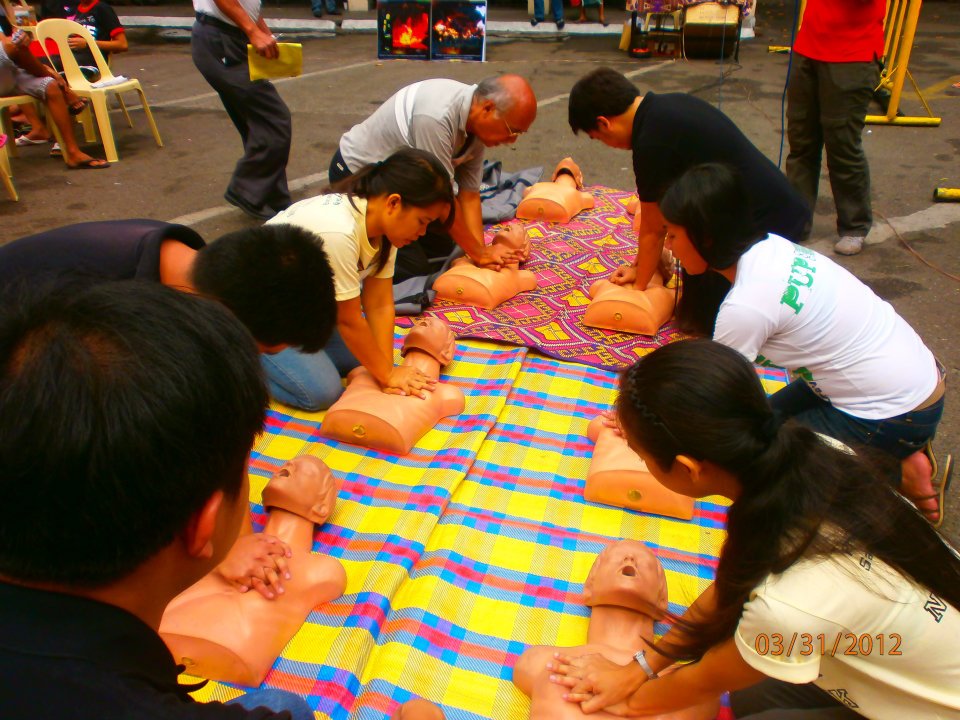
Participants of a disaster response workshop in Pandacan, Manila are trained to perform cardiopulmonary resuscitation or CPR. AESJ/Teatro Balagtas
The government was earlier presented with an offer to lease a 50-hectare reclaimed area in Manila Bay where the oil depots of the "Big Three" could be transferred. Petron had earlier indicated a plan to finally move out of Pandacan and transfer its storage facilities to the Manila North Harbour Port Inc, which the firm said would be much closer to its oil refinery in Limay, Bataan. Petron uses barges to deliver fuel from its refineries to Pandacan. Shell and Chevron said they have no plans of transferring their oil depots saying they would only incur additional costs for the relocation. Shell uses an existing pipeline to transport their refined products from their refineries in Batangas to Metro Manila. Chevron, meanwhile, imports its products.
— ELR, GMA News 

 GMA Brandtalk
 Tracking
 Archives


