

 GMA Brandtalk
 Tracking
 Archives

'Heat stroke break' back for traffic enforcers, street sweepers
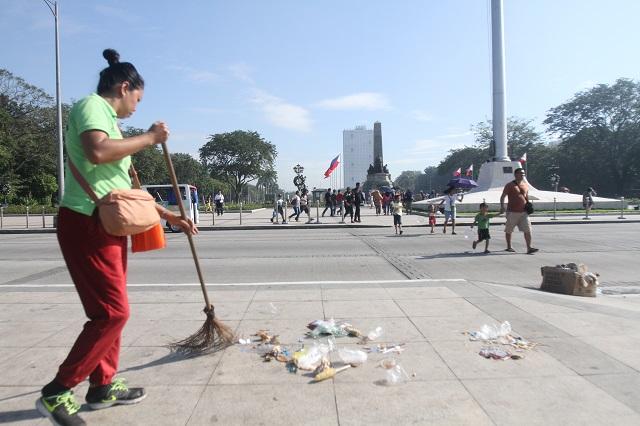
The Metropolitan Manila Development Authority (MMDA) on Wednesday said it offers a 30-minute break to its traffic enforcers and street sweepers amid the high heat index in the region.
In a statement, the MMDA said the "heat stroke break" policy started Monday and will last until May 31.
"We acknowledge the challenges being faced by our traffic enforcers and street sweepers who diligently work in the heat to fulfill their duties and responsibilities; their well-being is crucial and this initiative seeks to mitigate health-related illnesses among them, especially with the sudden rise in the heat index in Metro Manila," MMDA chairperson Romando Artes said.
On-duty traffic enforcers and street sweepers are allowed to leave their posts in shifts to rehydrate, seek shelter from the sun, and take a 30-minute break to avoid heat stroke, according to the MMDA.
An additional 15-minute break will also be given to MMDA field personnel in case the heat index in Metro Manila reaches 40 degrees Celsius and above.
The MMDA noted that the heat stroke break shall be done alternately to maintain the operations of the agency on the ground.
Earlier, labor group Trade Union Congress of the Philippines (TUCP) urged employers to offer breaks to their workers as the heat index reaches dangerous levels in some parts of the country.
The TUCP called on employers to implement the following measures to prevent illnesses and fatalities among the workforce:
- Heat break, especially for outdoor workers, during the hottest part of the day, such as around 11 a.m. to 2 p.m., which can be facilitated through flexible work time arrangements.
- Buddy system as a proactive monitoring system for workers to check on each other’s well-being, supported by the openness and alertness of the management, especially the workplace safety officer.
- Mandatory heat stress orientation sessions, supplemented by periodic refresher courses or training guides, to educate workers about hydration reminders, how to flag heat stress symptoms, and the corresponding treatment.
--VAL, GMA Integrated News

