

 GMA Brandtalk
 Tracking
 Archives

Tito Sotto: Alias a 'fake name' if no person is behind it
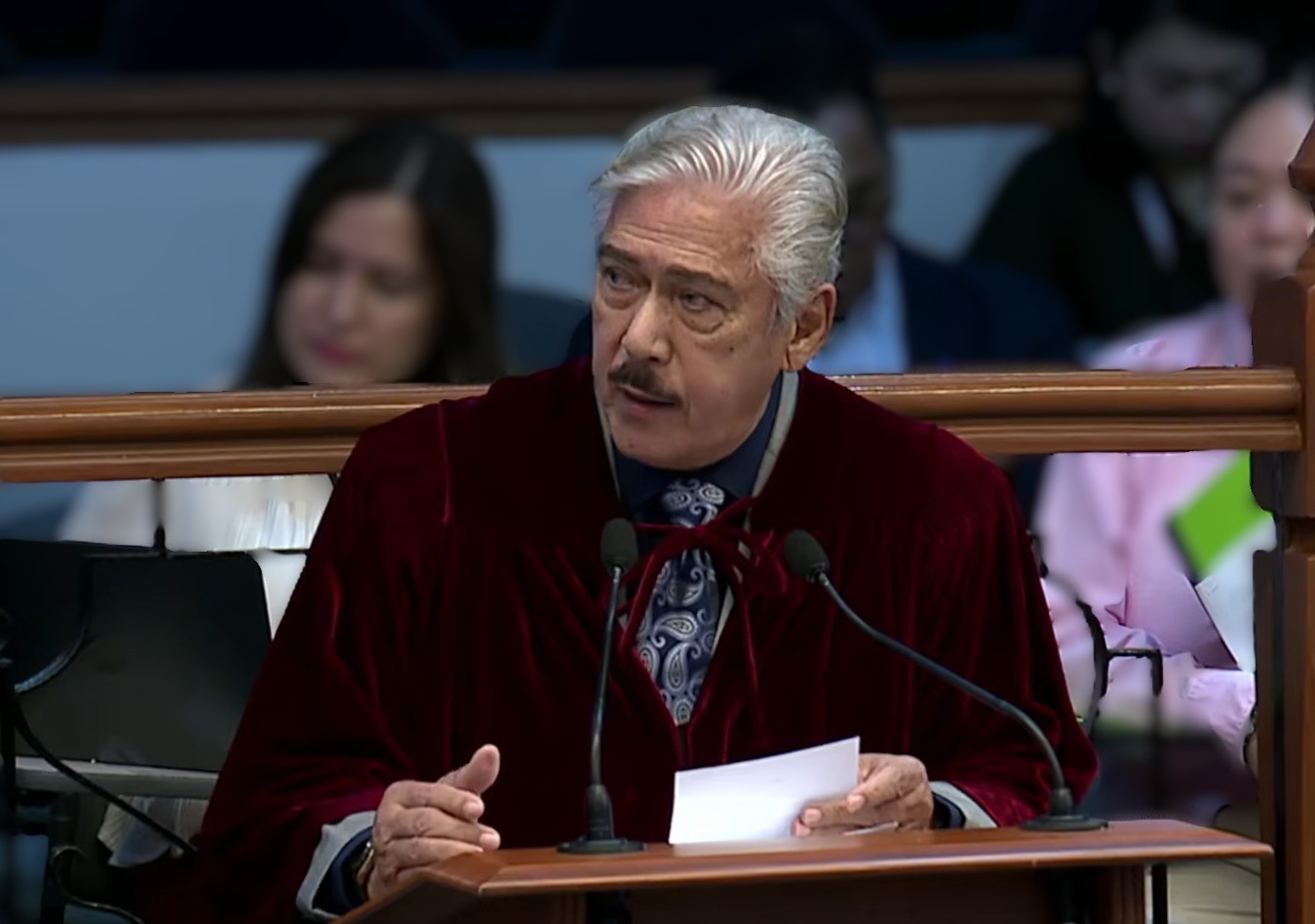
Senator-Judge Vicente “Tito” Sotto III on Tuesday clarified that an alias may be used as a pseudonym for entertainment purposes, but if there is no actual person behind the name, it could be considered a “fictitious name” or “fake name.”
On the 20th day of the impeachment trial of Vice President Sara Duterte, Sotto cited Republic Act No. 6085, which regulates the use of aliases.
“It’s only allowed in the Philippines for pseudonyms, solely for literary, cinema, television and other entertainment purposes. Therefore, if there is a person behind the alias, then it is an alias,” he said.
“If there is no person behind the name, it is a fictitious name or a fake name. Just for the record, Mr. President,” he added.
Section 1 of RA 6085 states:
Except as a pseudonym solely for literary, cinema, television, radio or other entertainment purposes and in athletic events where the use of pseudonym is a normally accepted practice, no person shall use any name different from the one with which he was registered at birth in the office of the local civil registry, or with which he was baptized for the first time, or, in case of an alien, with which he was registered in the Bureau of Immigration upon entry; or such substitute name as may have been authorized by a competent court.
Sotto made the manifestation in response to an exchange between Senator-Judge Robin Padilla and private prosecutor Mae Divinagracia on Wednesday, August 26, regarding the use of aliases in confidential activities.
During the hearing, Padilla pointed out that Philippine heroes and revolutionaries also used aliases during the Spanish colonial period, citing names such as Dimasalang, the alias of José Rizal; Siling Labuyo, used by Marcelo H. del Pilar; Taga-Ilog, used by Antonio Luna; Magdalo, used by Emilio Aguinaldo; and Lakambini, used by Lope K. Santos, among others.
Divinagracia, however, argued that the circumstances under which the aliases were used back then were different because there was a war and the Philippines was under Spanish rule.
On Tuesday, before the trial journal was approved, Sotto also refuted a report that Divinagracia was supposedly not allowed to answer and was cut off several times during Padilla’s interpellation.
“I browsed through the journal and she was able to, Atty. Divinagracia, I believe, she was able to answer most of the questions. There was one or two instances where she was cut off, but I think she was pertaining to, so just for the record, to complete it, she was pertaining to Republic Act 6085, and I think the court allowed her to answer this but probably she was not able to elaborate more,” he said.
Senate impeachment court Presiding Officer Francis Escudero took note of Sotto’s manifestation and confirmed that Divinagracia was able to answer Padilla’s query.
“Although she was not able to give that much detail that the good senator-judge made,” Escudero said.— MCG, GMA News

