

 GMA Brandtalk
 Tracking
 Archives

BARMM 2026 Elections: A guide to the parliamentary voting process
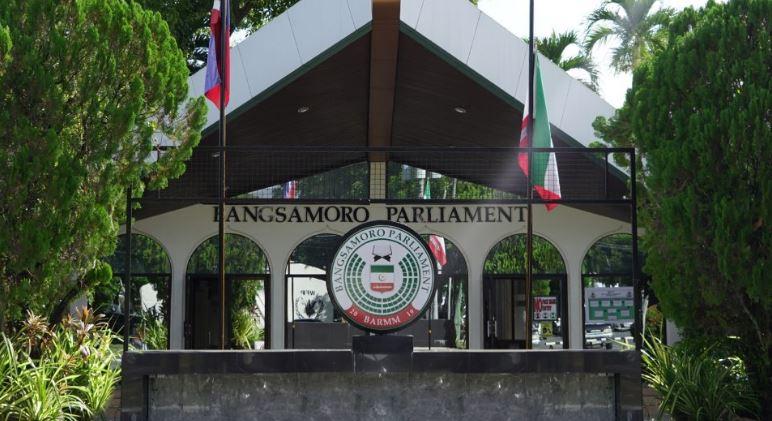
The historic first regular elections in the Bangsamoro Autonomous Region in Muslim Mindanao (BARMM) are set to take place on September 14, 2026. This comes after the regional polls were postponed four times.
Enacted in 2018, Republic Act No. 11054, or the Bangsamoro Organic Law, established the region's governmental structure and political entity to exercise self-governance according to the Philippine Constitution.
Under the law, BARMM was established with a “parliamentary form of government,” constituting a democratic political system that allows its people to freely vote (Sec. 3, Article IV).
But what does it mean to be parliamentary?
Parliamentary seats
The BARMM Parliament is composed of 80 members.
The seats are divided into three classifications and will be allocated as follows:
- Regional Parliamentary Party Representatives (RPPP) - 40 seats
- Parliamentary District Representatives - 32 seats
- Sectoral Representatives - 8 seats
Regional Parliamentary Party Representatives (RPPP) seats are contested in a region-wide race among registered political parties, rather than individual candidates.
Each political party must submit a list of 40 nominees, ranked in order of priority to fill the seats won based on the overall votes gathered.
Think of it like the party-list representatives in the House of Representatives, who similarly rank their first, second, third, and subsequent nominees in case they win multiple seats.
According to the Botong Bangsamoro website, as far as practicable, at least one in every three party nominees must be a woman, and no nominee can be related to another within the second degree of consanguinity or affinity.
RPPP seats are allocated to political parties proportionally based on the percentage of votes obtained by each party relative to the total votes cast in the election.
Parties need at least 2.5% of the total valid votes to qualify, according to Comelec.
If qualifying groups receive varying percentages of votes, they will be ranked from highest to lowest, and the 40 seats will be distributed proportionally based on their vote shares.
For example, if a party secures 10% of the total RPPP votes across BARMM, it would earn roughly 4 seats (or 10 percent of the 40 available seats).
Meanwhile, Parliamentary District seats are awarded to representatives elected from single-member districts as follows:
- Basilan - 4
- Lanao del Sur - 9
- Maguindanao del Norte - 5
- Maguindanao del Sur - 5
- Tawi-Tawi - 4
- Cotabato City - 3
- Special Geographic Area (SGA) - 2
Unlike RPPP seats, district representatives are elected through a direct plurality vote, meaning whoever gets the most votes wins.
Lastly, the remaining eight seats reserved for Sectoral representatives are divided among Non-Moro Indigenous Peoples (NMIP) and Settler Communities with two seats each, alongside one seat each for Women, Youth, Traditional Leaders, and the Ulama.
However, voters will not vote for the two NMIP representatives on the main election ballot; instead, their own assembly will select them under rules set by the Commission on Elections (Comelec).
Chief Minister
The position of “Chief Minister” is not directly voted on by the public. Instead, it is collectively chosen through a majority vote among the 80 elected members of the Parliament.
This parliamentary power marks a milestone, as the Chief Minister was previously appointed by the President of the Philippines.
According to the Bangsamoro Organic Law, the responsibilities of the Chief Minister include serving as the head of the Bangsamoro Government and exercising the power to appoint heads of ministries, agencies, bureaus, and other offices within the regional executive branch.
Decisions made by the Chief Minister and their appointed cabinet members directly impact constituents across social services, education, security, and livelihoods.
Once seated, the Chief Minister is also responsible for nominating candidates for two Deputy Chief Minister positions, who are then elected by the members of Parliament.
BARMM is divided into three subregions: Southwestern Mindanao, North-Central Mindanao, and South-Central Mindanao.
Under the law, the two Deputy Chief Ministers must represent the two subregions different from that of the elected Chief Minister.
Qualifications
In general, to qualify as a parliamentary nominee, a candidate must meet the following criteria:
- Filipino citizen
- At least 25 years old on election day
- Youth representatives must be at least 18 years old and no older than 30 years old on election day
- Able to read and write
- A registered BARMM voter
In addition, candidates for district representatives must specifically be registered voters of the district they seek to represent and must have resided there for at least one year immediately preceding election day.
Duties and term in office
According to the Bangsamoro website, elected members of the BARMM Parliament carry out vital legislative duties, including enacting laws, holding public consultations, and disciplining their members.
Under the law, members of Parliament are tasked with the following duties:
- Enact laws that advance, protect, and ensure the general welfare of the people in the Bangsamoro region
- Authorize the Chief Minister, Parliament Speaker, and Presiding Justice of the Shari'ah High Court to augment items in the general appropriations law (budget)
- Regulate the grant of regional franchises and concessions, and empower the Chief Minister to grant leases, permits, and licenses over agricultural lands and forest management
- Declare official holidays
- Call for referendum on critical issues affecting BARMM
- Conduct inquiries to assist in drafting legislation
- Exercise disciplinary authority over members of Parliament
- Consult on matters affecting the environment
The elected BARMM officials in the upcoming first-ever polls will serve an extended five-year term starting at noon on October 30, 2026 until noon on June 30, 2031.
The Bangsamoro Transition Authority (BTA) will continue to serve as the interim government until the newly elected leaders take office, unless members are replaced by the President or elected to a different position.
Following this initial transition, standard terms for Parliament members will revert to three years under Sec. 11, Article VII of the Bangsamoro Organic Law, with a limit of three consecutive terms.
To sync the BARMM polls with the national and local elections moving forward, the next regular Bangsamoro elections will be held on the second Monday of May 2031 and every three years after that.
Voting process
The first regular elections on September 14 will utilize an Automated Election System featuring Automated Counting Machines (ACMs).
This means voters will shade their choices on paper ballots and feed them into the ACMs, which will print a receipt reflecting their selected candidates.
On election day, voters must shade their choices as follows:
- One (1) Regional Parliamentary Political Party
- One (1) District Representative
- Six (6) Sectoral Representatives (2 for Settler Communities, and 1 each for Women, Youth, Ulama, and Traditional Leaders)
Voters are allowed to bring a list or cheat sheet (kodigo) of their chosen candidates, provided it reflects their personal preferences.
Political party logos will appear beside party names on the ballot for easy identification, though individual party nominees will not be listed.
For individual candidate races, photos will be printed alongside names to prevent voter confusion among candidates with similar names.
For accessibility, ballots will be available in Filipino, English, and Arabic.
Comelec previously stated that it aims to proclaim the winning BARMM candidates within two days after election day, citing the efficiency of automated counting. —LDF, GMA News
References:
Botong Bangsamoro 2026 - https://www.facebook.com/botongbangsamoro
Botong Bangsamoro App/Website: https://botongbangsamoro.web.app/
Comelec website, Facebook page, and documents

