

 GMA Brandtalk
 Tracking
 Archives

Court urges public to send questions for amici curiae
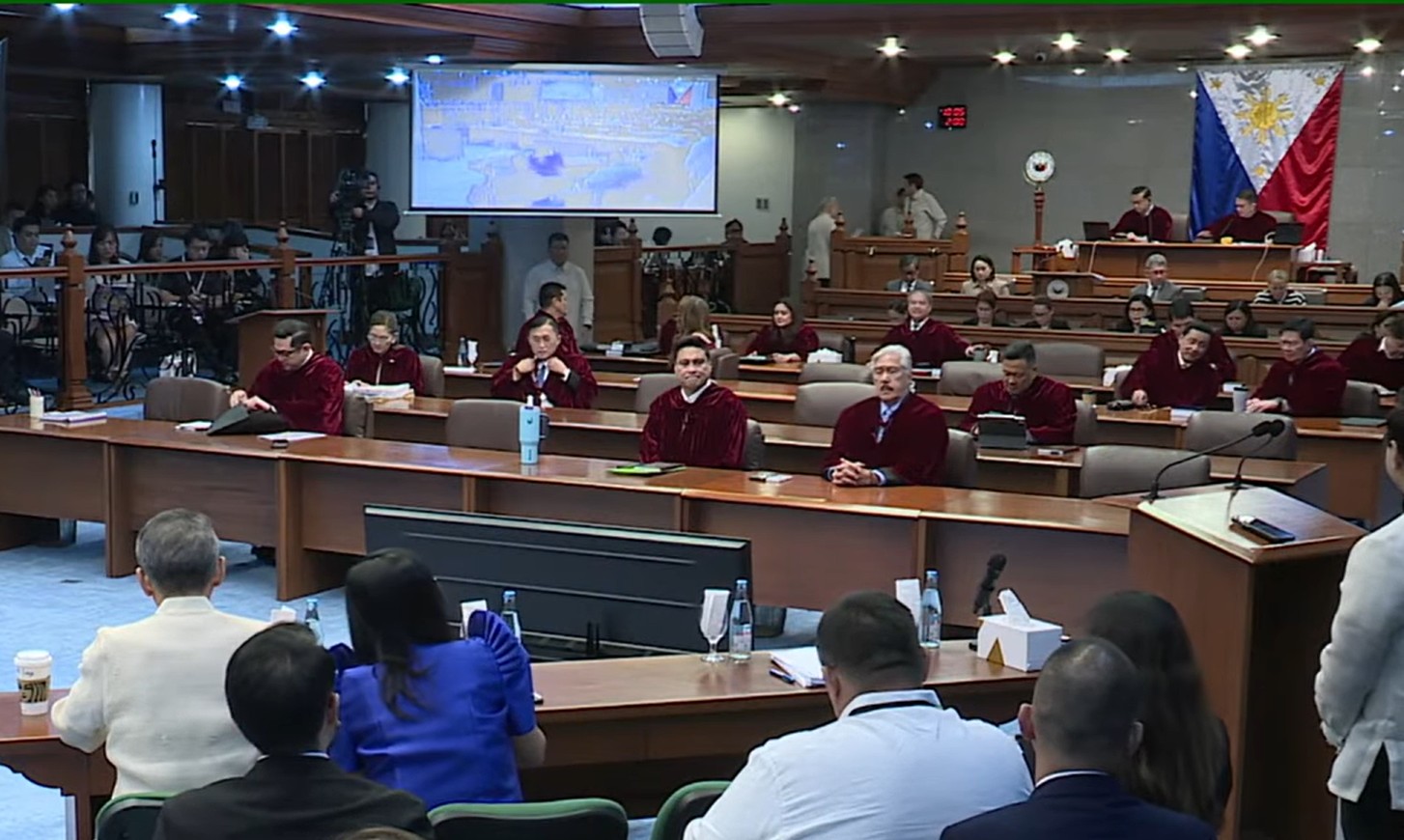
The Senate impeachment court on Tuesday encouraged the public to submit questions for the retired Supreme Court justices who will appear as amici curiae (friends of the court) to help resolve questions on the voting threshold for convicting Vice President Sara Duterte.
In a press conference, court spokesperson lawyer Regie Tongol said the public may submit questions through the Senate of the Philippines’ official Facebook page.
“We are expecting those posts on our Senate Facebook page. So, I need to coordinate with the Secretariat regarding the questions submitted there. And perhaps by tonight, we will collate those questions,” Tongol said.
He, however, said the court would select questions that are new and may not be raised by the senator-judges.
“Of course, if those questions have already been asked, we won’t have the presiding officer ask them again since they will already have been answered,” he explained.
Tongol said the court would screen the questions to ensure they are novel and unlikely to be raised by the senator-judges.
"We will only submit questions that are sufficiently complex and necessary to the presiding officer,” he said.
Tongol previously announced that the following legal luminaries will physically appear before the impeachment court on Wednesday, September 16, to present their expert opinions on the ruling regarding the 16-vote threshold for convicting Duterte:
-
Retired Supreme Court Chief Justice Artemio Panganiban — served as the 21st Chief Justice of the Supreme Court from December 2005 to December 2006;
-
Retired Supreme Court Chief Justice Reynato Puno — served as Chief Justice from December 2006 to May 2010, after serving as an Associate Justice from 1993 to 2006; and
-
Retired Supreme Court Associate Justice Adolf Azcuna — served as an Associate Justice of the Supreme Court and is also a framer of the 1987 Constitution. The Supreme Court has specifically described him as the principal author of Article XI, which deals with accountability of public officers, including impeachment.
Retired Supreme Court Chief Justice Hilario Davide Jr. will also participate, but through a legal memorandum instead of a physical appearance.
Tongol said the amici curiae are expected to answer questions on whether the phrase “all the Members of the Senate,” as stated in Article XI, Section 3, Paragraph 6 of the Constitution, should refer to the Senate’s full membership of 24 senators or only those “who are legally and physically capacitated to participate and vote on the final question in an impeachment trial.”
The amici curiae are also set to face questions related to the Avelino v. Cuenco case, particularly whether its treatment of members beyond the Senate’s coercive jurisdiction applies to senators who are detained, abroad, suspended or whose whereabouts are unknown.
The questions will seek to determine whether such senators should be included in the phrase “all the Members of the Senate” for purposes of the two-thirds vote required under the Constitution.
They are also expected to give their views on whether a senator-judge who did not attend or substantially participate in the impeachment proceedings, including in propounding questions to and observing the demeanor of witnesses, may nevertheless validly cast a vote on the final question in an impeachment trial.
The oral arguments between the defense and prosecution panels on the matter will be held a week later, on September 23, with each side given 15 minutes to present its position, according to Tongol..
After the oral arguments, the senator-judges are also expected to cast their votes on the matter on the same day.— MCG, GMA News

