

 GMA Brandtalk
 Tracking
 Archives

Blumentritt descendants donate rare Rizal letter, other 19th-century items to National Museum
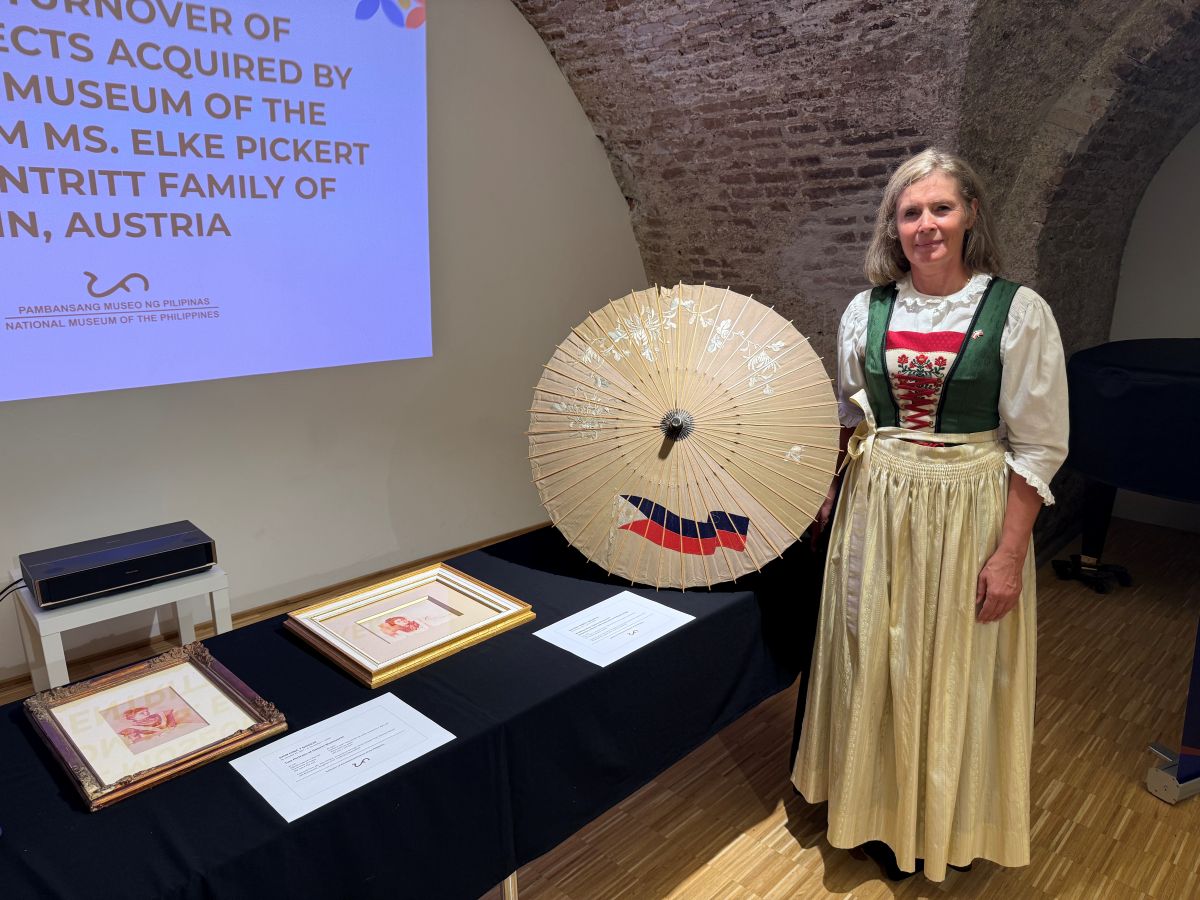
VIENNA, Austria - The National Museum of the Philippines has acquired three sets of 19th-century heirlooms kept by descendants of Austro-Hungarian ethnographer Ferdinand Blumentritt.
The items, long in the possession of Blumentritt’s great-great-granddaughter Elke Pickert, include an unpublished letter from Jose Rizal, a pair of watercolor paintings by Juan Luna, and a 19th-century Japanese parasol with an embroidered earlier version of the Philippine flag.
For over a century, these historical treasures remained tucked away in Kufstein, Austria, the ancestral home of Pickert’s grandmother, Dolores Blumentritt.
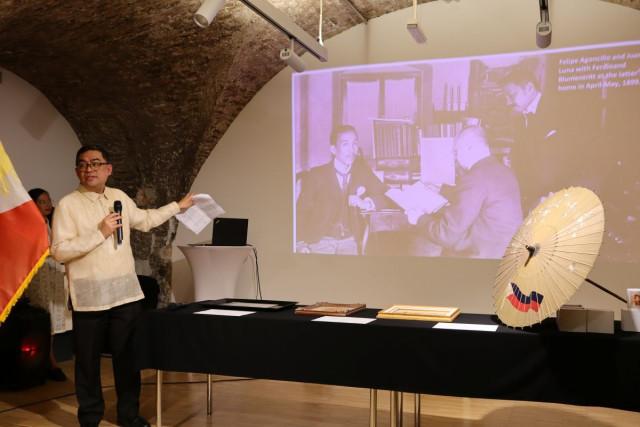
“The precious objects have been a part of our family history for many decades,” Pickert shared during a turnover ceremony attended by officials from the National Museum of the Philippines and the Philippine Embassy in Vienna, as well as diplomats, academics, and local community members on Thursday.
Pickert told GMA News about her joy of having these items showcased in the Philippines. “I’m proud that it’s going to the Philippines, to the National Museum, and a lot of people can see it.”
Treasure trove
The heirlooms were discovered by Austrian anthropologist Dr. Johann Stockinger in 2017, upon visiting Pickert’s home in Kufstein for his previous research on Blumentritt.
Although Stockinger knew about Pickert’s lineage, he was unaware that the family had kept the historical items safe, including the portraits of Dolores.
“I saw the portraits hanging on the wall. I asked Elke, ‘Do you know who painted these?’ She said, ‘No’”, Stockinger told GMA News.
Stockinger quickly identified the artwork as original watercolor portraits of 25-year-old Dolores painted by Juan Luna in Leitmeritz (present-day Litomerice in the Czech Republic) in April 1899, signed “Recuerdos de LVNA”. The other portrait bore the sign, “LVNA 99”.
“I had to explain their significance to her. I was then allowed to rummage through a few boxes of old documents. In the process, I discovered Rizal’s letter to Blumentritt dated May 9, 1894.”
Stockinger was referring to the unpublished three-page letter Rizal wrote from his exile in Dapitan in May 1896. Here, the hero sent his greetings to Blumentritt and his daughter Dolores, whom he called “Loleng”.
The anthropologist also recalled a detail from Blumentritt’s old correspondence to German anthropologist Adolf Benhard Meyer about a wedding present sent from Kobe, Japan.
“I read in Blumentritt’s letter to A. B. Meyer dated April 29, 1900: ‘Loleng’s wedding will take place on May 17. She received a silk umbrella with the flag of the Philippine Republic embroidered on it from a Filipino living in Kobe.’ I then asked Elke if they still had this umbrella, and sure enough, she was able to find it in the basement.”
“She went down to her cellar, and she found it, after more than a century,” Stockinger said.
A glimpse into Philippine-Austrian friendship
Rizal’s unpublished letter from Dapitan, written in Spanish and German and addressed to Blumentritt, describes his activities while in exile, including sending a collection of butterflies to Europe and treating indigenous patients.
The correspondence also reveals Rizal’s playful relationship with Loleng, which National Museum Deputy Director-General for Museums Arvin Manuel Villalon believes may have helped preserve the document through generations.
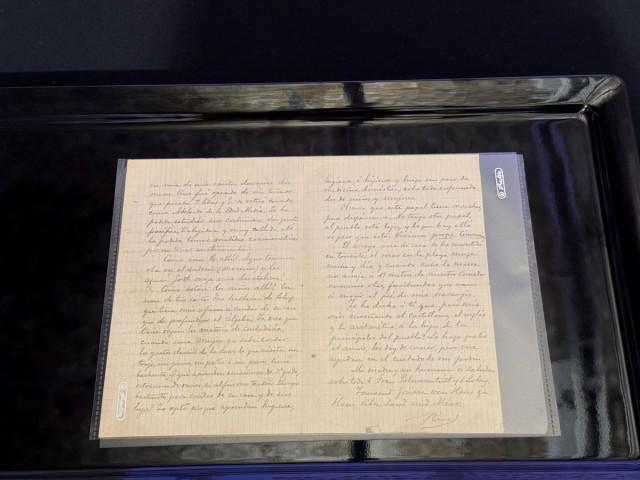
Teasing Loleng’s disinterest in mathematics, Rizal wrote: “Why learn quadratic equations and root extraction if you ultimately won’t have enough time to take care of your home and your children? I prefer that they learn about hygiene, hygiene, and hygiene. And later, a little bit more of domestic medicine, especially children's and women's diseases.”
Rizal closed his letter: “My mother and sister send their regards, especially to Frau Blumentritt and Loleng”, before sharing a German quote: “Tausend Grüße von Haus zu Haus, über Land und Meer” (A thousand greetings from house to house, across land and sea).
For the portraits, Luna and Felipe Agoncillo–serving then as diplomats of the First Philippine Republic–visited the Blumentritt family in Leitmeritz between April and May 1899. During this period, Luna painted several artworks, including portraits of Blumentritt and his daughter.
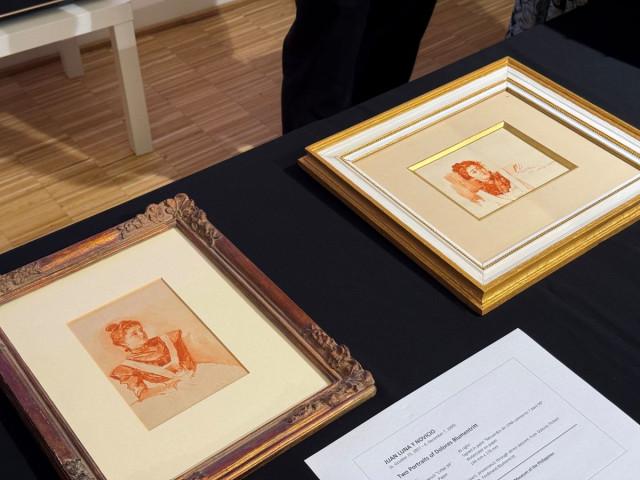
Loleng’s watercolor portraits show the fashion at the time: she wears puffy sleeves known as gigot and what looks like a Victorian velvet choker. Her hair is neatly arranged in a high chignon, with soft curls in the front.
“All in all, she was likely quite fashionable as befits the daughter of a prominent gentleman scholar. And we regard these portraits as small artistic treasures that tell us so much of this important circle of relationships,” Villalon said.
The third item is a traditional Japanese silk umbrella embroidered with wisteria, chrysanthemums, and a hoisted Philippine flag.
It was sent from Japan by diplomat Mariano Ponce as a wedding gift to Dolores, who would marry Karl Pickert in 1900.
Ponce, chosen by Emilio Aguinaldo to represent the Philippine Republic, procured the umbrella made of white silk called habutai. It was embroidered with chrysanthemum, wisteria, butterfly motifs, and an embroidery of a Philippine flag hoisted on a bamboo pole.
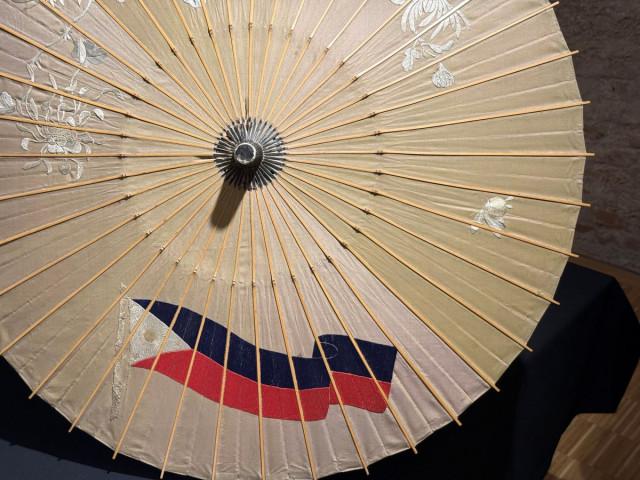
The gesture was part of a larger tribute where Aguinaldo’s revolutionary government covered Dolores's entire wedding expenses, according to Villalon.
“The letter, the portraits, and the umbrella also show the endearing qualities of Filipino values, such as utang na loob or reciprocity, familial ties, and, of course, cherished friendships, the friendship between the Blumentritts and, of course, our hero, Dr. Jose Rizal,” Villalon added.
Older than the Philippines and Austria
Some of these historical objects are older than the republics of the Philippines and Austria, Philippine Ambassador to Austria Evangelina Lourdes Bernas noted.
So, most Filipino and Austrian guests at the turnover ceremony stood in awe to see these heirlooms in person.
Bernas said that the objects stand as “a testament to the ties of friendship between our countries that are much older than our formal bilateral diplomatic relations”.
National Museum Director-General Jeremy Barns described the acquisition as “super nakakataba ng puso (heartwarming)”, stressing how it shows family connections and friendships.
“It’s like a window into the time of Rizal and his friendship with Blumentritt. Here’s another opportunity to dive a bit deeper and ask, ‘Who is Blumentritt and what is his importance? What is his relationship with Jose Rizal?’ We’re enriched by stories like this, and these objects prove that these stories really happened,” Barns told GMA News.
National Museum Board of Trustees Chairman Andoni Aboitiz added that the items symbolize the Philippines today: “an international, cosmopolitan, and very reflective people”.
“My wish is that the people realize that this is a symbol of who we are today, not just of what happened in the past, but who we are today: open, free, and people who are always looking for new ideas and not resistant to change," he said.
For anthropologist Dr. Hermann Muckler from the Austro-Philippine Society, the pieces symbolize “a very close and very relaxed and even very productive relationship”.
“This brings us here in Austria closer to the Philippines. And thanks to Johan Stockinger, who was for a long time the president of the Austro-Philippine Society. He is still on the board, in a very important function where he is digging into the history of this personal relationship between Rizal and Blumentritt. So, it’s quite likely that new findings will surface in the near future," Muckler said.
According to Barns, the items are set to be presented in an upgraded gallery at the National Museum in Manila next year. —VBL, GMA News

