

 GMA Brandtalk
 Tracking
 Archives


Duterte defense cites 'bugalbugal' for 'I-will-kill-you' rhetoric
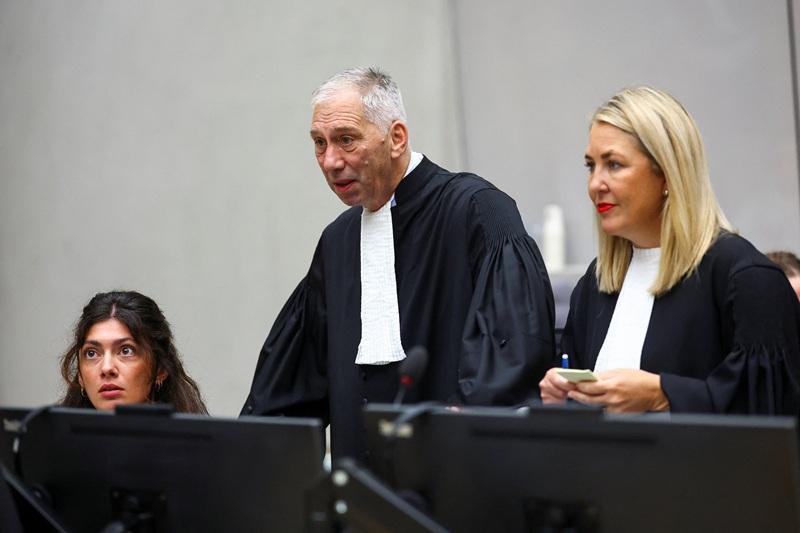
Former President Rodrigo Duterte’s lawyers are asking the International Criminal Court (ICC) to consider Visayan culture and language in assessing the profanity and alleged threats he made amid his drug war.
These statements attributed to Duterte during the war on drugs include “Papatayin kita," or "I will kill you" in English.
In an expanded section in its pre-trial brief, the defense cited “bugalbugal”, which it described as “a familiar Cebuano practice of verbal play involving teasing, mockery and deliberately irreverent humor.”
Lead defense counsel Peter Haynes said bugalbugal’s meaning depends on shared cultural understanding and the relationship between the speaker and audience, where words that may appear hostile in isolation could instead be understood as playful ridicule.
It also cited studies of Cebuano humor which, according to the filing, identify “hyperbole, ambiguity, and departures from literal meaning” as common features.
“These linguistic insights, and contemporary commentary applying bugalbugal to Mr Duterte’s speeches, provide grounds for examining whether apparently literal threats conveyed exaggeration, ridicule, or theatrical intimidation to their intended audience,” Haynes said.
'I will kill you' not literal
The defense’s filing argued that Duterte’s language must be assessed within its linguistic and cultural setting rather than a literal reading of individual statements.
“To Western ears, and indeed to listeners outside of Davao, Mr Duterte’s rhetoric directed towards those involved in producing, trafficking or even using drugs, may be objectively shocking,” Haynes said.
The defense said the question for the judges is whether those statements carried the same meaning for the audiences Duterte was addressing.
The defense specifically raised whether phrases such as “I will kill you” or “Papatayin kita” are used in Visayan and Cebuano speech as an emphatic expression without necessarily showing an intent to murder.
Haynes also said Duterte used “jocular ridicule” in public speeches to connect with crowds, “particularly those familiar with his Visayan manner of speaking”.
Other studies cited by the defense examined the use of swearing for solidarity and emphasis and Duterte’s multilingual style of political speech.
Official transcripts, Haynes added, “document audience laughter in response to his threatening language.”
“These reactions are relevant to whether particular passages were understood as familiar theatrical exaggeration rather than instructions to kill, particularly when considered alongside his stated use of threats to frighten offenders into abandoning illegal activities.”
'Bugoy' hard talk
Duterte’s lawyers also argued that the former president cultivated a “deliberate bugoy,” or “tough guy,” image to deter or scare offenders into reform.
Citing academic literature, lead counsel Peter Haynes highlighted “paternalistic cussing”, or language that expresses authority, concern, or reprimand abrasively.
“These studies identify the meanings and purposes of his ‘hard talk’, distinct from any intention to commit the charged crimes,” the filing stated.
Haynes claimed that prosecutors are selectively quoting inflammatory portions of presidential speeches while leaving out statements that qualified the use of force or warned police officers against abuse.
For the defense, “neutralization” does not mean an indiscriminate order to kill but rather “a standard measure subject to legal constraints.”
“The Prosecution invites the Trial Chamber to interpret the term as synonymous with killing, thereby suggesting that it gave officers on the ground carte blanche to eliminate their targets during police operations,” the defense stated.
Reiterating the defense
Haynes’ arguments on Duterte’s manner of speech reiterated what the former president’s previous counsel, Nicholas Kaufman, said amid the charges confirmation hearing: “neutralization” denotes “lawful restraint”.
On the sidelines of that hearing, former presidential spokesperson Salvador Panelo insisted that many of the former president’s drug war statements were hyperbole or exaggeration.
Filipino law experts have weighed in on that aspect, with some emphasizing the importance of insider witnesses who could explain how “neutralize” was interpreted among police ranks.
The Office of the Prosecutor has told Trial Chamber III that insider witnesses are on its List of Witnesses.
The first five prosecution witnesses are expected to testify before the court once the prosecution and the Common Legal Representatives of the Victims (CLRV) finish their opening statements.
Duterte’s charges of crimes against humanity will be heard by Trial Chamber III from November 30 onwards. –NB, GMA News

