
 GMA Brandtalk
 Tracking
 Archives


EXPLAINER | Duterte at ICC: Inside the CLRV's trial brief — What do victims' kin want from the trial?
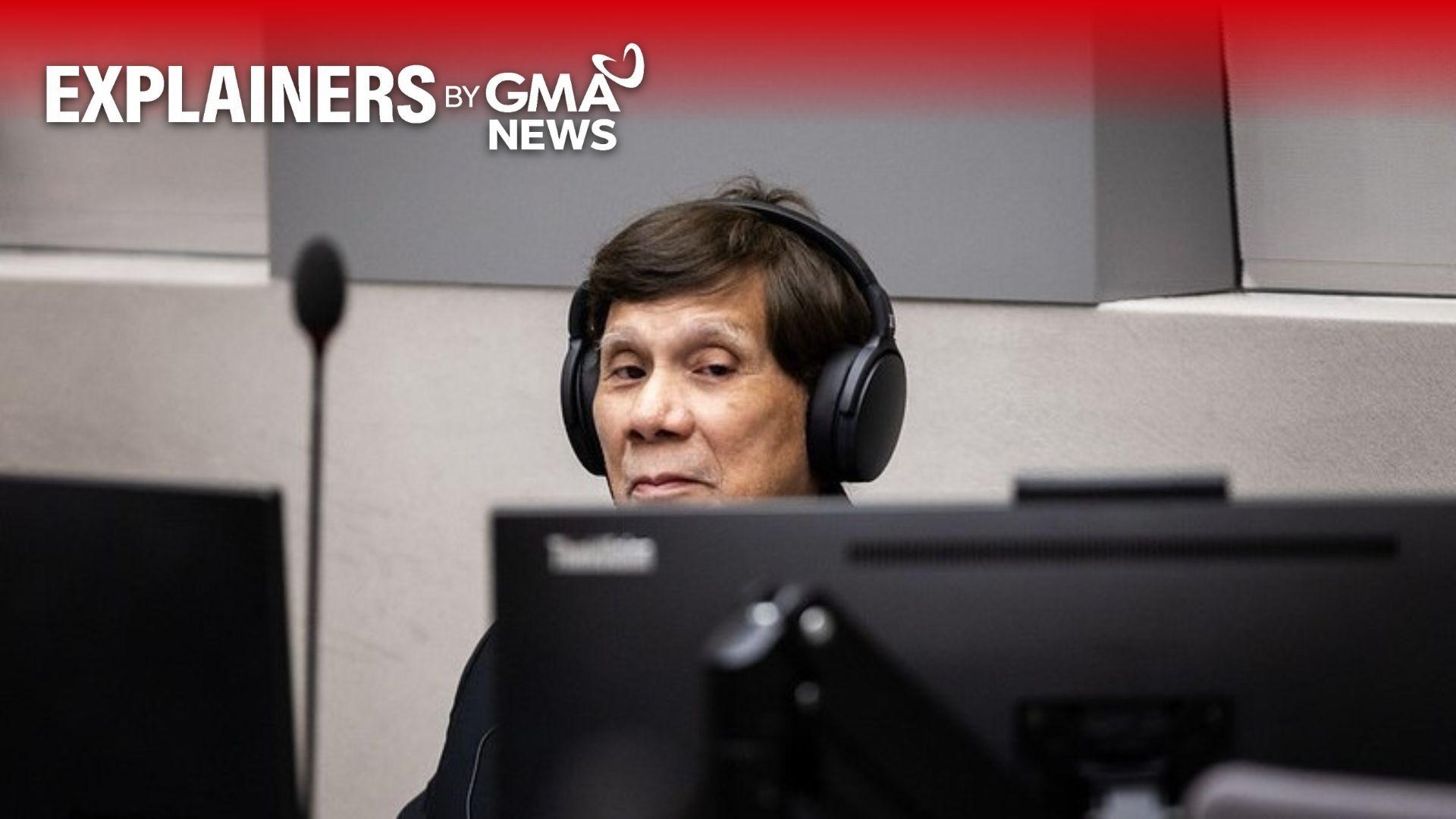
THE HAGUE – Former president Rodrigo Duterte is set to stand trial before the International Criminal Court (ICC) for his crimes against humanity case on Monday, November 30, in connection with the killings during his term as president and Davao City mayor.
This fourth and final part of a GMA News Online Explainer series tackles the hopes of the 539 victim families participating in the trial.
When the trial of former president Rodrigo Duterte opens on Monday, November 30 at the International Criminal Court (ICC), the courtroom will confront two fundamentally opposing records of the Philippine “war on drugs”.
On one side stands the official state narrative constructed between 2016 and 2022: executive speeches, police reports citing uniform self-defense ("nanlaban") claims, and official accomplishment tallies logging over 20,000 drug-related homicides. On the other side stands a 108-page trial brief submitted by the Common Legal Representatives of Victims (CLRV), representing 539 participating family members who are asking international judges to strip away administrative euphemisms and restore the dignity of those killed.
What do the victims actually want to achieve from the ICC trial?
Far from seeking personal revenge, the participating victim families emphasize in Section VI of their trial brief that their primary objective in joining the proceedings in The Hague is to obtain the formal judicial remedies denied to them by domestic institutions.
The CLRV outlined six core motivations and expectations the families are bringing to Trial Chamber III:
- Telling the story and preserving the memory of the victims
The victims want to enable the judges to “understand what happened to them, their relatives and their communities” by sharing the circumstances around the killings and consequences for the surviving family members. Their participation in the proceedings is not a mere “procedural act” but an opportunity to “place their experiences in the record” and to “preserve the memory of the deceased”.
- Acknowledging harm
The victims expect Trial Chamber III “will acknowledge the harm” they and their families suffered, adding that joining the trial is “cathartic” as it can articulate their grief, loss, fear, insecurity, and other consequences of the alleged crimes. They want to obtain reparations for the harms suffered as a result of crimes.
- Seeking recognition and dignity
The victims’ families lost breadwinners, incurred financial and legal expenses, experienced disruption to children’s education, or suffered stigma and social isolation. Their participation can “encompass both an individual search for truth” and seek recognition and dignity for those who died through an adequate investigation or acknowledgment through domestic mechanisms.
- Preserving historical record
Victims hope to ensure their experiences, as well as those of affected individual families, are “not reduced solely to statistics or case files”. By helping preserve the record within the ICC’s jurisdiction, victims want to contribute to the judicial process and help the court understand the human consequences of the alleged crimes.
- Rebuilding trust and social relationships
Victims wish to contribute to the rebuilding of trust and social relationships affected by violence and insecurity, through a process providing them the chance to be heard and recognized without requiring them to retaliate.
Who are the 539 participating victims behind the case?
The CLRV trial brief presents a comprehensive demographic profile of the 539 participating victims authorized to present their views and concerns before the Court:
377
Participating survivors fighting the legal case in The Hague who are women—mothers, widows, daughters, grandmothers, and sisters left behind. They constitute 70% of the victims authorized to participate in the trial.
248
Young adult males who were killed or targeted during the charged period, constituting 95% of the victims in the charged incidents. The other 14 were females.
190
Individuals killed during the charged period were breadwinners in their families, working as tricycle drivers, street vendors, batilyo (fish port loaders), kargador (container van loaders), construction workers, and waste scavengers.
24
Children or minors who were killed during the anti-drug campaign.
143
Participating victims who were children under 18 at the time of the killings. At least 57 children were forced to drop out of school for at least one year following a parent's murder. Currently, 89 child victims participate in the trial.
~100
Earnings, in pesos, of the killed/targeted breadwinners to support between 5 and 7 immediate and extended dependents.
>99%
Percentage of participating victim families (523) who reside in urban poor informal settlements, where average single-room dwellings measure just 6 square meters. In many cases, families are forced to continue living and sleeping in the exact single rooms where their loved ones were executed, unable to afford relocation.
How did the drug war turn death into a commercial burden for families?
The filings expose a stark financial contradiction in how human lives were valued and processed during Duterte’s drug war.
On one side, operational guidelines detailed by the Prosecution incentivized executioners with cash rewards allegedly ranging from P20,000 to P80,000 for low-level targets (and up to P1 million for high-value targets). On the other side, surviving families were forced to pay virtually identical sums just to bury their dead.
While an operative allegedly received P20,000 to P80,000 for a dead body, at least 56 participating families had their relatives’ corpses taken directly to “police-friendly” funeral parlors without consent. To reclaim the body for burial, surviving kin were forced to negotiate fees ranging from P25,000 to P150,000.
One participating survivor, identified in court records as Victim a/50002/25, described finding her relative’s body abandoned on a boulevard before it was transferred to a funeral home. Forced to negotiate the release fee without funds, she recalled: “I was bargaining as if I were buying fish.” She ultimately paid P45,000 to reclaim the body.
Beyond funeral debts, surviving kin reported police officers extorting between P5,000 and P200,000 under threat of arbitrary detention or fabricated charges. Officers also allegedly routinely seized motorcycles, cash, and personal belongings from crime scenes without documentation.
Sworn victim statements directly contradict official "nanlaban" claims, detailing instances where targets stripped off their clothes to prove they were unarmed, begged for mercy, or were executed while kneeling.
How long will the trial take, and what comes next?
The ICC’s official Duterte case information page confirms that the trial before Trial Chamber III is expected to last for at least two years.
During this multi-year process, the Court will hear evidence from Prosecution witnesses, listen to oral submissions from the CLRV, and examine Defense evidence before delivering a judgment.
The CLRV brief emphasizes that the 539 victims are not seeking personal revenge, but formal legal acknowledgment of their harm, the correction of public records, and the restoration of their dead relatives’ human dignity.
The opening of proceedings in The Hague marks the beginning of a long-awaited judicial journey, in which people responsible for the deaths during Duterte’s drug war are finally held accountable to international law.
READ Part 1: EXPLAINER | Duterte at ICC: The legal feud ahead of the trial
READ Part 2: EXPLAINER | Duterte at ICC: Inside the Prosecution's trial brief — Who died, when, and where?
READ Part 3: EXPLAINER | Duterte at ICC: Inside the Defense's trial brief — Should Duterte's crimes be prosecuted in PH?
—KG, GMA News

