

 GMA Brandtalk
 Tracking
 Archives

Castro: Lack of amount threshold for AMLC freeze order problematic
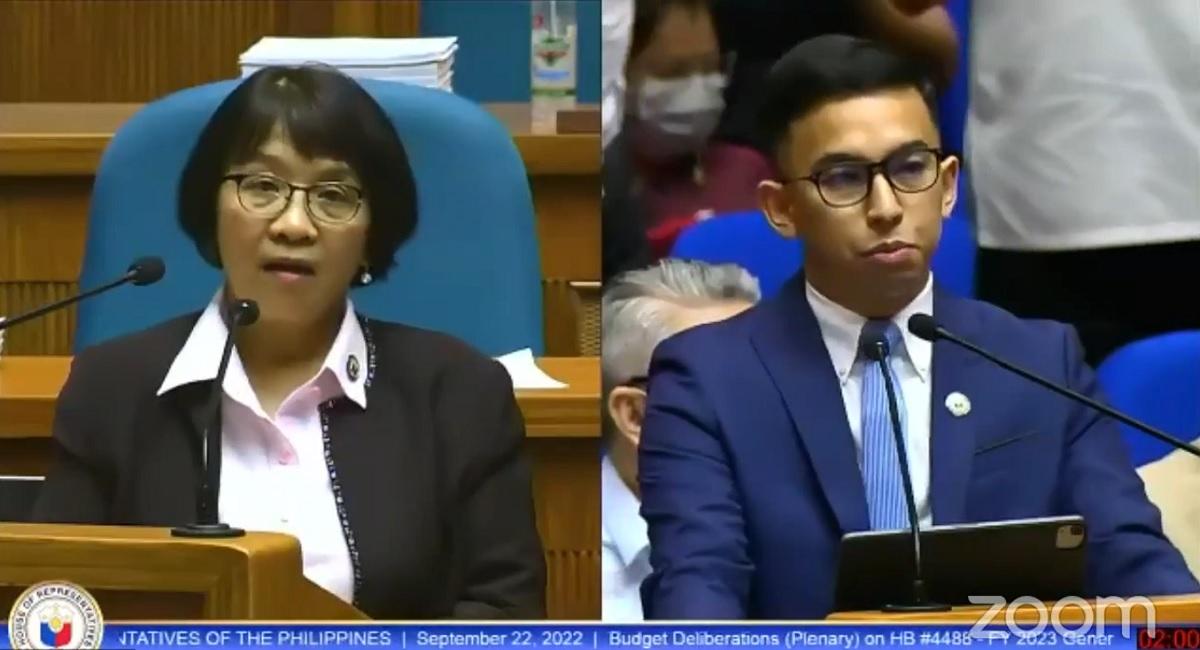
The Anti-Money Laundering Council's policy of seeking a freeze order on bank accounts regardless of the amount in the subject bank deposit is problematic, if not prejudices the owners of the frozen accounts, a House leader said Thursday.
House Deputy Minority France Castro of ACT Teachers party-list made the position upon her asking AMLC budget sponsor and Ako Bicol party-list Representative Raul Bongalon if there is an amount threshold for seeking the freezing of an indivdidual or organization's bank accounts for alleged terrorist financing, during plenary deliberations on AMLC's proposed P108-million budget for 2023.
"If one has P50,000 in a bank account which is from a reparation that person got as a victim of the human rights violation during the Martial Law rule...or if one has P30,000, or P10,000 in a bank account?...Would that be [good for freezing for suspected] terrorist financing?" Castro said.
To which the Bongalon replied, "Wala pong specific amount. For as long as iyong sinasabing amount is in relation to anti-money laundering cases...the court can take cognizance, regardless of the amount."
Castro responded by saying, "This is a problem because freezing accounts tend to be arbitrary just because you are suspected of something."
"Tingin natin, ito ay masamang record para sa AMLC at sa ATC...walang due process, biglaan [na freeze], hindi nila alam, walang makatotohanang basehan at walang pagkakataon para kontrahin ang ebidensiya ng AMLC at ATC," she added.
(For us this is a bad record for the AMLC and the Anti-Terrorism Council...no due process, sudden freezing of accounts, without the person's knowledge, on false bases and with no opportunity to refute the AMLC and ATC's evidence.)
Bongalon countered Castro by citing that under existing laws, the AMLC can seek a freeze order on bank deposits before the Court of Appeals without informing the owner of accounts and that the AMLC can only issue a freeze order after securing a favorable judgement from the CA.
Bongalon added that aggrieved parties have remedies.
"We follow due process, and I will add that the subject of the freezer order has remedy under the law. The aggrieved party can file a petition before a court questioning the issuance of the freeze order," he said.
Castro, however, cited the case of the Manila court lifting the freeze order issued against Amihan National Federation of Peasant Women for lack of probable cause, as well as the freeze order issued on nuns of the Rural Missionaries of the Philippines-Northern Mindanao Region on allegations of communist links, as dangerous precedents of not having a specific amount to flag for freezing.
"Dapat mauna ang pag iimbestiga niyo on these individuals who hold accounts. Kasi baliktad [na] e, guilty under proven otherwise. Ikaw pa ang magpapatunay na hindi ka involved sa terrorist financing," Castro said.
(Investigating the account holders should come first before freezing their accounts. Doing the reverse means that they're guilty until proven otherwise. And you have to prove that you're not involved in terrorist financing.)
Bongalon said that freeze orders are based on valid grounds.
"AMLC observes due process and won't issue freeze orders at will. Any issuance of freeze order is based on thorough investigation and analysis," Bongalon said. — BM, GMA News

