

 GMA Brandtalk
 Tracking
 Archives

Marcos orders whole-of-gov’t approach vs. poverty
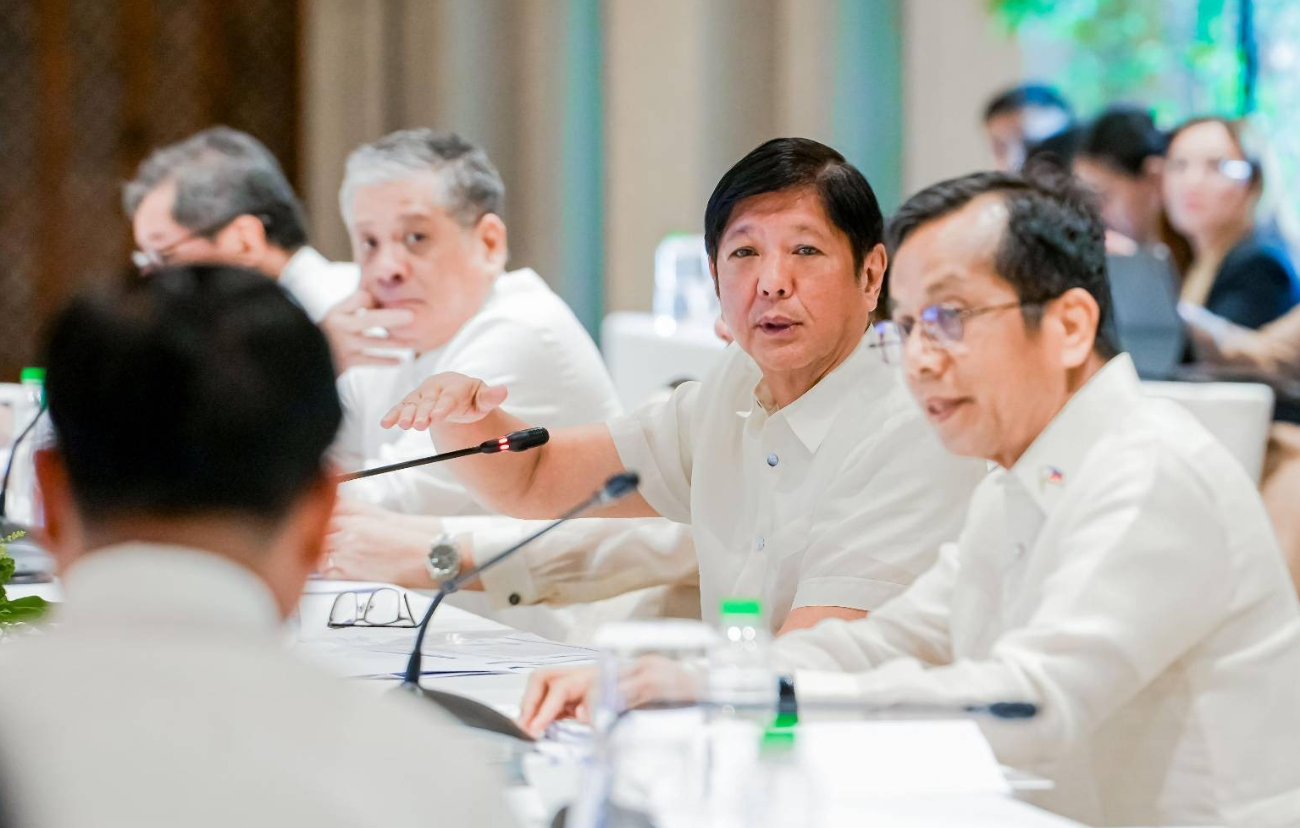
President Ferdinand R. Marcos Jr. has directed government agencies involved in providing social services to adopt a whole-of-government approach to tackling poverty in the country.
At the first en banc meeting of the National Anti-Poverty Commission (NAPC) in Malacañang Palace, Marcos stressed the need for coordination among government agencies and local government units (LGUs) to address the issue of poverty.
Marcos pointed out the role of the NAPC as a dedicated agency focused on poverty-related matters and called for a clear understanding of the responsibilities and functions of each government entity involved in assisting indigent communities.
He said it was essential to differentiate the tasks of the NAPC from those of other government agencies.
For instance, in crisis situations, the Department of Social Welfare and Development (DSWD) takes the lead, while the Department of Trade and Industry (DTI) and the Department of Labor and Employment (DOLE) handle job-related initiatives.
Marcos stressed the importance of coordination among these agencies, emphasizing the need to pool resources and start from a baseline of understanding.
He also highlighted the significance of engaging with residents in disadvantaged communities to identify their specific needs.
Marcos mentioned the lack of infrastructure, such as farm-to-market roads, reliable internet, electricity, and water, in certain areas as major challenges that need to be addressed.
He urged the NAPC to identify problematic areas and collaborate with other departments to develop appropriate interventions.
NAPC lead convenor Lope Santos III provided an update on the Commission's plans and activities in recent months.
He highlighted the goal of aligning all development plans with the Philippine Development Plan 2023-2028, which aims to reduce poverty from 18.1 percent to 8.8 to nine percent.
Santos mentioned the formulation and adoption of the National Anti-Poverty Action Agenda and the National Poverty Reduction Plan, following the Magna Carta of the Poor, as key objectives to be completed by September and October respectively.
Santos also introduced the National Anti-Poverty Action Agenda (N3A), which focuses on multidimensional poverty concerns, socioeconomic factors, ecology, and governance.
The plan has been developed through consultations and workshops involving national government agencies, LGUs, and the basic sectors.
The NAPC secretariat is currently integrating inputs, and the draft will be presented for approval in the next en banc meeting.
Attending the first en banc meeting of the NAPC were Secretary Rex Gatchalian of the Department of Social Welfare and Development (DSWD), Secretary Benjamin Abalos Jr. of the Department of the Interior and Local Government (DILG), Secretary Arsenio Balisacan of the National Economic and Development Authority (NEDA), Secretary Suharto Mangudadatu of the Technical Education and Skills Development Authority (TESDA), and Secretary Carlito Galvez of the Office of the Presidential Adviser on Peace, Reconciliation, and Unity. —NB, GMA Integrated News

