

 GMA Brandtalk
 Tracking
 Archives

Marcos to US solon: New responses needed amid volatile geopolitics
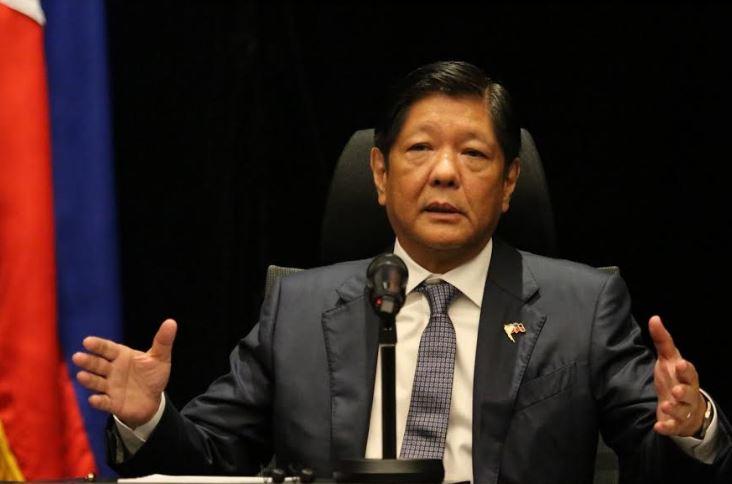
President Ferdinand "Bongbong" Marcos Jr. on Tuesday stressed the need to strengthen the Philippines' ties with the US and for "new responses and new positions" amid volatile geopolitics, particularly in the Asia Pacific.
Marcos thus said during the courtesy call of US Senator Tammy Duckworth in Malacañang.
“I think we must continue to promote and to hopefully make even stronger and deeper and especially with the volatility that we are observing in geopolitics, especially in our region, but not limited to our region but all over the world, is something that we need to find new responses for and to take new positions for,” Marcos said.
When he met with US President Joe Biden in May, Marcos cited the need to strengthen the partnership between the two countries in the post-pandemic economy and amid the tensions in the South China Sea and the Asia-Pacific and Indo-Pacific region.
“Beyond that, there are also issues, geopolitical issues that make the region... the Philippines is, possibly, arguably the most complicated geopolitical situation in the world right now,” Marcos had said.
On Saturday, the Chinese Coast Guard (CCG) illegally used water cannons against Philippine Coast Guards vessels going to the Ayungin Shoal on a resupply mission to the BRP Sierra Madre.
The PCG condemned CCG’s “dangerous maneuvers and illegal use of water cannons” against their vessels escorting the indigenous boats chartered by the Armed Forces of the Philippines (AFP) to deliver food, water, fuel, and other supplies to military troops stationed on BRP Sierra Madre.
It said that the CCG’s move not only disregarded the safety of the PCG crew and the supply boats, but also violated international law, including the 1982 United Nations Convention on the Law of the Sea (UNCLOS), the 1972 Convention on the International Regulations for Preventing Collisions at Sea (COLREGS), and the 2016 Arbitral Award.
The United States said China's attack threatened regional stability. Australia expressed concern over the incident, while Japan called it "unacceptable."
The Presidential Communications Office said the meeting between Marcos and Duckworth was an opportunity for the Philippines to raise the importance of US legislative support for common security and trade interests, including the enhanced assistance towards the modernization of the Philippines’ defense and civilian law enforcement capabilities, the immediate reauthorization of the GSP program, and the facilitation of other strategic trade and investment opportunities.
When it comes to the energy sector, Duckworth said the two countries could collaborate for the production of electronic vehicle batteries to meet the huge demand in the US.
Duckworth told the President that she met with Environment Secretary Maria Antonia Yulo-Loyzaga and Energy Secretary Raphael Lotilla about the US' transition to renewable energy sources, including the present challenges it has been facing.
“So, for example, we’ve discussed at length about electronic vehicle batteries and we can’t get enough of them to meet the American market. And I can’t think of a better place to create a new manufacturing ecosystem for the American market than here in the Philippines where we can work together to supply that market so that we can continue to make our switch to renewables as well. And there are many other places where we can work together,” Duckworth told Marcos.
“And again, I would rather have America’s manufacturing supply chain rest here in a nation that has been a long-time friend and ally, than in a nation that is our adversary or our competitor. And so, I think there are lots of opportunities and we had a productive meeting," she added.
For his part, Marcos responded batteries are important because renewable energy, from solar and wind, are not constant. —NB, GMA Integrated News

