

 GMA Brandtalk
 Tracking
 Archives

Brothers JV, Jinggoy on opposite sides of divorce bill
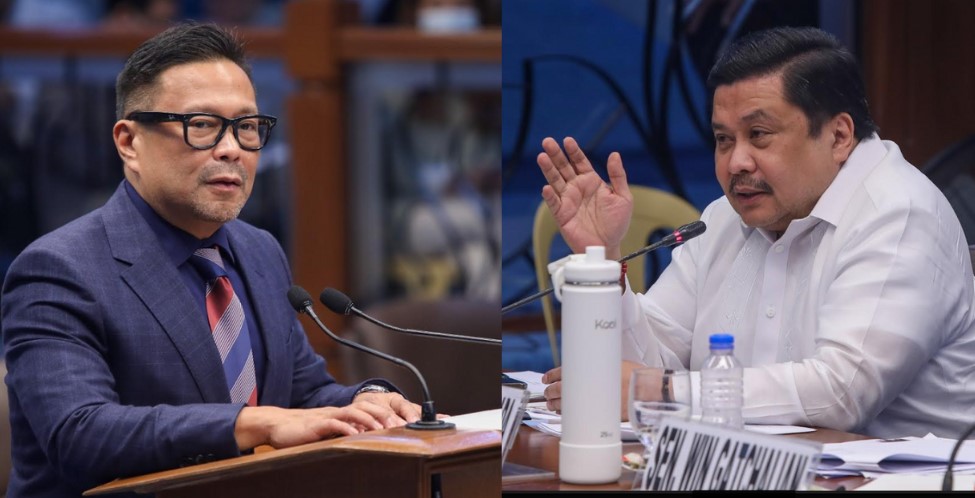
Half-brothers JV Ejercito and Jinggoy Estrada are on opposite sides of the fence when it comes to the issue of divorce in the Philippines.
This after both senators on Tuesday expressed their respective stance amid discussions on the absolute divorce bill.
In a statement, Ejercito said he is currently in favor of the divorce bill despite being raised as a Roman Catholic, a church whose leaders in the country have reiterated its stance against the legislation.
“I understand the defense of the Church of the sanctity of marriage but I also know that a lot of Filipino couples are trapped in loveless and unworkable marriages. It is not their fault,” said Ejercito.
“As a representative of the people and a Catholic, I am currently in the process of discernment. I intend to listen, and actively participate in the deliberation in the Senate. I am leaning at this time to be in favor,” he added.
Meanwhile, elder half-sibling Estrada expressed his opposition over the bill and instead suggested to seek alternatives for “nullifying a marriage”
“I have been and still am not in favor of legalizing divorce in our country. Instead of pushing for an absolute divorce law, which is proscribed by the Constitution, perhaps a bill with a well-defined ground for nullifying a marriage would be a much welcomed alternative,” Estrada said in a separate statement.
Estrada pointed out that he filed a bill during the 15th Congress "defining certain indications of psychological incapacity as a ground for the declaration of nullity of marriage.”
”Imbes na divorce, bakit hindi na lang natin pag-aralan kung paano mas katanggap-tanggap at mapapagaan ang proseso ng pagkuha ng annulment ng kasal? (Instead of divorce, why don’t we just study how to make the process more acceptable and smoother for marriage annulment?)” he said.
Earlier, newly-elected Senate President Chiz Escudero expressed his concern over the possible discourse that the divorce discussions may bring between the church and state.
“Ako personally, nasabi ko na, mas nais kong gawin affordable at accessible ang kasalukuyang mga batas natin sa annulment,” Escudero said.
(Personally, I would prefer the existing laws on annulment to be made affordable and accessible.)
Despite this, he assured that he will balance the discussion in the Senate.
On May 22, the House approved the controversial bill on its final reading with over 131 lawmakers in favor and 109 voting against.
Should the bill be passed into law, couples may file for divorce under the following grounds:
- Legal separation under Article 55 of the Family Code of the Philippines
- Annulment of marriage under Article 45 of the Family Code of the Philippines
- Separation of the spouses for at least five years at the time of the petition for absolute divorce is filed, and reconciliation is highly improbable.
- Psychological incapacity as provided in Article 36 of the Family Code of the Philippines
- Domestic or marital abuse to include acts under RA No. 9262 or the Anti-Violence Against Women and and Their Children Act of 2004
—Jiselle Anne Casucian/RF, GMA Integrated News

