

 GMA Brandtalk
 Tracking
 Archives

Ambassador Romualdez raises concerns over cyber vulnerabilities amid US-PH maritime security negotiations
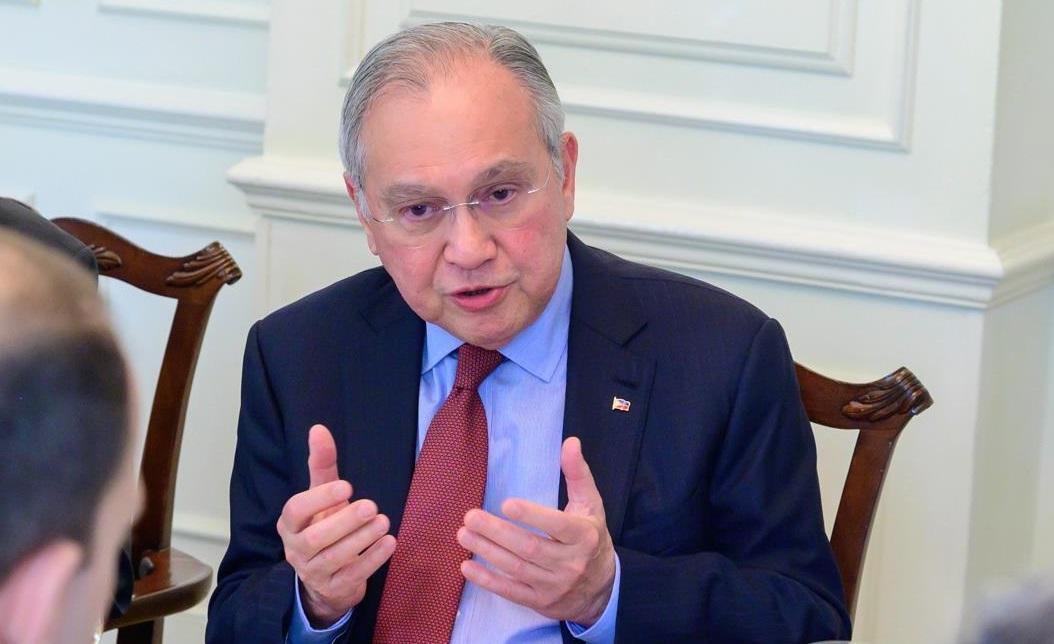
As the United States and the Philippines negotiate significant agreements related to maritime security and cooperation amidst ongoing tensions in the West Philippine Sea, Philippine Ambassador to the U.S. Jose Manuel Romualdez has expressed concern over potential cyber attacks targeting him.
"Our relationship with the United States is a very important one vis-a-vis the challenges that we face right now in the West Philippine Sea. So obviously we’re vulnerable to this type of cyber attack," Ambassador Romualdez stated, acknowledging the sensitive nature of his assignment.
Speaking at a recent forum at an American university, Romualdez recounted a lighthearted moment during a gathering at Malacañang where he humorously told Chinese Ambassador to the Philippines Huang Xilian that his phone had been “hacked” and that he could no longer afford to purchase a new one.
Although he mentioned this in a light manner, while recounting this anecdote, he emphasized its seriousness, noting that information from the American intelligence community had indicated that he was among those targeted for telephone hacking efforts.
"The information was passed on to me by our friends in the American intelligence community that I was one of those targeted of being hacked by telephone," Romualdez explained.
"I remember, I’m sure probably the Chinese Ambassador Huang does not remember, but in one of those occasions, I think it was the Vin d’honneur in Malacanang. I said it jest, in a joke, but I meant it that my phones are being hacked and I can’t afford to change my phones anymore."
In response, the Chinese Embassy in the Philippines issued a statement denying Huang’s awareness of Romualdez's claims and expressing surprise at the comments, as the two ambassadors had not met for some time.
"I verified the story with Ambassador Huang; he was surprised by such a story since he hasn't met Ambassador Romualdez for a long time. The two Ambassadors have never touched upon the so-called Chinese hacking issue, and Ambassador Huang doesn't know where Ambassador Romualdez got this story from," the embassy's statement read.
Romualdez, however, speculated that the hacking could be the work of private Chinese hackers, pointing out the ongoing concerns about espionage activities associated with Chinese nationals.
"It could be private Chinese hackers, we don't know. But the fact of the matter is now we have stories in the Philippines about espionage and Chinese spies that are roaming around," he remarked.
Recent U.S.-Philippines agreements include a rotational force posture under the Enhanced Defense Cooperation Agreement (EDCA) and a historic trilateral summit involving the U.S., Japan, and the Philippines in Washington.
These developments, coupled with successive meetings between defense officials of the U.S. and Philippines, aim to ensure safe navigation in vital waterways such as the South China Sea and West Philippine Sea.
Citing concerns over communication security, Romualdez mentioned he had to travel back to the Philippines to relay critical information to President Ferdinand "Bongbong" Marcos.
"On very important matters that I need to report to the President, I’ve occasionally flown back to the Philippines, a twenty-hour flight, at my own personal expense to be able to report to him on matters of paramount concern of our security," he said.
In recent weeks, the National Bureau of Investigation (NBI) in the Philippines has arrested several Chinese nationals on allegations of espionage, a situation that the Chinese Embassy has dismissed as mere speculation. — BAP, GMA Integrated News

