

 GMA Brandtalk
 Tracking
 Archives

QuadComm can legally give ICC its findings on drug war deaths —House leader
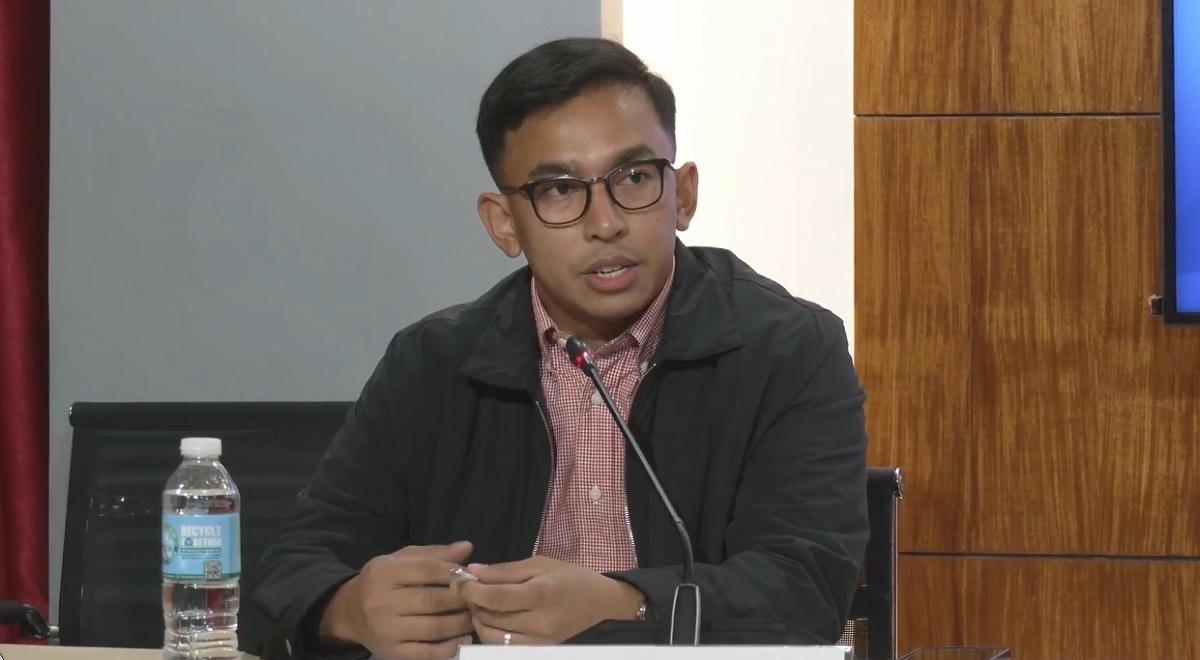
The House Quad Committee, which investigated the drug war deaths that occurred during the term of former President Rodrigo Duterte, can legally submit the results of its probe to the International Criminal Court (ICC) in the event the Hague-based tribunal issues a subpoena for them, House leaders said Wednesday.
House Assistant Majority Leader Raul Angelo "Jil" Bongalon of Ako Bicol party-list made the position a day after the former President was arrested on the basis of a warrant issued by the ICC for alleged crimes against humanity.
Duterte is currently on his way to The Hague.
“If a compulsory process—for instance, a subpoena—will be issued, most likely the committee will follow that subpoena...[Because] the ICC has already acquired jurisdiction over this case,” Bongalon, a lawyer, said in a press conference.
“The testimonies of the witnesses who appeared before this committee investigations are publicly available, but if they really want the official transcript, as well as other pieces of evidence, of course, in adherence to the subpoena, probably the committee will comply,” he added.
The QuadComm's chairperson Representative Robert Ace Barbers earlier said the panel would not be submitting its findings to the ICC, as the Philippines is no longer a member, and that the report will solely be used for domestic purposes.
Duterte, then President, withdrew the Philippines from the Rome Statute, the treaty that created the ICC, when it opened its investigation against his drug war in 2018. The withdrawal took effect a year later.
Bongalon also cited the 2021 Supreme Court ruling that the Philippines remains obligated to cooperate with ICC proceedings provided that the process was started before the Philippines’ withdrawal and that the alleged crimes happened at a time when the Philippines was still a member nation.
The ICC has also said that while the Philippines' exit from the Statute took effect on March 17, 2019, the court retains jurisdiction with respect to alleged crimes that occurred on the territory of the country while it was a state party, from November 1, 2011 up to and including March 16, 2019.
This time frame means the ICC case also covers Duterte’s time as mayor of Davao City.
“As what has been mentioned by the other branches of government, the Supreme Court, in affirming the continuing obligations of our government with regards to matters or issues that have been presented and submitted before 2018...as part of our continuing obligations, I think that [the submission of QuadComm's findings] would be a point of consideration,” Bongalon said.
“Kung ano man ang gagawin ng committee [Whatever the committee decides to do], it will be consistent with our continuing obligations under the ICC despite our withdrawal in 2019,” he added.
Further, Bongalon said Duterte’s arrest proves that the recommendation of the QuadComm to file crimes against humanity and murder charges against him stands on solid evidence and legal grounds.
“The discussions, deliberations, and testimonies before the QuadComm hearings would probably enlighten the judges of the International Criminal Court. They will have more evidence for the trial against the former President,” he said.
“We have to emphasize that the charges filed against the former president is crimes against humanity, a crime that the ICC has jurisdiction over. The other crimes are crimes of aggression, genocide, and war crimes,” Bongalon added. — BM, GMA Integrated News

