

 GMA Brandtalk
 Tracking
 Archives

Customs asked why out of 1,296 raids, only 2 tobacco smugglers convicted
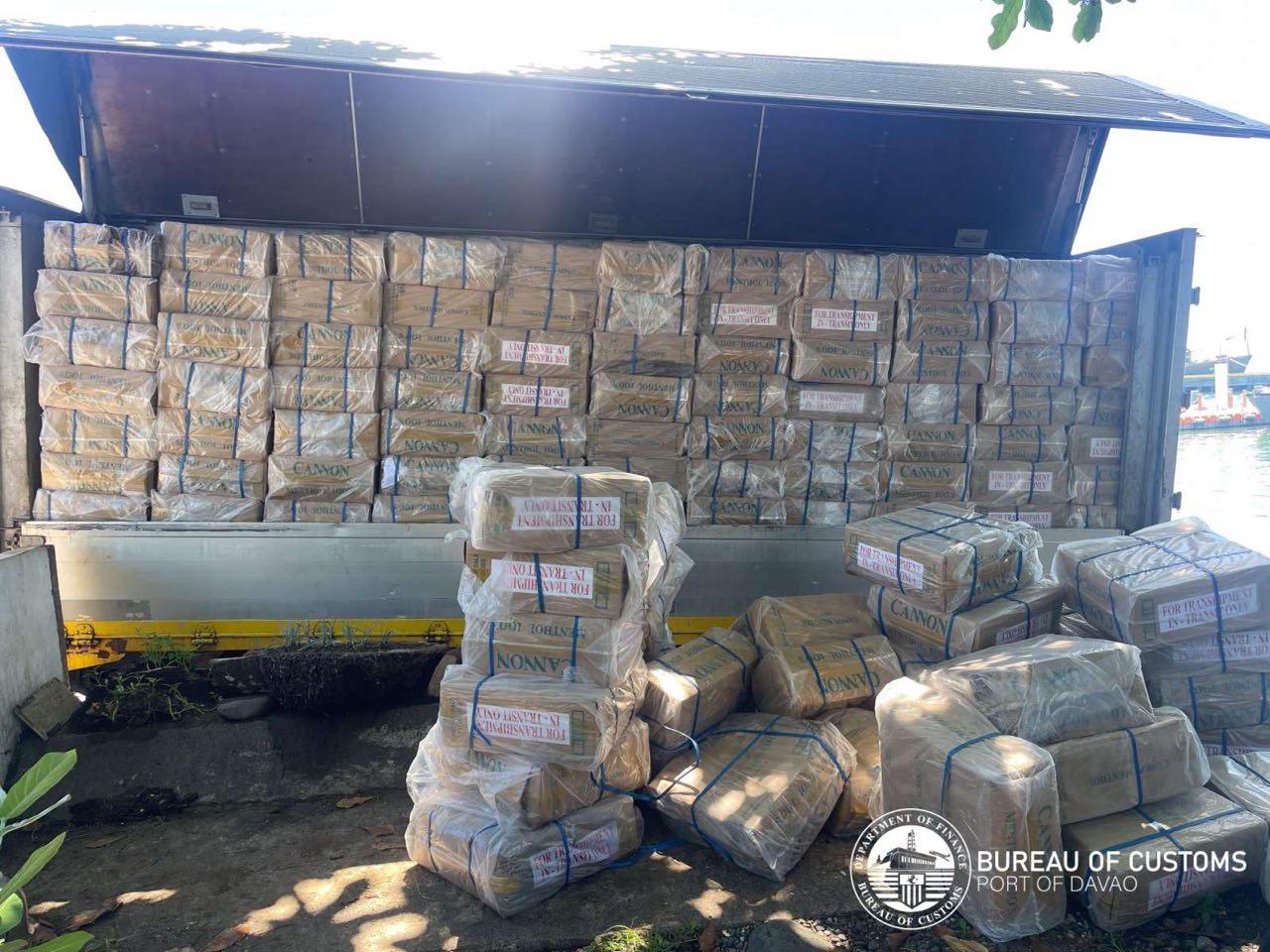
The Bureau of Customs conducted 1,296 operations against tobacco smugglers from 2018 to early 2025 but only two resulted in convictions, Senator Sherwin Gatchalian told Customs officials on Wednesday.
In a hearing of the Senate Committee on Ways and Means, Gatchalian said data from the BOC and the Bureau of Internal Revenue showed that out of the number, only 64 cases have been filed, 14 cases are pending with prosecutors, eight cases are before the courts, and only two have been decided.
“If you look at the universe of 1,200, only less than one percent of those seizures actually make it as a decision and also conviction. So it’s not the number of seizures, but a number of convictions, especially favorable convictions,” committee chairman Gatchalian said.
“With all due respect to the BOC, kaya hindi natin maalis sa isip natin na minsan itong mga seizures eh pangpakitang tao na lang… In this case…the actual numbers 0.15% actually are convicted,” he added.
(This is the reason why we can't do away with the doubts that some of these raids are only for show.)
BOC Assistance Commissioner Vincent Philip Maronilla said multiple raids might have been consolidated in the 64 cases.
“In multiple raids, our investigation might have yielded that there are only a certain number of people that were responsible, but we will look into that particular data. We will submit the data to the committee,” Maronilla said.
Gatchalian was not convinced, saying more than 1,200 raids cannot be consolidated into 64 cases.
"Kasi masarap sabihin ‘yung 1,296 seizures eh. Lahat kami masaya. Pero yung actual case na na-file, ang layo— 64 lang versus 1,296. Kahit na i-consolidate natin, I don’t think it can be reduced to 64 cases,” Gatchalian said.
(It is good to say that there are 1,296 seizures. We are all happy with that. However, the actual cases that were filed are significantly lower. That’s 64 cases against 1,296 raids. Even if we consolidate those number of raids, I don’t think it can be reduced to 64 cases.)
Maronilla said there are monitoring systems in place that could explain the numbers presented by Gatchalian during the hearing.
“We’ll also look into the number of respondents to these 64 cases, that might explain some disparity,” Maronilla said.
Gatchalian then noted the apparent lack of coordination between the BOC and the Department of Justice in prosecuting tobacco smugglers.
“Ang nakita namin ngayon ay walang coordination between the DOJ, BOC, and the BIR. Hindi sila nag-uusap-usap. Parang ngayon lang sila nagkaroon ng pagkakataon na mag-usap sila. So lahat ng nireraid ng BOC at BIR, pag dumating na sa prosecution, talo lahat,” Gatchalian said in an interview after the hearing.
(What we saw after this hearing was there is no coordination between the DOJ, BOC, and the BIR. They are not talking to each other. It seems like they just now had the chance to talk. So, everything that the BOC and BIR raid ends up losing when it reaches prosecution.)
According to Gatchalian, more than 60% of the cases against tobacco smugglers have been dismissed.
“Ang objective natin may makulong. Para may makulong, dapat nananalo yung kaso. So, malaking problema ito dahil nagiging pakitang tao lang yung raid at yung kaso wala talagang nangyayaring kaso,” Gatchalian said.
(Our objective is to put the responsible individuals behind bars. The cases should have been won. This is a big problem because the raids appear to be just for show, but there is no real progress in the cases.)
During the hearing, Maronilla admitted that there were challenges in prosecuting tobacco smugglers after the Department of Justice changed its policy in conducting preliminary investigations.
“The DOJ… changed their policy in the conduct of preliminary investigation. Before, the quantum of evidence that was required was probable cause. But, I think, their policy is now, certainty of conviction instead of just mere probable cause,” Maronilla said.
“Certainty of conviction assumes more stringent build-up of cases and preparation of documentary and testimonial evidence,” he added.
Maronilla said the bureau had been holding seminars and exchanging information with the Justice Department “to be able to beef up the cases filed with the Bureau that is still pending before the DOJ.” –NB, GMA Integrated News

