

 GMA Brandtalk
 Tracking
 Archives

Marcos: ASEAN watching US-China trade war with concern
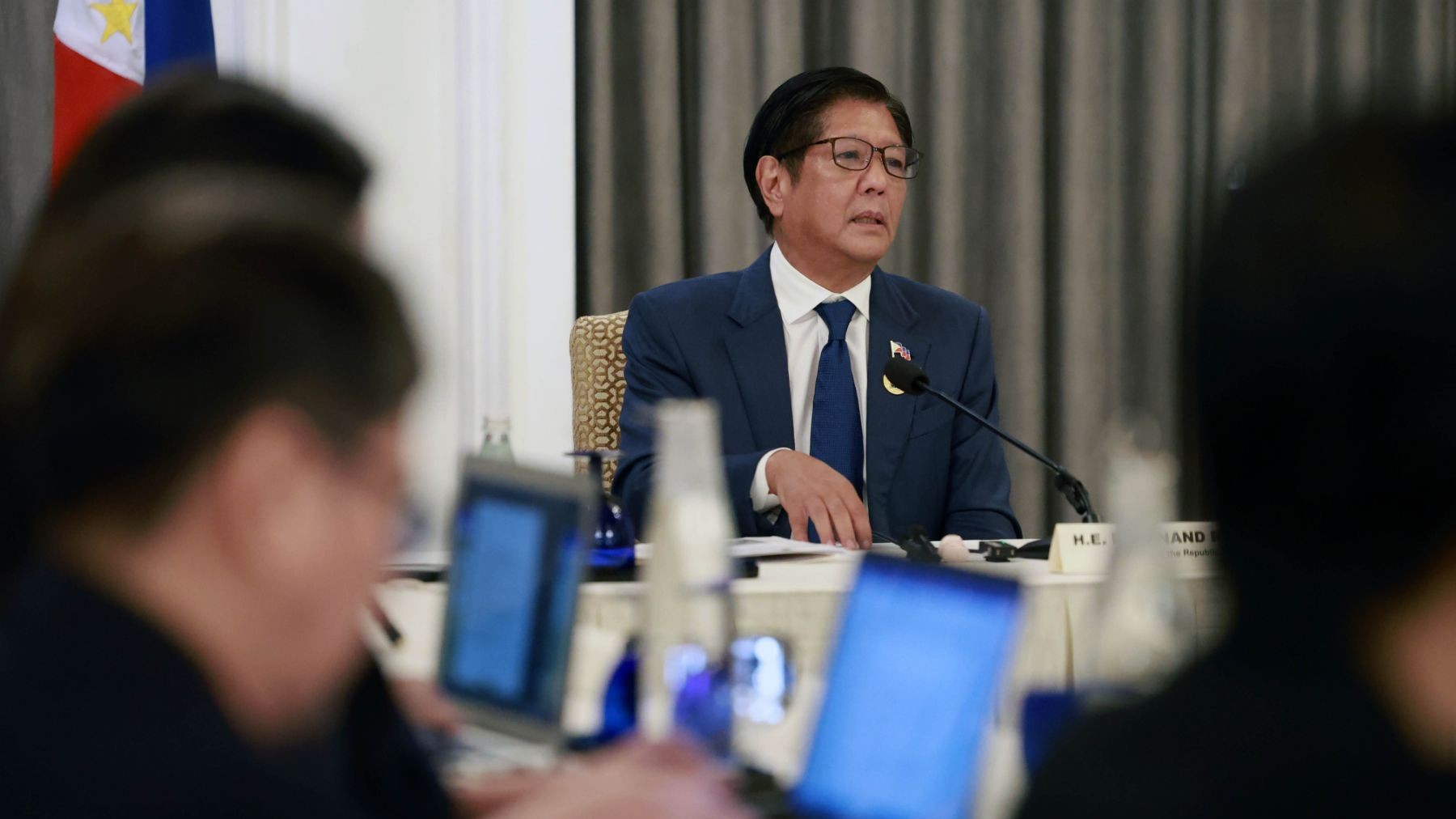
President Ferdinand ''Bongbong'' Marcos Jr. said Tuesday that the member states of the Association of Southeast Asian Nations (ASEAN) are concerned with the trade war between the United States and China.
Speaking to the Philippine media delegation, Marcos said he had a chance to speak with Chinese Premier Li Qiang at the 46th ASEAN Summit and Related Summits, noting that Beijing does not want any trade war.
“I also had an actually good conversation with the Premier of China. And I asked him, ‘Premier, what do you think?’” Marcos said.
“He says, ‘Well, we do not want any of this,’” he added.
Marcos said ASEAN is concerned because China is the biggest economic driver in the region.
“And, of course, we watch very closely what is happening to the economy in China because it affects all of us,” the President said.
Marcos noted that Manila has been trading with Beijing, adding that there had been many Chinese investments in the Philippines.
“So, talagang kung makita mo wala namang – walang –kung matuloy itong regime na unilaterally imposed, talagang babagsak. It has a global effect and it is not going to be a good one,” Marcos said.
(So, really if you look at it there is nothing –nothing –if this regime proceeds to being unilaterally imposed, it will truly fall.)
Washington is seeking to reduce its $295 billion goods trade deficit with Beijing and to persuade China to renounce what the United States says is a mercantilist economic model and contribute more to global consumption, a shift that would require politically sensitive domestic reforms.
Beijing has pushed back against what it sees as external interference. It wants Washington to lower tariffs, clarify what it wants China to buy more of, and treat it as an equal on the world stage.
Marcos emphasized this trade war would result in “shrinkage in economic activity.”
“I hope not. I hope I'm wrong,” Marcos said, noting that they do not know what will happen when the 90-day freeze on the unilateral tariffs runs out.
Marcos said the regional bloc would also depend on one another, particularly on trade.
“The structure of world trade is completely different now from what it was before. The conclusion also that we arrived at is that we have to depend more on each other, on ASEAN,” Marcos said.
“ASEAN, malakas naman ang loob namin sa ASEAN member countries. The economies are vibrant. Masigla ang kanilang mga ekonomiya,” he added.
( We’re pretty confident with ASEAN member countries… Their economies are lively.) —RF, GMA Integrated News

