

 GMA Brandtalk
 Tracking
 Archives

DICT: Meta agreed to demote Facebook posts which gov't tagged as fake news
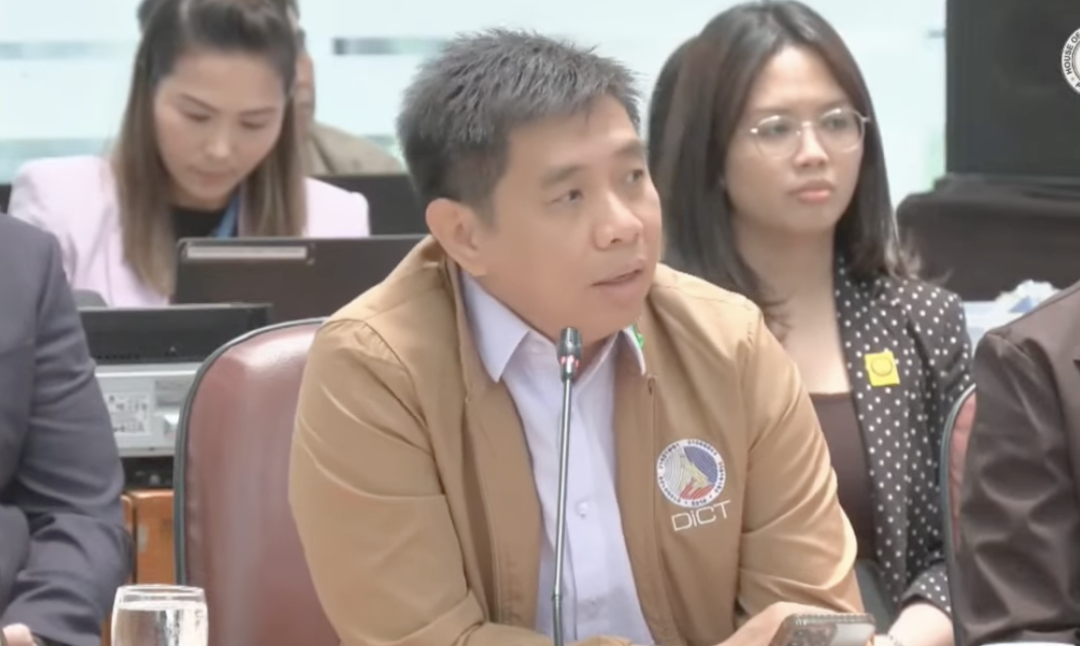
Meta, the company that operates Facebook, has agreed to demote in the social media platform's newsfeeds posts that the Philippine government would flag as fake news, Information and Communication Technology Secretary Henry Aguda told a joint House committee inquiry on Thursday.
Addressing a hearing of the House Tri Committee on the proliferation of disinformation online, Aguda said Kumu, Google, and TikTok had agreed in a meeting on Wednesday to comply with whatever the government would say to protect the truth.
Aguda said Meta wrote the Department of Information and Communication Technology on Thuesday to inform the agency that it would implement a demotion mechanism on posts that the government would flag as disinformation.
"Pumapayag na sila ngayon na kapag CICC o PCO o any duly authorized agency ng gobyerno, kapag nagpadala kami sa kanila na ito po, fake news ‘to, they will demote in their feeds," Aguda said.
"Meaning, hindi naman totally mawawala pero mababawasan. Malaking bagay po ‘yun. And we acknowledge na sumagot is Meta," he added.
(Meta has agreed that if the Cybercrime Information and Coordinating Center, the Presidential Communications Office, or any duly authorized agency of the government flags a post as fake news, it will be demoted in the newsfeeds. They won't be removed, but they will be decreased. That is a substantial development. And we acknowledge that Meta responded.)
Still, Aguda said the DICT would wish for legislation on disinformation for a proactive approach against fake news.
At the hearing, the Presidential Communications Office chief Secretary Jay Ruiz and Aguda proposed that social media firms that allow false information to be distributed on their platforms should be penalized.
“When you allow fake news on your platform, dapat may karampatang parusa... kasi nga ikaw ang nagpapasok niyan, e. Your platform is being used to be a purveyor of ignorance. You allow it,” said Ruiz, a former television reporter.
(There should be an appropriate penalty if you allow fake news on your platform... because you allowed it to happen. Your platform is being used as a purveyor of ignorance. You allow it.)
“As a social media platform, dapat lahat ‘yan…dapat nalilinis mo ‘yan. With the advent of new technology, deep fakes, artificial internet intelligence, and fake news spread like wildfire. It will reach hundreds of millions in just hours,” he added.
(You should clean it up as a social media platform.)
Aguda said the situation was akin to a mall owner who shouldn't allow fake merchandise in the premises.
“A mall won’t allow stores that sell fake products inside its premises. So sa akin po, ang may responsibility dyan, ‘yung platform,” Aguda said.
(The responsibility lies with the platform.)
He said that there was no reason for social media platforms to be spared from regulation because, under existing laws, broadcast content, including that in journalism platforms, as well as movies and television shows, were regulated by both state-run and private entities.
Aguda said members of the Kapisanan ng Brodkaster ng Pilipinas practiced self-regulation while the Movie and Television Review Classification Board (MTRCB) regulated cinema and television programs.
"Social media, on the other hand, has a reach 20 times larger than a normal broadcast,” Aguda said.
Asked if he was pushing for regulation by the government of the social media platforms, Ruiz said, "Yes."
Ruiz said that at present, social media platforms were already doing self-regulation based on their community standards. He said the regulation should be done with government standards.
Censorship
According to Tina Panganiban-Perez’s Thursday report on “24 Oras,” Surigao del Norte Representative Robert Ace Barbers floated the idea of prior censorship on online posts.
“Would it be possible that there could be some system of prior censorship before content is posted online, as long as it does not violate any law? Kung gano'n (If that’s the case), we can closely coordinate with the social media platforms and ask them to do the same,” Barbers said.Aguda responded that it was possible, just like how YouTube checked the texts on its platform.
“Pag ka may mga salita doon na talagang bawal, ginagamit po nila yan for illegal gambling and pornography, mababasa po yun tapos tinatanggal na nila lahat. TikTok meron din pong ganun. Si Meta rin po merong mekanismo. Siguro ang tanong diyan is, meron silang tool, masusi ba yung pag-aapply nila ng tool?” Aguda said.(If there are prohibited words, like those used in illegal gambling and pornography, YouTube can read and remove them. That is also the case with TikTok, and Meta also has a mechanism for that. They have the tool, but is it scrutinizing enough?)
Surigao del Sur Representative Johnny Pimentel said the government should step up in regulating the social media platforms if they cannot self-regulate.“We should really study, I don't know if this is possible, that we should require this Meta to get a franchise from Congress for them to operate here,” Pimentel said.
Lawmakers also asked about the efforts of DICT in addressing fake news, misinformation, and disinformation.Aguda said DICT is working on an AI-powered system that can detect fake news and online scams, which can be endorsed to Meta and other online platforms for usage.
“Sa amin, ang fake news ay equivalent po yan sa panlilinlang, equivalent po yan sa krimen (For us, fake news is equivalent to deception, which is equivalent to a crime),” Aguda said.
The government also plans to have an operational framework within the government that engages in fact-checking.
“Ito 'yung pagsasama ng DICT, PCO, PNP, at saka DOJ para nga pagtulungan po, kasi kailangan may enforcement, kailangan 'yung pag-flag down, kailangan 'yung coordination with the platforms,” Ruiz said.
(It is composed of the DICT, PCO, Philippine National Police, and Department of Justice, because we need enforcement in flagging down fake news, and we need coordination with the platforms.)Meta was not present during the hearing, but during the previous House inquiry, it said its platform is neutral and the posts are the responsibility of the users.
Meanwhile, Google Philippines said it would take accountability for the things that are within the platform’s control.“For things that are within the control of other entities, such as, for example, the user,s then the appropriate responsibility and accountability mechanisms as provided by law will be applicable,” said Atty Yves Gonzales of Google Philippines.
However, Bataan Representative Geraldine Roman warned against the planned establishment of a government watchdog agency.“The establishment of a government watchdog agency over content creation reeks of censorship, and such a law may be questioned before the Supreme Court and, by default, be deemed as unconstitutional because we are dealing with a basic right, which is the freedom of speech,” Roman said.
The House Tri-Committee terminated the inquiry of fake news and disinformation on social media, so the contempt orders against some vloggers like Sass Sasot, Lorraine Badoy, and Mark Anthony Lopez have been lifted. –NB, GMA Integrated News
