

 GMA Brandtalk
 Tracking
 Archives

Angara vows literacy, teacher workload reforms: 'Crisis but manageable’
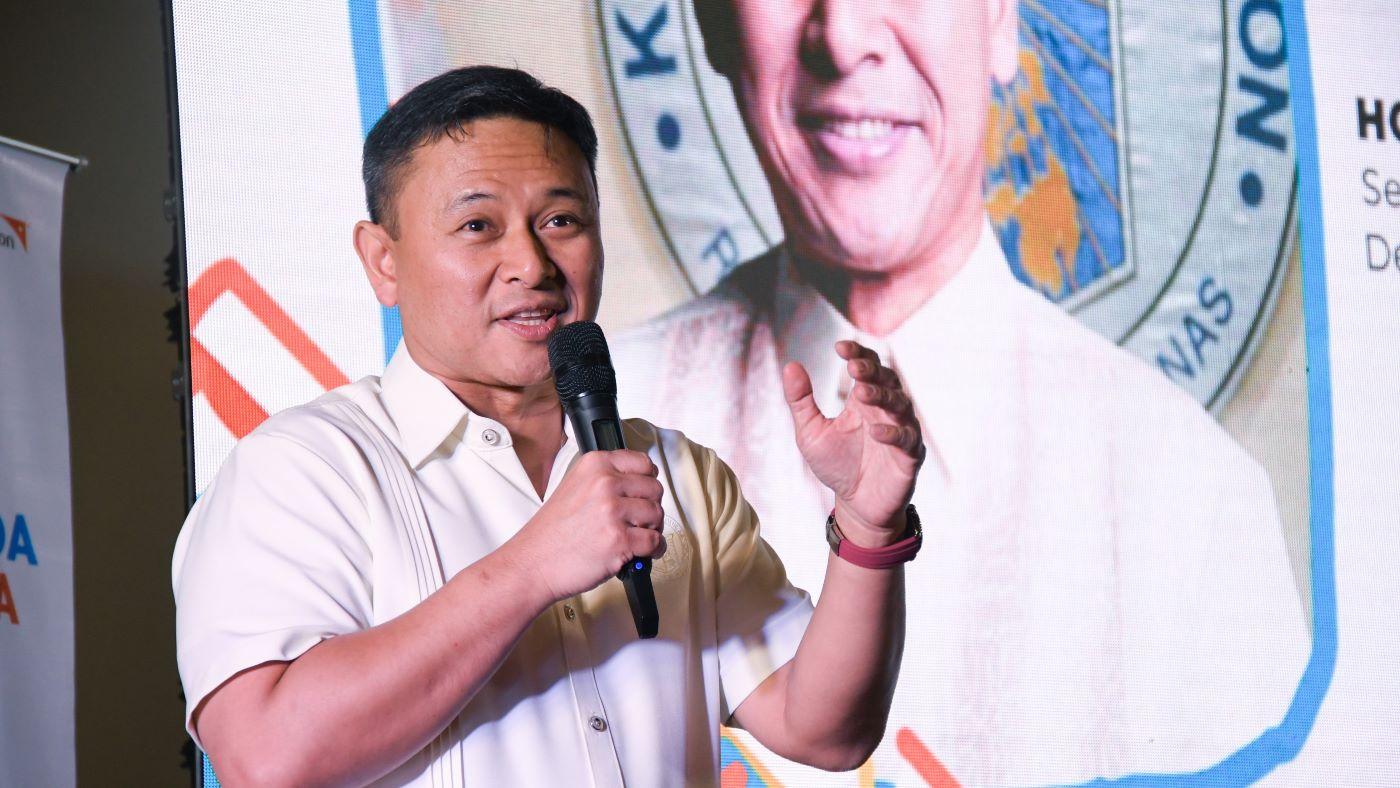
Education Secretary Sonny Angara acknowledged Monday the Philippines is facing a literacy crisis but assured the public that the Department of Education (DepEd) is working on targeted reforms, starting with early grade interventions and support for overburdened teachers.
In an ambush interview at Tenement Elementary School in Taguig, Angara laid out his priorities after nearly a year in office. The visit coincided with the opening of School Year 2025–2026, with more than 27 million students nationwide returning to school.
Foundational literacy, pandemic gaps
When asked what he has learned about the education system so far, Angara emphasized the importance of focusing on early-grade learners.
“We really have to focus on what they call pre-stage 1. That’s in your kinder to Grade 3,” Angara said.
He explained that students in this bracket are at a critical stage of learning to read and comprehend. Many, he said, suffered during the pandemic due to lack of face-to-face interaction with teachers.
“'Yun 'yung kawawa dahil wala silang interaction sa mga teachers noong panahon ng pandemic,” Angara said.
(They were at a disadvantage because they had no interaction with teachers during the pandemic.)
To address this, DepEd launched summer reading and learning programs aimed at closing foundational learning gaps.
Angara highlighted the DepEd's major preparations leading to the first day of classes, including the weeklong Brigada Eskwela and the rollout of summer reading programs.
“Pinasasalamatan natin ang lahat ng tumulong, lalo na mula sa pribadong sektor. Napakarami po nila,” Angara said.
(We thank all those who helped, especially those from the private sector. There are so many of them.)
"At pangalawa, naglunsad tayo ng summer reading programs. 'Yan ang gusto ng ating Pangulo—nakatuon tayo sa basics para progresibong matuto ang mga bata.”
(Secondly, we launched summer reading programs. That's what the President wants — we are focused on the basics so children can progressively learn.)
Crisis—yes, but solutions underway
The education secretary acknowledged the challenge of low reading and comprehension levels among students, citing it as a major focus for reform: “May datos tayong nagsasabing maraming bata ang hindi natututo sa tamang level. 'Yun po ang pina-target natin.”
(We have data saying many children do not learn at the right level. That's what we are targeting [to address].)
Pressed on whether the country is truly in a literacy crisis, Angara said: “I think it is. It’s reached crisis levels but manageable. And I think we have some solutions in place.”
Among these are initiatives that seek to involve local governments and private partners in improving learning conditions. In Taguig, he commended the local government's active support.
“Very helpful ang local governments, ang legislators, even the private partners. May mga maraming tumutulong. Sana ganoon sa lahat ng dako ng bansa.”
(Local governments, legislators, and even the private partners are very helpful. I hope it’s the same all across the country.)
Supporting teachers: Hiring, admin help, possible overtime pay
Angara also responded to concerns raised by teachers’ groups over the heavy workload they continue to shoulder.
“Totoo ‘yun. Overloaded po ang ating teachers,” he admitted.
(That’s true. Our teachers are overloaded.)
To address this, the administration has approved the hiring of 20,000 new teacher items this year, along with 10,000 administrative officers. The additional admin staff are expected to reduce teachers’ non-teaching tasks like fixing printers or managing school logistics.
“Para si teacher, hindi na 'yung pag-aayos ng printer, magluluto ng pagkain… may katulong na si teacher,” Angara explained.
(So that teachers no longer have to fix printers or cook food… they now have a support staff.)
DepEd is also studying the possibility of offering overtime pay for teachers who take on extra shifts, although current laws cap teaching hours at six per day.
Creative solutions for school congestion
In areas like Metro Manila, where space is limited, Angara said DepEd is looking at replicating Taguig’s voucher system. Under the scheme, students in overcrowded public schools are given vouchers to enroll in nearby private schools.
“Pag masikip na 'yung public school, binibigyan nila ng voucher 'yung isang bata para pumili ng private school na malapit,” he said.
(When public schools are overcrowded, they give students a voucher to enroll in a nearby private school.)
The system is now being considered for expansion in Region 4A, especially in densely populated provinces like Cavite and Laguna.
Building resilient schools, responding to emergencies
DepEd is also working on infrastructure solutions. In flood-prone areas like Negros and Bicol, Angara said a new elevated school design is in development to protect classrooms from frequent typhoons and flooding.
In response to the recent fire at San Francisco High School in Quezon City, Angara said the department is now sourcing replacements for damaged furniture and classrooms. Out of the 22 rooms affected, eight were regular classrooms.
“Baka by this week makapagbigay na kami ng replacements,” he said.
(We hope to deliver replacements by this week.)
Despite reports of minor repairs needed in some schools, Angara described the school opening as “generally smooth,” except for the fire incident in Quezon City.
He ended the briefing with a message of hope, emphasizing that while the problems are serious, the government is taking steps to deliver solutions with the support of local communities and the private sector.
Shift to digital learning, lighter workloads
Angara also emphasized the importance of digitization in public schools, with the DepEd providing laptops, tablets, and computer training for teachers and students. He cited Tenement Elementary School as an example, where digital tools like Khan Academy are being integrated into lessons.
“Hindi na mahihirapan ang teachers kasi nakahanda na ang lesson plans sa software. At sa panig ng ating mga guro, matagal na pong utos ng Pangulo na bawasan ang trabaho nila para makapag-focus sila sa pagtuturo,” Angara said.
(Our teachers won't have much difficulty because their lesson plans are prepared using the software. And on the part of our teachers, the President ordered a long time ago to lessen their workload so they can focus on teaching.)
In line with this directive, DepEd has removed nearly half of the administrative reports previously required of teachers.
“Ngayon, wala na silang inaalala kundi ang kanilang lesson. Mas makakapag-concentrate sila sa mga estudyante—at may resulta po talaga,” he added.
(Now, they don't have to worry about anything except their lessons. They can concentrate on their students, and these already have results.)
Every school to have admin officer by 2026
To further support educators, Angara announced that by the end of 2026, all public schools in the country are expected to have administrative officers.
“Napakalaking bagay po ito para sa ating mga guro, eskwelahan, at mga bata,” he added.
(It will be a big help for our teachers, schools, and children.)
The initiatives reflect the Marcos administration’s broader agenda to improve education outcomes through targeted reforms and collaborative efforts between the public and private sectors. —AOL/KG, GMA Integrated News

