

 GMA Brandtalk
 Tracking
 Archives

House bills on absolute divorce refiled in 20th Congress
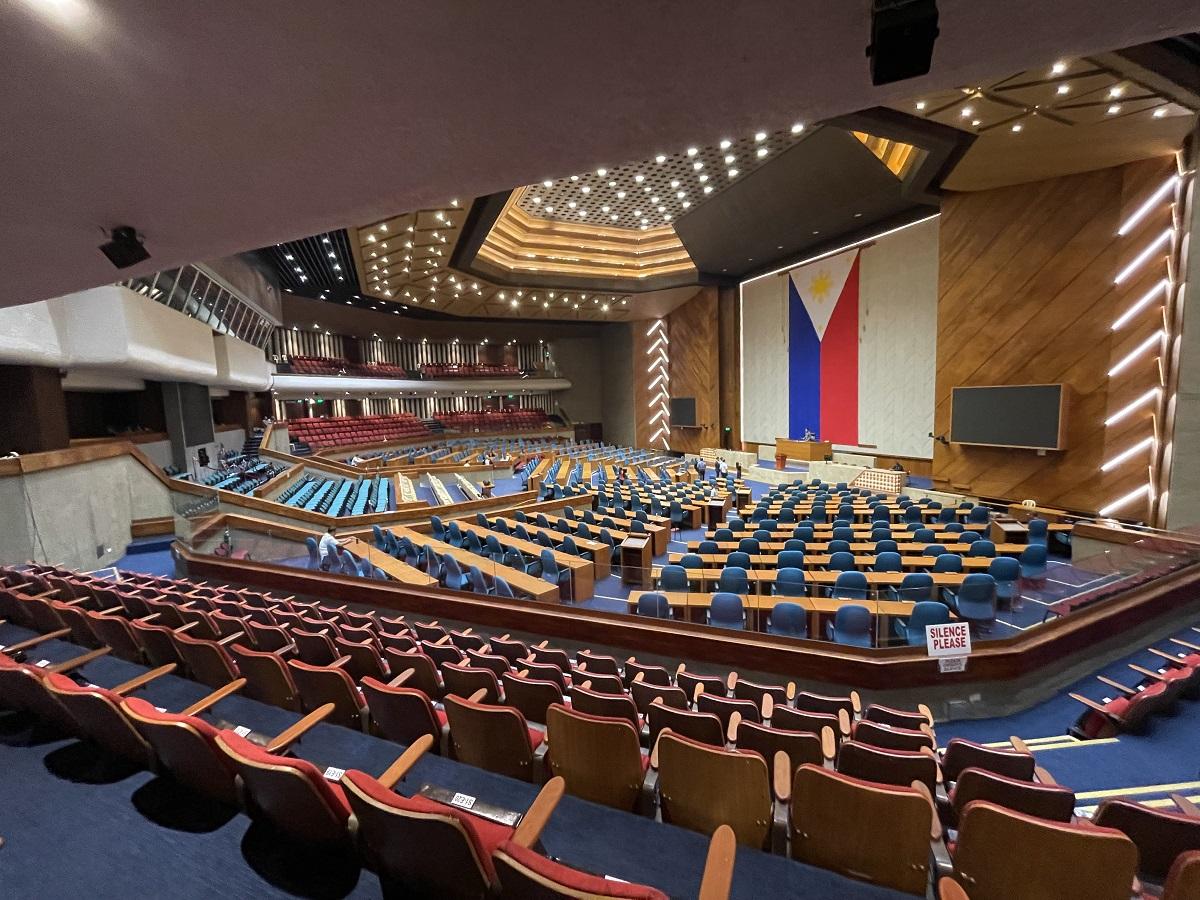
Proposed legislation on absolute divorce has been refiled in the House of Representatives under the 20th Congress.
House Bill 108 filed by 4Ps Partylist Representative JC Abalos and House Bill 210 filed by ACT Teachers Partylist Representative Antonio Tinio and Kabataan Partylist Representative Renee Louise Co aim to reintroduce absolute divorce in the Philippines. All of them asserted that not all marriages are worth keeping to begin with.
"In the context of divorce, a marriage is recognized as valid but is terminated. The termination occurs not due to any defect or omission at the time of the marriage ceremony, but rather as a result of circumstances that arise during the marriage itself—which is a reality that most individuals often fail to acknowledge," Abalos wrote in his explanatory note.
ACT Teachers and Kabataan Partylists also refiled the Absolute Divorce Bill this 20th Congress. @gmanews @gmanewsbreaking pic.twitter.com/paBUa7VE6q
— Tina PanganibanPerez (@tinapperez) July 1, 2025
Abalos cited a study that showed that approximately 17.5% of Filipino women between 15 and 49 years old have experienced physical, sexual, or emotional abuse from their partners.
"The bill aims to provide spouses in irreparably broken marriages a legal avenue for dissolution, thereby safeguarding children from marital strife and empowering vulnerable spouses, particularly in abusive relationships, to rebuild their lives," Abalos said.
In their explanatory note, Tinio and Co wrote that "Philippine society generally frowns upon and discourages marital break-ups and provides cultural and legal safeguards to preserve marital relations."
"For many women, the inequalities and violence in marriage negate its ideals as the embodiment of love, care, and safety, and erode the bases upon which a marriage is founded," they added.
READ: What's the difference between annulment, legal separation, and divorce?
The bills provide common grounds for granting absolute divorce, such as physical violence, drug addiction, homosexuality, and grounds for annulment of marriage under Article 45 of the Family Code.
"Hindi naman nating pinipilit or ine-encourage na maghiwalay ang married couples dahil napaka-importante at napaka-invaluable and grabe ang sanctity of marriage," Abalos told reporters in an interview.
(We are not insisting or encouraging the breakup of married couples because the sanctity of marriage is important and invaluable.)
"What we're just saying here is that we must acknowledge the struggle of our countrymen na nasa-stuck sa mga ganitong toxic relationships," he added.
(What we're saying here is that we must acknowledge the struggle of our countrymen who are stuck in toxic relationships.)
READ | Divorce in PH: 'Humanitarian imperative'?
Abalos' version of the proposal requires a 60-day cooling off period for the Family Court to "exercise all efforts to reunite and reconcile the concerned spouses," while Tinio and Co's version requires a six-month cooling off period.
The absolute divorce bill was passed on third and final reading by the House of Representatives during the 19th Congress.
Grounds for divorce
The bills state that divorce will sever the marriage bond, allowing the divorced spouses to contract marriage again.
Among the grounds for divorce listed in the bills are:
- physical violence or grossly abusive conduct directed against the petitioner, a common child, or a child of the petitioner;
- physical violence or moral pressure to compel the petitioner to change religious or political affiliation;
- attempt of respondent to corrupt or induce the petitioner, a common child, or a child of the petitioner, to engage in prostitution, or connivance in such corruption or inducement;
- final judgment sentencing the respondent to imprisonment of more than six years, even if pardoned;
- drug addiction or habitual alcoholism or chronic gambling of the respondent;
- homosexuality or bisexuality of the respondent;
- contracting by the respondent of a subsequent bigamous marriage, whether in the Philippines or abroad;
- marital infidelity or perversion or having a child with another person;
- other than one's spouse during the marriage, except when upon the mutual agreement of the spouses, a child is born to them by in vitro or a similar procedure, or when the wife bears a child after being a victim of rape;
- attempt by the respondent against the life of the petitioner, a common child or a child of the petitioner;
- abandonment of petitioner by respondent without justifiable cause for more than one year.
The proposals also provide that the grounds for annulment, legal separation, and declaration of nullity of marriage are also deemed grounds for divorce.
"We already acknowledge that marriages can be broken and marriages are not all perfect because we already have annulment, legal separation, and declaration of nullity of marriage [under current Family Code]. But why is divorce important, because even though we acknowledge that marriages can be broken, the law still requires that spouses remain married on paper," Abalos said, referring to current limits of the law that prevent remarriage or lengthy and expensive annulment process.
Back in 2023, the state-run Philippine Commission on Women (PCW) said it was in favor of passage of the divorce law because current laws are disadvantageous to women.
"In such cases, women are sometimes solely burdened to financially provide for the children and balance this with their personal struggles of loneliness and social stigma due to cultural stereotypes under the current legal system," the PCW said. — VDV, GMA Integrated News

