

 GMA Brandtalk
 Tracking
 Archives

Lawmaker: Confidential funds should be regulated, not banned
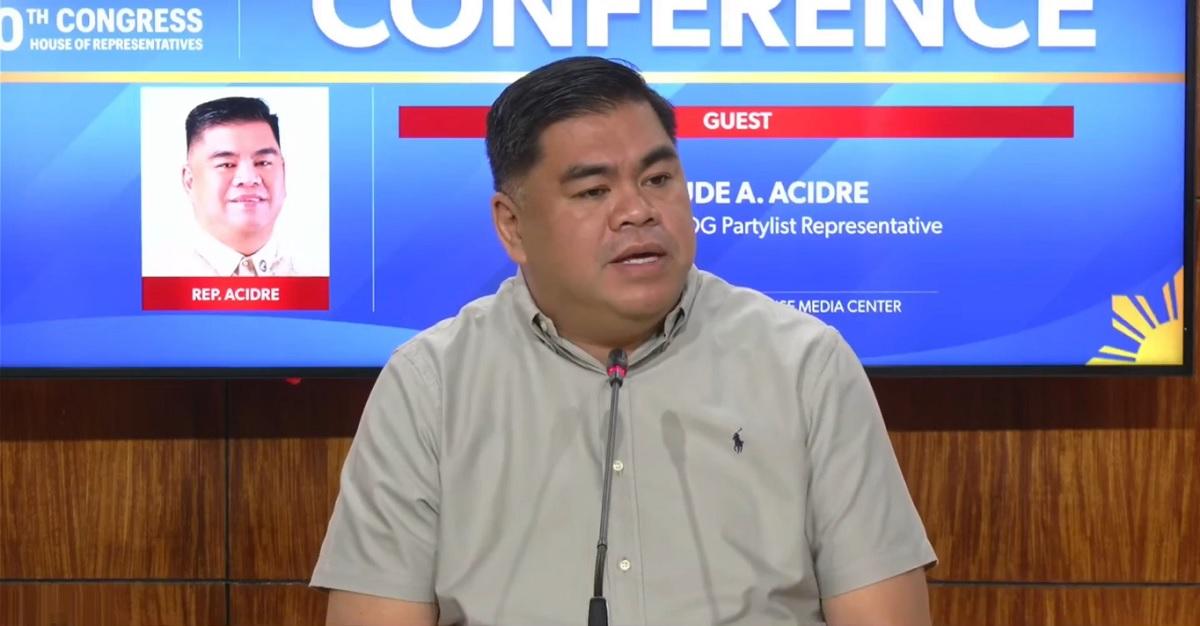
The allocation of confidential funds to government agencies as well as local government units should be regulated, not banned, Tingog party-list Representative Jude Acidre said Wednesday.
Acidre made the response when asked if the LGUs should still be allocated confidential funds in light of former vice president and Naga City Mayor Leni Robredo’s announcement that she will remove confidential funds from the city’s budget to ensure proper spending of public funds.
Robredo’s lead was followed by Dumanjug, Cebu Mayor Gungun Gica, who said, “Effective immediately, no more confidential funds for LGU Dumanjug. Public funds must serve the people—openly, clearly, and with integrity.”
Acidre, however, said any fund allocation, including confidential funds, should stand on merits.
“We cannot judge a fund based on people who abused it. We must also be able to ascertain the usefulness of certain mechanisms with the merits, with the good that they are able to do. And the same is the case with confidential funds,” he said in a press conference.
“There are LGUs wherein confidential fund allocation is of significant help, especially if there are security threats involved. We cannot do a one-size-fits-all policy for all our LGUs.”
Rather than prohibition, Acidre said, strict regulations should be in place to ensure that the disbursement of confidential fund is above board.
He cited bills filed during the 19th Congress—in the aftermath of the House inquiry into the confidential fund use of Vice President Sara Duterte, including during her tenure as Education Secretary—requiring the disclosure of audit findings on confidential funds once flagged by state auditors, and limiting the allocation and disbursement of confidential and intelligence funds (CIF).
“The joint memorandum circular [on confidential fund use] should be passed into law, and we need legislation focusing on the accountability of special disbursement officers, including provision for their qualifications and the fidelity fund for those who have custody of confidential funds,” Acidre said.
“We saw regulatory gaps that we need to fix during the House inquiry, and we need to address that. For one, state auditors should have enough oversight [pero] hindi naman po natin pwedeng alisin totally ang [but we cannot totally remove] confidential funds, especially in some municipalities or LGUs, or even agencies of government where its use is based on merit and in related to ensuring public order and safety, including anti-insurgency measures,” he added.
Duterte is facing an impeachment complaint accusing her of betrayal of public trust, culpable violation of the Constitution, graft and corruption, and other high crimes, mainly over alleged misuse of P612.5 million worth of confidential funds.
Prior to the filing of the impeachment complaint, the House good government and public accountability panel inquiry revealed that the Office of the Vice President Duterte and DepEd submitted acknowledgment receipts riddled with wrong dates, signatories with no birth records, unnamed signatories and non-readable names of signatories before the Commission of Audit (COA) to justify the disbursement of around P612.5 million worth of confidential funds. — BM, GMA Integrated News

