

 GMA Brandtalk
 Tracking
 Archives

DBM: Proposed 2026 budget to be submitted to Congress in next two weeks
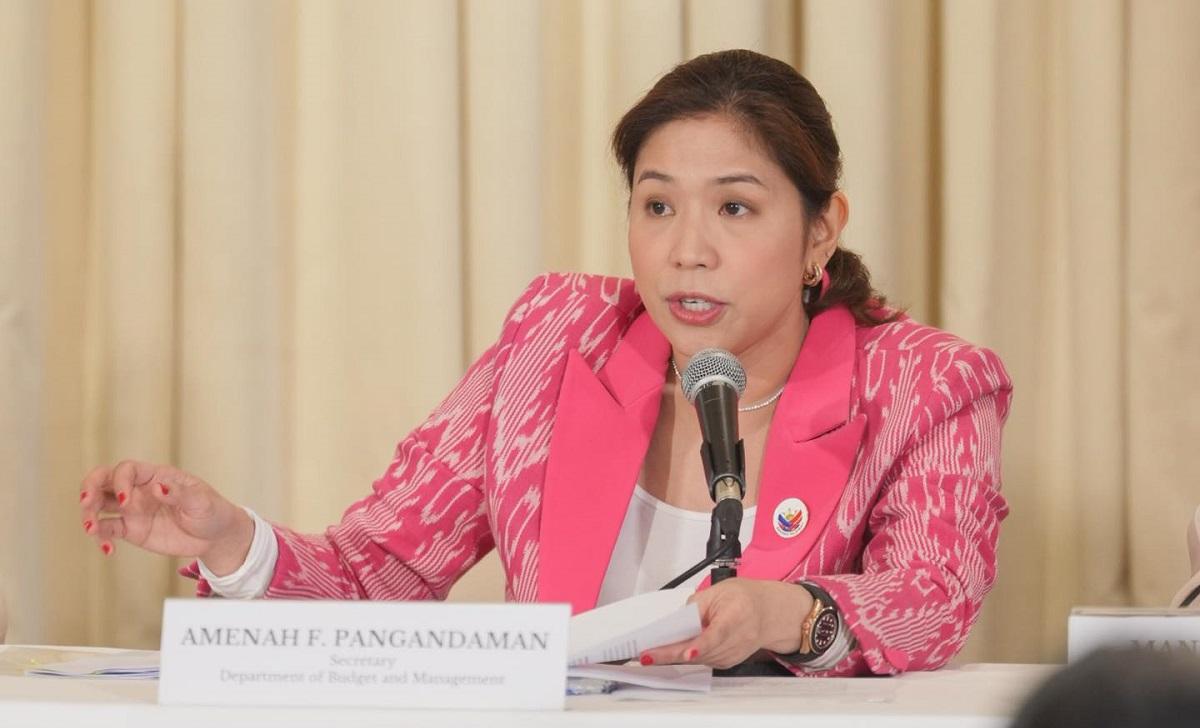
The Department of Budget and Management (DBM) said Tuesday it will submit the proposed 2026 budget to Congress in the next two weeks, promising greater transparency and accountability throughout the deliberations.
Speaking at the Post-SONA Discussions, Budget Secretary Amenah Pangandaman said the proposed 2026 budget or the National Expenditure Program (NEP), approved at P6.793 trillion by President Ferdinand “Bongbong” Marcos Jr., is now being printed.
“Sa ngayon iniimprenta na po ang ating budget. In two weeks, ibibigay ito sa House of Representatives at tsaka sa Senado,” she said in a panel discussion in San Juan City.
(Right now, the [proposed 2026 national] budget is being printed. In two weeks, it will be given to the House of Representatives and the Senate.)
Her remarks came a day after Marcos, in his State of the Nation Address (SONA 2025), said that he is willing to operate on a reenacted budget for 2026 and warning that he would veto a budget bill that is not in harmony with his administration’s programs and priorities.
“For the 2026 national budget, I will return any proposed Generation Appropriations bill that is not fully aligned with the National Expenditure Program (NEP),” Marcos said in his fourth SONA.
The 2026 expenditure program resulted from about P10.101 trillion budget proposals which were trimmed down due to limited fiscal space and the fiscal consolidation strategy, which targets the gradual reduction of the national government’s deficit from 5.5% of the gross domestic product (GDP) in 2025 to 4.3% by 2028.
The lion’s share of the proposed budget will go to maintenance and other operating expenses (MOOE) with P2.639 trillion to fund the implementation of government programs and projects, followed by personnel services (PS) expenditures with p1.908 trillion.
The Philippine budget process starts with the President and the Cabinet secretaries submitting their proposed appropriations under the NEP. This is then forwarded to the House of Representatives Committee on Appropriations for deliberations, where lawmakers may introduce adjustments as long as they stay within the prescribed ceiling.
Once changes are finalized, the proposal becomes the General Appropriations Bill (GAB). After approval on third reading, the House transmits the bill to the Senate for its own review.
“Asahan niyo po na ang DBM, katuwang ng ating mga Gabinete, na magiging responsive po ang pagsasagawa ng ating budget. Kung ano po ang kinakailangan ng tao, makikinig po kami diyan, handa po kaming mag-invest diyan,” Pangandaman said.
“Pangalawa, we will also make sure na kung ano ang budget na nakalaan sa atin ay makarating ng mas mabilis sa mga tao. We will be more transparent, we will be more accountable sa mga kababayan natin,” she added.
(You can expect that the DBM, together with our Cabinet partners, will ensure that the budget process is responsive. Whatever the people need, we will listen and we are ready to invest in that. Second, we will also make sure that the budget allocated to us reaches the people faster. We will be more transparent and more accountable to our fellow citizens.)
Should there be changes in the NEP and last-minute adjustments made by lawmakers, Pangandaman said project implementation would be affected.
“Unang-una po, babagal ang pag-i-implement ng mga proyekto kasi hindi po kami ready diyan eh, ang napag-usapan po namin sa loob ng anim na buwan iyon po iyong alam namin kung paanong i-implement at saka paano isakatuparan,” she said.
“So, kapag magkaroon po ng mga bagong proyekto na hindi po consistent sa ating mga programa, mahihirapan po kaming i-implement itong mga ito – madi-delay po ang mga proyekto kapag hindi po consistent ang ating budget doon sa inaprubahan po ng Executive,” she added.
(First of all, the implementation of projects will slow down because we’re not prepared for that. What we discussed over the past six months are the projects we know how to implement and carry out. So, if there are new projects that aren’t aligned with our programs, it will be difficult for us to implement them — projects will be delayed if the budget is not consistent with what was approved by the Executive.) — RSJ, GMA Integrated News

