

 GMA Brandtalk
 Tracking
 Archives

Monsod: Archiving means dismissal based on SC ruling
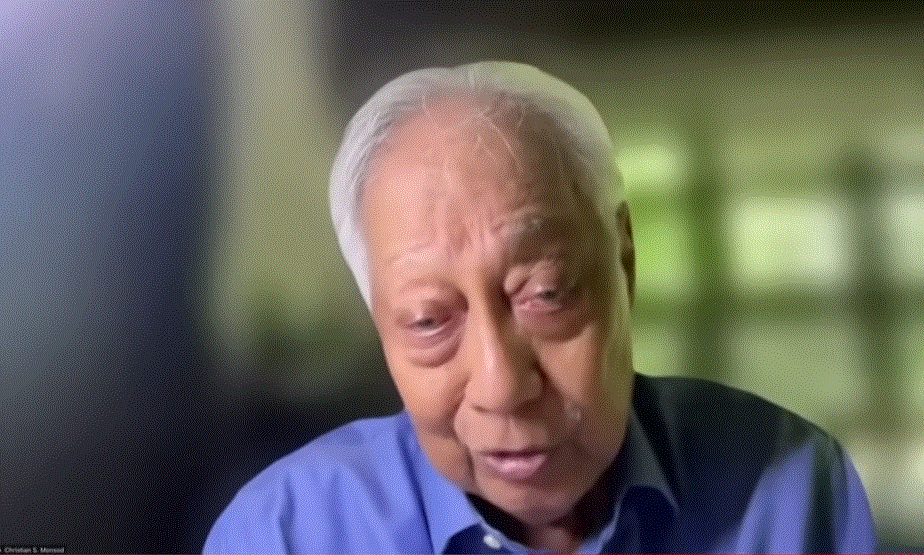
If the Supreme Court’s (SC) decision were to be the basis, then the impeachment complaint against Vice President Sara Duterte was effectively dismissed when the Senate archived it, according to one of the framers of the 1987 Constitution.
“Ang sabi sa SC decision kapag inarchive (the SC said once you archive,) it amounts to a dismissal. Well, I don't know. But if you follow the SC decision, if you archive, it amounts to dismissal of the charges," lawyer Christian Monsod said in a report by Mark Salazar on "24 Oras."
However, retired associate justice Adolf Azcuna said the Senate can always retrieve the impeachment complaint from the archives “without prejudice” if “necessary.”
Meanwhile, UP College of Law assistant professor Paolo Tamase described the complaint as, “Natutulog siya ngayon, in deep sleep siya sa Senado hanggang buhayin siya ng tamang mosyon (the impeachment complaint is currently in deep sleep in the Senate until the right motion revives it.)
Azcuna added that, “Whatever is the decision of the court, let’s just accept it because that becomes part of the law of the land, and that is our system."
Regardless of the Supreme Court's decision, among the issues in the ruling is the one-year ban rule, another law expert said.
“Malinaw kasing inunang desisyunan ng House [of Representatives] 'yung 4th complaint bago pa nila dinesisyunan naman 'yung tatlo pang complaint... Paano yan maging bar doon sa pang-apat na complaint e nauna ngang inaksyunan ng House to a plenary vote 'yung pang-apat na complaint... So ang logic ay kwestyunable na,” said Atty. Domingo Cayosa, constitutional law expert.
(It’s clear that the House first decided on the fourth complaint even before acting on the other three, so how can that bar the fourth complaint when it was the one the House acted on first and even brought to a plenary vote? So the logic is questionable.)
Azcuna also questioned whether the first three impeachment complaints could be considered “initiated” despite not being referred to the House committee.
“The interpretation we gave in Francisco vs. House of Representatives is the one being modified in the present case because in the present case the SC said the 3 complaints were initiated even if they were not referred to the committee because they were archived, and later on with the lapse of the 19th Congress, they were terminated and dismissed,” Azcuna said.
A part of the Supreme Court decision also questioned the House for a lack of due process, as Duterte was not given a chance to respond before the complaint was brought to the Senate.
“When the SC decision came in with these new conditions, ngayon sasabihin ng Senate hindi nagcomply ang House. Of course, they did not comply because they did not exist at the time. Walang shortcomings ang House,” Monsod said.
(The Supreme Court decision came with these new conditions. The Senate is now saying that the House did not comply. But of course, they didn’t comply, because those conditions didn’t exist at the time. The House had no shortcomings.)
No matter what the SC decides, it should be discussed comprehensively and explained thoroughly to the public, Azcuna said.
“Sana may oral argument sa MR (motion for reconsideration) para maipaliwanag sa taumbayan kung anong dahilan kung bakit hindi talaga pwede itong kasalukuyang articles at ito ay pumasok sa one-year ban [at] bakit na ban yan hindi naman narefer sa committee. Bigyan ng pagkakataon ang House in an oral argument kung bakit hindi pa initiated itong tatlo,” Azcuna said.
(There should be an oral argument for the MR for the public to understand the reasons why the current articles aren’t valid, why they fall under the one-year ban, and why it was not referred to the committee. The House should be given the opportunity in an oral argument to explain why these three complaints haven’t been initiated yet.) —Mariel Celine Serquiña/LDF, GMA Integrated News

