

 GMA Brandtalk
 Tracking
 Archives

Filipino families experiencing involuntary hunger drops to 16.1% – SWS
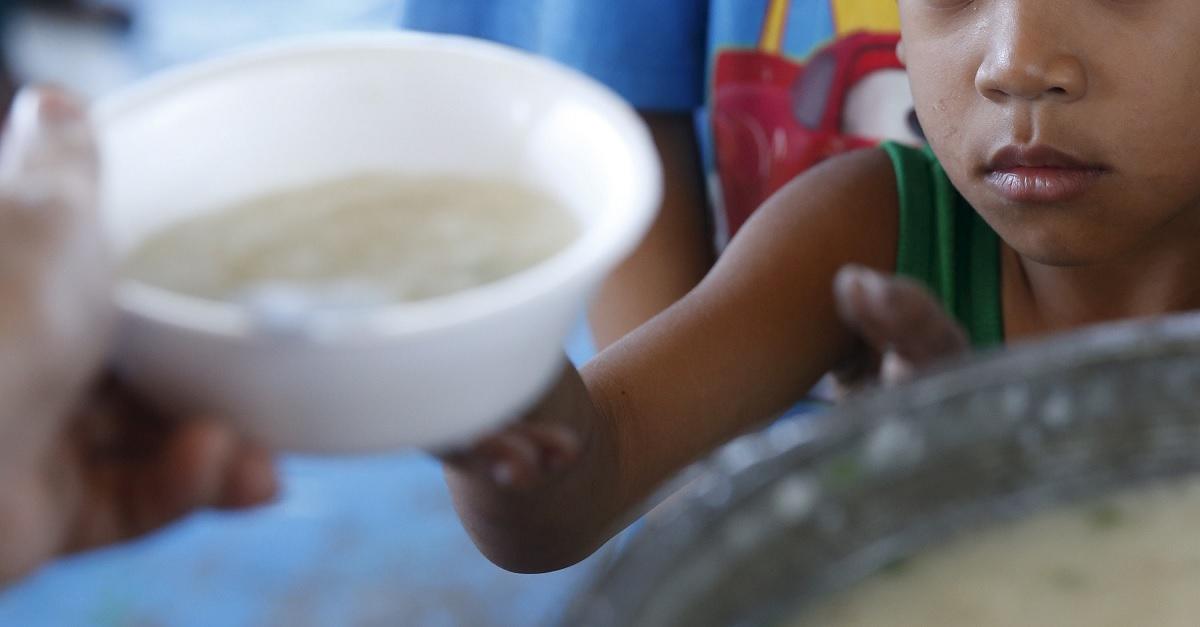
There are fewer Filipino families that experienced involuntary hunger or were hungry and had nothing to eat at least once in the past three months, according to the Second Quarter 2025 Social Weather Survey (SWS).
At least 16.1% of Filipino families reported experiencing involuntary hunger or were hungry for at least once the past three months. The figure was 3.9 points below 20.0% in the April 23-28, 2025 survey. In March 2025, the figure was at 27.2% before falling to 19.1% in April 11-15, 2025.
"The 2025 average of 19.9% was 0.3 points lower than the 2024 average of 20.2%, and 1.2 points lower than the record-high 21.1% average of 2020 during the COVID-19 pandemic," the survey showed.
The survey was conducted from June 25 to 29, 2025 using face-to-face interviews of 1,200 adults aged18 and above nationwide. There were 300 respondents each in Metro Manila, Balance Luzon (or Luzon outside Metro Manila), the Visayas, and Mindanao.
The sampling error margins are ±3% for national percentages and ±6% each for Metro Manila, Balance Luzon, the Visayas, and Mindanao.
Decrease in Mindanao, Balance Luzon
As of June 2025, the survey showed that the experience of hunger was highest in Metro Manila and the Visayas, both at 21.7% of families, followed by Balance Luzon (or Luzon outside Metro Manila) at 15.3%, and Mindanao at 9.7%.
However, the 3.9-point decline in hunger between April 23-28, 2025 and June 25-29, 2025 was due to a sharp decrease in Mindanao by 16.6 points and a slight decrease in Balance Luzon (1.7 points). There is a slight increase noted in the Visayas by 2.0 points and in Metro Manila, by 1.4 points.
Moderate hunger, severe hunger
The survey showed that the 16.1% hunger rate in June 25-29, 2025 was the sum of 12.8% who experienced Moderate Hunger or those who who experienced hunger “Only Once” or “A Few Times” in the last three months and 3.3% who experienced Severe Hunger or those who experienced it “Often” or “Always” in the previous three months.
Comparing with results from the survey done last April 23-28, 2025, moderate Hunger fell by 3.6 points from 16.4% while Severe Hunger hardly moved from 3.6%.
In Metro Manila, Moderate Hunger rose by 1.7 points from 14.3% in April 23-28, 2025 to 16.0% in June 25-29, 2025, while Severe Hunger hardly moved from 6.0% to 5.7%.
In Balance Luzon, Moderate Hunger hardly changed from 13.9% to 13.0%, while Severe Hunger hardly moved from 3.1% to 2.3%.
In the Visayas, Moderate Hunger fell by 1.3 points from 18.3% to 17.0%. However, Severe Hunger rose by 3.4 points from 1.3% to 4.7%.
In Mindanao, Moderate Hunger fell sharply by 14.3 points from 21.3% to 7.0%, while Severe Hunger fell by 2.3 points from 5.0% to 2.7%.
Hunger falls among both the Poor and Non-Poor
The SWS explained that hunger occurs at different rates among the Poor and the Non-Poor.
"At any single point in time, hunger is usually higher among the Poor. From quarter to quarter, however, the hunger rates among the poor and the non-poor may change, either upward or downward. Hunger is highest among the food-poor."
In the June 2025 survey, 49% of Filipino families rate themselves as Mahirap or Poor, 10% rating themselves as Borderline (by placing themselves on a line dividing Poor and Not Poor), and 41% rating themselves as Hindi Mahirap or Not Poor.
"On Self-Rated Food Poverty — based on the type of food eaten by their families — the June 2025 survey also found 41% of families rating themselves as Food-Poor, 10% rating themselves as Food Borderline (by placing themselves on the line dividing Food-Poor and Not Food-Poor), and 49% rating themselves as Not Food-Poor."
The rate of Total Hunger (Moderate hunger plus Severe hunger) fell among the Self-Rated Poor from 25.9% in April 23-28, 2025 to 21.0% in June 25-29, 2025.
Among the Non-Poor (Not Poor plus Borderline Poor), Total Hunger also fell from 14.1% to 11.4%.
Compared to April 23-28, 2025, the rate of Total Hunger fell among the Self-Rated Food-Poor from 28.4% to 21.3%, and among the Non-Food-Poor (Not Food-Poor plus Borderline Food-Poor) from 14.1% to 12.4%. — Jiselle Ann Casucian/BAP, GMA Integrated News

