

 GMA Brandtalk
 Tracking
 Archives

Chiz Escudero asks Palace for ‘negative list’ of infra projects
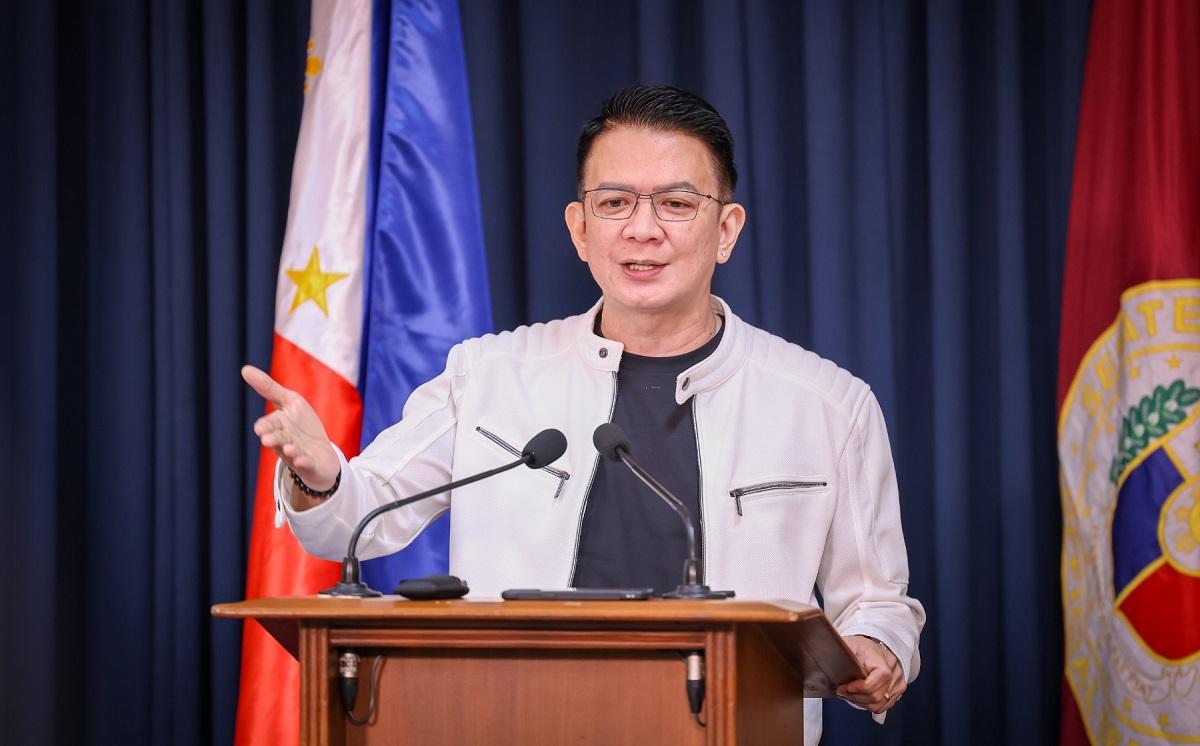
Senate President Francis “Chiz” Escudero on Tuesday called on Malacañang to come up with a “negative list” of infrastructure projects that cannot be funded under the proposed P6.793 trillion national budget for 2026 as a proactive measure to get rid of questionable projects.
“Instead of waiting for questionable projects to slip into the budget and then expose them after the fact, we should be proactive. The Palace should make it clear from the start that these kinds of projects will not be entertained,” Escudero said in a statement.
“Babaha ng mga walang kwentang projects kung ‘di natin idedetalye kung anu-ano ang dapat ipagbawal na projects (Useless projects will be rampant if we don't detail what kinds of projects should be prohibited). There should be zero budget for zero-benefit projects,” he added.
The Senate blue ribbon committee on Monday began its inquiry into the anomalous flood projects in the country. This was after President Ferdinand Marcos Jr. earlier disclosed that 20% of the total P545 billion budget of flood control projects was awarded to only 15 contractors, five of which have projects in almost all regions nationwide.
Escudero said that among the projects that must be included in the “negative list” are low-value but overpriced road devices such as reflective studs, slope protection nets, and paints, as well as “vanity projects” like waiting sheds, swimming pools, signages, and non-essential amenities.
He is also mulling for a moratorium on new flood control projects of the Department of Public Works and Highways (DPWH) for next year, citing billions of funds in the current budget remain unspent.
“Tapusin muna natin ang pending projects at ayusin natin ang plano bago natin ituloy ang mga ito (Let’s finish the pending projects first and fix the plan before we continue with these). We should give Secretary (Vince) Dizon the opportunity to fix the system first,” he said.
“Let’s redirect those funds to waste-to-energy plants, refuse-derived fuel facilities, and other measures that address garbage, clogged drainage systems, and reduced water-holding capacity in rivers and waterways. These are among the real drivers of flooding in Metro Manila and other urban centers,” Escudero added.
Stronger laws
Meanwhile, Senate Minority Leader Vicente Sotto III called on Congress to amend the Construction Industry Authority of the Philippines (CIAP) and Philippine Contractors Accreditation Board (PCAB) Law.
This was after some of the construction firms linked to Sarah and Pacifico Discaya were found to be owned by their relatives and employees, while bidding against each other for the same projects.
Sotto also warned that some contractors may establish new corporations or sole proprietorships whenever their licenses are denied.
Senator Risa Hontiveros, on the other hand, questioned the reported lack of coordination between the DPWH and the local government units regarding the implementation of the flood control projects.
Hontiveros cited the earlier report that the Quezon City government has only approved two out of 254 monitored flood control projects by the DPWH.
“Can flood control projects really be made without coordination with the LGU? At kung kailangan naman ng coordination, eh bakit po maraming proyekto ang hindi nagko-coordinate sa mga LGUs (And if coordination is needed, then why are there so many projects that were not coordinated with the LGUs)?” she said during Monday's hearing.
In response, the DPWH NCR admitted that flood control projects proceeded despite having no clearance from the local government.
For his part, Senator Panfilo Lacson said he has high expectations for the probe to be conducted by the independent commission formed by the Malacañang.
“Many will be watching the result of the independent investigation of the commission. The projected composition is to the hilt, and is potentially extensive and comprehensive enough to pinpoint accountability,” he said in a radio interview.
“But as someone who came from law enforcement, delivering the certainty of punishment is key. If we don't see anyone being punished, there will be those who will be emboldened to engage in corruption,” Lacson added. —Vince Angelo Ferreras/AOL, GMA Integrated News

