

 GMA Brandtalk
 Tracking
 Archives

Tinio questions multi-year allocations for floodwalls in Davao City
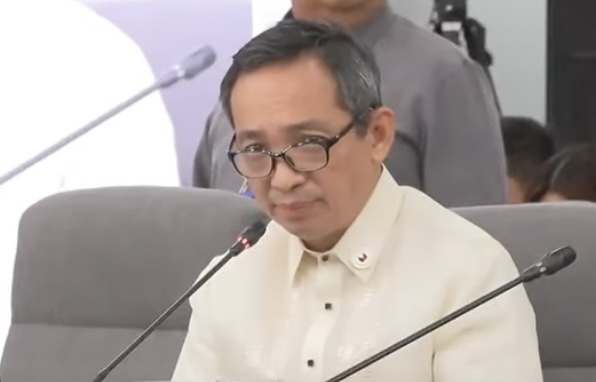
House Deputy Minority Leader ACT-Teachers party-list Rep. Antonio Tinio on Tuesday questioned the multi-year contractual authority given in 2020 for the construction of revetments or flood walls in Davao City, when the MYCAs are usually allocated for "big-ticket" items.
At the hearing of the House Infrastructure Committee, Tinio said there were 12 revetment projects measuring less than one kilometer that were given MYCAs in December 2020. The projects, he said, were completed in 2022 and 2023.
“These projects were completed in 2022 to 2023 at the least. Ilang taon ba ang kailangan para makumpleto ang 190 meters, 300 meters na revetment/flood wall? Normal po ba ‘yun? Bakit po espesyal ang Davao City na meron sila ganitong multi-year contractual authority?” Tinio said.
(How many years does one need to complete 190 meters, 300 meters of revetment, or flood wall? Is that normal? Why is Davao City so special that they have this multi-year contractual authority?)
On Tinio's questioning, Public Works Undersecretary Ma. Catalina Cabral said MYCAs are allocated by the Department of Budget Management to projects that may take more than a year to complete, such as "big-ticket items."
Tinio said the huge projects, such as the Manggahan Floodway, were considered big-ticket items. But revetments?
“Your Honor, it really depends on the project cost,” Cabral said.
DPWH Region 11 Regional Director Juby Cordon said it was the first time she heard about the MYCA in Davao.
"I have contacted our personnel. We will check on that, Sir, and we will give you the information,” Cordon said.
Davao City is the hometown of former President Rodrigo Duterte and his daughter, Vice President Sara Duterte. His son Paolo is the congressman of the first district of the city, while his other son Sebastian is the acting mayor.
Sought for comment, Duterte ally Davao City third district Rep. Isidro Ungab said that all flood projects in Davao City are above board and merit-based.
“Davao City’s allocation for flood control projects is based on its extensive land area and vulnerability to flooding, with funding determined through established planning and budgeting processes at the national level," Ungab said.
"As a representative of just one out of three districts, I am aware that project inclusion follows needs-based assessment and is subject to evaluation by both the DPWH and the Executive branch,” he added.
“Any legislator is free to raise questions or request clarifications from the DPWH about project details and implementation,” Ungab added.
Ungab then said that the most urgent and recurring problems in flood control infrastructure—including the worst-hit areas, substandard works, and unresolved ghost projects—are outside Davao City, notably in several parts of Luzon.
“These are locations where flooding causes massive damage and where investigations have found that dikes and other structures failed or were never properly built," Ungab said.
"For transparency and accountability, investigative attention should be focused on those high-risk and problem-prone areas, not on regions where the projects were duly planned and implemented under the established budget process,” he added.
During the same probe, Commission on Audit's (COA) Tracy Sunico revealed that state auditors already issued notices of charges, suspensions, and disallowances on P120 billion worth of flood control projects since 2016.
“We just collated from 2016, but we can check our records for those dating back to 2000 or 2010," Sunico said.
Sunico committed to submitting these documents to the House joint panel conducting the flood control project probe.
"We will have them printed and furnish you with copies," Sunico said. –NB, GMA Integrated News

