

 GMA Brandtalk
 Tracking
 Archives

Diokno presses DOH: Six years after UHC Law, Filipinos still shoulder 60% of health costs
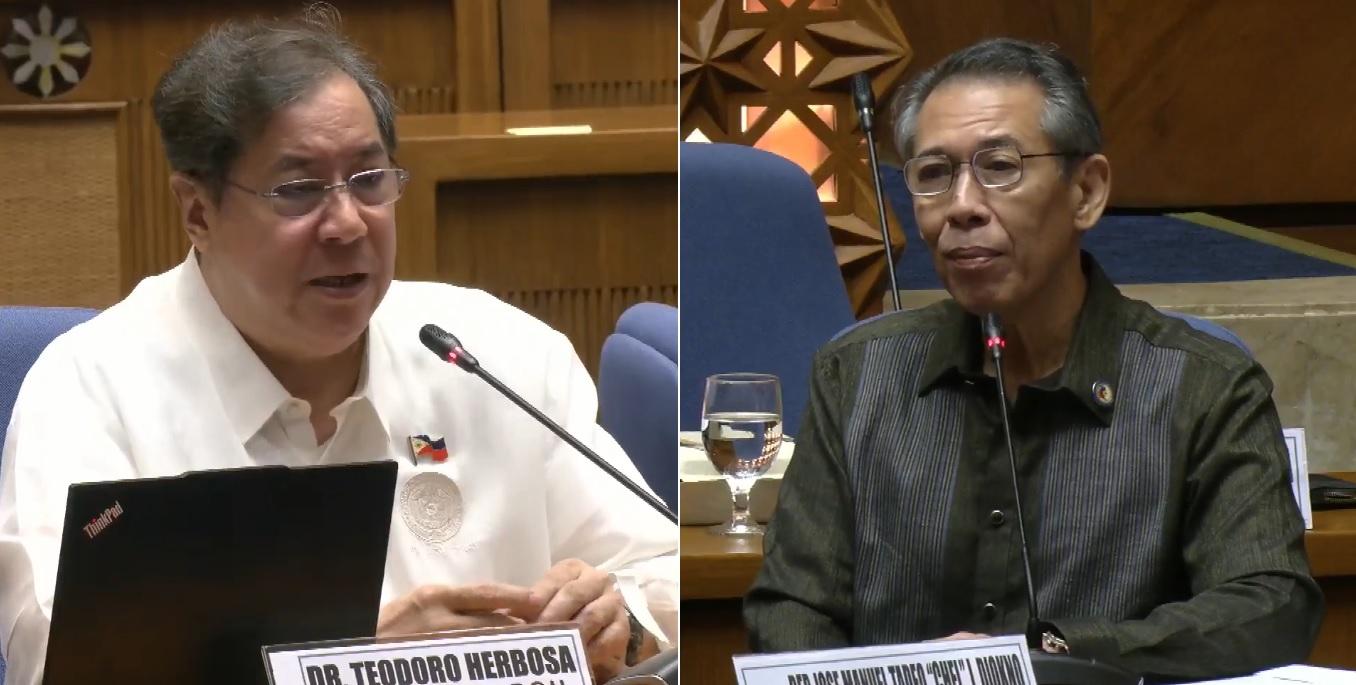
Lawmakers pressed the Department of Health (DOH) on Thursday to explain why Filipinos continue to bear the brunt of healthcare expenses six years after the passage of the Universal Healthcare (UHC) Law, with Health Secretary Ted Herbosa conceding that out-of-pocket costs remain at 60 percent despite promises of financial protection.
During the House appropriations committee’s briefing on the proposed 2026 DOH budget, Akbayan Representative Chel Diokno questioned Herbosa on the agency’s lack of clear timelines and targets for fully implementing the landmark law.
“Malaking disgrasya, actually malaking disaster sa isang pamilya kung magkasakit ‘yung magulang o ‘yung mga anak nila. Umaabot ng 40 percent ng kinikita ng isang manggagawa ‘yung ginagastos nila ‘pag na-ospital,” Diokno said. “Kailan makakaasa ang ordinaryong Pilipino na talagang bababa ang kanilang ginagastos pag sila'y nagkakasakit?”
(It is a huge disaster for a family if a parent or a child gets sick. Workers spend as much as 40 percent of their income when a family member is hospitalized… When can ordinary Filipinos expect that their medical expenses will truly go down?)
Herbosa admitted that the Philippines is far from reaching the UHC goal of lowering out-of-pocket spending to 20 percent.
“Ngayon po nasa 60 percent pa ang sa Filipino according to the PIDS studies,” Herbosa said, adding that DOH aims to reduce the figure by raising PhilHealth reimbursements and expanding benefit packages. “I’m hoping na kahit pagbaba ko in three years, mapababa ko to at maakyat ko ‘yung government side [spending] up to 70 percent. Nasa 41 pa lang po tayo.”
(Currently, Filipinos’ out-of-pocket expenses are at 60 percent… I’m hoping that before I step down in three years, we can bring this down by raising the government share to 70 percent. Right now, it’s only at 41 percent.)
The health chief also cited pandemic disruptions, saying that while the UHC Law was enacted in 2019, implementation was derailed for three years as funds were diverted to COVID-19.
Diokno, however, expressed disappointment that the DOH’s presentation did not include concrete numbers or a specific roadmap. “I would hope that in succeeding years you could tell Congress how much lower the cost of hospitalization and medication will be for the ordinary Filipino,” he said.
One public dentist for every 48,000 Filipinos
Diokno also flagged what he called a “big problem” in public oral health, noting that there is only one government dentist for every 48,130 Filipinos. He questioned why entry-level government dentists earn just P34,421 monthly (Salary Grade 13), lower than the P40,208 starting salary for nurses (Salary Grade 15).
Herbosa admitted that the DOH lost its dentist plantilla positions in a 1992 reorganization, leaving most dentists in the private sector or the military. He said the department is now proposing to revive its dental program and correct salary inequities among allied health workers such as med techs and radiologic technologists, many of whom are leaving for better pay abroad.
“I have assigned an undersecretary on the dental program and she’s also a dentist to fix all these problems with dentistry,” Herbosa said.
Bigger budget push
Herbosa reiterated that raising the DOH’s budget remains key to delivering on the UHC promise. “In any country, what is most important is education and the health of its people. Hopefully with the help of Congress, ma-increase ko ‘yung budget. I think if we increase the budget, our doctors and healthcare workers will be ready to implement [UHC] for all Filipinos,” he said. — BM, GMA Integrated News

