

 GMA Brandtalk
 Tracking
 Archives

AFD eyes more support for PH’s climate transition
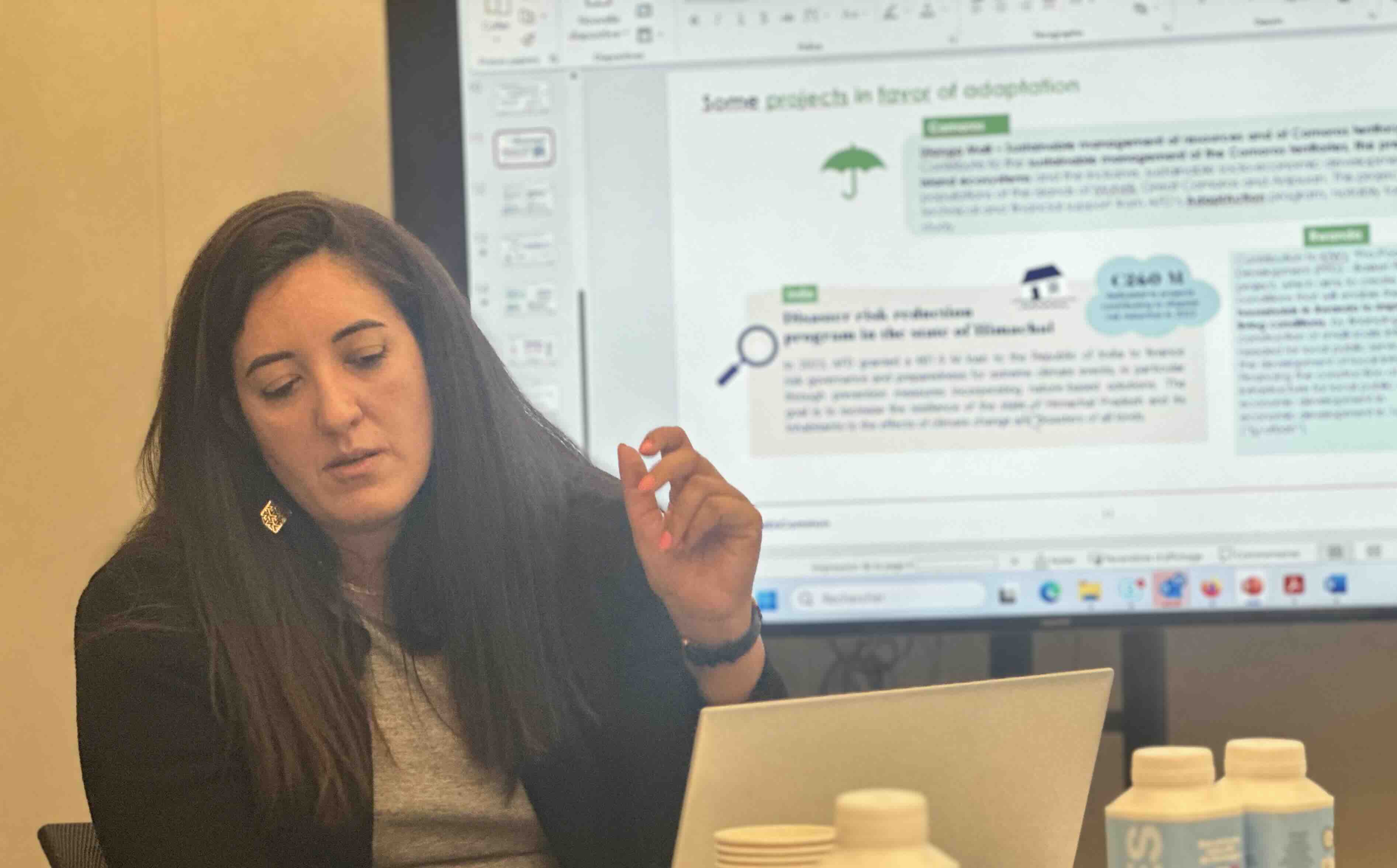
The Climate Division of Agence Française de Développement (AFD), France’s public development bank, announced that it is seeking to expand its support for the Philippines in its transition towards low-carbon and climate-resilient development.
Atika Ben Maïd, Deputy Director of the AFD Group Climate Division, told GMA Integrated News that the move is part of AFD’s 2050 Facility, a program designed to back long-term, low-carbon, and resilient development strategies.
It will also help the Philippines meet its commitments to decarbonization under the Paris Agreement.
Maïd noted that discussions are ongoing with the Department of Environment and Natural Resources (DENR) and the Department of Finance (DOF).
“The focus of (AFD) in the Philippines was actually on the forestry and land use change for this long-term strategy," she said
'Most vulnerable'
The 2050 Facility program provides technical assistance and capacity-building to countries that are either among the highest greenhouse gas emitters or the most vulnerable to climate change.
Its objective is to help them transition towards sustainable development pathways that reduce emissions and strengthen resilience.
In June, the DOF announced that the Philippines secured concessional financing from France, through the AFD, amounting to EUR 150 million (approximately PHP 9.47 billion) to advance national climate initiatives.
AFD has previously cited the Philippines as one of the most climate-vulnerable nations in the world, ranking it as the fourth most affected by extreme weather events from 2000 to 2019.
These events, it warned, directly impact Filipinos and could cost the country more than $3.5 billion annually by 2040.
According to the United Nations Development Programme (UNDP), the Philippines has committed to a projected reduction and avoidance of 75% in greenhouse gas (GHG) emissions by 2030, covering the agriculture, waste, industry, transport, and energy sectors. Of this target, 2.71% is unconditional, with the remainder dependent on international support.
Renewable Energy
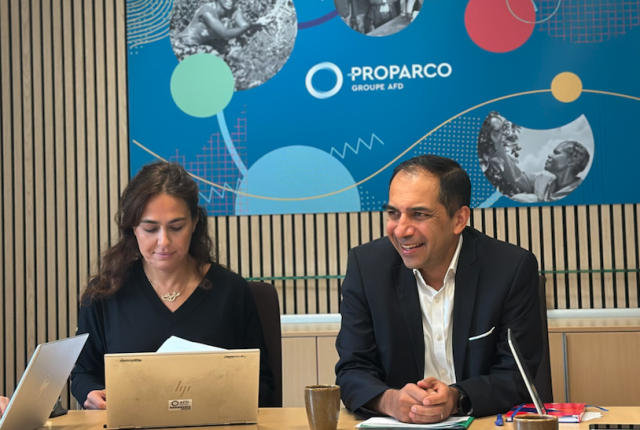
To further strengthen the Philippines’ shift to a low-carbon and resilient economy, PROPARCO—the private sector financing arm of the AFD Group—said it is also exploring ways to support renewable energy projects in the country, particularly in solar and wind power.
“We’re looking at some project, we’re also looking at some specific investment in equity. The aim of (PROPARCO) is to do more, including with financial institutions, to target specific kinds of objectives, for example, climate, such as biodiversity,” explained Djalal Khimdjee, Deputy CEO of PROPARCO Groupe AFD.
One challenge, PROPARCO noted, is that Philippine institutions are still less familiar with PROPARCO compared to traditional lenders that the country has long relied on for development financing.
Despite not having major partnerships in the Philippines yet, Khimdjee said PROPARCO hopes the government will recognize some of its game-changing projects abroad. Among these is its support for India’s GRAVITA, an eco-responsible lead battery recycling company.
Recently financed by PROPARCO, GRAVITA also operates in Sri Lanka and five African countries, helping formalize a sector that informal players in developing economies often dominate.
“With GRAVITA, we have established our reputation in India. The track record is important to penetrate the market, that’s why in Indonesia, in the Philippines, we need a flagship deal in that business to be known, that’s why it’s not easy in the beginning,” said Reza Hassam Daya, Global Head of Manufacturing, Agribusiness & Services at PROPARCO.
Khimdjee emphasized, however, that PROPARCO’s role is not to compete with local lenders.
“Our role is not to compete with financial institutions; we’re here to see the value added,” he said. —VAL, GMA Integrated News

