

 GMA Brandtalk
 Tracking
 Archives

What is a SALN?
Ombudsman Jesus Crispin Remulla just issued a memorandum allowing access to the Statement of Assets, Liabilities, and Net Worth (SALN) of public officials, including those of the president and the vice president.
The memo on the SALN also covers the heads of Constitutional Offices, and local government officials, since the Ombudsman is the official repository of the SALNs of these public officials.
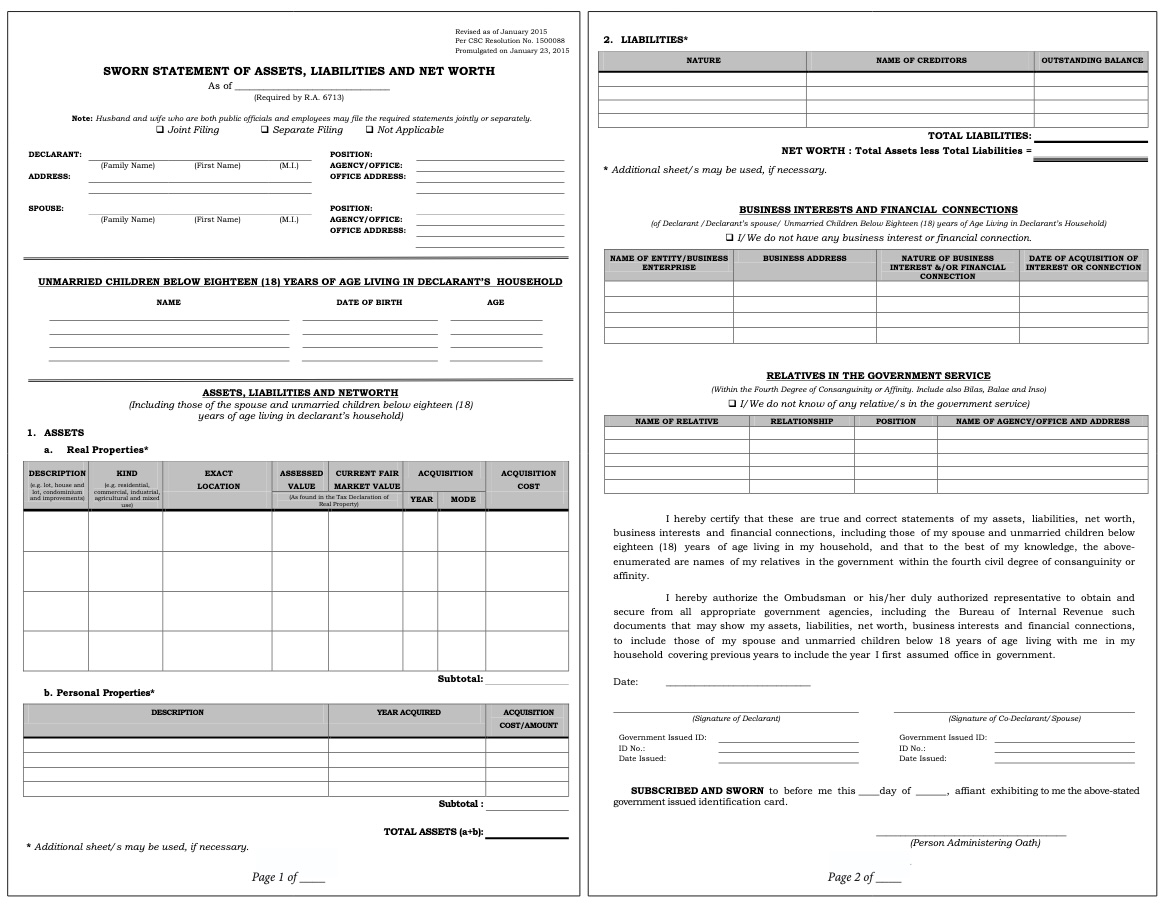
But what is a SALN?According to the Civil Service Commission (CSC), SALN is “the disclosure of financial connections or business interests and identification of relatives within the fourth degree of consanguinity or affinity. Further, it also requires the declarant to name his/her bilas, balae, and in-laws who are in government service.”
“The purpose of the SALN is to promote transparency in the civil service and to establish a deterrent against government officials bent on enriching themselves through unlawful means,” the CSC said.
In filing the SALN Form, it requires one to provide the following information:
- Name of unmarried children below 18 years old living in the declarant’s household
- Total Assets (real and personal properties, including their amount, the year they were acquired, and their exact locations)
- Liabilities
- Business Interests and Financial Connections
- Relatives in the government service
The CSC said that SALNs must be filed within 30 days after assumption of office; on or before April 30 of every year thereafter; and within 30 days after separation from the service.
However, there are individuals exempted from filing their SALN. This includes those serving in an honorary capacity only, those whose position title is laborer, and those who are casual or temporary workers.
The new policy is a reversal of the 2020 memo issued by Remulla's predecessor, former Ombudsman Samuel Martires, who restricted the access to SALN by requiring the consent of the SALN owner for disclosure, among other restrictions.
According to the CSC, the Ombudsman is “authorized to obtain and secure from all appropriate government agencies, including the Bureau of Internal Revenue such documents that may show the declarant’s assets, liabilities, net worth, business interests and financial connections.”
But the CSC said that the Ombudsman cannot look into bank accounts in private banks by virtue of the authorization in the SALN.

