

 GMA Brandtalk
 Tracking
 Archives

PH-China tension not an issue in South China Sea Code of Conduct finalization
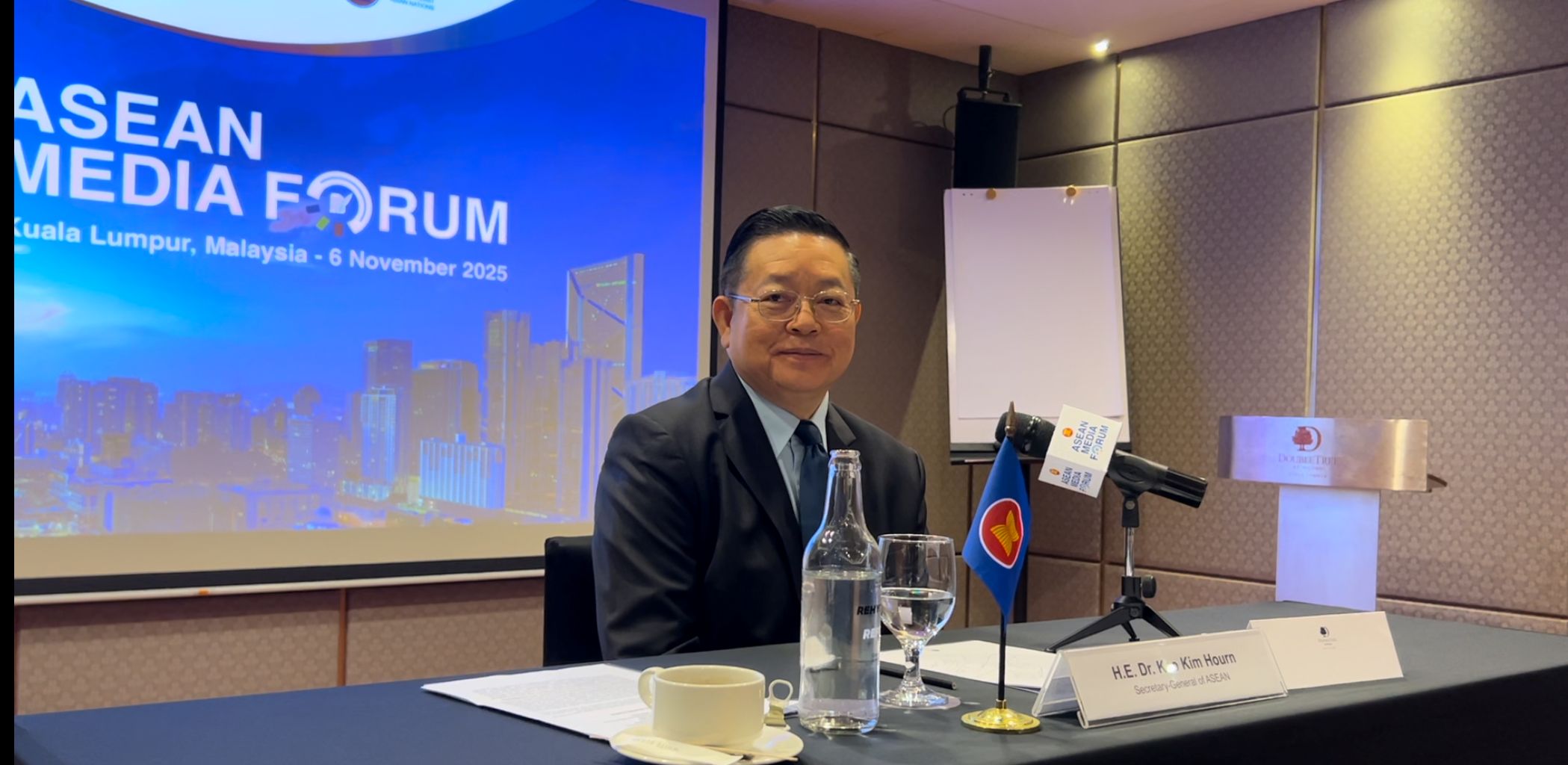
KUALA LUMPUR, Malaysia— The tension between the Philippines and China is not among the issues that delay the finalization of the Code of Conduct in the South China Sea between the Association of Southeast Asian Nations and Beijing, ASEAN Secretary General Kao Kim Hourn said Thursday.
During the 9th ASEAN Media Forum, Kao said "no" when asked by GMA News Online if the tension in the West Philippine Sea is one of the contentious issues as the regional bloc move to finalize the Code of Conduct.
"No. The issue between the Philippines and China is confined...it should be between the ASEAN and China," he said.
ASEAN Secretary General Dr. Kao Kim Hourn said the tension between the Philippines and China is not among the contentious issues in the finalization of the Code of Conduct in the South China Sea ?@gmanews? ?@gmanewsbreaking? pic.twitter.com/QNKwOlebYt
— Amita O. Legaspi (@amitalegaspi) November 6, 2025
Philippines, as well as other ASEAN member countries like Malaysia, Vietnam, Brunei, have overlapping maritime claims in the South China Sea.
China, on the other hand, claims almost the entire South China Sea, including areas within the Philippines’ exclusive economic zone.
In 2016, the Permanent Court of Arbitration invalidated China’s sweeping claims and affirmed the Philippines’ sovereign rights over the West Philippine Sea. China has refused to recognize the ruling.
Binding or not?
Kao said the most contentious issue is whether the code would be binding or not.
"I think that we need to finalize, of course, make sure that the COC is binding. One issue is whether it will be binding or non-binding. I'm sure this is something that will be in ongoing discussions," he said.
Kao said there is already a Declaration on the Conduct of Parties in the South China Sea signed in 2002 but is non-binding and "considered to be more of what we call confidence-building measures. And of course to lay down a very important foundation of how ASEAN and China should work together in the South China Sea."
"We have a non-binding DOC already so we should focus on the COC. So I say this is among other issues that need to be sorted out," he said.
"I am sure we will finalize at some stage. I have every confidence to believe that this work will be finalized next year. I hope that it will be finalized next year during the Philippines' chairmanship," he added.
Philippine President Ferdinand "Bongbong" Marcos earlier expressed optimism that the COC will be finalized during the country's chairmanship next year.
The Philippines will be the chairman of ASEAN in 2026 and will host the ASEAN Summit and other related summits.
Code of Conduct
Kao said the drafting of the COC should not be prolonged.
"We should not prolong the drafting of the COC. The process is very important. It is equally important as the outcome. Between ASEAN and China, we work at the level of comfort to make sure to bring in everyone on board as part of the consensus and decision making," he said.
He added that once the COC is finalized, it should be implemented and followed by all the ASEAN member countries and China.
"Once we reach a consensus, we reach an agreement that we need to implement, don't forget that implementation is critical. Once an agreement is reached, no one has any reason not to implement because we spent so much time already trying to negotiate," Kao said.
The COC has been under negotiation since 2017.
"By 2017, they (ASEAN and China) agreed that the tensions kept rising. So it's time to start negotiating for a real code of conduct. Then, of course, we had COVID. There's a lot of discussions what need to be in the COC in terms of the language, the structure, what it should derive, even the way they use the wordings and a lot of things basically what kind of COC would it be," he said.
Kao said that the negotiations have come a long way.
"Today, I will say that we have come a long way to where we are. That's why this year under Malaysian chairmanship, another work that Malaysia has been pushing is to accelerate their negotiations through the convening of more meetings to provide additional guidelines to the working group as they negotiate. This is a very tedious negotiation," he said.
He said it is important to negotiate and "work together because the process is very, very important to make sure that we have a clear understanding of what actually the COC is all about."
The ASEAN Secretary General admitted that the COC will not resolve the actual bilateral issue and the claims between two countries as that "will have to be negotiated on the basis of international law, specially the UNCLOS (United Nations Convention on the Law of the Sea)."
However, he said, the COC will make sure that South China Sea will remain peaceful, stable, and will be a guideline on how to address issues that would not destabilize the area.
"We hope the COC will reach full agreement, it should bring down tension, it should
promote better understanding, stabilize the area," he said.
He added that parties "should not take any activities that would give rise to more tension." — RSJ, GMA Integrated News

