

 GMA Brandtalk
 Tracking
 Archives

16 senators sign report to form independent body to probe infra anomalies
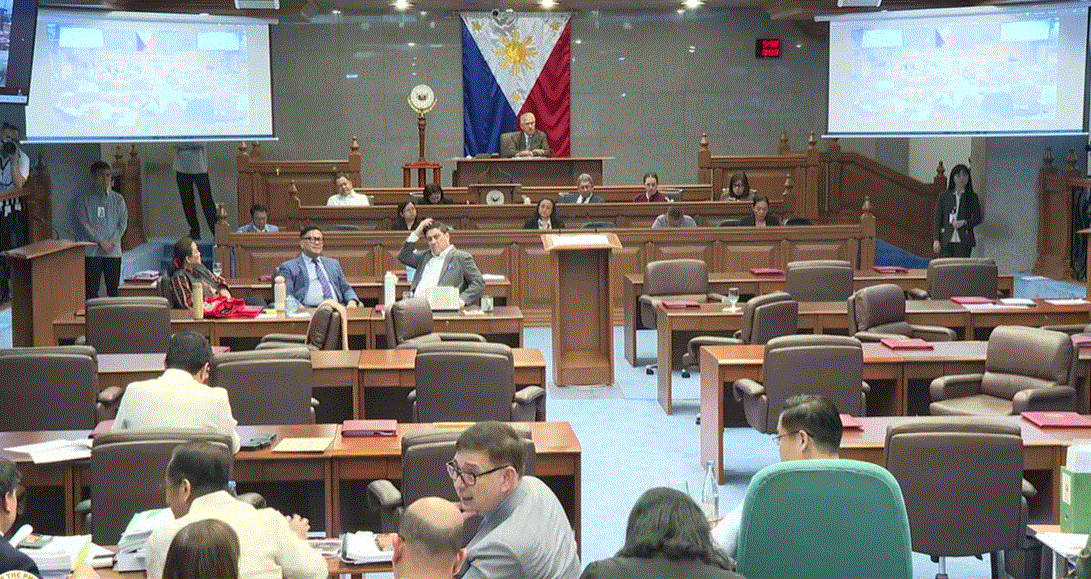
Sixteen senators formally signified support for the creation of the Independent People’s Commission (IPC) by signing the committee report on Senate Bill No. 1512, which would grant the body powers to investigate anomalies in all government infrastructure projects.
Based on the committee report shared by the office of Senator Francis “Kiko” Pangilinan—sponsor and co-author of the measure—to members of the media on Thursday, the senators who signed the report were:
- Senate President Vicente “Tito” Sotto III
- Senate President Pro Tempore Panfilo Lacson
- Senate Majority Leader Juan Miguel Zubiri
- Sen. Francis Pangilinan
- Sen. Win Gatchalian
- Sen. Bong Go
- Sen. Pia Cayetano
- Sen. Jinggoy Estrada
- Sen. JV Ejercito
- Sen. Mark Villar
- Sen. Erwin Tulfo
- Sen. Loren Legarda
- Sen. Risa Hontiveros
- Sen. Bam Aquino
- Sen. Joel Villanueva
- Sen. Robin Padilla
Meanwhile, the eight senators who did not sign were: Senate Minority Leader Alan Peter Cayetano, Sen. Francis “Chiz” Escudero, Sen. Rodante Marcoleta, Sen. Raffy Tufo, Sen. Lito Lapid, Sen. Camille Villar, Sen. Imee Marcos, and Sen. Ronald “Bato” dela Rosa.
According to Pangilinan’s office, some of the senators who did not sign the committee report were not physically present when it was being circulated to gather signatures.
Pangilinan’s office also cited the “urgency” of having the committee report signed by the majority, as the bill had to be sponsored during the plenary session on Wednesday before the sponsorship of House Bill No. 4058, or the General Appropriations Bill of 2026.
Committee Report No. 16 was submitted jointly by the Senate Committees on Justice and Human Rights, Civil Service Government Reorganization and Professional Regulation, and Finance on Wednesday, November 12.
The committees recommended SB 1512 be approved, in substitution of SB 1215, which was filed by Sotto in August.
The bill primarily aims to establish the IPC, an independent body responsible for investigating anomalies, documenting, and recommending measures to address corruption, mismanagement, and negligence in the planning, procurement, and implementation of public infrastructure projects.
The IPC shall specialize in the technical, engineering, and financial audit of such projects—-including, but not limited to, procurement processes, contract variations, right-of-way acquisitions, and project implementation—and shall serve as the primary repository of government infrastructure data.
The commission shall be granted the power to issue subpoena ad testificandum and subpoena duces tecum to compel the attendance of witnesses and the production of documents, records, and other evidence. It may also grant immunity to any person who voluntarily provides information vital to the probe.
It may also order the immediate preventive suspension, subject to constitutional limitation, of government officials under investigation.
Likewise, it may issue temporary closure or revocation orders of permits, business licenses, or registrations of establishments, contractors, or entities found to be responsible for the implementation of anomalous infrastructure projects.
The Palace-created Independent Commission on Infrastructure (ICI) may be abolished once the IPC is institutionalized through law, according to former Senate President Franklin Drilon.
President Ferdinand Marcos Jr. issued Executive Order 94 in September, which created the ICI as a non-partisan fact-finding body that would investigate irregularities in flood control projects and infrastructure projects in the last 10 years.
If created, the mandate of the IPC shall last until June 30, 2028, unless otherwise extended by law.—LDF, GMA Integrated News

